Hera’s first look at Didymos shows a sharp ridge and a half-hidden moonlet
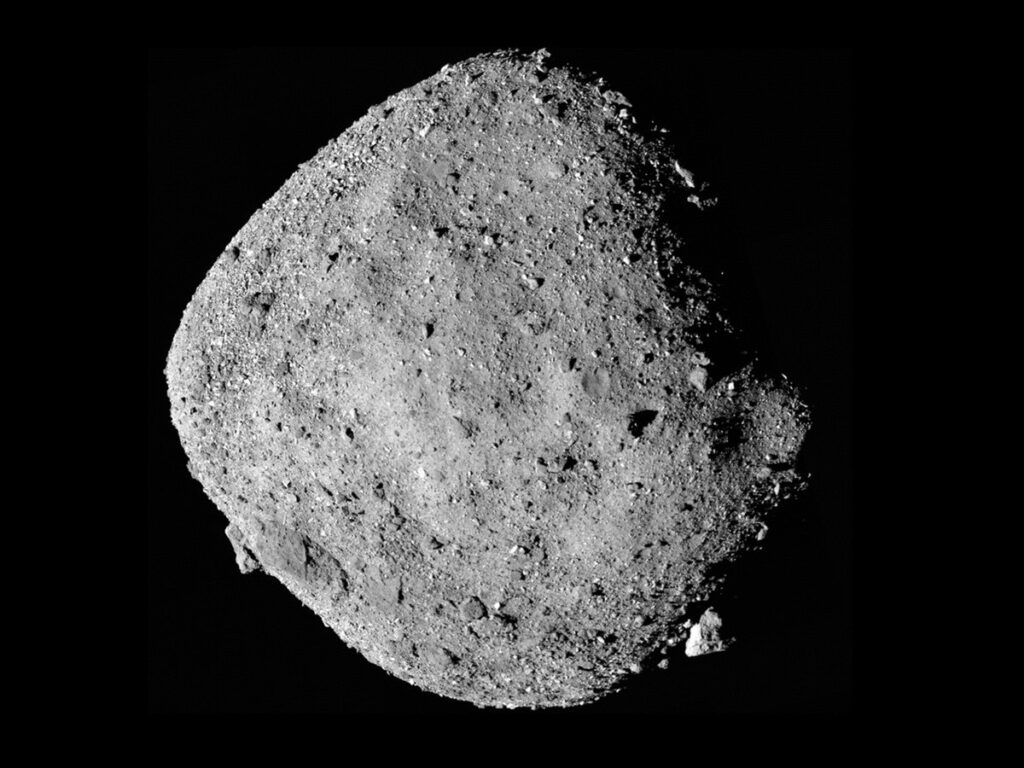
From 56 km away, ESA's Hera probe has imaged the asteroid Didymos, with a sharp equatorial ridge and part of its small moon Dimorphos peeking out at the top.
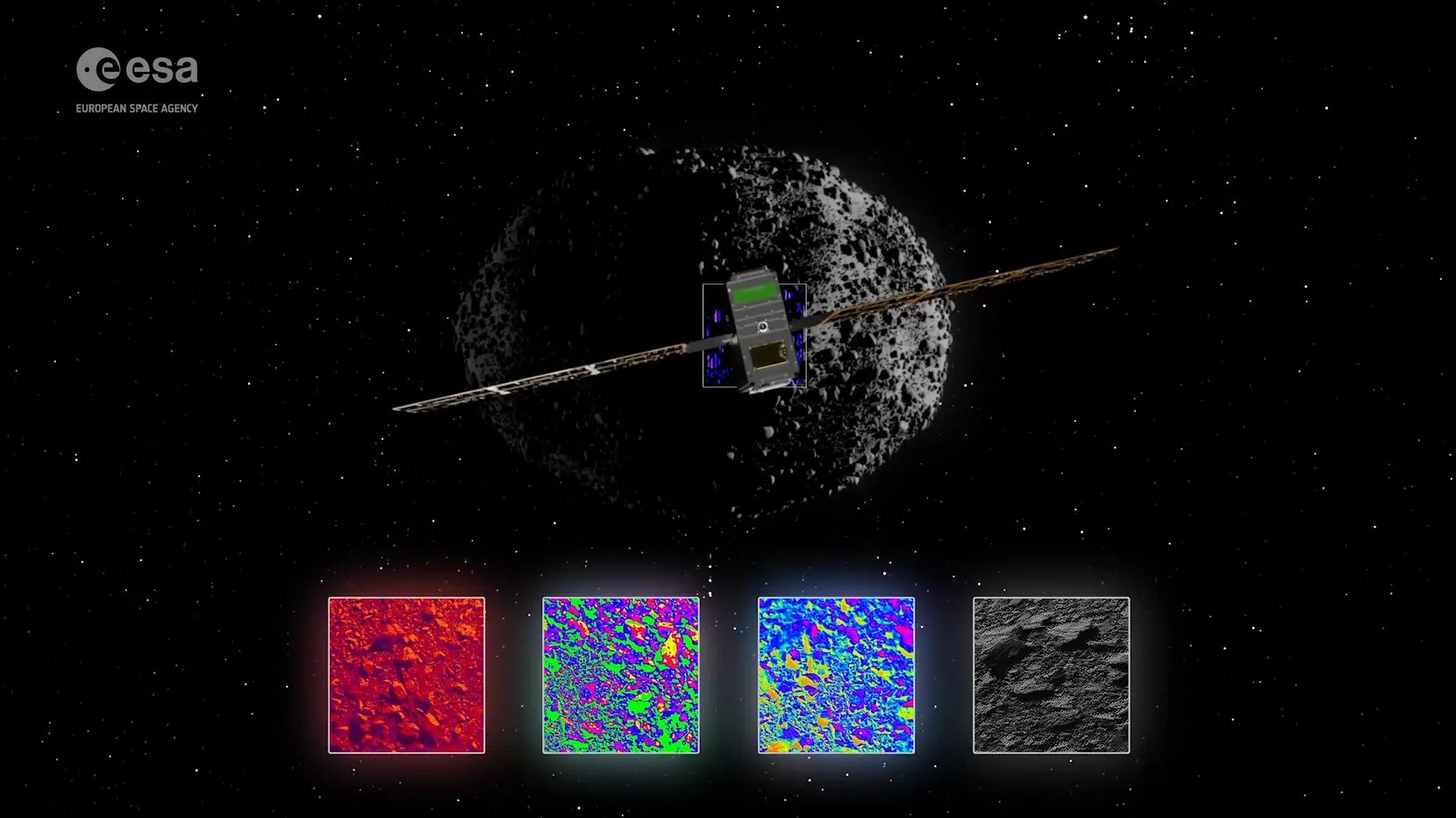
ESA’s Hera spacecraft has returned an early preview image of the asteroid Didymos, taken from 56 km away, with part of its small moon Dimorphos visible near the top, ESA said on November 12. Detailed images of both are due on November 25.
One face of Didymos, and a moon peeking in
Hera is ESA’s first mission for planetary defence, the work of finding ways to protect Earth from asteroids. The spacecraft is about the size of a small car, according to ESA. Its target is a pair of asteroids: Didymos, the main body, about 780 m across, and Dimorphos, a moonlet about 151 m across that orbits it.
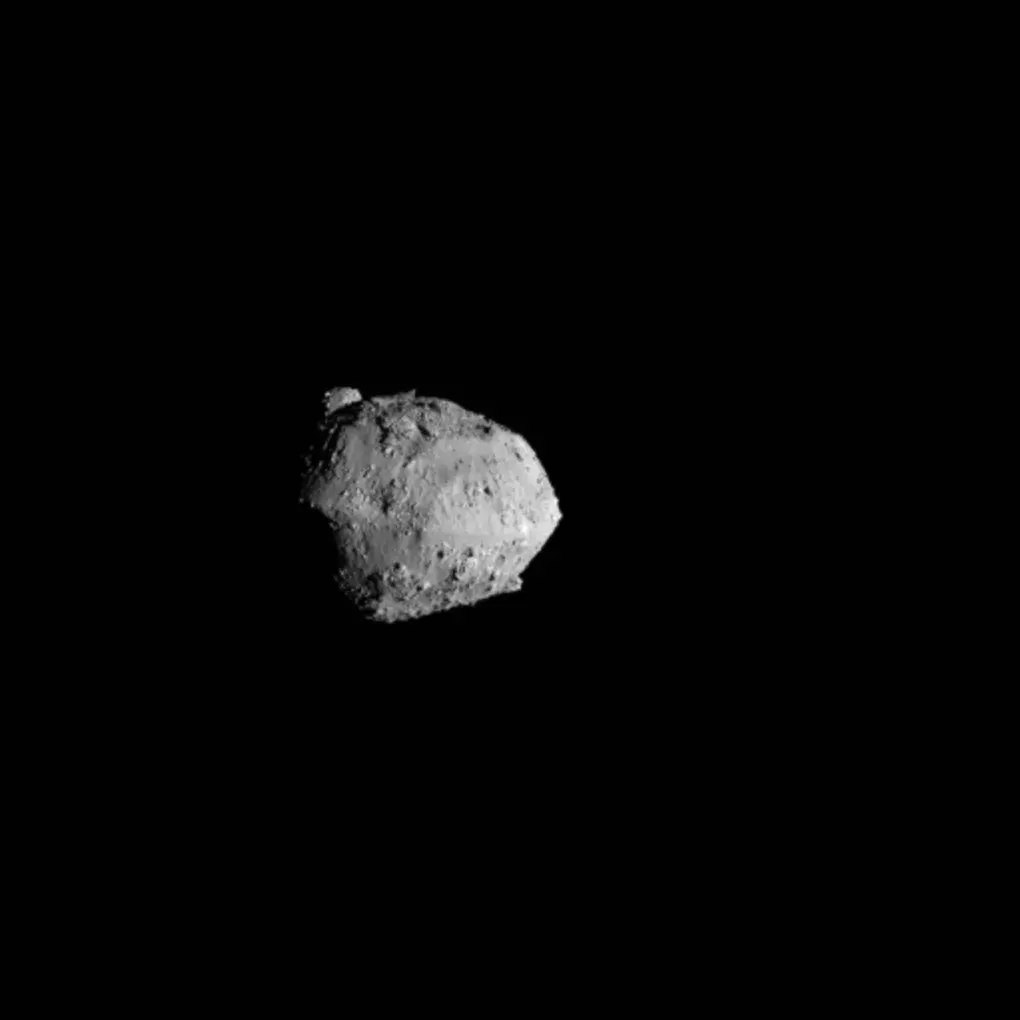
The new picture comes from the spacecraft’s camera and shows one face of Didymos. Large boulders and smoother regions cover the surface. The most unexpected feature is a sharp ridge running around the equator. Part of Dimorphos appears near the top of the frame, with some boulders visible on its upper side. ESA says the moonlet orbits a little more than 1 km from Didymos.
ESA describes the image as an early preview, so the sharper views that follow should show far more of both bodies.
A spin close to the breaking point
The ridge may be linked to how fast Didymos turns. The asteroid rotates about every 2.2 hours, close to the speed at which it could fly apart. ESA says models suggest such a fast spin can push loose surface material toward the equator, and that some material may even have been shed into space, eventually forming Dimorphos.
That would make the equatorial ridge a leftover of the moon’s own birth. It is a model-based idea, and the close-up images will test it.
Detailed images of both asteroids are due on 25 November.
The crash site Hera has come to examine
On September 26, 2022, NASA’s 580 kg DART spacecraft hit Dimorphos at 6.1 km/s. The impact threw debris across 10,000 km and shortened the moonlet’s orbit around Didymos by about 33 minutes. ESA’s own pages note this was the first time human action changed the orbit of an object in the Solar System.
The test worked, but it left open questions that only a visit can answer. ESA lists several: whether the impact dug a crater or reshaped the whole asteroid, what Dimorphos is made of, and why the deflection was larger than impact simulations predicted.
What Hera can settle, and why it is hard
The deflection puzzle matters for planetary defence. If scientists want to repeat the method against a real threat, they need to know how much of the push came from the impact itself and how much from material thrown out of the surface. That depends on what Dimorphos is made of. A loose pile of rubble and a more solid body would react differently to the same hit, and from Earth the difference cannot be measured.
Hera’s survey is meant to supply the missing details. ESA says that over the coming months the spacecraft will carry out a close-up “crash site investigation” of Dimorphos, using several instruments and two shoebox-sized CubeSats (very small spacecraft). The mission is expected to progress eventually to landing.
Close work around two small, fast-spinning asteroids with almost no gravity is demanding, and the first sharp images will show how rough the terrain is. The 56 km preview is a long way from the survey distances still to come, and any statement about a crater or the moonlet’s interior has to wait for those data.
For readers who want a quick guide, ESA also published a video on 10 asteroid mysteries that Hera will explore, and an AI-based mission communication platform, the Hera Space Companion, at hera.esa.int.