Why Uranus and Neptune have lopsided magnetic fields, and how fast they may change
Simulations from the University of Texas at Austin link the tilted, disordered fields of Uranus and Neptune to changes in electrical conductivity deep inside, and suggest the fields can shift within decades.
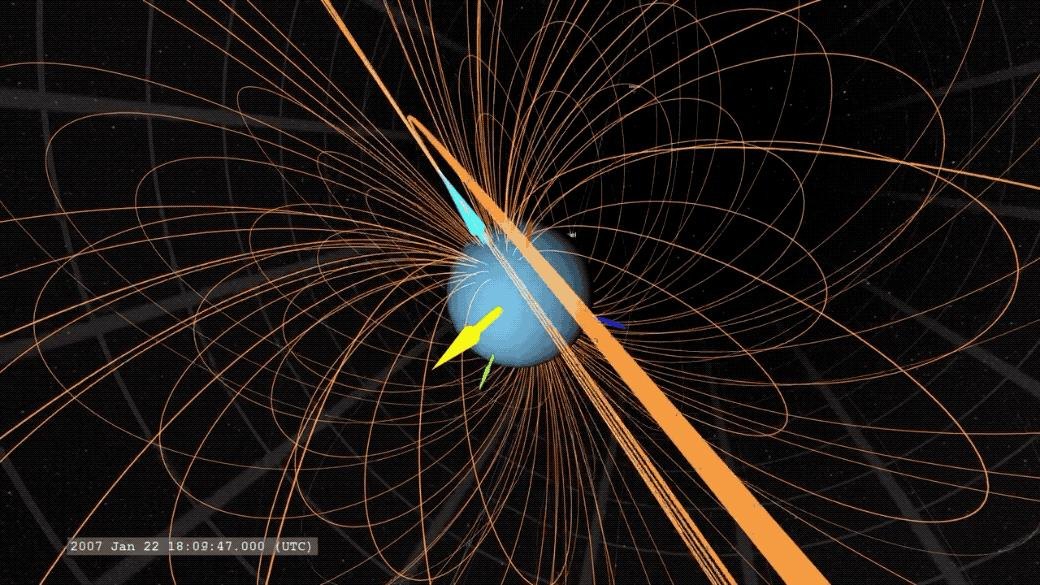
Researchers at the University of Texas at Austin say the odd magnetic fields of Uranus and Neptune may arise from how electrical conductivity changes with depth inside the planets. Their simulations also suggest the fields can shift substantially within decades, according to the Jackson School of Geosciences.
A field that does not line up with the planet
Earth’s magnetic field looks roughly like a bar magnet with a north and a south pole, and that pole pair (the dipole) is tilted about 11 degrees from the planet’s rotational axis. Uranus and Neptune are different. NASA’s Voyager 2 spacecraft found that their fields are far more disordered, and the dipoles are tilted by 59 degrees at Uranus and 47 degrees at Neptune, according to the Jackson School.

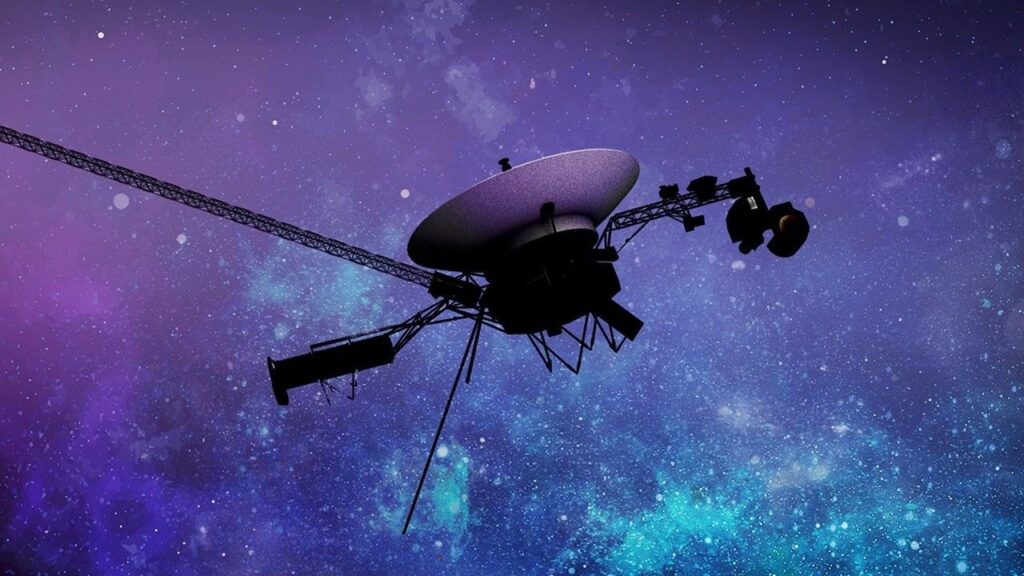
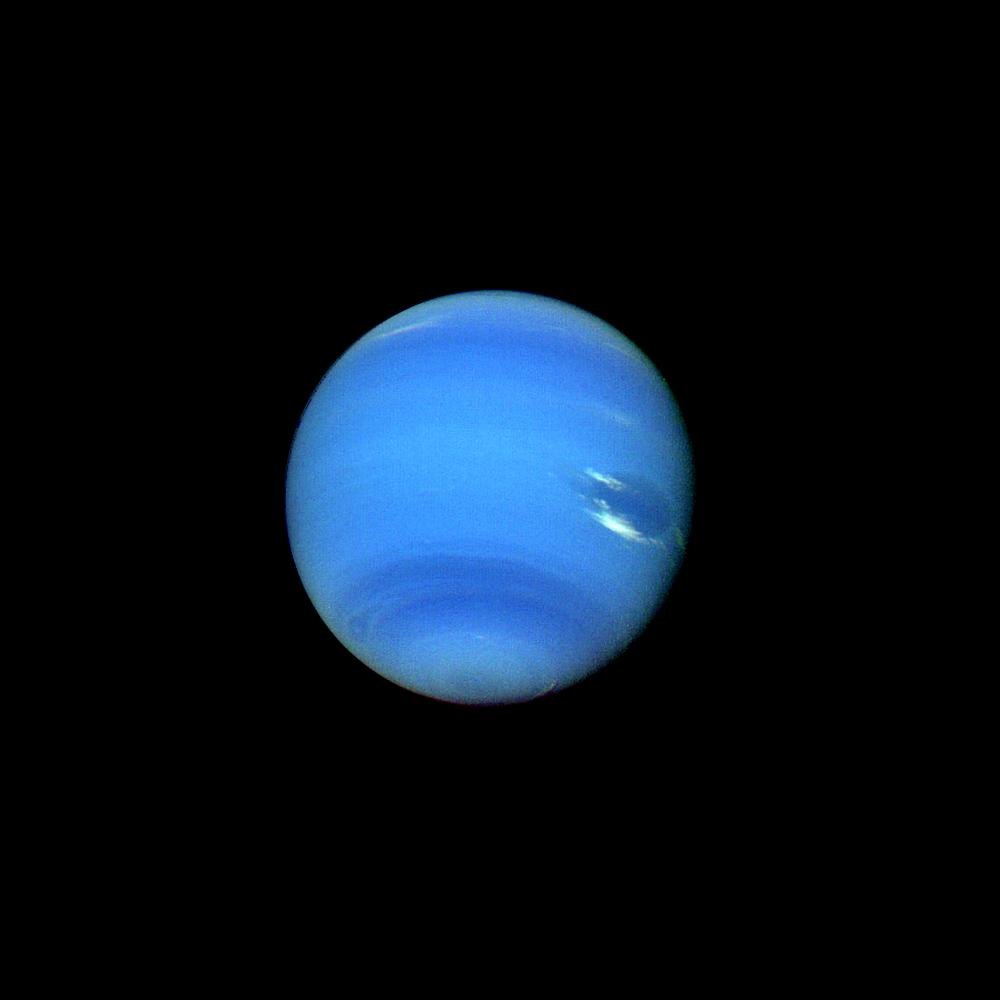
Voyager 2 flew past Uranus on January 24, 1986, and past Neptune on August 25, 1989, according to NASA’s image archive. It remains the only spacecraft to have visited either planet, so the field measurements from those two passes are still the basis for what scientists know. The mission is one of the Voyager probes that are still operating at the edge of the Sun’s influence.
What the simulations changed
Both planets are about four times wider than Earth and are called ice giants. They are thought to contain hydrogen, helium, water, ammonia, methane and rocky material. Lead author Chi Yan, a research associate at the Jackson School, said the size and composition of the planets could produce tilted fields.
The team ran computer simulations that model fluid motion, temperature and magnetic fields together. A planetary dynamo is the process in which moving, electrically conducting fluid generates a magnetic field. Here, the researchers assumed that conductivity increases with depth, rather than staying uniform, and that assumption reproduced fields of the lopsided kind seen at the two planets.
The more surprising result concerns time. Earth’s magnetic tilt drifts only about a degree over 50 years, Yan noted. In the models, the tilt of an ice giant can swing by tens of degrees within decades during some periods. That implies the fields at Uranus and Neptune today could differ considerably from the ones Voyager 2 recorded.
The work, by Yan and colleagues at UCLA, Imperial College London and Northumbria University, is published in Communications Physics (DOI 10.1038/s42005-026-02841-y). Funding came from the University of Texas Institute for Geophysics, NASA and the UK Science and Technology Facilities Council.
Where the test will come from: Auroras seen by Webb
A prediction that fields can swing quickly can be checked, and the team points to the James Webb Space Telescope. Auroras are glowing displays that appear where charged particles follow magnetic field lines into a planet’s atmosphere, so their position traces the field. Researchers are analyzing Webb infrared images of the auroras, which may show whether the dipole has moved. Tom Stallard of Northumbria University led the Webb observing campaign and reviewed the paper.
The next step is to combine three kinds of evidence: the Webb auroral images, the 1980s Voyager 2 measurements and the dynamo simulations, to estimate what the fields look like now. If the auroras sit where the Voyager-era field would put them, the idea of rapid change loses weight. If they have moved by a large angle, that would support it.
The team also says more missions to the ice giants are needed to understand their interiors fully. A magnetic field measured up close by an orbiter would constrain the conductivity assumption far better than aurora images from Earth’s vicinity can. Until then, the 1986 and 1989 flybys remain the only direct readings, taken at one moment in time for each planet.
For planetary scientists, the finding also reframes a long-running puzzle. The tilted fields were once treated as a strange but fixed feature. This work suggests they may be a snapshot of a field that keeps moving.