Voyager’s team to take questions a day after the probe passes one light-day
NASA will mark Voyager 1 passing one light-day from Earth with a worldwide light signal on Nov. 17 and a live JPL discussion with the mission team on Nov. 19.
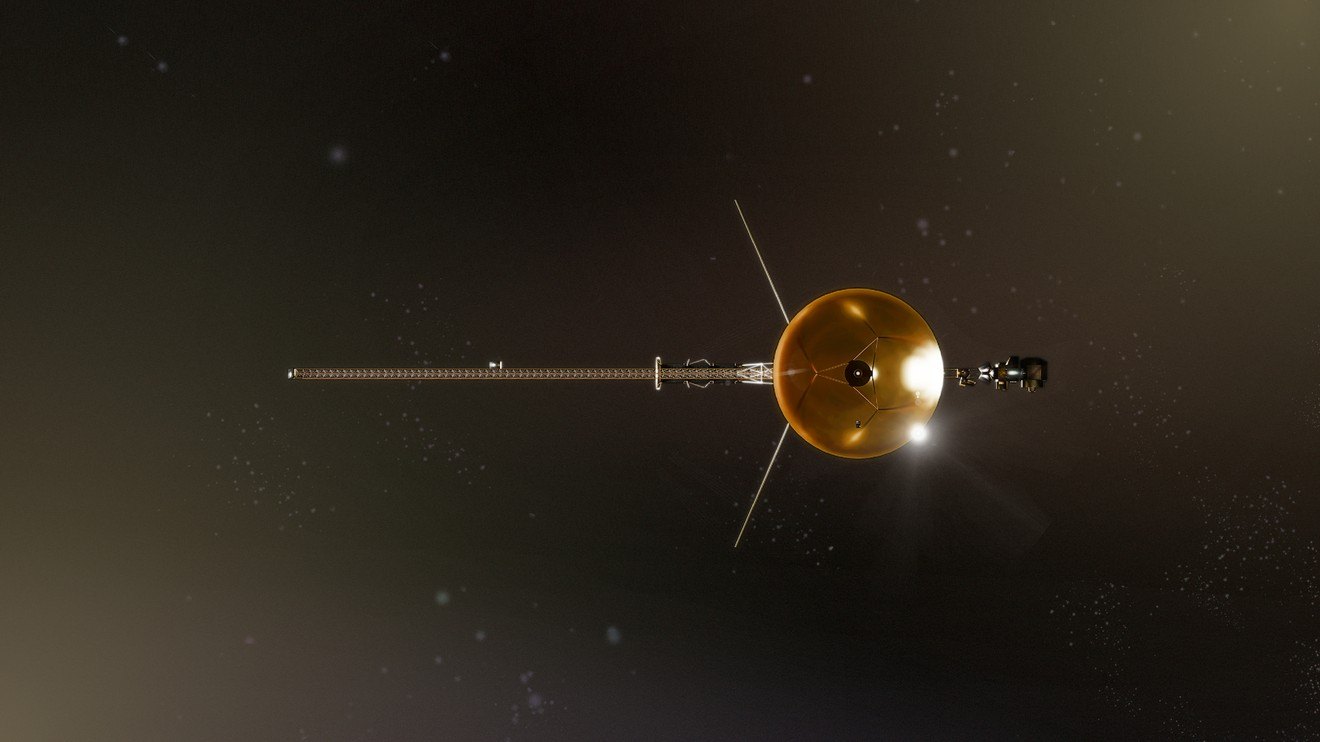
NASA’s Jet Propulsion Laboratory will host a live discussion with the Voyager team on Nov. 19, a day after Voyager 1 passes one light-day from Earth, according to a NASA media advisory. A worldwide light signal comes first, on Nov. 17.
One light-day: A distance measured in time
A light-day is the distance light travels in 24 hours. NASA says Voyager 1 will reach that mark on Wednesday, Nov. 18, more than 16 billion miles (25.9 billion kilometers) from Earth. Launched in 1977, it is the most distant human-made object, and any light from Earth would take a full day to reach it.

Voyager 1 entered interstellar space in 2012. Following a different trajectory, Voyager 2 entered in 2018.
Interstellar space is the region beyond the heliosphere, the protective bubble created by the Sun. NASA says both probes still return unique observations of that environment. The agency notes they were designed to explore the outer planets, using a planetary alignment that occurs once every 176 years.
Two events, two days apart
On Tuesday, Nov. 17, NASA invites people to take part in “Shine Bright for Voyager’s Light-Day”. The idea is a symbolic wave of golden light circling the planet after sunset. NASA built a website that makes a phone or tablet flash “VGR”, Voyager’s call sign, in Morse code. Details are at go.nasa.gov/shinebright, and NASA asks people to share photos or videos tagged @NASA. We covered the mechanics in our earlier report on the Shine Bright campaign.
The second event is new. On Nov. 19 at 12 p.m. EST (9 a.m. PST, 17:00 UTC), JPL in Southern California will host a moderated discussion about the status of Voyager 1 and 2, the science the twin probes still gather, and the challenge of keeping spacecraft running for so long over such distances. A Q&A with media and other audience members follows. NASA says the event will be shown online through NASA Live.
NASA lists five participants:
- Nicky Fox, associate administrator of the Science Mission Directorate, Washington
- Jonathan Lunine, JPL chief scientist and Caltech professor of planetary science
- Suzanne Dodd, Voyager project manager at JPL
- Kareem Badaruddin, Voyager mission manager at JPL
- Jamie Rankin, Voyager deputy project scientist, Princeton University
The session will also include a preview of the upcoming NASA+ Voyager documentary, planned for 2027, the mission’s 50th anniversary. It takes place in JPL’s von Kármán Auditorium, where JPL held Voyager briefings during the probes’ grand tour of the outer planets.
What the day-long delay means for anyone watching
For viewers, the practical point is timing. Voyager 1 crosses the light-day line on Nov. 18, between the two events, so the light signal on Nov. 17 is a send-off rather than a celebration after the fact. Anyone who wants to join needs to act on the evening of the 17th in their own time zone, since the wave of light follows sunset around the globe.
The scale behind the milestone is worth keeping in mind. In the figures NASA gave in our earlier coverage, Voyager 1 was 25.80 billion kilometers from Earth on Oct. 30 and travels at about 35,000 mph. Even at that speed, the probe covers only a small fraction of a light-day in a day, which is why reaching this mark has taken nearly 50 years. The same delay shapes the mission’s daily work: a command sent from Earth takes about a day to arrive, and the reply takes another day to come back.
That is why the engineering questions on Nov. 19 matter as much as the science. NASA’s Deep Space Network, also managed by JPL, is the link to the probes, and the panel is set to cover how the team keeps both craft operating over such distances. Readers who want the background on the edge of the Sun’s bubble can read our explainer on what the Voyager probes found at the heliopause.
The Voyager mission is managed by Caltech in Pasadena, California, with JPL building and operating the spacecraft, and is funded by NASA’s Heliophysics Division in Washington.