Hera’s 10 open questions about Dimorphos, from its crater to its mass
ESA's Hera planetary defence spacecraft reaches the Didymos system this month, with ten open questions about the asteroid DART hit in 2022.
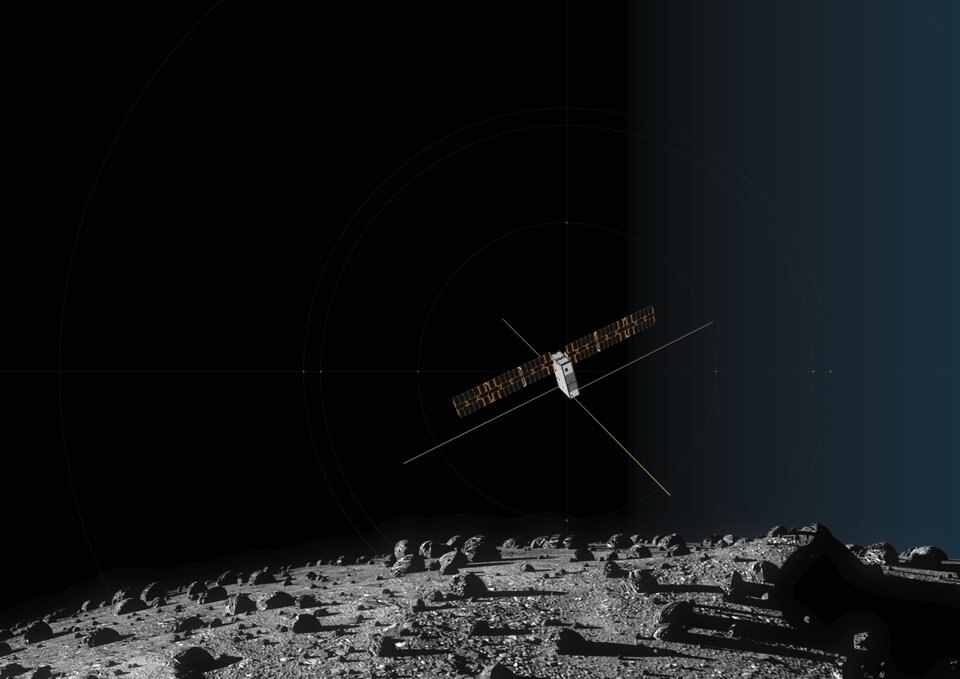
ESA’s Hera spacecraft arrives at the asteroid pair Didymos and Dimorphos this month, and the agency has set out ten mysteries it hopes to settle, starting with what NASA’s DART crash did to the small moonlet in 2022.
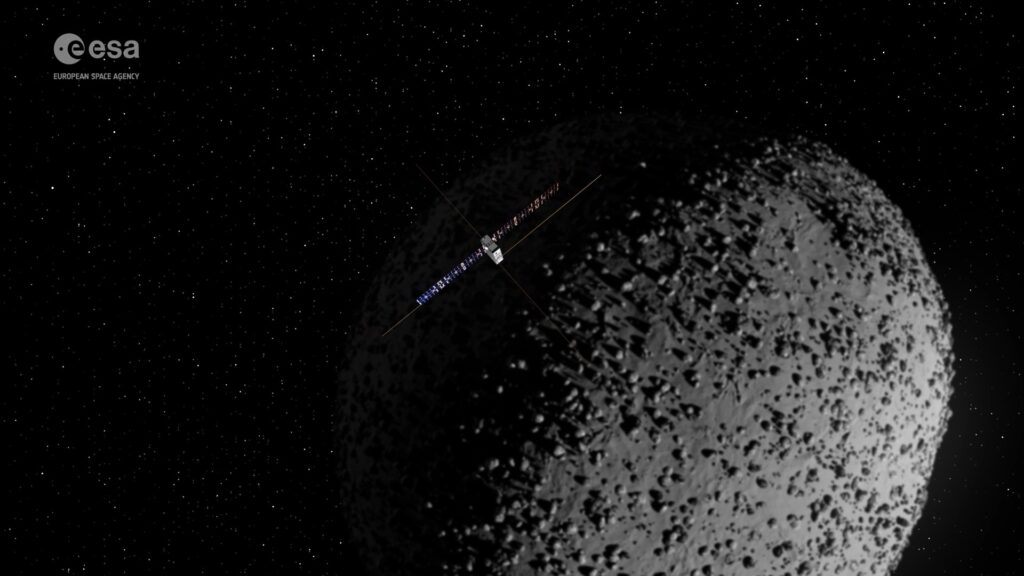
A small-car-sized probe at a historic target
Hera is ESA’s first planetary defence mission. It is heading for Dimorphos, an asteroid 151 m across that circles a larger parent, Didymos, which measures 780 m. On 26 September 2022 NASA’s DART spacecraft struck Dimorphos on purpose, making it the first object in the Solar System to have its orbit changed by humans. Telescopes on Earth saw the impact brighten the pair, ESA said, but nobody has seen what happened to the surface up close. Hera is meant to do that survey, so that deflecting an asteroid by ramming it can become a technique scientists understand well. Its first views of the two bodies were covered in our report on Hera’s first look at Didymos and Dimorphos.
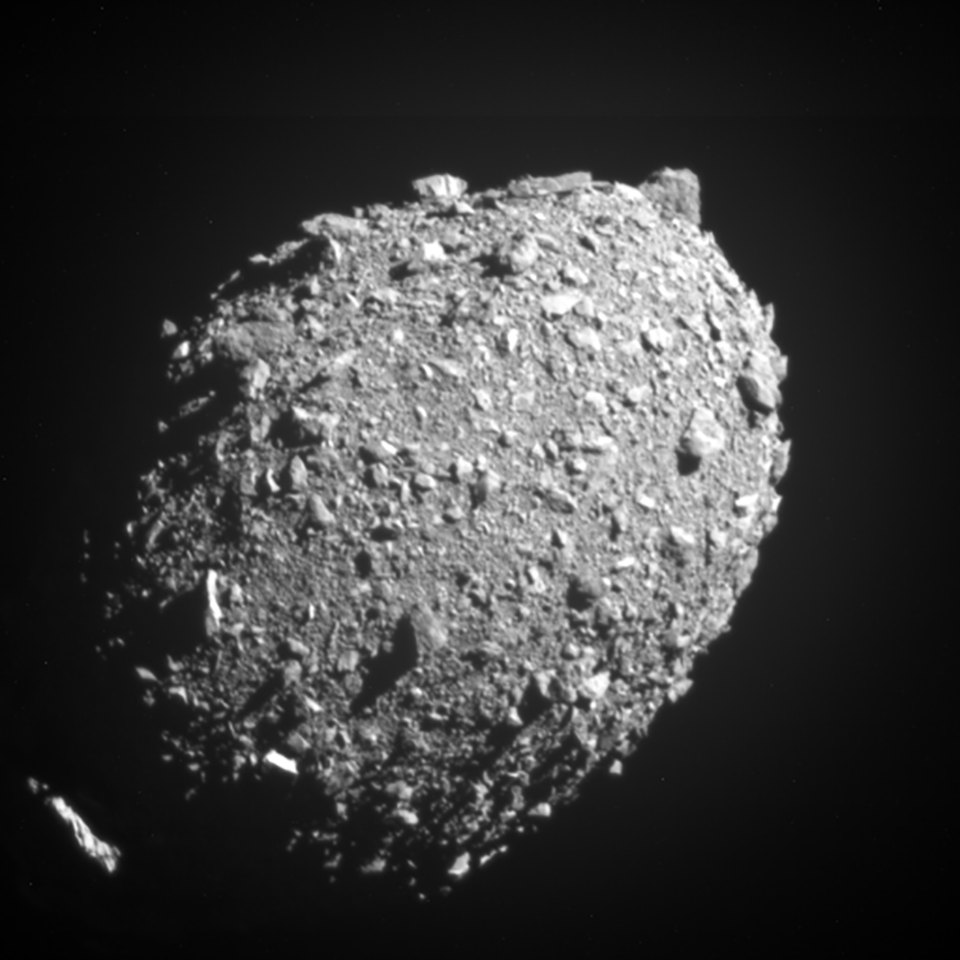
ESA’s longer article lists the questions. The first is whether DART left a crater. According to ESA, about 0.5% of the asteroid’s mass is estimated to have been blasted away, and whether the scar is a neat crater or a reshaped body depends on how well the surface holds together. A second question is whether debris from the impact is still nearby. Models suggest most of it has left, and one study estimates only about 0.002% remains, but Hera has to confirm this quickly for its own safety.
Is Dimorphos wobbling, and what holds it together?
Dimorphos was thought to be tidally locked, meaning it always shows the same face to Didymos, as the Moon does to Earth. The impact may have set it tumbling instead. Brightness measurements hint at this, ESA said, but the amount is unknown, and tumbling would matter for Hera’s autonomous flight near the pair.
Other questions concern origin and strength. The leading idea is that the YORP effect, a slow spin-up caused by sunlight, made Didymos shed material that later gathered into the moonlet. Comparing the two bodies and dating the weathering of Dimorphos’s surface could test that. Because Dimorphos’s gravity is extremely weak, cohesion, the stickiness between grains, may be what keeps it intact. Hera’s Juventas CubeSat is to attempt a landing to see whether the surface can carry a lander.
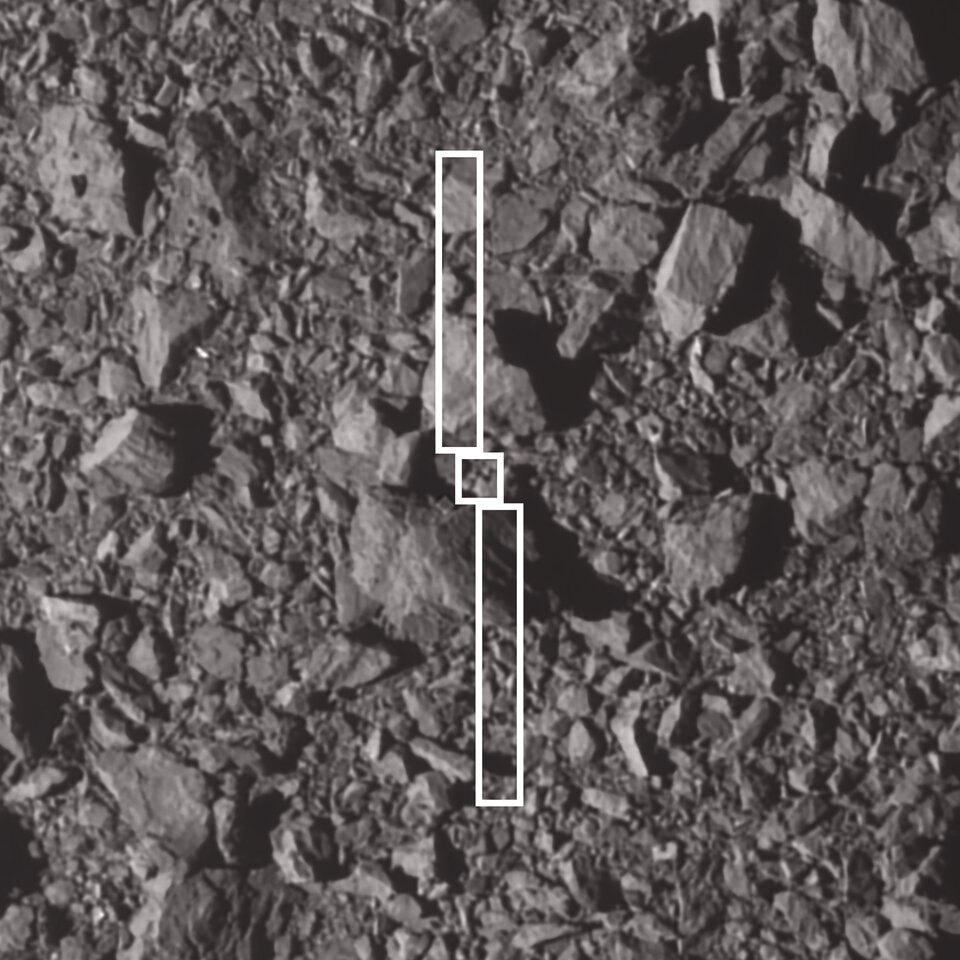
DART’s last images showed boulders but no visible dust, even though dust probably helps bind a surface. ESA lists camera resolution, tiny impact jolts, radiation pressure, electrostatic effects and layers hidden under the boulders as possible explanations. The boulders themselves may be fragments of older bodies, either porous and fragile or tougher than they look.
Radar, mass and the extra push from the impact
The technical heart of the mission is measuring things DART could only hint at. Juventas carries a radar that will probe the interior at a resolution of about 10 m, according to ESA. That could show a solid but porous body, like pumice, or a loose pile of boulders with large gaps. The mass of Dimorphos is also poorly known, with an uncertainty of tens of percent. Hera will track how the asteroids and surface landmarks move and read tiny Doppler shifts in its radio signal, a change in frequency caused by motion, to narrow that down.
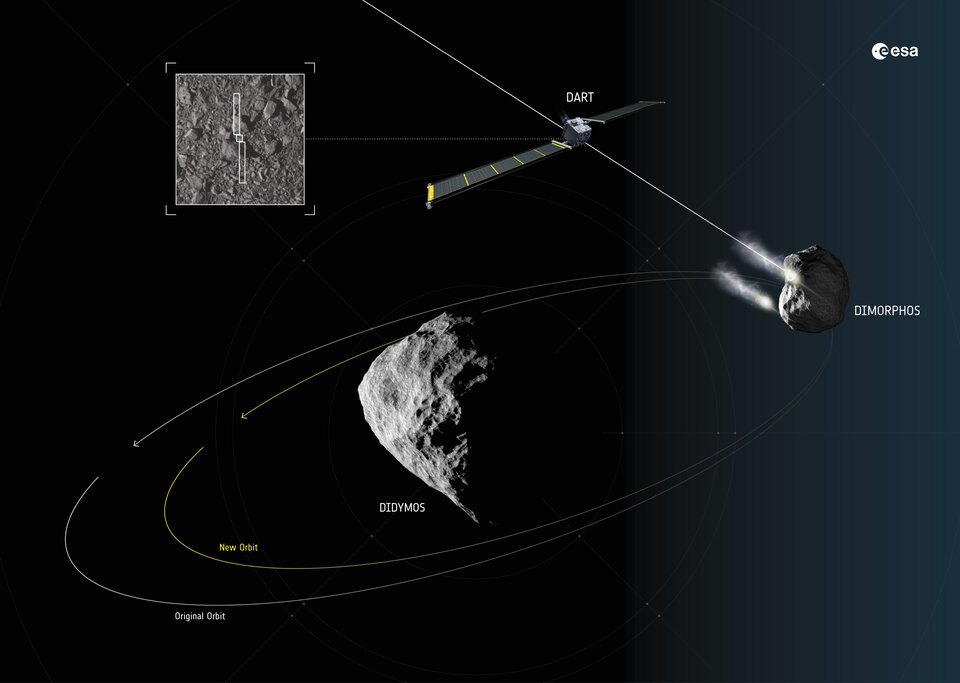
That mass figure feeds directly into the tenth question, the so-called beta factor. DART’s impact lengthened Dimorphos’s orbit around Didymos by 33 minutes, which was more than expected. ESA attributes the extra effect to ejected debris recoiling like a rocket thrust, and its current estimate is that the impact delivered about 2.1 times DART’s own momentum, the product of mass and speed. Without a firm mass for Dimorphos, that multiplier cannot be pinned down. A precise value tells planners how hard to hit a future threatening asteroid, so the survey turns a single experiment into a usable method.
ESA’s text gives no exact arrival day, only that Hera reaches its target during November. Teams will check the crater and debris questions first, since those bear on safe operations.