Nearby Type Ia supernova in NGC 1433 is still brightening, and telescopes are lining up
A white dwarf exploded in NGC 1433, about 50 million light-years away, and NSF NOIRLab is coordinating telescopes to follow it before it peaks between 18 and 23 November.
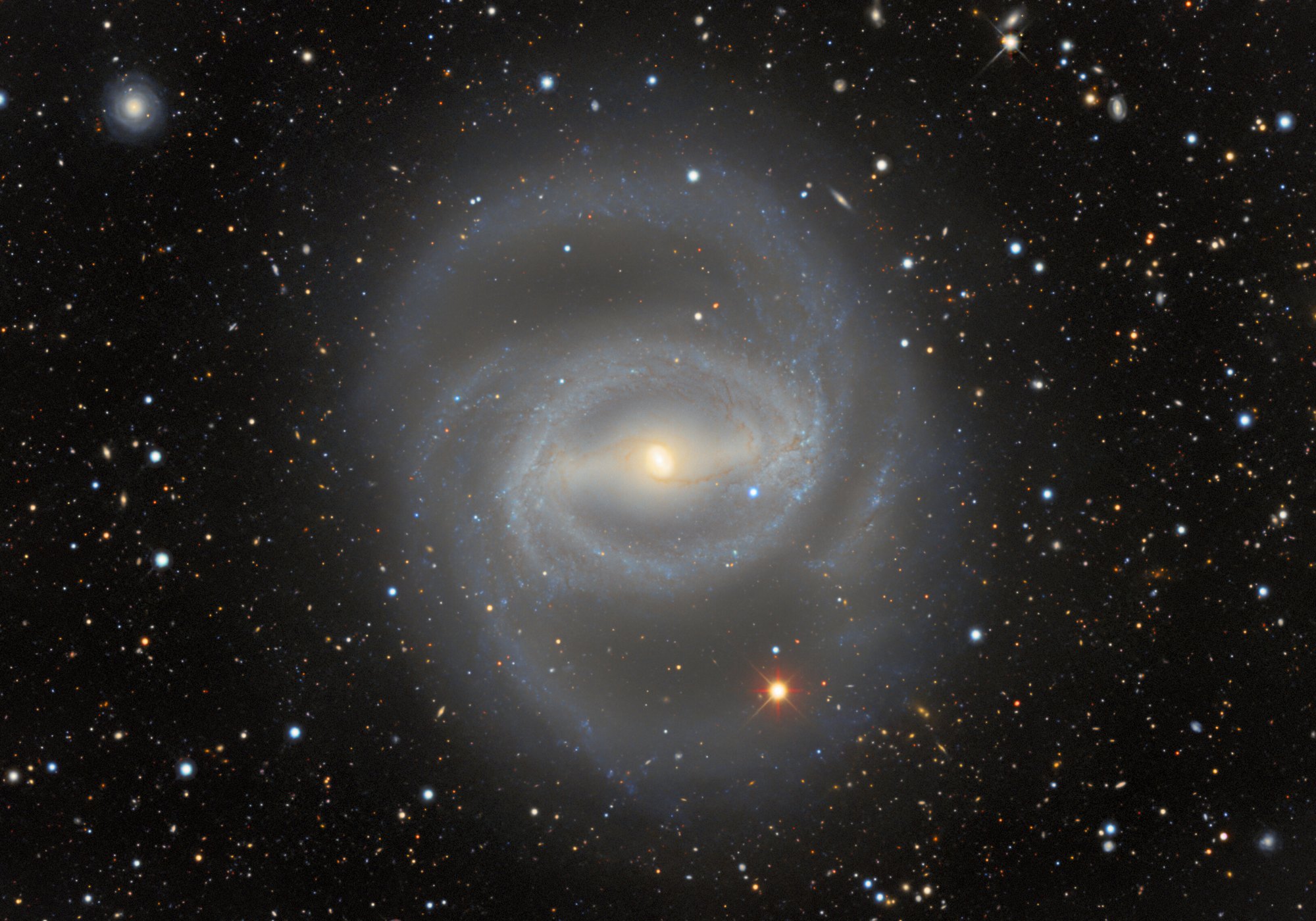
NSF NOIRLab has released new images of supernova SN 2026ahvu, a stellar explosion in the galaxy NGC 1433 about 50 million light-years away. According to the NOIRLab release, it is still brightening and expected to peak between 18 and 23 November.
A white dwarf explosion caught on the way up
The Asteroid Terrestrial-impact Last Alert System (ATLAS), a survey that scans the sky for moving and changing objects, discovered the object on 2 November 2026 at about 04:20 UTC. It was first logged as AT 2026ahvu. A spectrum taken the next day with the Keck II telescope’s DEIMOS instrument showed it was a young Type Ia supernova, and it received its supernova name.
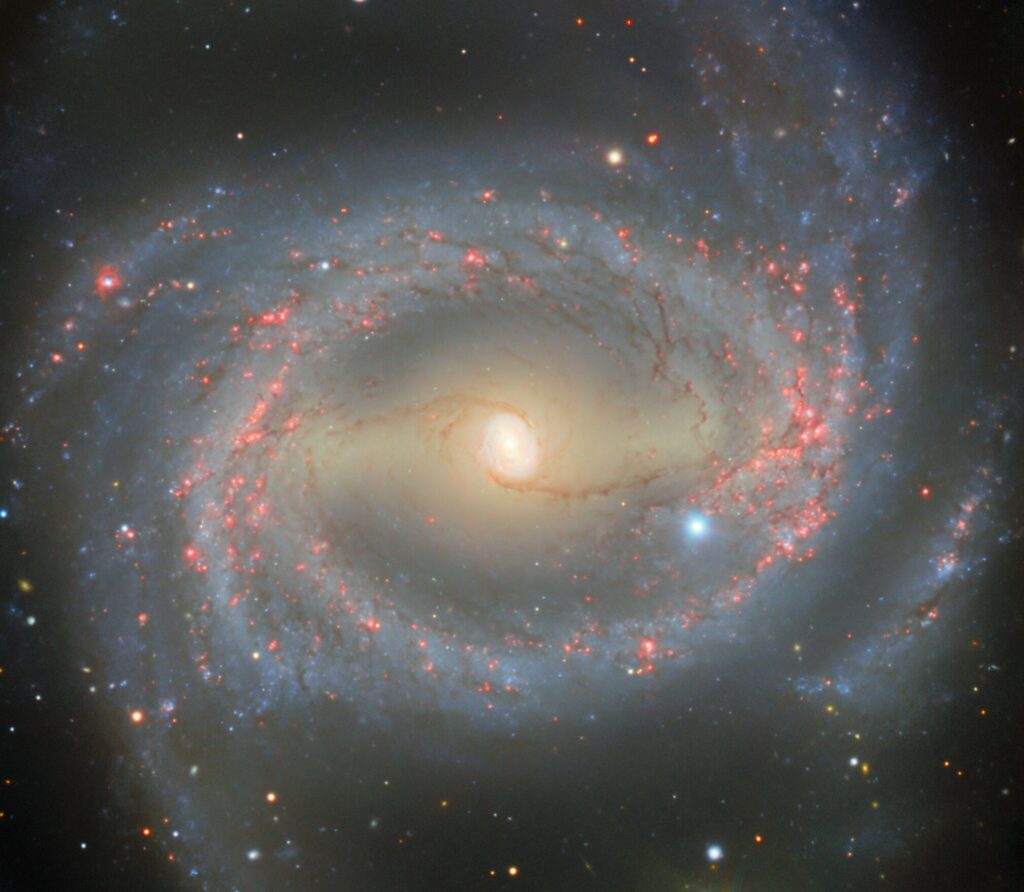
A Type Ia supernova is the thermonuclear explosion of a white dwarf, the dense leftover core of a star like our Sun, that has pulled in matter from a close companion star. NGC 1433 is a barred spiral galaxy in the southern constellation Horologium. The supernova sits to the right of and slightly below the galaxy’s center in the new pictures.
Astronomers rate brightness in magnitudes, a scale on which smaller numbers mean brighter objects. At discovery the supernova was around magnitude 17. Within days, observations reported it at 13.5. NOIRLab expects a maximum of magnitude 10.5 to 12.1 and notes that this prediction may be refined as data arrive. The peak can also occur at different times in different color filters.
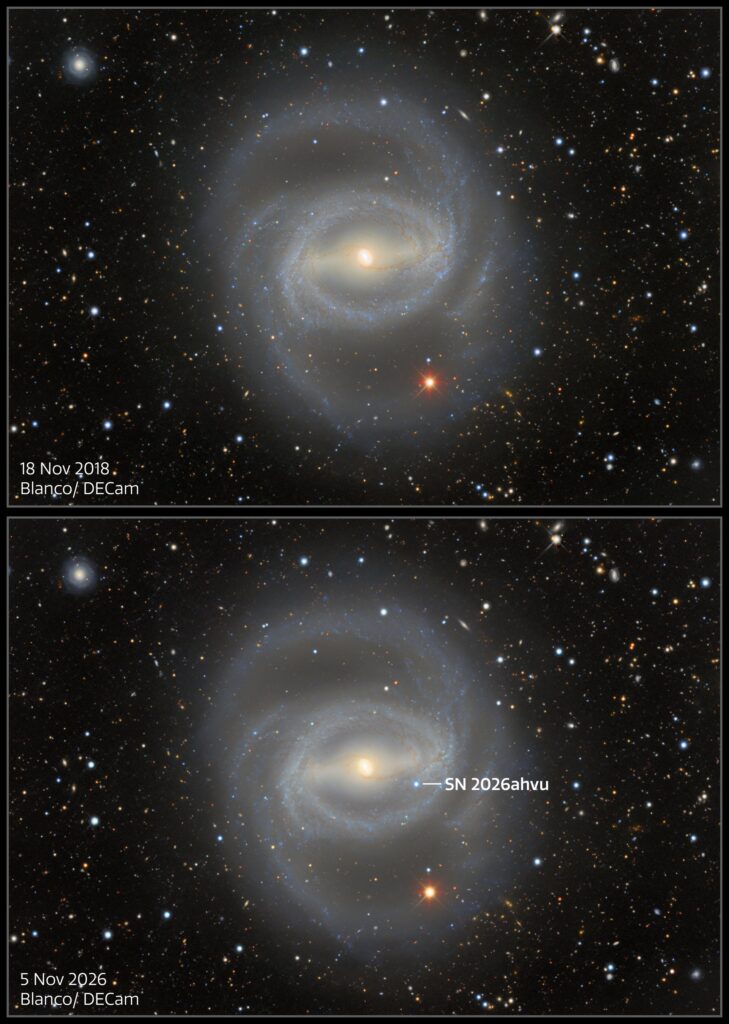
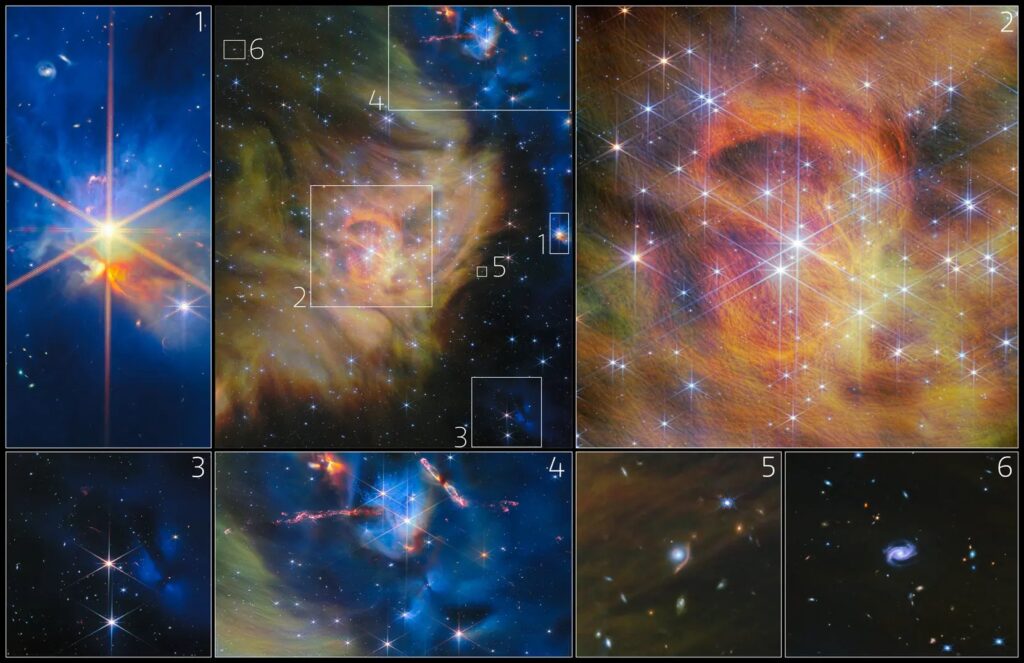
The pictures come from two facilities. The Dark Energy Camera (DECam) is mounted on the Víctor M. Blanco 4-meter Telescope at Cerro Tololo Inter-American Observatory in Chile. Gemini South, in Chile, is half of the International Gemini Observatory. NOIRLab says Gemini gives the sharper view, while DECam also holds images of NGC 1433 from the Dark Energy Survey, taken between 2013 and 2019 before the explosion. Comparing the two shows how the supernova’s surroundings changed.
What the follow-up is meant to reveal
Astronomers use Type Ia supernovae to measure cosmic distances, because their true brightness is well known. Comparing it with how bright one looks from Earth gives its distance. Yet NOIRLab says it is still unclear what kinds of star systems produce them and exactly how the explosion ignites.
The earliest hours and days carry the best clues. They can help separate competing explosion scenarios and show whether the blast hit a companion star or surrounding material, evidence that fades quickly as the debris expands. NOIRLab is organizing repeated observations with three of its instruments: the Blanco telescope with DECam, Gemini, and the Southern Astrophysical Research (SOAR) Telescope, which sits at Cerro Pachón, Chile. Imaging tracks changes in brightness and color, and spectroscopy shows what the ejected material is made of and how fast it moves.
NOIRLab has also invited other observatories, on the ground and in space, to add observations at other wavelengths and from other time zones, since a single site can miss changes. The Gemini data come from Director’s Discretionary Program GS-2026B-DD-104 and are public in the Gemini Observatory Archive.
Closest since the Pinwheel Galaxy’s 2011 blast
NOIRLab calls this one of the nearest Type Ia supernovae seen since SN 2011fe in the Pinwheel Galaxy (Messier 101). That event is a useful yardstick. According to its record, the Palomar Transient Factory survey found SN 2011fe on 24 August 2011 in images from the two previous nights, when it was about a million times too faint to see with the naked eye. It lay about 21 million light-years away and reached a peak magnitude of 9.9 around 13 September 2011.
SN 2026ahvu is more than twice as far, so it will probably peak somewhat fainter than SN 2011fe, though NOIRLab’s range of 10.5 to 12.1 leaves room for some overlap with it. The comparison also shows what has changed in 15 years. The Dark Energy Survey’s archive lets astronomers look at the galaxy as it was before the star exploded, and a global network of facilities can be pointed at the supernova within days of discovery. The release does not say whether a companion star or leftover material will be detected; that is what the coming weeks of data should show.
Distance matters here too. The release adopts about 50 million light-years for NGC 1433 but notes that published estimates differ. Because Type Ia peaks have a known intrinsic brightness, measuring the maximum of SN 2026ahvu will sharpen the distance to its host galaxy.
Within reach of amateur telescopes in the south
According to NOIRLab, backyard telescopes of small to medium size can already pick up the supernova when conditions are good, with the best odds for observers in the southern hemisphere, where NGC 1433 climbs high in the sky. It shows up as a faint point of light. Taking a picture can reveal it with smaller instruments than looking by eye requires. Its position is right ascension 03h 41m 55.511s, declination -47° 13′ 39.39″ (J2000), which makes it hard or impossible to see from far northern latitudes. Visibility also depends on telescope aperture, sky darkness and atmospheric conditions.