Antarctic ozone hole is 7th largest on record, yet the layer is still healing
NASA and NOAA say a strong polar vortex made the 2026 ozone hole the seventh largest in 48 years, but it was shallow and the ozone layer is still on course to recover.
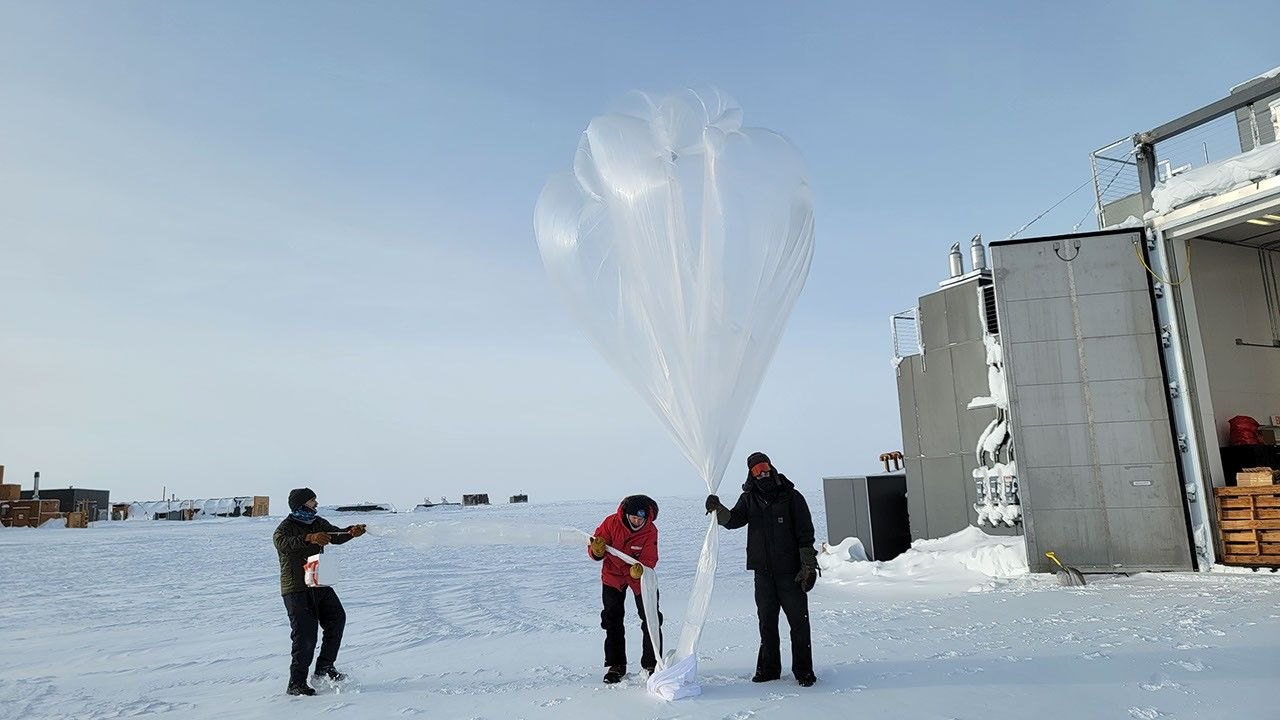
The 2026 Antarctic ozone hole is the seventh largest in 48 years of records, NASA and NOAA reported. A very strong polar vortex enlarged it, but it was shallow, and the agencies say the ozone layer is still on track to recover.
A big hole, but not a deep one
The ozone layer is a band of the stratosphere, high above the weather, that absorbs much of the Sun’s harmful ultraviolet radiation. Scientists call the “hole” the area over Antarctica where the total amount of ozone falls below 220 Dobson units, the standard unit for measuring how much ozone sits in a column of air.
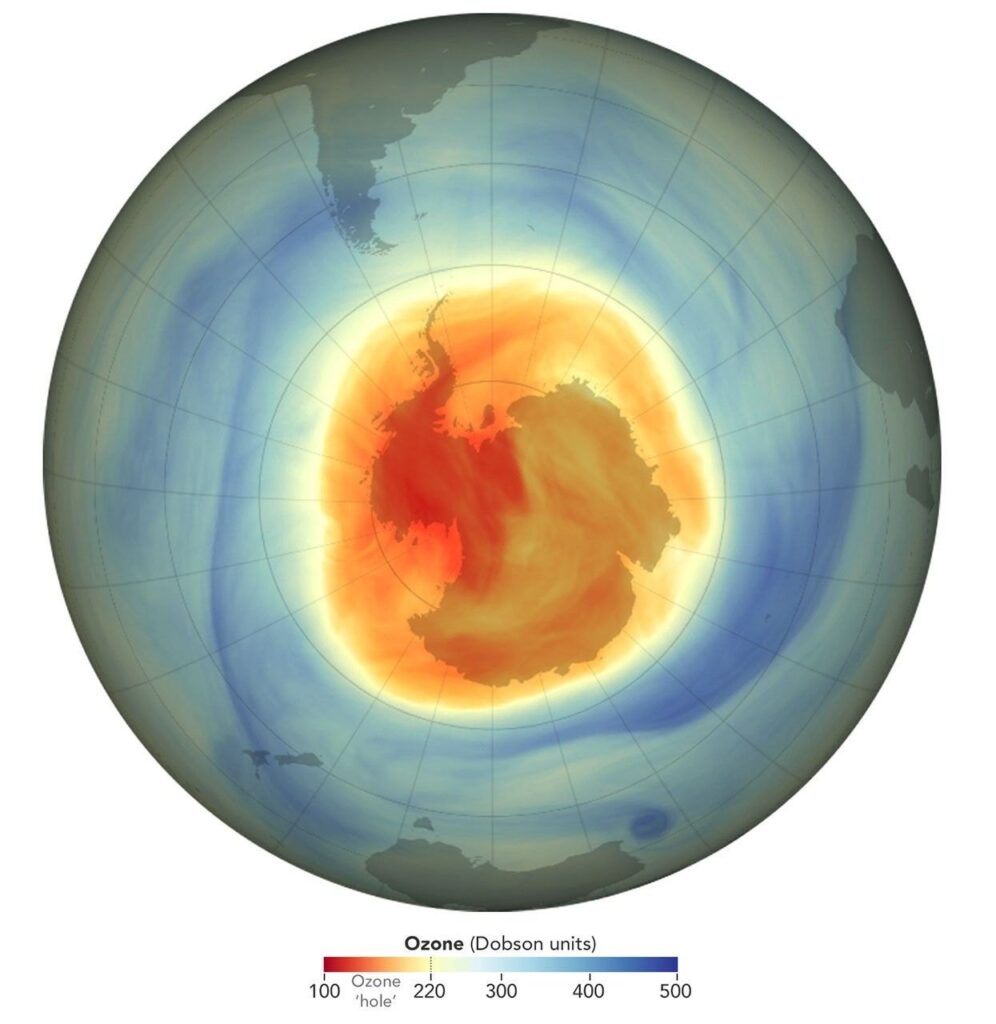
From Sept. 7 to Oct. 13, the peak depletion season, the hole averaged about 9.6 million square miles (25 million square kilometers). Its largest single-day extent came on Sept. 18, at 10.5 million square miles (27.1 million square kilometers). The largest hole since monitoring began was in September 2000.
Size is only half the picture. Balloon-borne instruments at the South Pole Baseline Atmospheric Observatory found that ozone directly overhead bottomed out at 105 Dobson units on Oct. 17. The lowest South Pole value ever recorded is 92, in October 2006. So this year’s hole covered a lot of ground without being as thoroughly emptied as the worst ones.
How a quiet atmosphere built a larger vortex
The polar vortex is a ring of fast winds that circles Antarctica in winter and traps very cold air inside it. NASA’s Ozone Watch explains why that matters: in the polar darkness, clouds form in the cold air, and reactions on their surfaces convert chlorine stored in the stratosphere into a form that attacks ozone once sunlight returns in spring. Bromine adds to the loss.
Paul Newman, a senior scientist at the University of Maryland, Baltimore County, and long-time leader of NASA’s ozone research team, said the hole grew “to proportions we haven’t seen in a decade” because of an unusually powerful vortex. Amy Butler of the NOAA Chemical Sciences Laboratory pointed to the weather below: huge atmospheric waves usually push upward from the lower atmosphere and disturb the vortex, but in August and September they were feeble. As a result the strongest vortex winds stayed several degrees of latitude farther from the pole, leaving a bigger area where conditions favor ozone loss.
The data came from several sources. NOAA’s balloon and ground measurements were combined with satellite records, which have tracked the ozone layer since 1979. Aura, NOAA-20, NOAA-21 and the jointly operated Suomi National Polar-orbiting Partnership satellite all supplied observations.
What the numbers say about recovery, and what they cannot
A large hole in one year does not reverse the long trend, and the agencies point to evidence that it is not doing so. Newman noted that the hole has been forming later in the season in recent years, which he reads as a sign the layer is healing. He also said the 2026 hole could have been 1 to 2 million square miles larger, about 3.5 million square kilometers, if ozone-depleting substances were as common today as at their peak in 2000.
Stephen Montzka of the NOAA Global Monitoring Laboratory said chlorine in the Antarctic stratosphere from these substances has fallen by about a third from its peak. The reason is the Montreal Protocol of 1987, under which countries agreed to replace such chemicals. They were once common in refrigerators, air conditioners and building insulation, and they stay in the air, or seep slowly out of discarded products and landfills, for decades.
That lingering explains why recovery is slow and why weather can still swing a single year. NASA’s Ozone Watch notes that ultraviolet light breaks these compounds apart in the stratosphere, and that one chlorine atom can then destroy thousands of ozone molecules in a chain of reactions. So even a reduced chlorine load can do a lot of damage when the vortex is large and cold, as it was this year. The open question is how much year-to-year variation will keep masking the downward trend. Scientists put full recovery of the hole in the 2070s.
The agencies point readers to NASA’s Ozone Watch and NOAA’s South Pole Ozone website for the current state of the layer over Antarctica. Ozone near the ground is a separate matter: NASA stresses that ground-level ozone is an air pollutant, distinct from the protective layer high above.