Europe’s second MetOp-SG weather satellite is woken up for a year-end launch
After 12 years of development and a sail-assisted voyage to French Guiana, ESA's MetOp-SG-B1 is being switched on for its final checks before an Ariane 6 launch planned toward the end of the year.
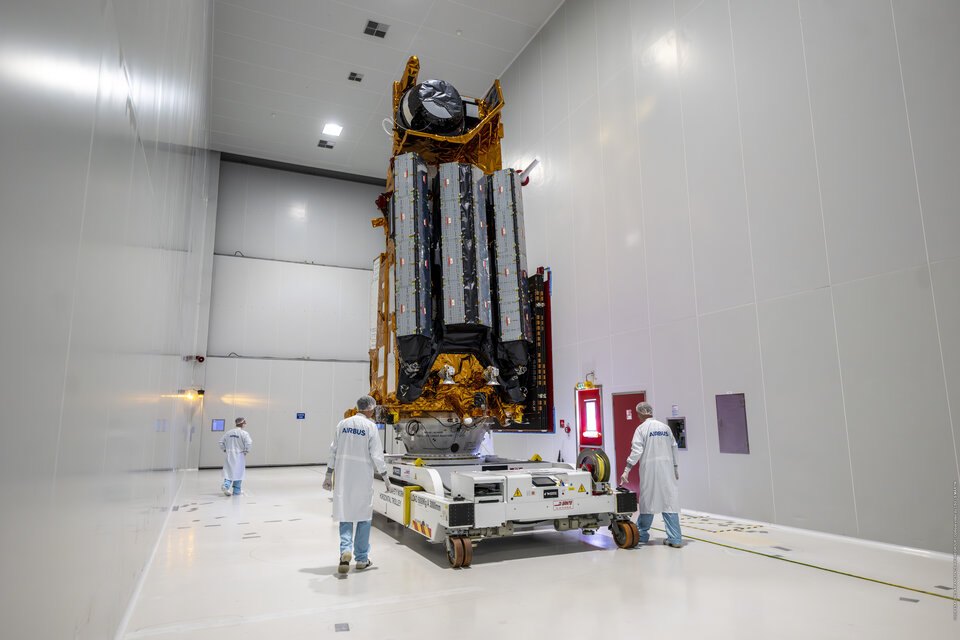
The MetOp-SG-B1 weather satellite has been lifted out of its transport container in a cleanroom at Europe’s Spaceport in French Guiana, ESA said. Teams are now switching it on ahead of a launch planned toward the end of the year.
From a sail-assisted ship to a cleanroom
MetOp Second Generation-B1 is the second satellite of Europe’s new polar-orbiting weather fleet, which circles Earth over the poles and so can scan the whole planet. It spent more than 12 years in development. It left Bordeaux, France, on 6 October aboard the sail-assisted vessel Canopée and reached Kourou on 16 October. ESA says the ship’s sail system cuts fuel use and carbon dioxide emissions.
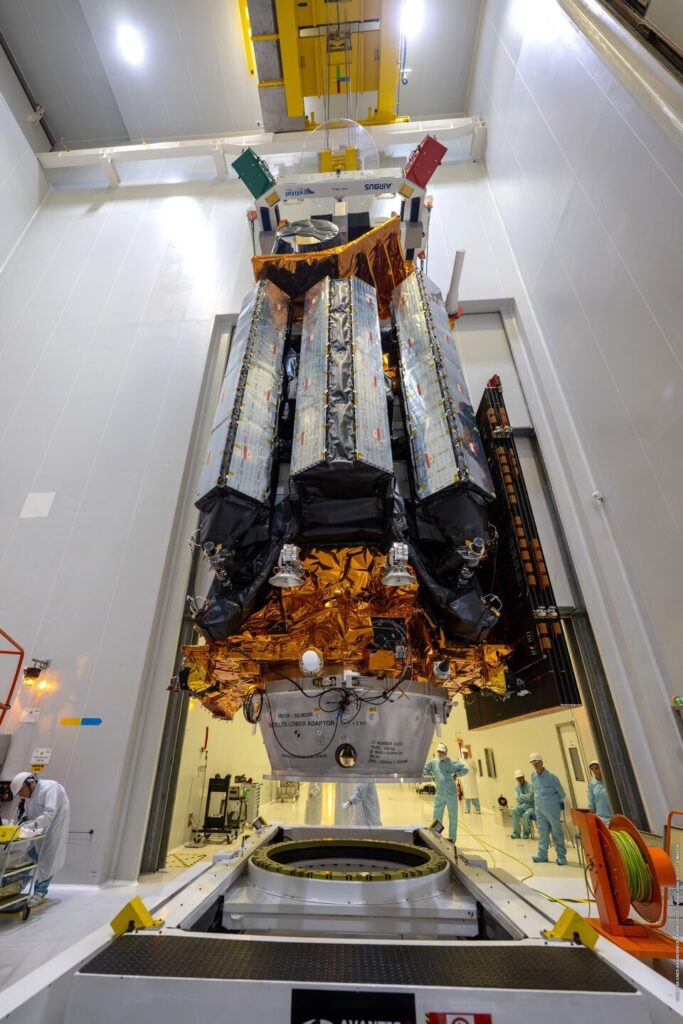
On arrival the satellite stayed in its transport container, in storage, until the launch campaign began. The container kept it dry, filled with nitrogen to keep components clean, at a steady 22°C. Now it has been taken out and placed on a dolly, a wheeled platform for moving it around the cleanroom.
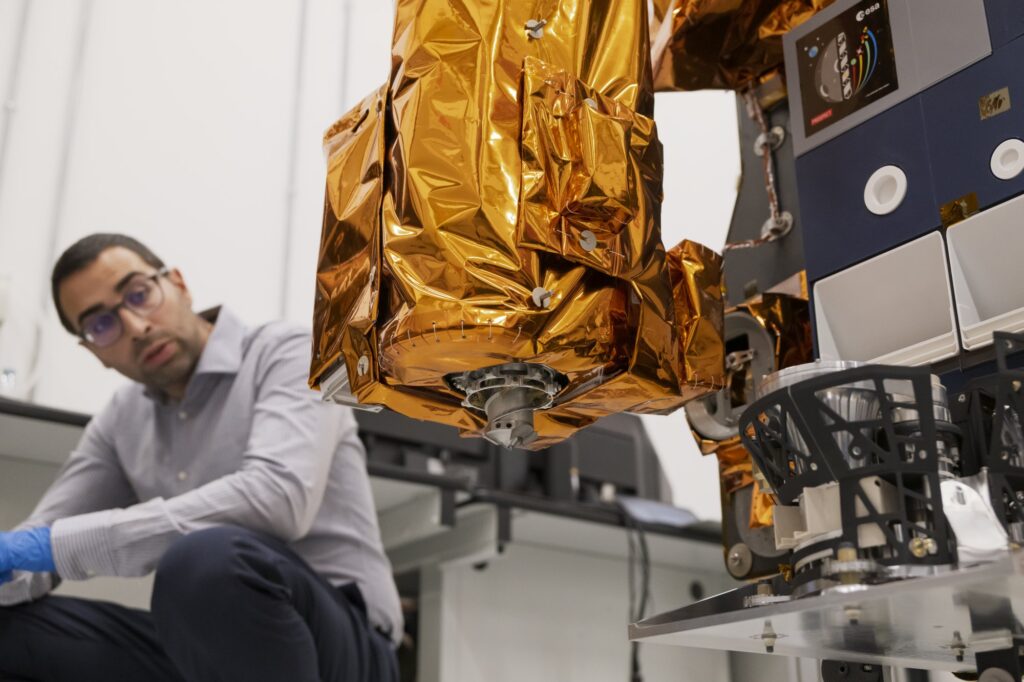
ESA’s Enrico Corpaccioli called the moment “exciting” for the team and described a “beautiful satellite” that everyone is looking forward to switching on.
The weeks before liftoff
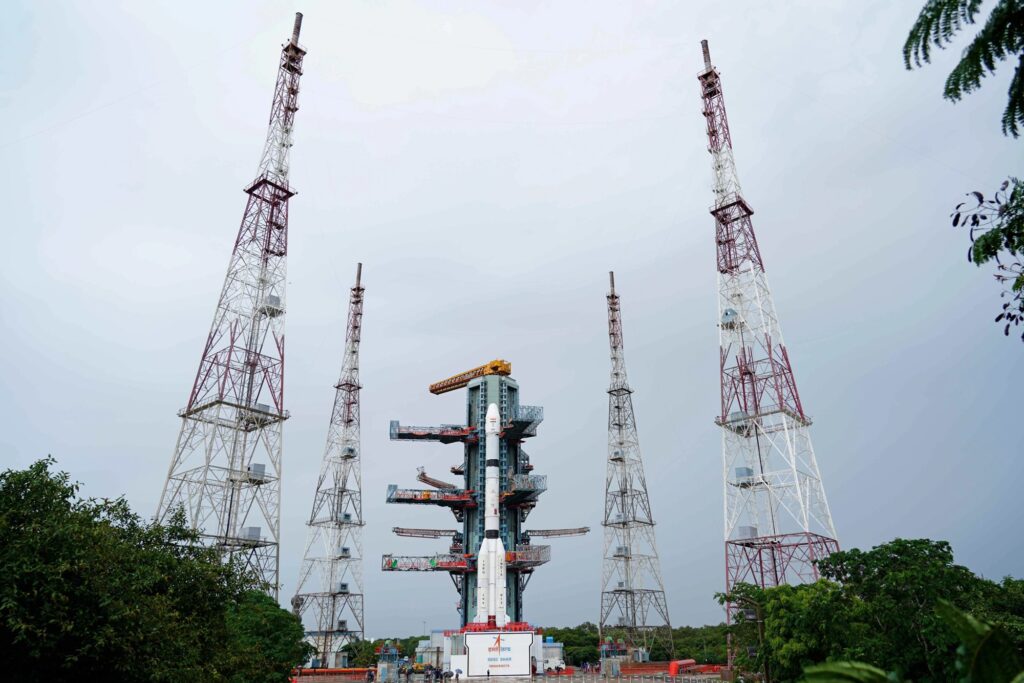
ESA lists the remaining steps: switching on the satellite, final checks and fueling. The satellite will then be encapsulated, meaning sealed inside the protective nose cone (the fairing) of its Ariane 6 rocket, and moved to the launch pad. Liftoff is planned toward the end of the year; ESA gives no exact date. Dates for European launches are listed on our rocket launch schedule.
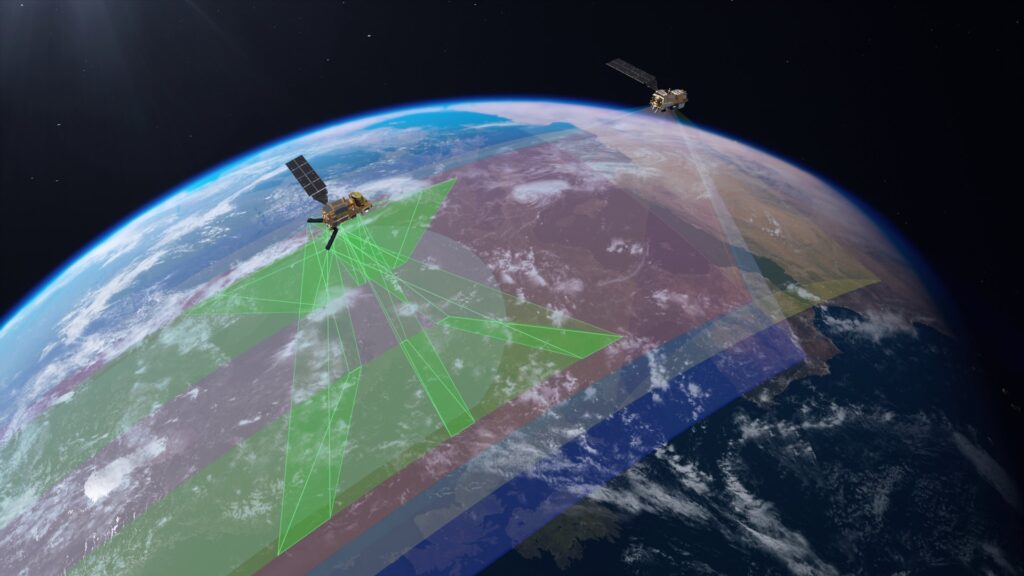
Once in orbit, MetOp-SG-B1 will join MetOp-SG-A1, launched in August 2025. The two carry complementary sets of instruments measuring temperature, precipitation, clouds and winds, data used in weather forecasting and climate research.
A fleet built to last two decades
The pairing is the heart of the design. ESA’s MetOp Second Generation page says the full program has six satellites, arranged as three successive pairs of A-type and B-type spacecraft, and counts about 10 different sensors across them. Each satellite is designed for a mission life of 21 years. The aim stated in the source is a data stream running for more than 20 years, which only works if replacements are ready before the older satellites fail.
The track record so far is short but clean. ESA’s page says A1 launched on 13 August 2025 from Kourou on an Ariane 6, and it orbits at 800 km altitude. B1 therefore follows its sibling by roughly 15 months if it flies at year-end as planned. That gap matters because the two satellite types do different jobs: the A-type page names instruments such as IASI-NG, METimage, 3MI and a microwave sounder, and the B-type is meant to complete the picture. ESA’s article does not list B1’s instruments.
The same launch site and rocket also carry other European Earth observation work. Our recent report on Sentinel-6B entering operational service shows the long-record approach in another field: keep measurements continuous for decades by flying overlapping satellites.
For now the milestone is modest but necessary. A satellite that has sat dormant for weeks must prove every system still works after the sea voyage, and the checks in the coming weeks decide whether the year-end target holds.