Webb finds brown dwarfs only twice Jupiter’s mass, the lightest known
A huge Webb mosaic of the star-forming region IC 348 turned up brown dwarfs with only twice Jupiter's mass, a challenge to models of how stars form.
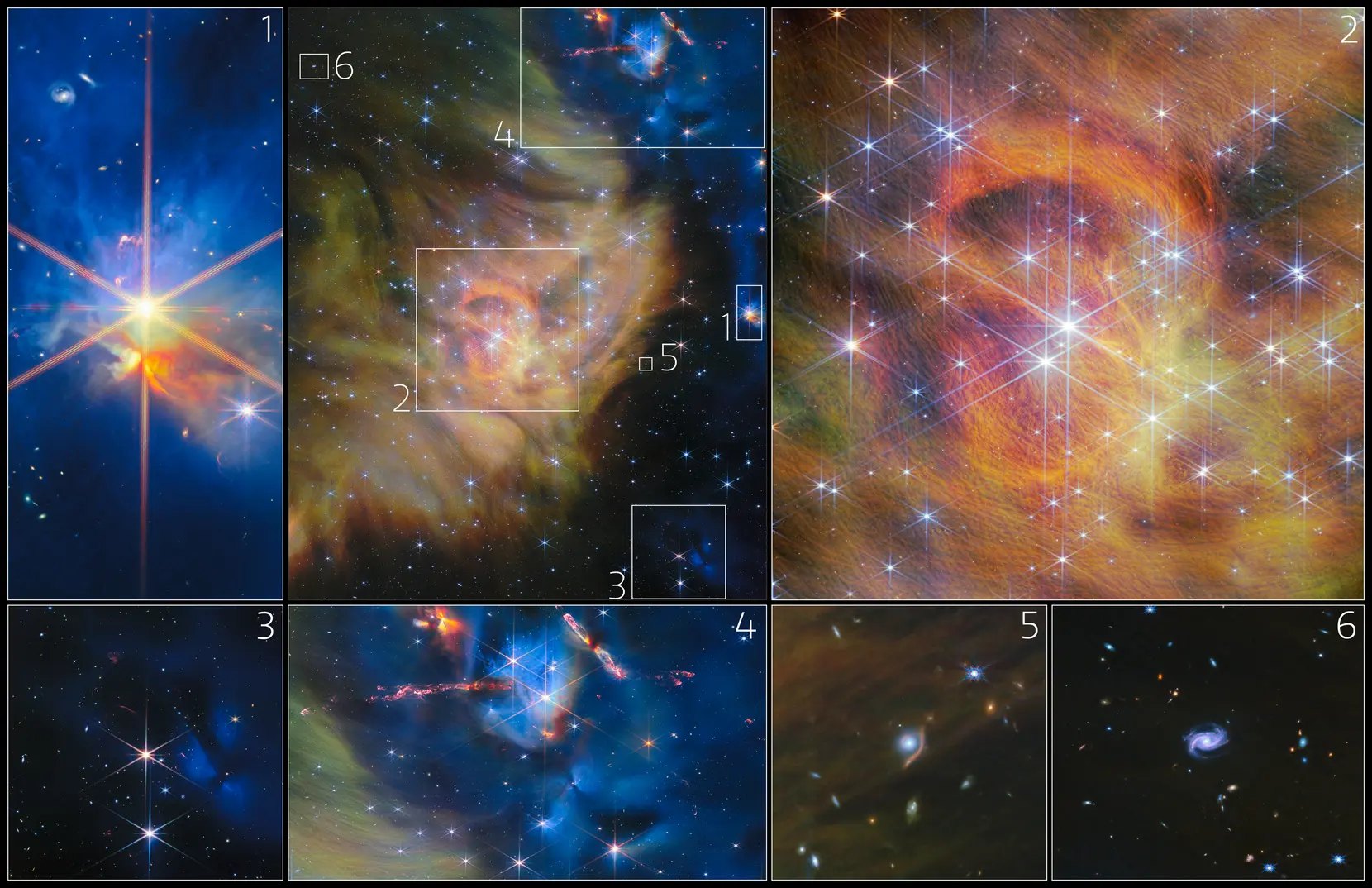
Astronomers using the James Webb Space Telescope have found brown dwarfs, failed stars too light to shine like the Sun, with only twice the mass of Jupiter in the nearby region IC 348, ESA reported. They are the lightest known.
A failed star the mass of a planet
Brown dwarfs form the way stars do, when a cold cloud of gas collapses. But their cores never get hot enough to fuse hydrogen into helium, the process that powers true stars. The smallest real stars weigh around 8% of the Sun’s mass, and brown dwarfs fall below that line. Many briefly burn deuterium, a heavy form of hydrogen, early in life.
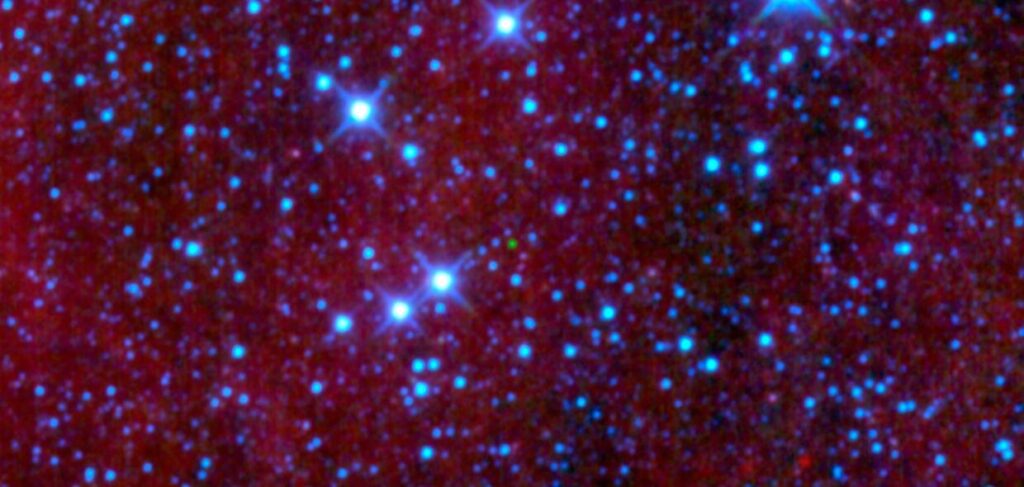
The open question is how small a brown dwarf can get. The same team first used Webb on IC 348 in 2022 and found examples with three to four times Jupiter’s mass. This time they went deeper and found some with only twice Jupiter’s mass, which is 0.19% of the Sun’s mass, according to ESA. IC 348 lies about 1,000 light-years away in the constellation Perseus. ESA says these objects pose a challenge to models of how stars form.
The work came in two steps. In 2024, Webb’s NIRCam (Near-Infrared Camera) imaged the region and captured the warm glow of young brown dwarfs and newborn stars. The astronomers picked candidates by their colors and brightness. In 2025 they followed up with NIRSpec (Near-Infrared Spectrograph), which splits light into a spectrum, to estimate the masses. The data come from Webb program 4866, led by K. Luhman and C. Alves de Oliveira.
A disc and a chemical fingerprint
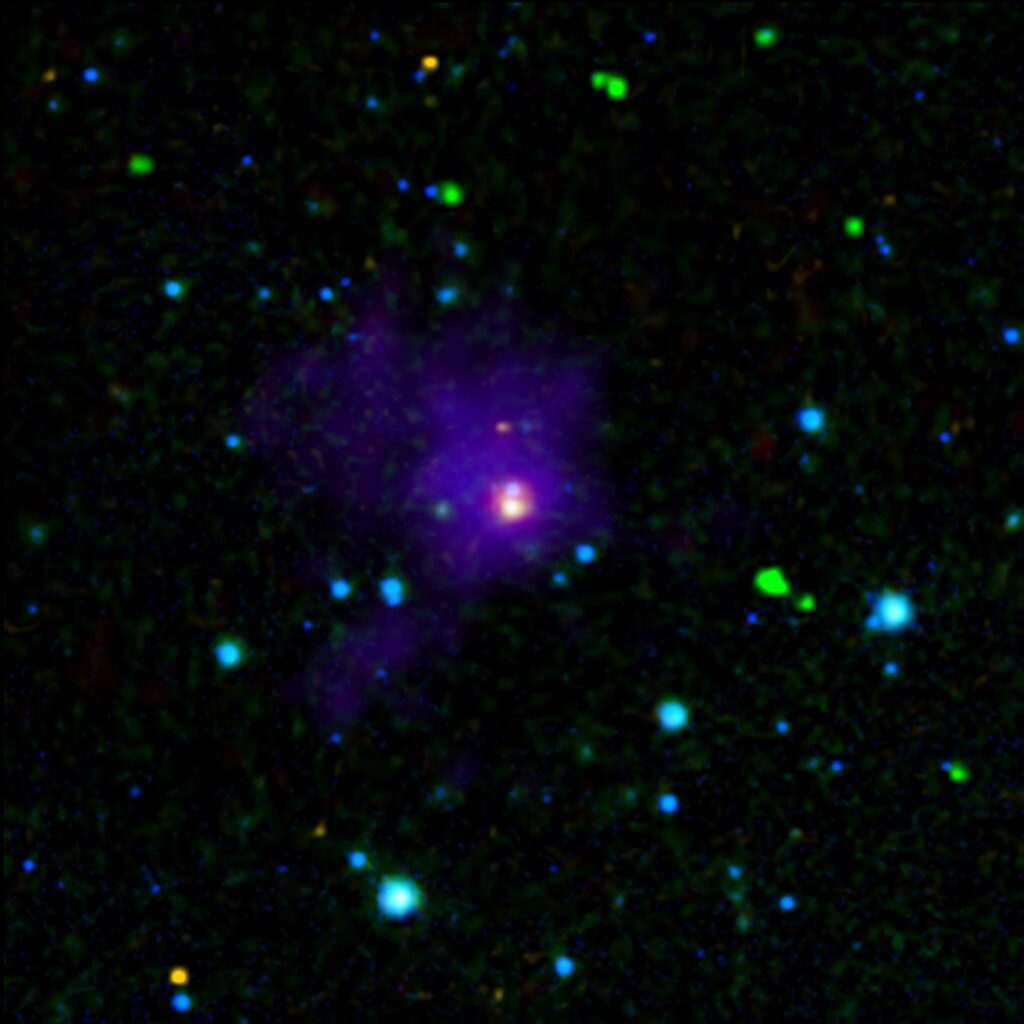
One of the lightest newly found objects shows signs of a disc, a ring of gas and dust of the kind in which planets can form. That hints that planets might be assembling around an object that is itself about the mass of a planet.
The spectra also show a feature the team attributed to hydrocarbons, molecules made only of hydrogen and carbon. Until now it had been seen only in the atmospheres of the lowest-mass brown dwarfs. ESA says this suggests such extreme objects may form a spectral class of their own. One aim of the program is to find where that feature comes from.
Jets from newborn stars in the corner of the frame
The mosaic is one of the largest Webb images released so far. Its upper-right corner holds a dense group of protostars, stars still gathering material. Several have Herbig-Haro objects, glowing patches that appear when jets from a young star slam into surrounding gas and dust.
The long, narrow horizontal object is HH 797, which Webb showed before as a Picture of the Month. Close inspection reveals two protostars with nearly parallel outflows. Next to it is the propeller-shaped HH 211, which has both narrow jets and broader outflows.
Nearby and faint versus distant and crowded
IC 348 is a useful hunting ground because of its closeness. Our report on Webb’s view of the N159 nebula describes a very different target. N159 sits about 161,000 light-years away in the Large Magellanic Cloud, a small galaxy orbiting the Milky Way, and ESA said Webb detected stars there with less than a tenth of the Sun’s mass. That is already faint for such a distance, yet it is far heavier than a brown dwarf at twice Jupiter’s mass.
The comparison shows why IC 348 matters for this question. At 1,000 light-years, about 160 times closer than N159, even objects a fraction of a percent of the Sun’s mass are within reach of Webb’s instruments. The Large Magellanic Cloud has a lower share of elements heavier than hydrogen and helium than the Milky Way, so it resembles conditions in the early Universe. Comparing the lightest objects in a nearby region like IC 348 with those in places like N159 is one of the program’s goals: its stated aim is to learn how populations of planet-mass objects vary between star-forming regions.
For now the lower limit is set by what Webb can detect. The 2022 and 2024-2025 results moved it from three to four Jupiter masses down to two. Whether a still lighter brown dwarf exists in IC 348 or elsewhere is the question the program continues to address.
Webb is a partnership of NASA, ESA and the Canadian Space Agency. ESA provided the NIRSpec instrument used for the spectra, along with the Ariane 5 launch.