Voyager 1 is about to be one light-day from Earth, and NASA wants you to flash a light
NASA invites the public to flash Voyager's call sign skyward after sunset on Nov. 17, as Voyager 1 approaches a distance no human-made object has reached: one light-day.
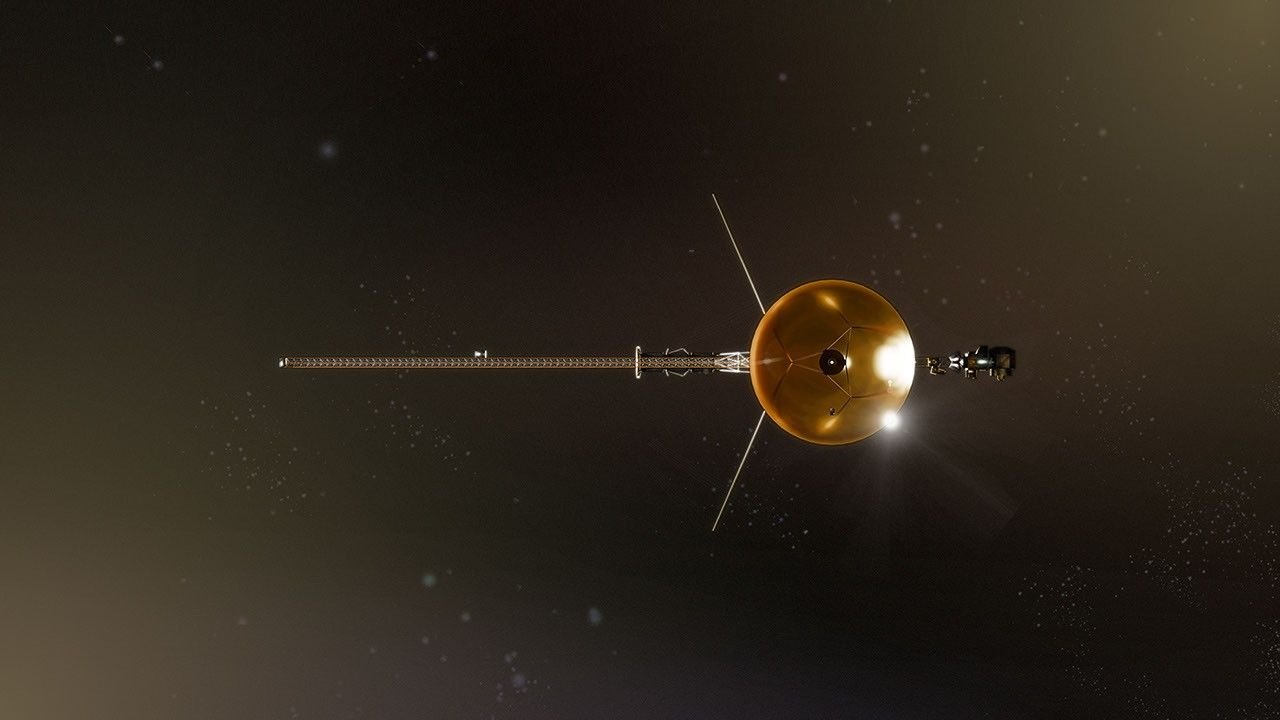
NASA is asking people worldwide to shine a light at the sky after sunset on Tuesday, Nov. 17, to mark Voyager 1 reaching one light-day from Earth, a distance no other human-made object has reached.
What a light-day is, and how to send the signal
A light-day is a measure of distance, not time. It is how far light travels in one day, which works out to roughly 25.9 billion kilometers (our calculation from the speed of light). Voyager 1 is about to pass that mark on its way out of the solar system.
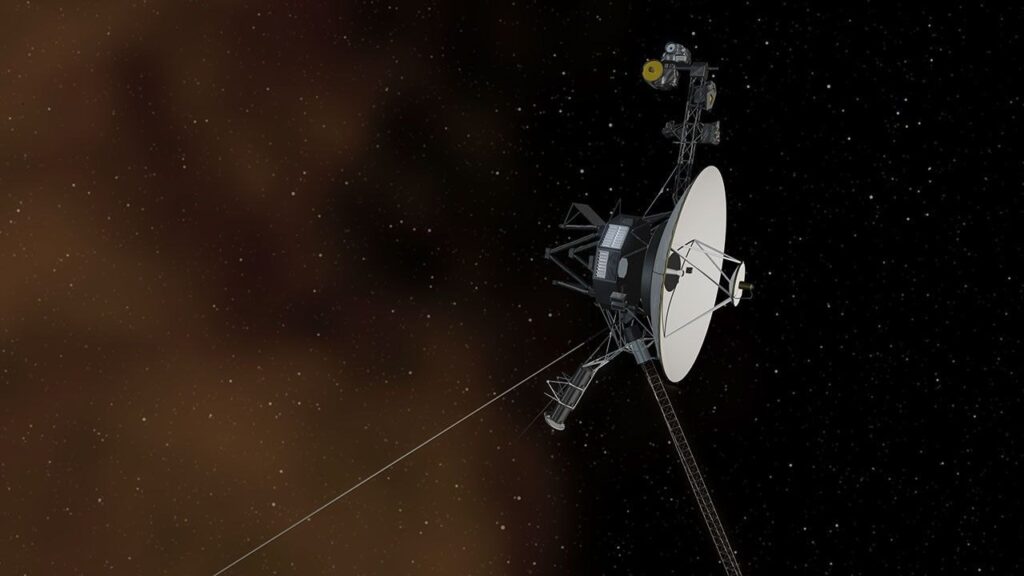
NASA offers two ways to take part. The first is an automated flasher that runs in a phone or tablet web browser: after sunset on Nov. 17, point the device at the sky and it flashes Voyager’s call sign, V-G-R, in Morse code. The second is to do it by hand with a flashlight, bike light, solar lantern, glow stick or phone.
Morse code uses short flashes (dots) and long ones (dashes). According to NASA, a dot lasts less than a second and a dash about one second, with a brief pause between the signals inside a letter and a pause of a second or more between letters. The letters are:
- V: three quick flashes, then one long (dot-dot-dot-dash)
- G: two long flashes, then one quick (dash-dash-dot)
- R: one quick, one long, one quick (dot-dash-dot)
NASA suggests repeating the pattern for around a minute, then sharing a photo or video on social media and tagging @NASA. The agency also encourages people to look for neighbors and local landmarks joining in, and to “go gold” in a nod to the spacecraft’s Golden Record.
A message that is already aboard
Both Voyager 1 and Voyager 2 carry that Golden Record, a disc inscribed with music, sounds from Earth and greetings from its people. NASA notes that it includes a Morse code message: “Ad astra per aspera,” Latin for “through struggle to the stars.”

The flashes themselves will not reach the spacecraft in any practical sense. The event is a symbolic salute, and NASA frames it that way: “Your light can be tiny, but the moment is huge.”
How far one light-day really is
The scale is easier to grasp with NASA’s own figures. In its November Night Sky Notes, the agency reported Voyager 1 at 25.80 billion km (just over 16 billion miles) from Earth, tracked by an antenna in Canberra, Australia, on Oct. 30. The same post says the probe is expected to cross the one-light-day mark on Nov. 18, 2026, at 16.1 billion miles from the Sun. That is a day after the Nov. 17 evening the public event is built around, which in many time zones lines up with the crossing.
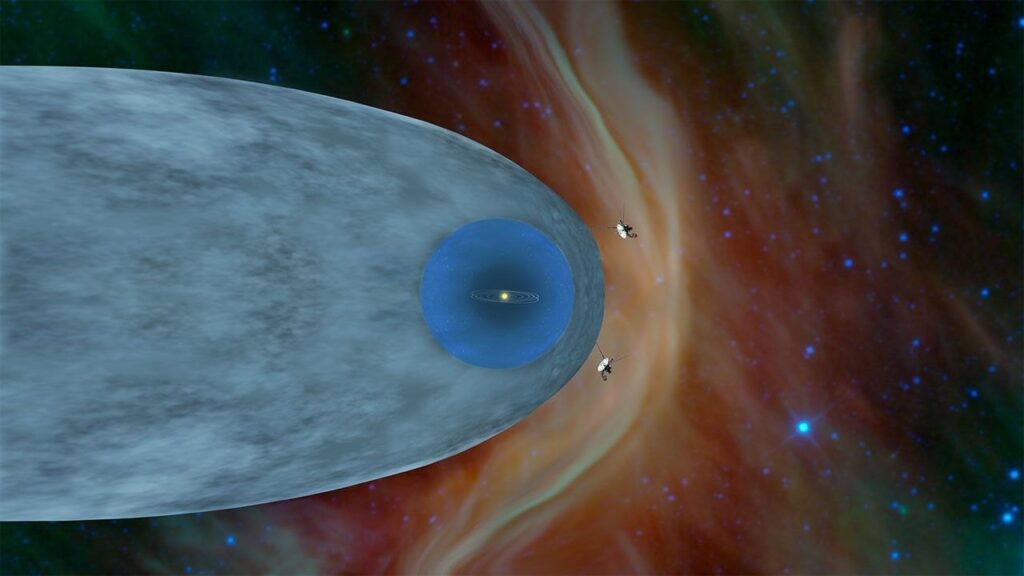
The speed behind that distance is modest by cosmic standards. NASA describes the twin probes, launched in 1977, as traveling through interstellar space at around 35,000 mph (56,000 kph). At that pace it has taken nearly 50 years to cover one light-day, a distance light crosses in 24 hours. Voyager 1 passed into interstellar space, outside the Sun’s protective bubble of particles and magnetic fields called the heliosphere, in 2012; Voyager 2, slower and heading in a different direction, followed in 2018, NASA says.
Voyager 1 is also still sending data. NASA’s Voyager pages list which instruments remain active and offer a live distance counter for each spacecraft. For the science behind the boundary the probes crossed, see our explainer on the heliopause and what the Voyager probes found there.
What to do on Nov. 17
Participation needs only a clear view of the sky after dark on Nov. 17 local time. NASA’s page has a video showing how to hail Voyager and a step-by-step guide, and it links an episode of its “We Asked a NASA Expert” podcast, “How Big Is Space?”, for readers who want more on cosmic distances.