Station’s last new solar array lifts its power by about 30% after a 7-hour spacewalk
Two astronauts finished a years-long upgrade, taking the International Space Station from 160 to 215 kilowatts, then spent Friday cleaning suits and the airlock.
Who is living in orbit right now, the crews of the International Space Station and China's Tiangong, the spacecraft docked to them, the next spacewalks and dockings, and our latest station stories.
Space stations now, Saturday, November 14
10 people are living in orbit right now
Right now 10 people are living on space stations: 7 aboard the International Space Station and 3 aboard China’s Tiangong station.
Crews, docked spacecraft and events from Launch Library 2, updated Nov 14, 15:03 UTC.
Docked now: Progress MS-34 (Zvezda aft, since Apr 28), Soyuz MS-29 (Prichal nadir, since Jul 14), Progress MS-35 (Poisk zenith, since Sep 19), Crew Dragon Grace (Harmony forward, since Oct 1), Cargo Dragon C211 (Harmony zenith, since Oct 15)
Tuesday, November 24, 05:03 UTC · launch to ISS
Soyuz 2.1b | Progress MS-36 (97P) Russian Federal Space Agency (ROSCOSMOS)
Wednesday, November 25 · launch to Tiangong
Long March 2F/G | Shenzhou 24 China Aerospace Science and Technology Corporation
Sunday, November 29, 15:47 UTC · launch to ISS
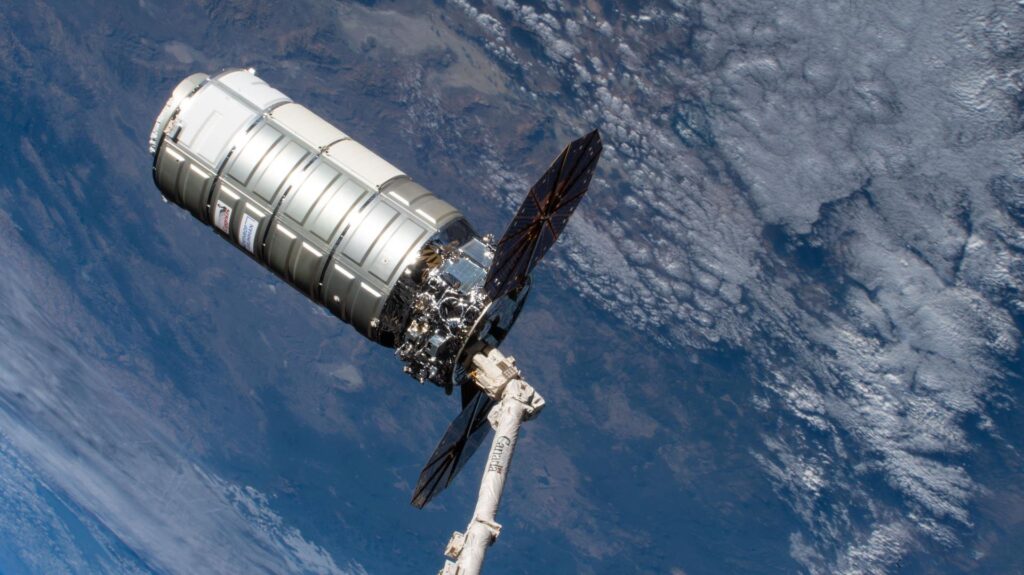
Falcon 9 Block 5 | Cygnus CRS-2 NG-25 SpaceX
Dates as Launch Library 2 lists them, in UTC; they move often. Every launch, with countdowns: rocket launch schedule.
Two astronauts finished a years-long upgrade, taking the International Space Station from 160 to 215 kilowatts, then spent Friday cleaning suits and the airlock.
Canadian astronaut Joshua Kutryk and NASA's Anil Menon are set to install the eighth roll-out solar array on Nov. 5, ending an upgrade that began in June 2021.
NASA is targeting Nov. 29 for the launch of Northrop Grumman's 25th station resupply mission, with cancer, muscle-loss and radiation experiments aboard.
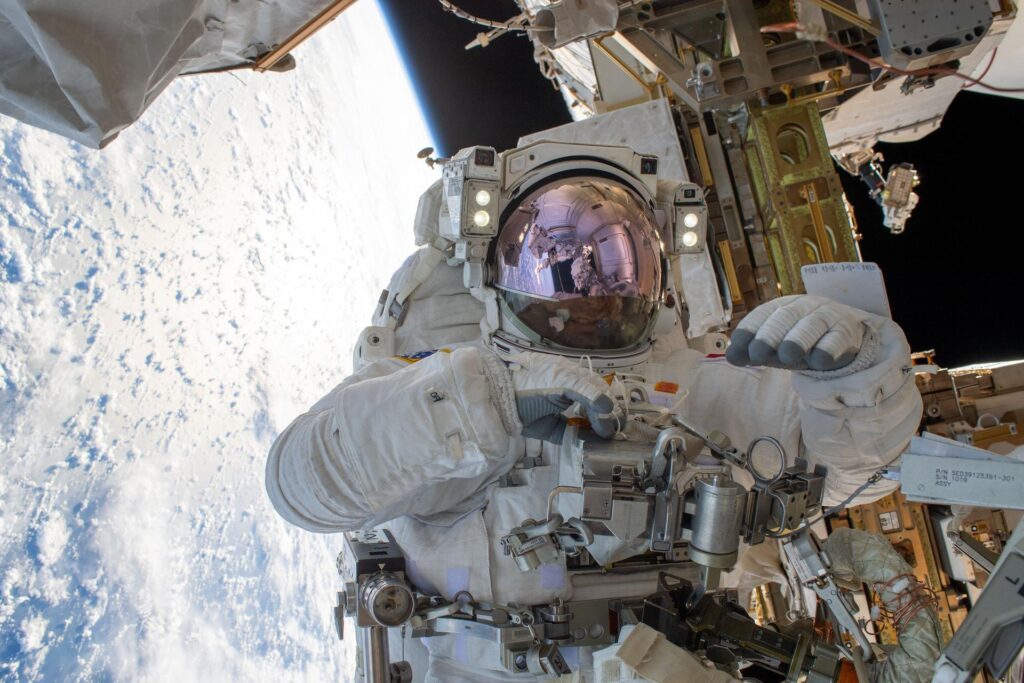
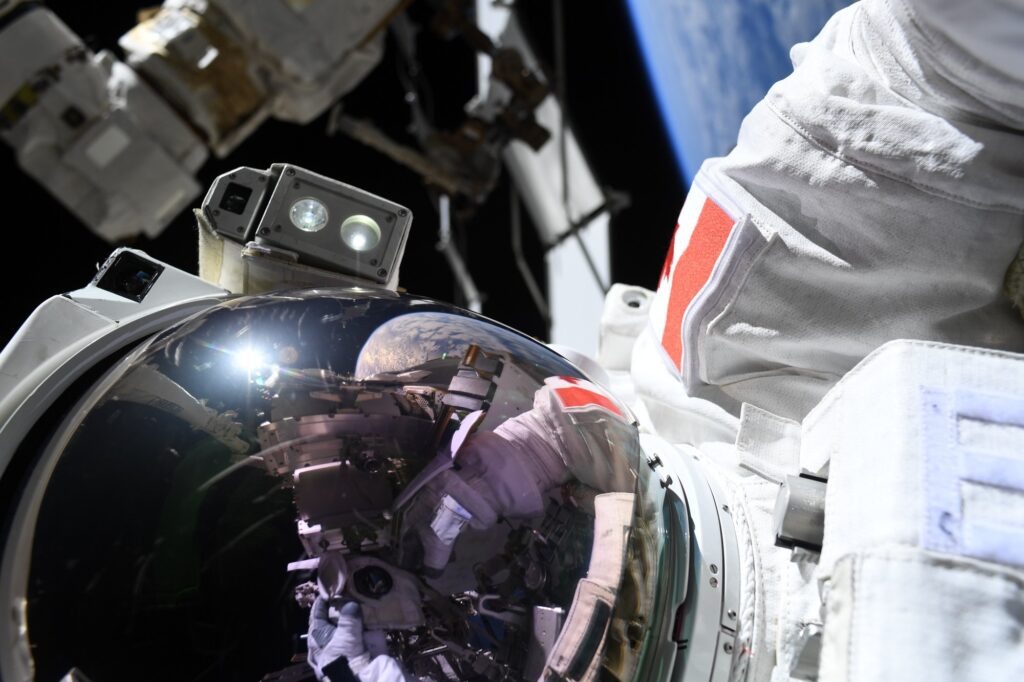
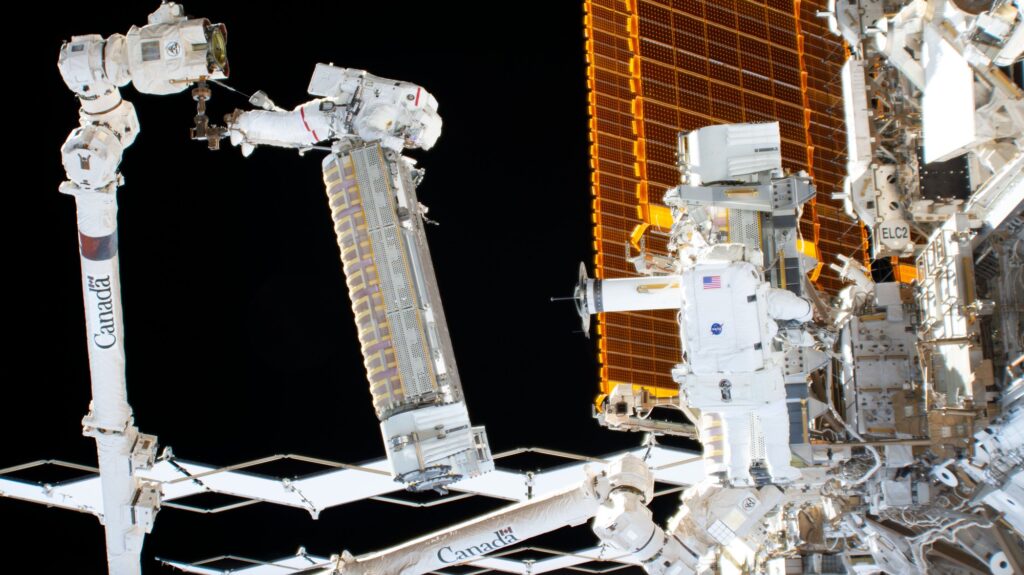
Canadian astronaut Joshua Kutryk became the fifth CSA astronaut to walk in space, helping install a new solar array while Canadarm2 carried his crewmate.
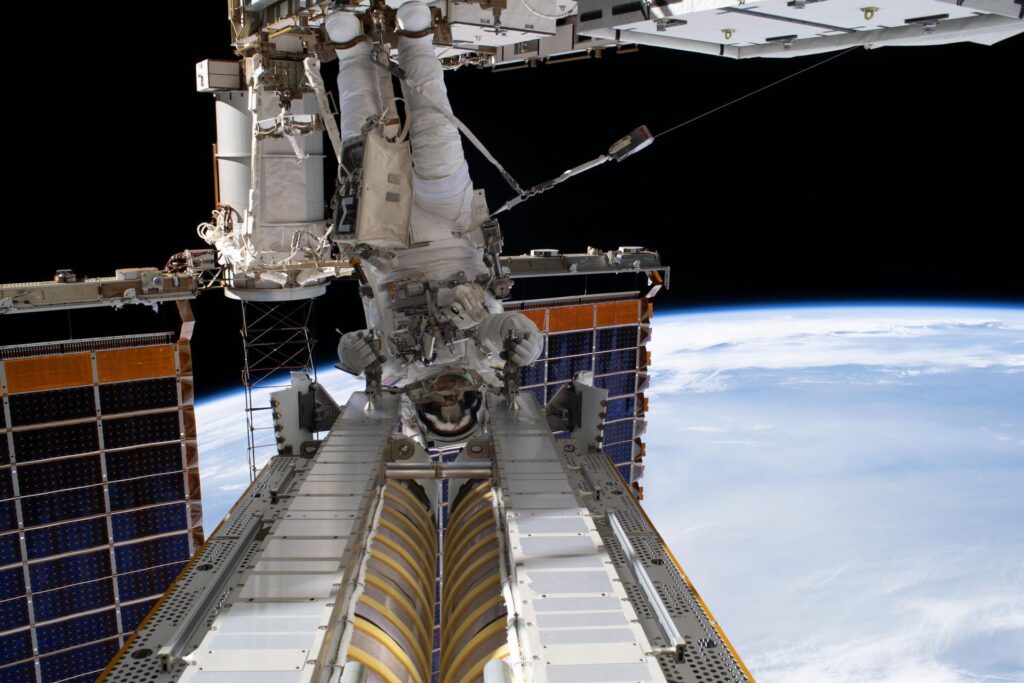
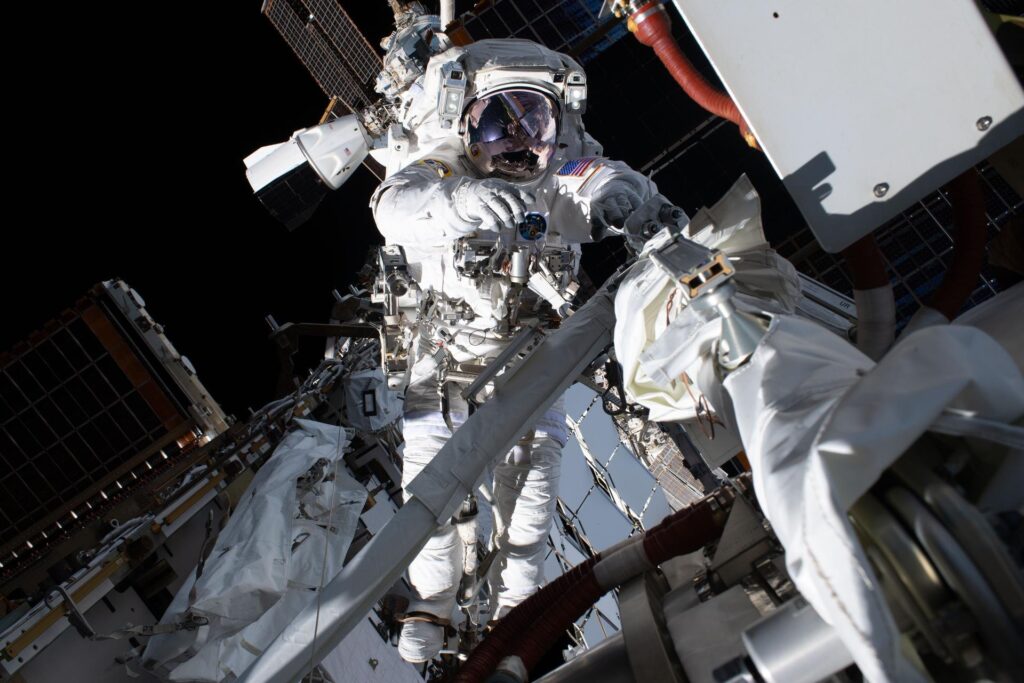
Anil Menon and Joshua Kutryk spent 7 hours 11 minutes outside the station to attach a roll-out solar array. A final one goes up on Nov. 5.
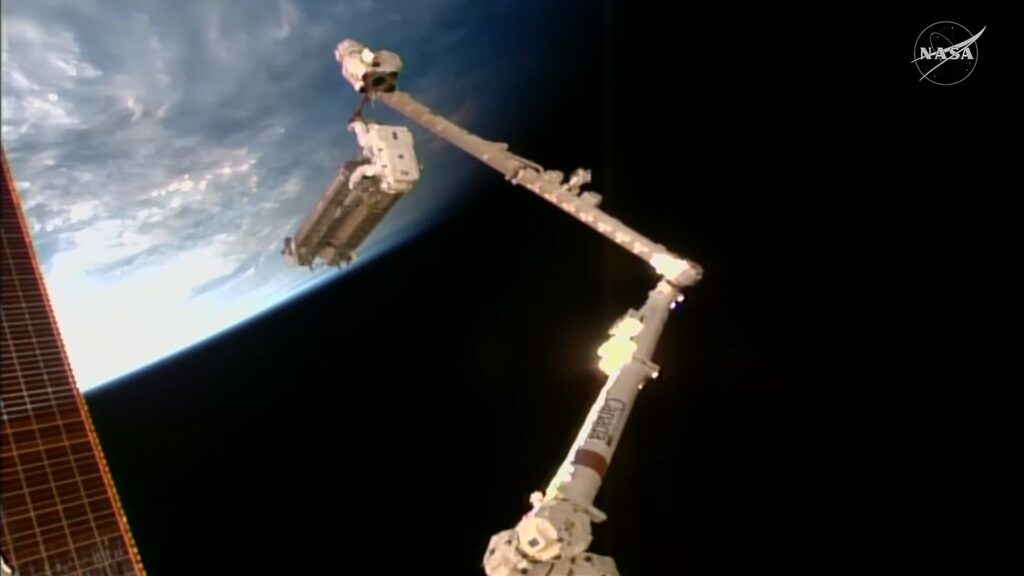
Mission managers have given the go for a roughly 6 hour 45 minute spacewalk, with Canadarm2 carrying the new array to its worksite on the station's port-side truss.
NASA's Anil Menon and CSA's Joshua Kutryk will leave the station on Oct. 29 to install a roll-out solar array, as the crew keeps up bioprinting and furnace research.
Canadian astronaut Joshua Kutryk will step outside the space station on October 29 and November 5 to install the last two new solar arrays, with Canadarm2 and a Canadian capcom…
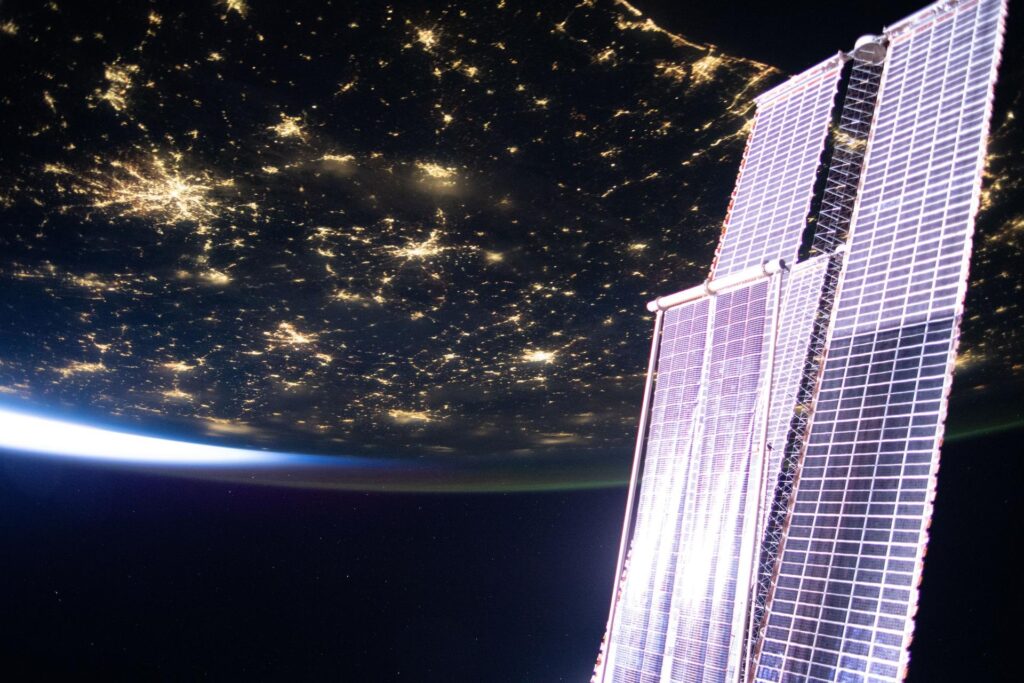
NASA says the eight roll-out solar arrays will raise the station's power by more than 160 kW, and the final pair arrived on Dragon on Oct. 15.
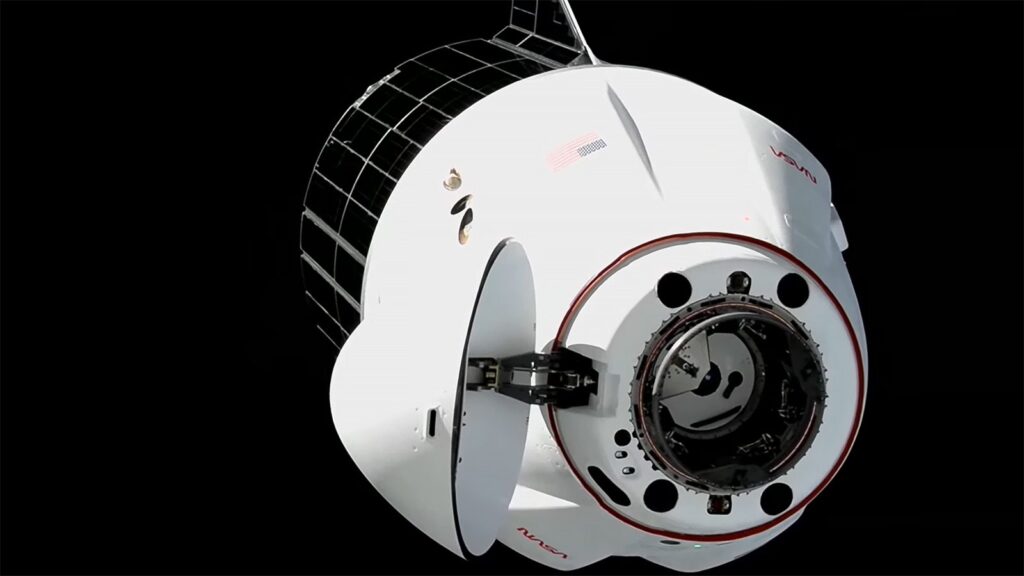
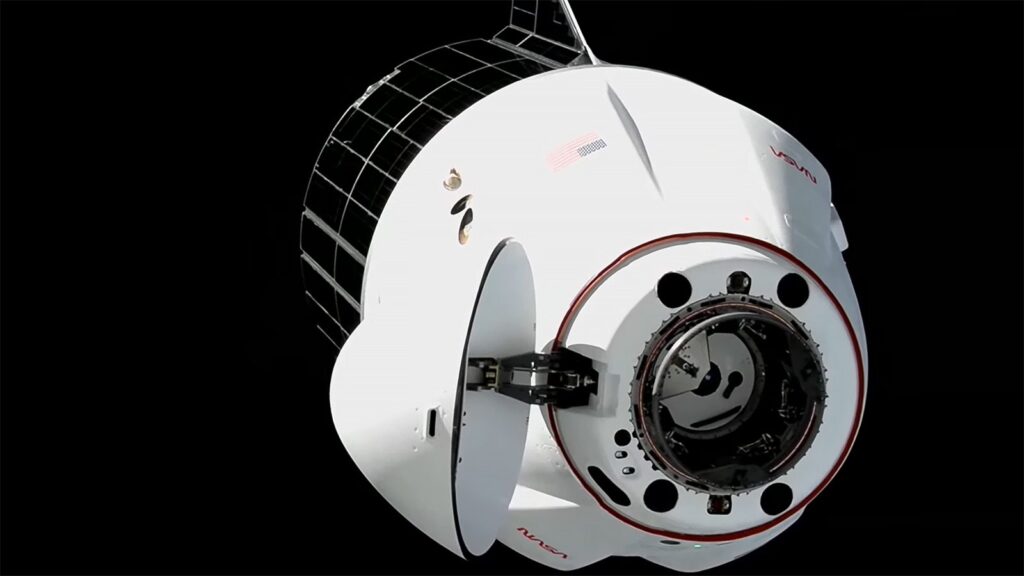
Five spacecraft are docked at the space station as the crew unloads SpaceX's CRS-35 Dragon and starts experiments, with roll-out solar arrays waiting in the trunk.
Twenty-five years of continuous crews on the ISS were marked in November 2025, with MIT-linked astronauts and researchers behind assembly, early experiments and still-running science.
Eleven people were aboard the International Space Station when Crew-13 arrived on Oct. 1, 2026, and NASA's own figures show how they live and work in orbit before its planned…
Two space stations circle Earth with crews living on them. The International Space Station, the ISS, is run by the space agencies of the United States, Russia, Europe, Japan and Canada. NASA says it has been continuously occupied since November 2000, and that it circles Earth about every 90 minutes, about 400 kilometers up. The other is Tiangong, China’s own station, run by the China Manned Space Agency, whose crews fly up on Chinese Shenzhou spacecraft.
Right now 10 people are living on space stations: 7 aboard the International Space Station and 3 aboard China’s Tiangong station. The lists at the top of this page come from Launch Library 2, a public database of spaceflight kept by The Space Devs, and refresh every three hours: who is aboard, which spacecraft are docked, and what is planned next.
Astronauts reach the ISS on SpaceX’s Crew Dragon or on Russia’s Soyuz, and each crew spacecraft stays docked for the whole stay, ready to bring its crew home. Food, water, experiments and spare parts arrive on uncrewed cargo ships: NASA’s commercial partners fly SpaceX’s Cargo Dragon and Northrop Grumman’s Cygnus, and Russia sends its Progress freighters. The “Docked now” line above shows which of them are attached to the station today, and at which port.
NASA explains that any time an astronaut leaves the spacecraft it is called an extravehicular activity, or EVA, which is what a spacewalk is. Astronauts go out to install and repair equipment and to set up experiments on the outside of the station. They leave through an airlock, wear pressurized spacesuits that give them oxygen and water and protect them from heat, cold and radiation, and stay attached to the station with safety tethers.
Yes, on some evenings and mornings it looks like a bright, steady light crossing the sky in a few minutes. Our ISS tracker shows where it is now and lists its visible passes over your city for the next seven days.
Crews sleep, eat, exercise and work on a tight schedule set by mission control. We describe a day aboard in life aboard the International Space Station.