Station’s last new solar array lifts its power by about 30% after a 7-hour spacewalk
Two astronauts finished a years-long upgrade, taking the International Space Station from 160 to 215 kilowatts, then spent Friday cleaning suits and the airlock.
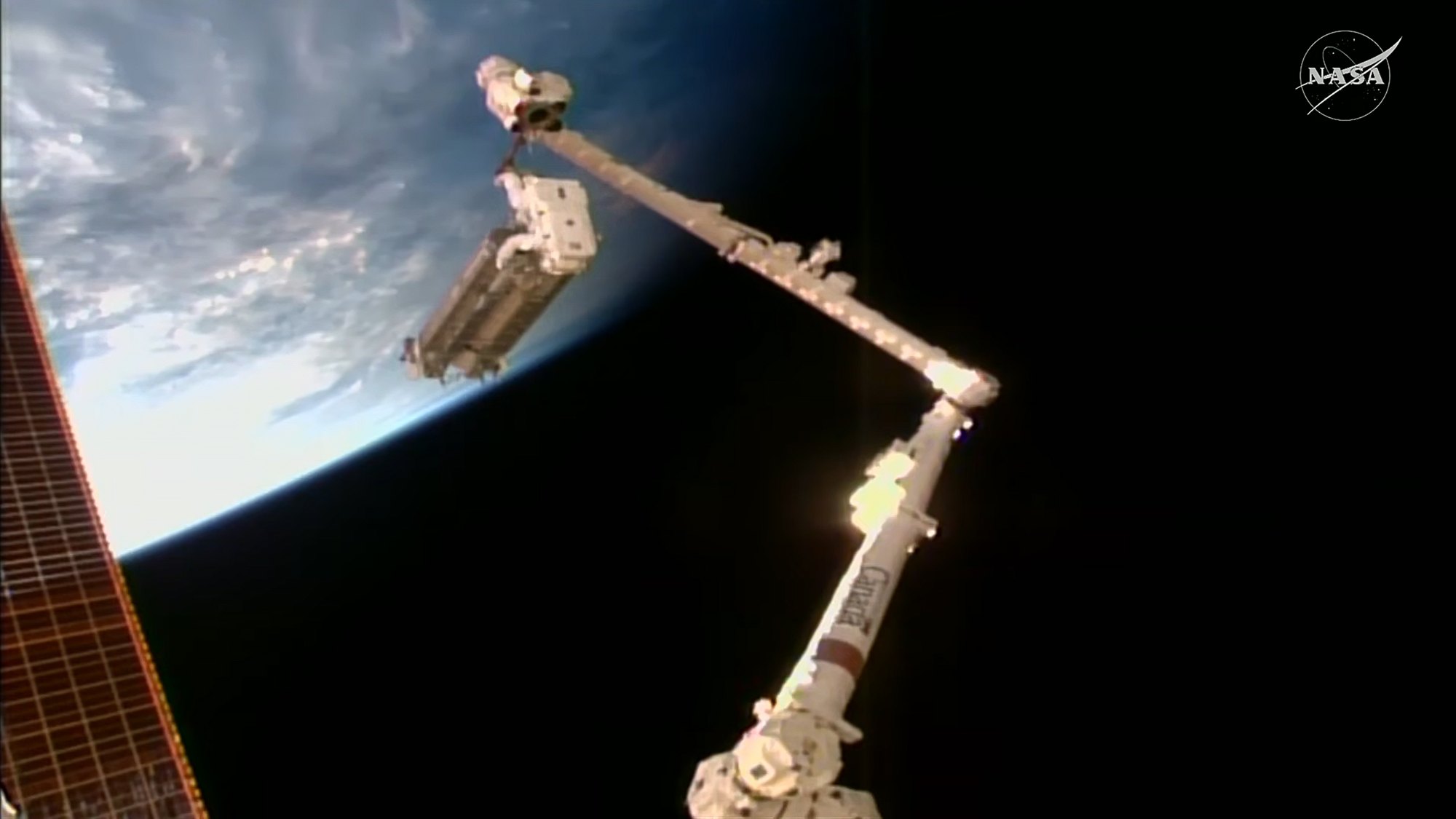
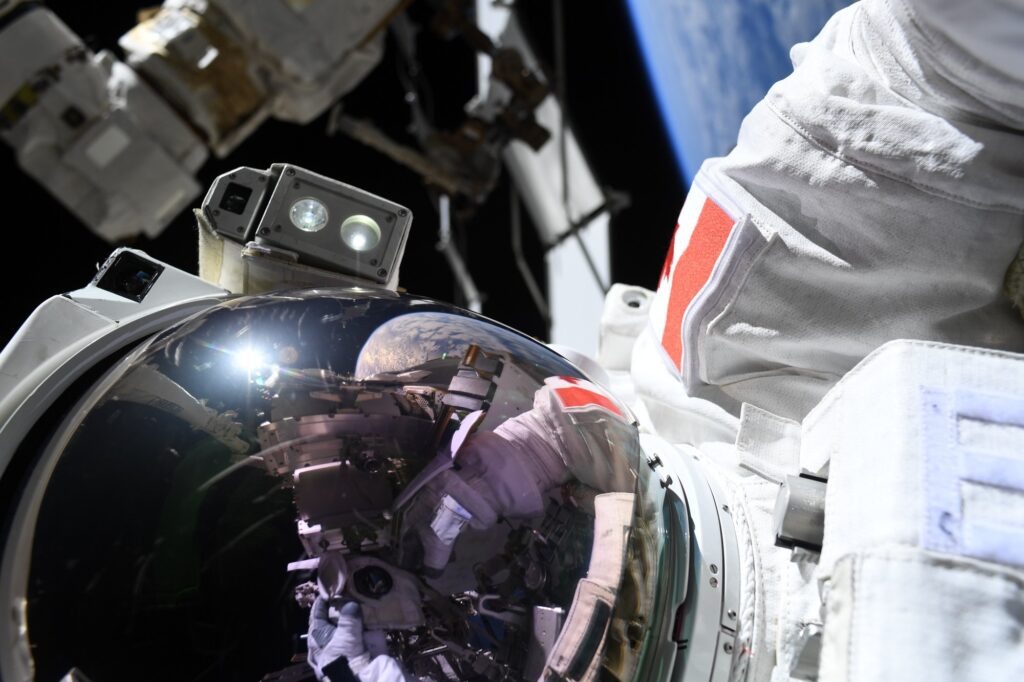
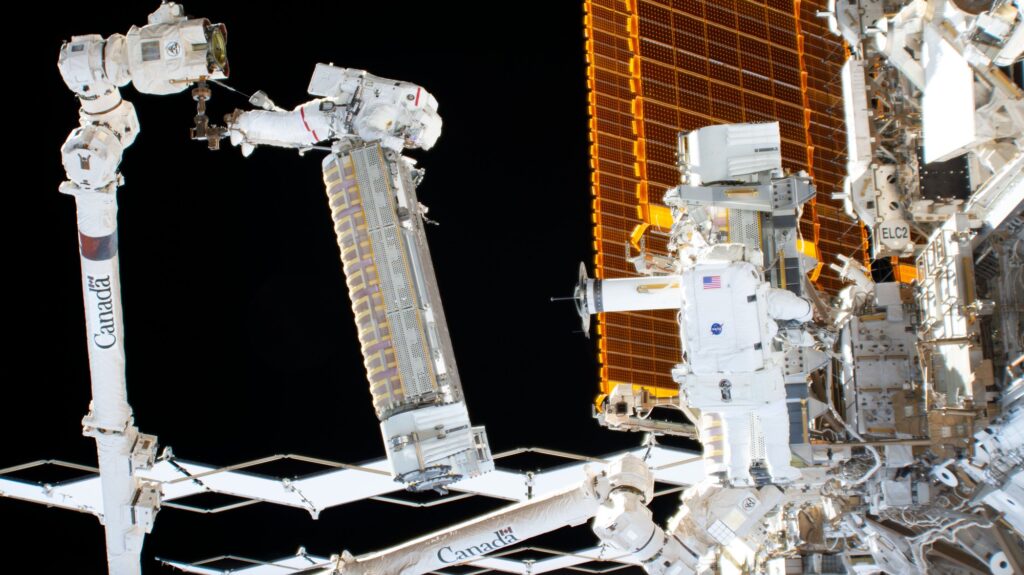
Astronauts Joshua Kutryk of the Canadian Space Agency and Anil Menon of NASA installed the eighth roll-out solar array on the International Space Station on Thursday, completing a power upgrade that raises output from 160 to 215 kilowatts, about 30%, NASA said.
A six-hour 59-minute spacewalk, then a day of tidying up
The installation took a spacewalk of six hours and 59 minutes. Menon rode the Canadarm2 robotic arm while carrying the array across to its worksite on the starboard side of the station’s truss, the long backbone that holds the solar wings and radiators. NASA says the station was about 260 miles above Earth at the time.
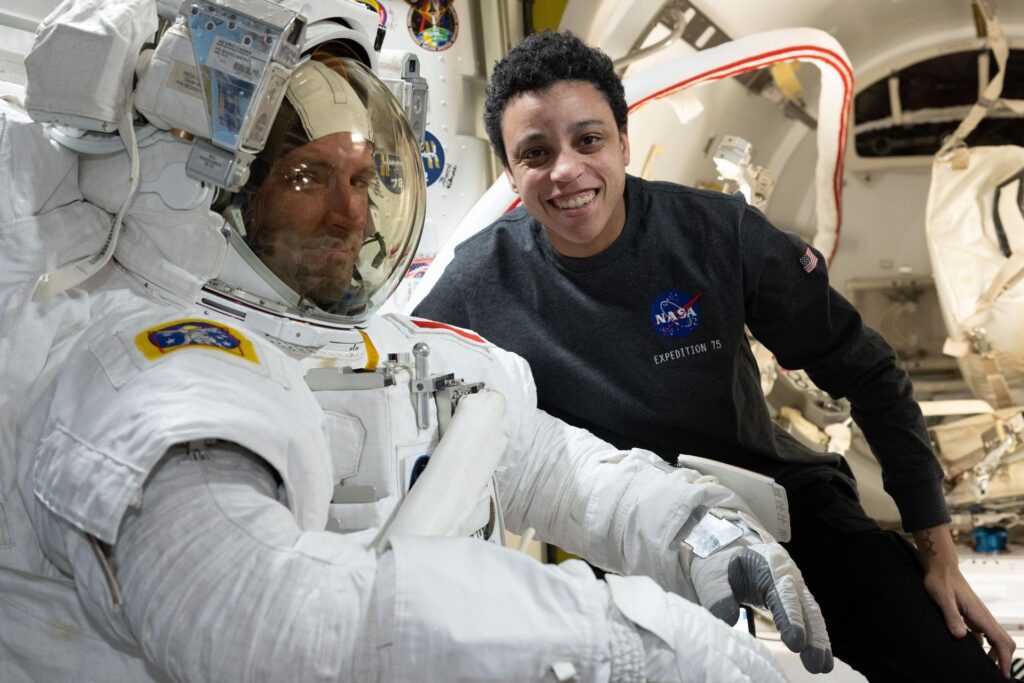
On the ground side of the work, NASA flight engineers Jessica Watkins and Luke Delaney helped the spacewalkers into and out of their suits, followed their progress and operated Canadarm2.
On Friday the crew turned to the less glamorous jobs that make the next spacewalk possible. Kutryk and Menon refilled the water tanks in their spacesuits and removed air bubbles from them. They also installed rechargeable batteries in the suits, cleaned the Quest airlock (the compartment used as the exit hatch), inspected tools and suits, stowed the gear in protective covers and powered down the supporting equipment.
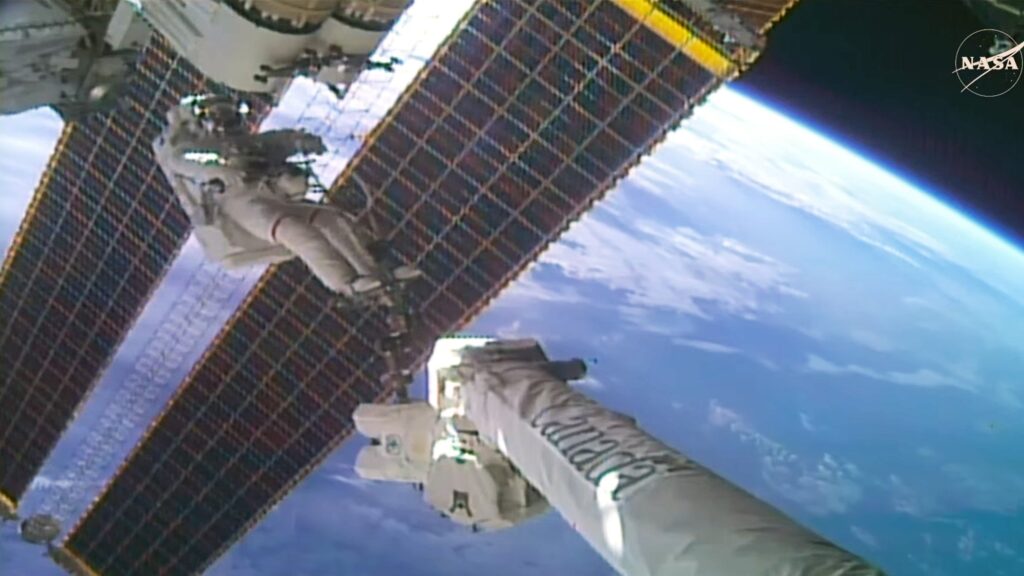
The four then held a conference with engineers on the ground to pass on what they learned, which NASA says will help prepare astronauts and flight controllers for future outings. NASA noted that each of them also fit in a couple of hours of rest on Friday.
Roll-out arrays: A project that began in 2021
A roll-out solar array is a flexible panel that is carried outside folded up and then unfurls like a rolled carpet. According to an earlier NASA station blog post, Menon and Kutryk fitted the first array of this pair to the port (left) side of the truss on October 29, in a spacewalk lasting seven hours and 11 minutes. They released the array’s tension bolts and it unfurled by itself over about ten minutes. NASA said then that the project began in June 2021.
That makes the November 5 outing the final step of an effort that has run for more than five years. The same earlier post gave the target as roughly 160 kilowatts rising to about 215 kilowatts, matching Friday’s figure.
What the extra 55 kilowatts changes for the crew
More electricity matters on a station that runs life support, communications, laboratory freezers and dozens of experiments around the clock. Seven people currently live aboard in Expedition 75, and the extra margin leaves more room for research equipment and visiting vehicles. For readers curious about the daily routine behind these numbers, our guide to life aboard the International Space Station covers it in detail.
The thing to watch next is how the new arrays perform in service. NASA said the first one was generating power as soon as it unfurled, and the agency has not yet published a figure for what the pair delivers together in practice. Future spacewalks will also reuse the suits that were serviced on Friday.
Meanwhile in the Russian segment
Work continued on the Roscosmos side of the station. Flight engineer Sergey Teteryatnikov measured his blood pressure with cuffs on his arm, wrist and finger. He then jogged on the treadmill in the Zvezda service module wearing electrodes that record his heart and breathing rate. NASA says the continuous data helps researchers understand how weightlessness affects the heart and lungs. It is part of the wider body of research on the space station.
Flight engineer Anna Kikina spent the day servicing ventilation systems and scientific hardware. Station commander Pyotr Dubrov finished an overnight carbon dioxide monitoring session, sent the data to mission controllers and inspected the condition of modules and hatches.