Progress 97 is set to bring three tons of supplies to the station, launching Tuesday
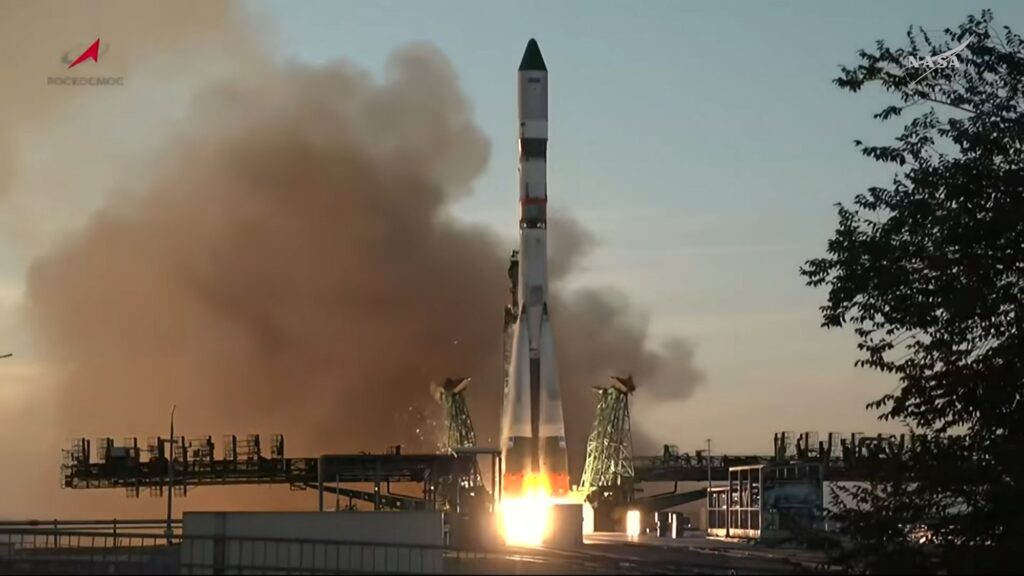
Roscosmos plans to launch Progress 97 from Baikonur at 10:17 UTC on Nov. 24, with an automatic docking to the station's Rassvet module two days later.
Who is living in orbit right now, the crews of the International Space Station and China's Tiangong, the spacecraft docked to them, the next spacewalks and dockings, and our latest station stories.
Space stations now, Tuesday, November 24
10 people are living in orbit right now
Right now 10 people are living on space stations: 7 aboard the International Space Station and 3 aboard China’s Tiangong station.
Next: Progress MS-36 Docking, Thursday, November 26, 12:11 UTC.
Crews, docked spacecraft and events from Launch Library 2, updated Nov 24, 23:59 UTC.
Docked now: Progress MS-34 (Zvezda aft, since Apr 28), Soyuz MS-29 (Prichal nadir, since Jul 14), Progress MS-35 (Poisk zenith, since Sep 19), Crew Dragon Grace (Harmony forward, since Oct 1)
Thursday, November 26, 12:11 UTC · ISS
Progress MS-36 Docking Docking
The Progress MS-36 spacecraft is scheduled to autonomously dock to the Zvezda module of the ISS.
Tuesday, December 1, 06:10 UTC · ISS
NG-25 Cygnus Capture Spacecraft Capture
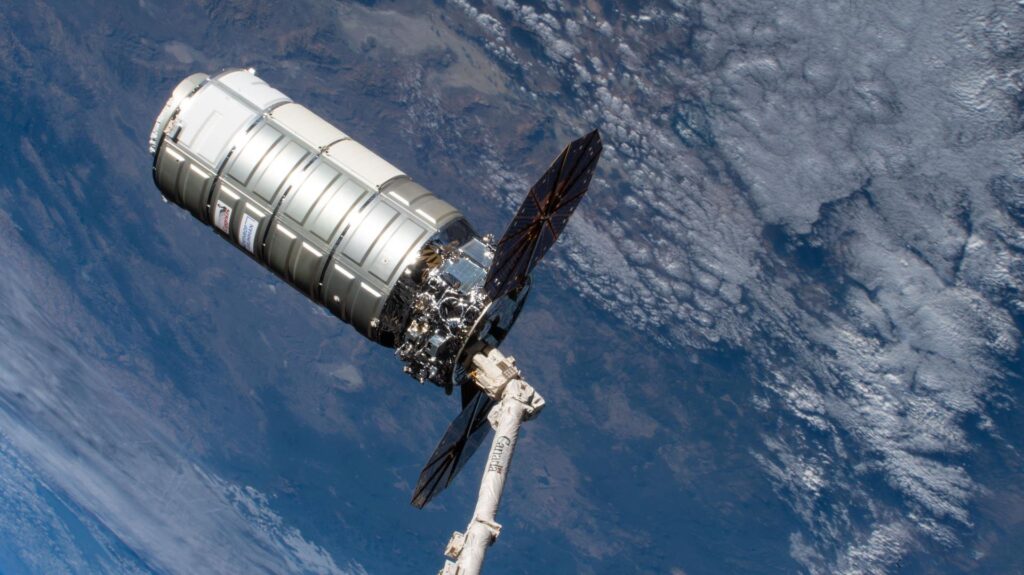
NASA TV will livestream the rendezvous and capture of Northrop Grumman's NG-25 Cygnus cargo craft to the International Space Station. More
Wednesday, November 25, 00:18 UTC · launch to Tiangong
Long March 2F/G | Shenzhou 24 China Aerospace Science and Technology Corporation
Sunday, November 29, 15:47 UTC · launch to ISS
Falcon 9 Block 5 | Cygnus CRS-2 NG-25 SpaceX
Dates as Launch Library 2 lists them, in UTC; they move often. Every launch, with countdowns: rocket launch schedule.
Roscosmos plans to launch Progress 97 from Baikonur at 10:17 UTC on Nov. 24, with an automatic docking to the station's Rassvet module two days later.
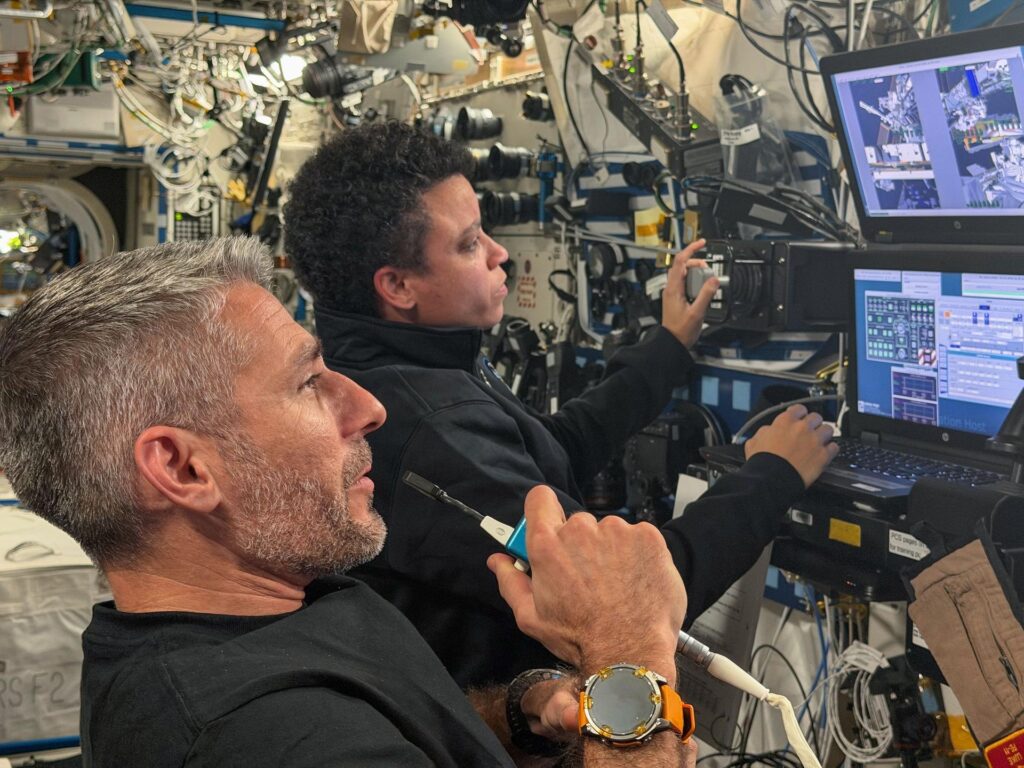
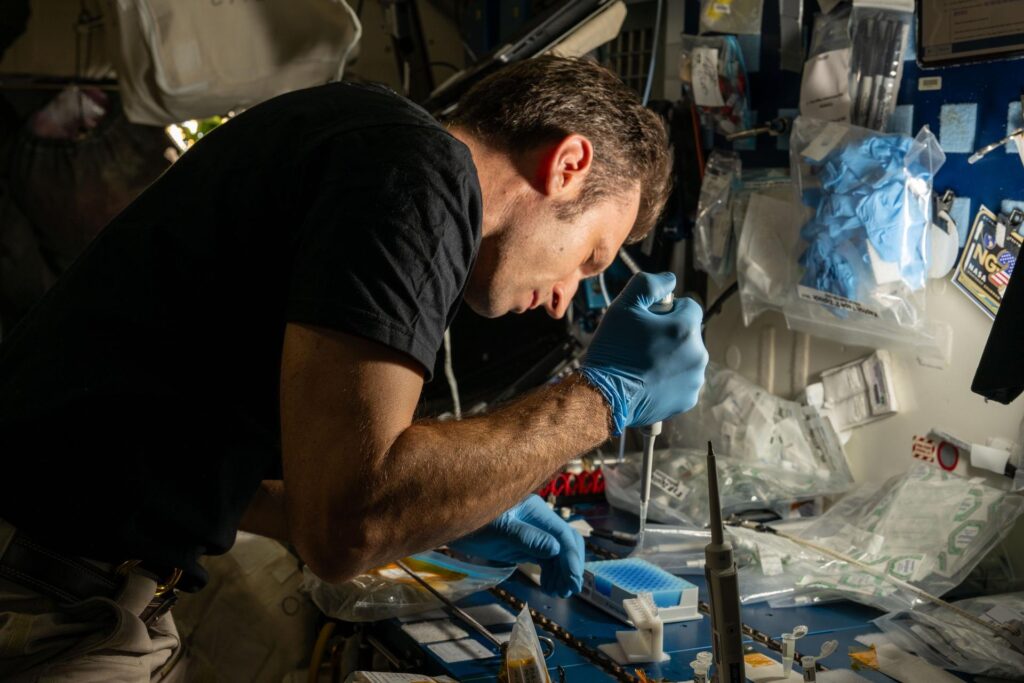
NASA's Expedition 75 crew spent Monday on microbe DNA sequencing, stem cell culture and a portable blood-testing kit, while also trying a new exercise machine.
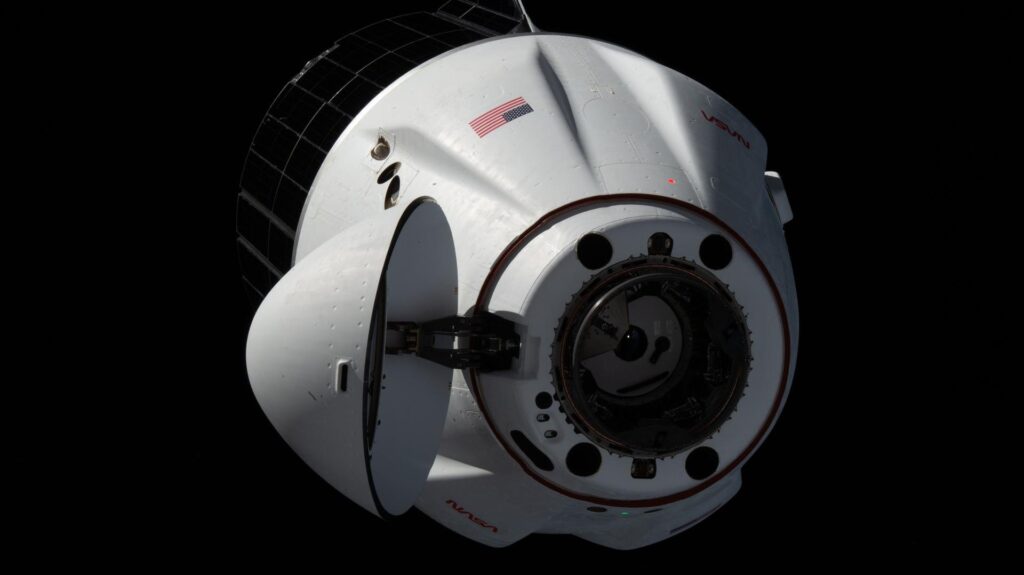
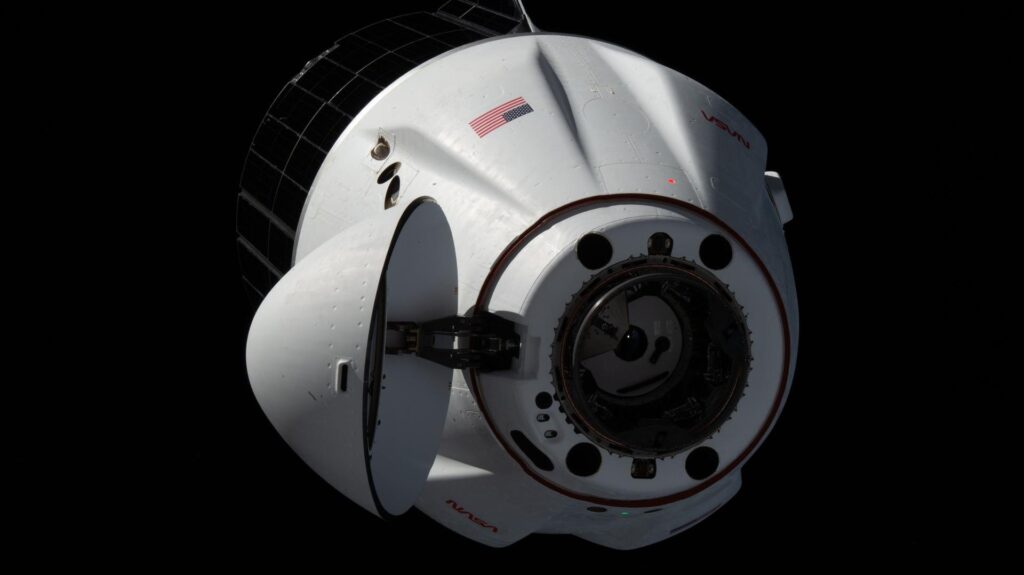
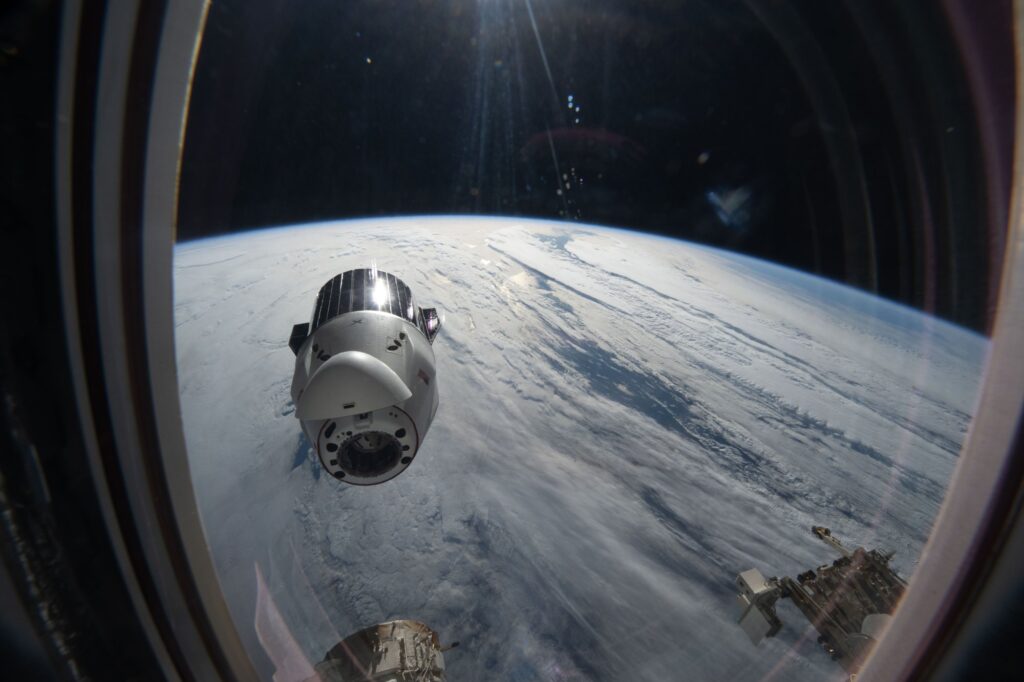
SpaceX's unpiloted Dragon left the station's Harmony module at 17:05 UTC and is due to splash down off California on Saturday, carrying frozen samples and a returning lighting system.
Bad weather at the California splashdown sites has pushed back the departure of SpaceX's cargo Dragon from the International Space Station. The next opportunity is Thursday, Nov. 19.
NASA will stream the undocking of SpaceX's CRS-35 Dragon on Nov. 18, with splashdown off California targeted for early Nov. 19 and research samples aboard.
Expedition 75 crew members studied blood flow and human lung cells, serviced spacesuits and stowed frozen samples in Dragon on Monday, NASA reported.
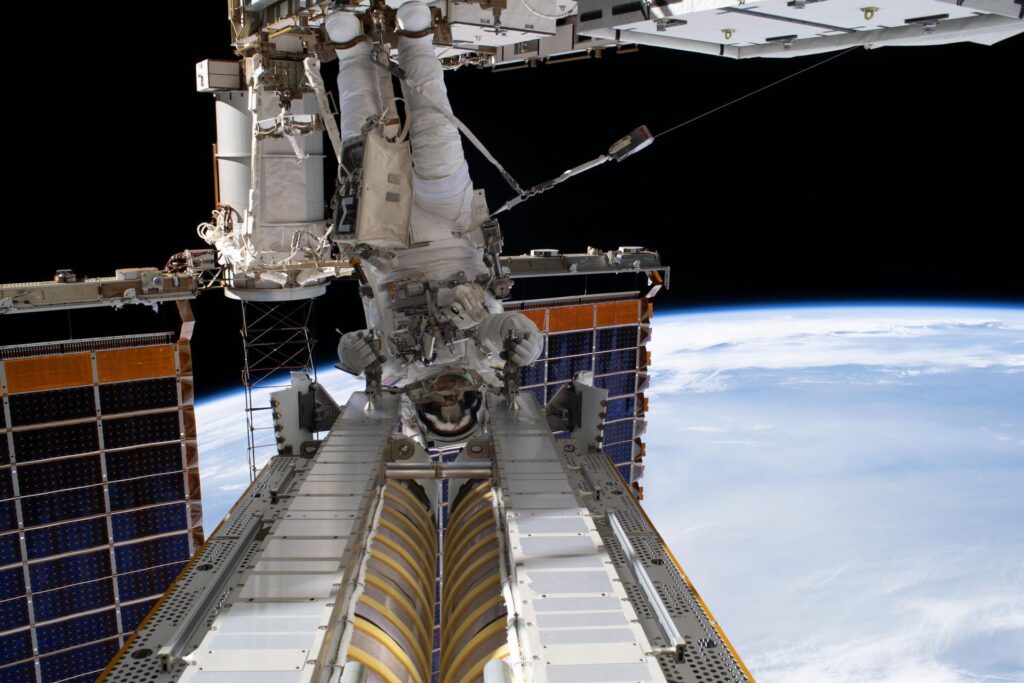
Two astronauts finished a years-long upgrade, taking the International Space Station from 160 to 215 kilowatts, then spent Friday cleaning suits and the airlock.
Canadian astronaut Joshua Kutryk and NASA's Anil Menon are set to install the eighth roll-out solar array on Nov. 5, ending an upgrade that began in June 2021.
NASA is targeting Nov. 29 for the launch of Northrop Grumman's 25th station resupply mission, with cancer, muscle-loss and radiation experiments aboard.
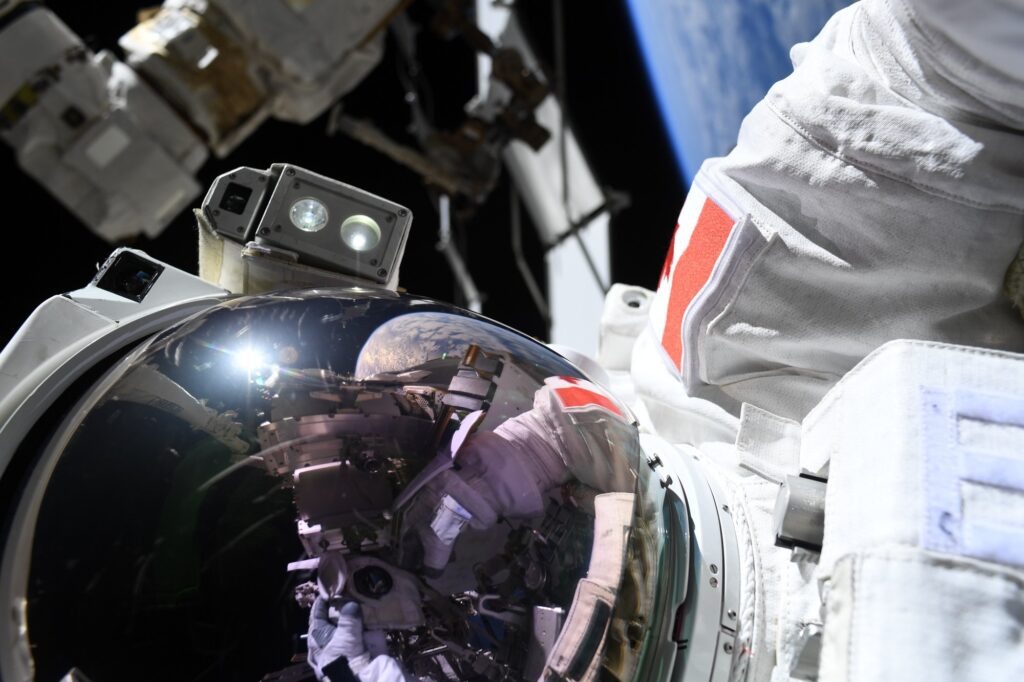
Canadian astronaut Joshua Kutryk became the fifth CSA astronaut to walk in space, helping install a new solar array while Canadarm2 carried his crewmate.
Anil Menon and Joshua Kutryk spent 7 hours 11 minutes outside the station to attach a roll-out solar array. A final one goes up on Nov. 5.
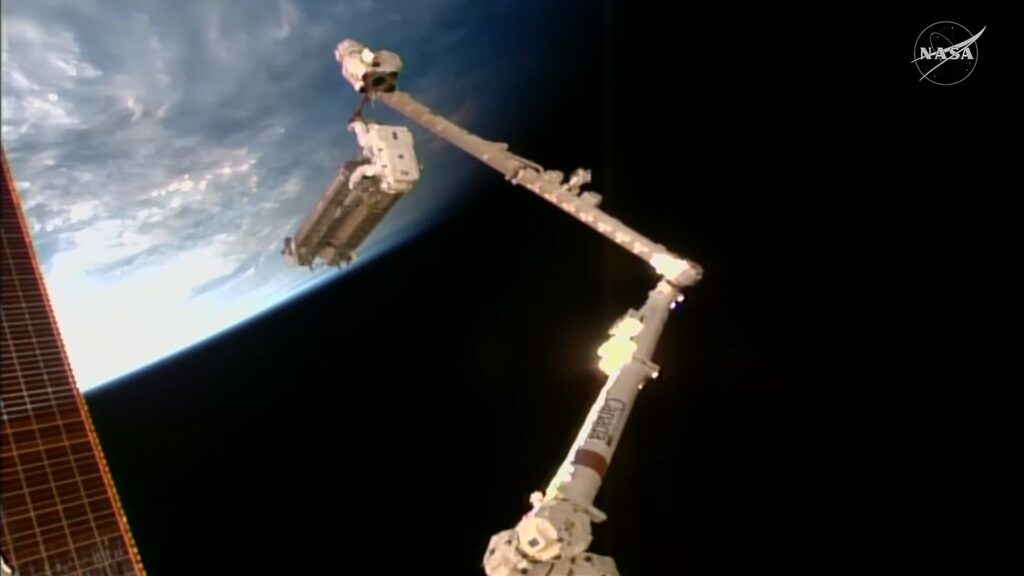
Mission managers have given the go for a roughly 6 hour 45 minute spacewalk, with Canadarm2 carrying the new array to its worksite on the station's port-side truss.
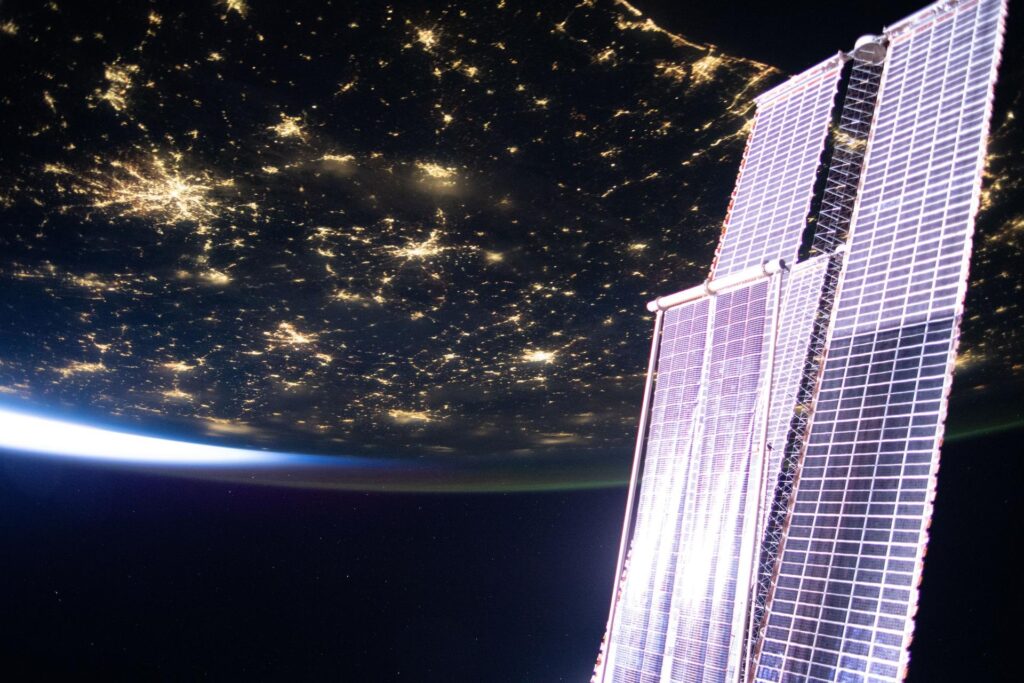
Two space stations circle Earth with crews living on them. The International Space Station, the ISS, is run by the space agencies of the United States, Russia, Europe, Japan and Canada. NASA says it has been continuously occupied since November 2000, and that it circles Earth about every 90 minutes, about 400 kilometers up. The other is Tiangong, China’s own station, run by the China Manned Space Agency, whose crews fly up on Chinese Shenzhou spacecraft.
Right now 10 people are living on space stations: 7 aboard the International Space Station and 3 aboard China’s Tiangong station. The lists at the top of this page come from Launch Library 2, a public database of spaceflight kept by The Space Devs, and refresh every three hours: who is aboard, which spacecraft are docked, and what is planned next.
Astronauts reach the ISS on SpaceX’s Crew Dragon or on Russia’s Soyuz, and each crew spacecraft stays docked for the whole stay, ready to bring its crew home. Food, water, experiments and spare parts arrive on uncrewed cargo ships: NASA’s commercial partners fly SpaceX’s Cargo Dragon and Northrop Grumman’s Cygnus, and Russia sends its Progress freighters. The “Docked now” line above shows which of them are attached to the station today, and at which port.
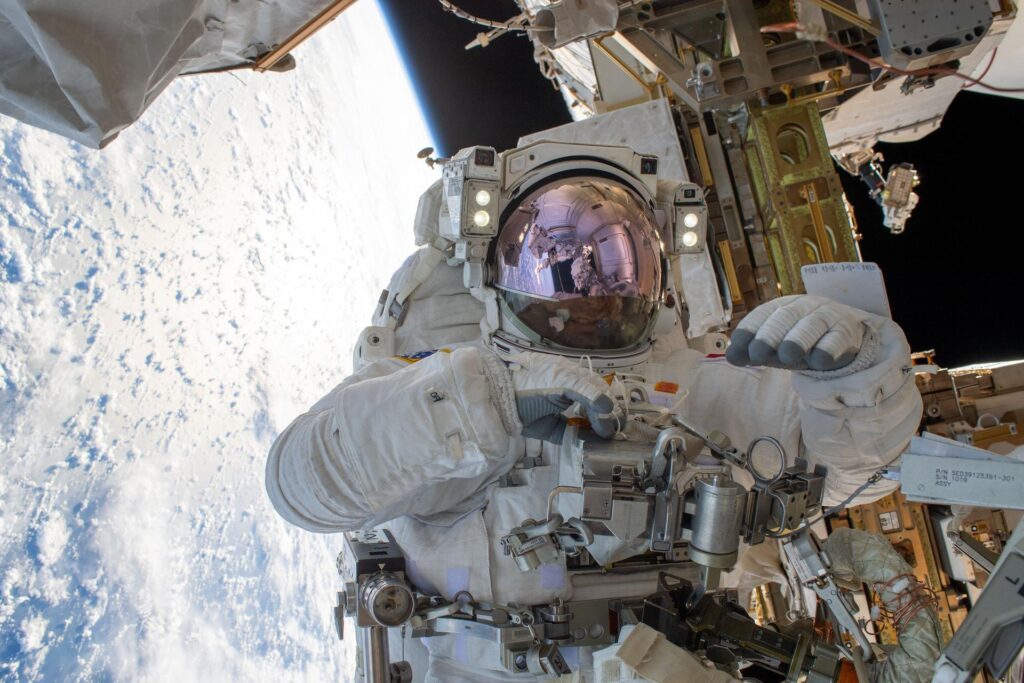
NASA explains that any time an astronaut leaves the spacecraft it is called an extravehicular activity, or EVA, which is what a spacewalk is. Astronauts go out to install and repair equipment and to set up experiments on the outside of the station. They leave through an airlock, wear pressurized spacesuits that give them oxygen and water and protect them from heat, cold and radiation, and stay attached to the station with safety tethers. Next at the stations: Progress MS-36 Docking, Thursday, November 26, 12:11 UTC.
Yes, on some evenings and mornings it looks like a bright, steady light crossing the sky in a few minutes. Our ISS tracker shows where it is now and lists its visible passes over your city for the next seven days.
Crews sleep, eat, exercise and work on a tight schedule set by mission control. We describe a day aboard in life aboard the International Space Station.