Boeing will fund a nearly $500,000 NASA mentorship for small supplier GRACE Aerospace
Boeing will pay for nearly $500,000 of structured help to GRACE Aerospace, the latest deal under NASA's renamed and simplified small-business supplier program.
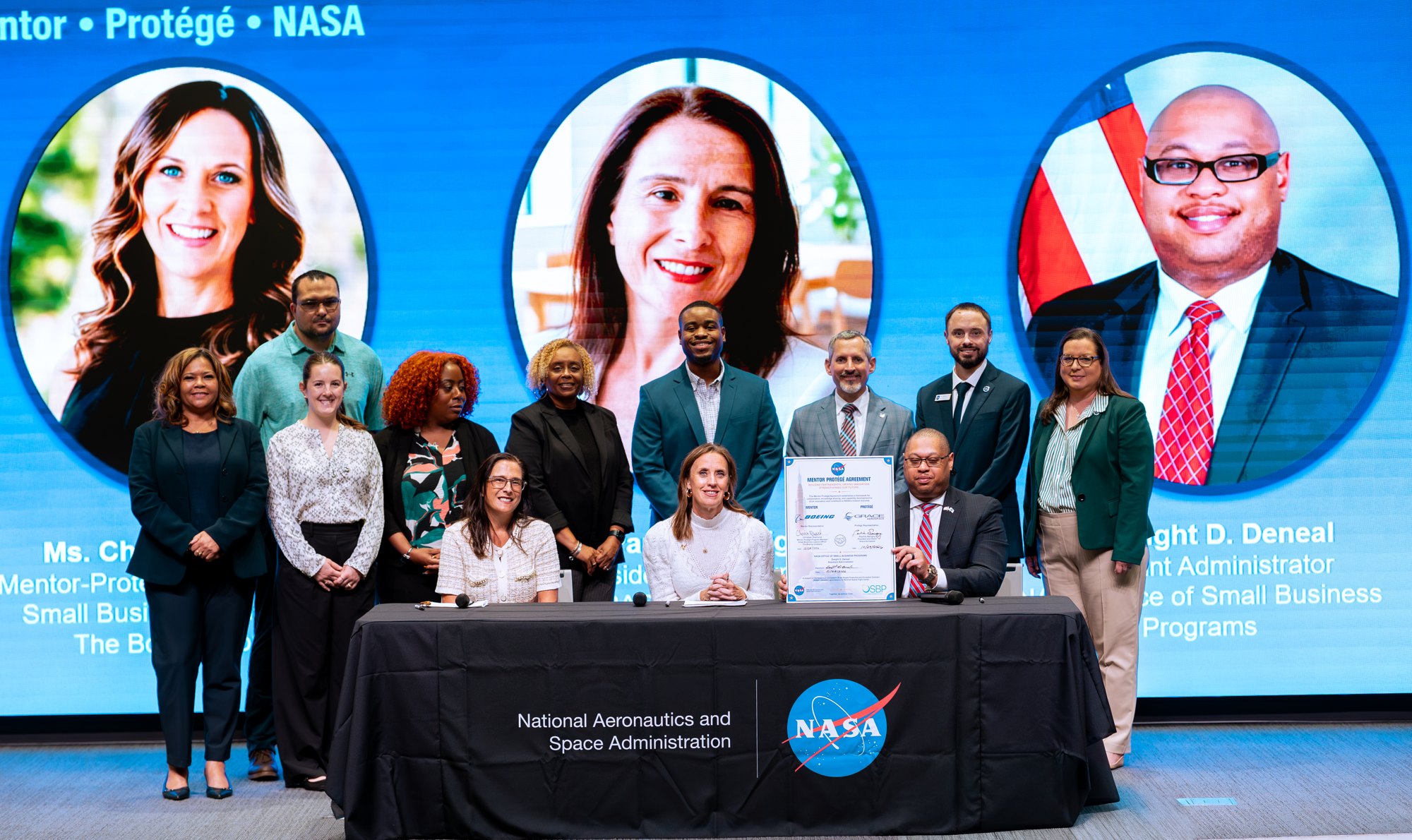
Boeing will fund a Mentor-Protégé Agreement worth nearly $500,000 to help GRACE Aerospace, a small supplier, build mission-critical aerospace hardware, NASA announced on Nov. 25 as it streamlines the program behind the deal.
A ceremony in Huntsville and a renamed program
NASA’s Office of Small Business Programs (OSBP) hosted the signing on Oct. 29 at the U.S. Space and Rocket Center in Huntsville, Alabama. Among those pictured were Pauline Sevigny, president and owner of GRACE Aerospace, Christian Diamond, Boeing’s Mentor-Protégé Program manager, and Dwight Deneal, OSBP’s assistant administrator. Contracting officers and the lead of NASA’s SLS (Space Launch System) stages team, along with NASA’s senior procurement executive, also attended.
A mentor-protégé agreement pairs a large company with a smaller one. The large company, here Boeing, gives structured help so the smaller firm can win more complex work. Under this agreement Boeing will provide that assistance to expand GRACE’s capabilities as a supplier of mission-critical hardware, and Boeing will pay for it.
The deal sits inside what NASA now calls the Small Business Supplier Development Program, recently renamed. NASA says it is simplifying the application process, cutting administrative requirements, speeding up review and approval, and strengthening incentives for large prime contractors to take part. Deneal said the agency has “intentionally redesigned the program as a mission-focused tool for strengthening industrial base readiness and mission success.”
GRACE has about two decades of experience serving defense and aerospace customers. NASA says the company will use the partnership to prepare for more complex aerospace and spaceflight programs. Sevigny said GRACE looks forward to “growing and learning from industry experts.”
What the money buys, and how small it is
Nearly $500,000 is modest next to the contracts that surround NASA’s big programs. We recently covered a $39.3 million cooling contract for the SR-1 Freedom nuclear spacecraft, roughly 80 times the size of this agreement. The mentoring money is different in kind: it does not buy hardware. It pays for training, process improvement and technical guidance that can make a small shop qualified to bid on hardware later.
The economics are also lopsided in a useful way. Boeing carries the cost of the agreement, while NASA gains a supplier it hopes can take on more demanding work. Boeing, for its part, strengthens its own supplier base. Diamond said the company looks forward to “sharing our expertise to support the continued growth and long-term success of a small business while strengthening our supplier base.”
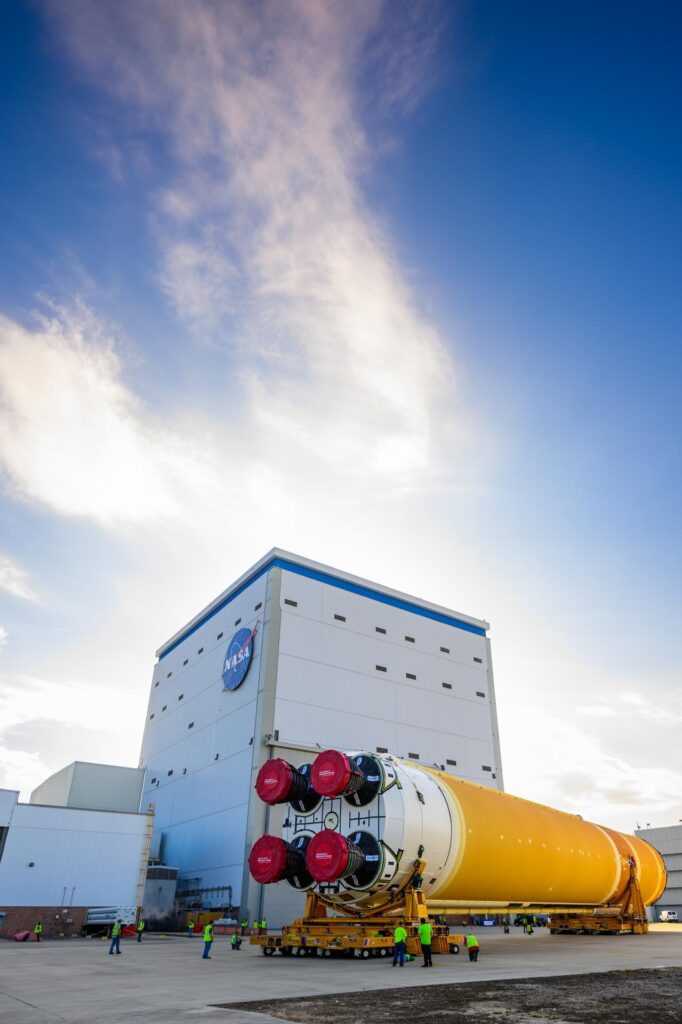
Boeing’s link to the NASA officials at the ceremony is easy to trace. According to NASA’s image library, Boeing is the lead contractor for the core stage of the Space Launch System, the rocket’s 212-foot-tall central stage, which is built at NASA’s Michoud Assembly Facility in New Orleans. NASA’s announcement does not say that GRACE will work on SLS parts, so the agreement should be read as general capability building rather than a contract for a specific rocket component.
Why NASA is pushing on the supplier base now
NASA frames the program as a way to strengthen the domestic aerospace industrial base for future exploration missions. A thin base is a practical risk: if only a handful of firms can make a given valve, weld or machined part, one delay or closure can hold up a whole stage. Adding capable small suppliers spreads that risk.
Details on how to apply are on NASA’s supplier development program page.
The story is a small-scale example of a larger pattern. Big programs depend on hundreds of unseen suppliers, and NASA is now leaning on prime contractors like Boeing to help grow them.