Voyager 1 hits one light-day from Earth, but its data stream has been silent since Nov. 14
NASA says Voyager 1 passed one light-day from Earth on Nov. 18, 2026, while engineers work on a data problem that has silenced its science and engineering stream since Nov. 14.
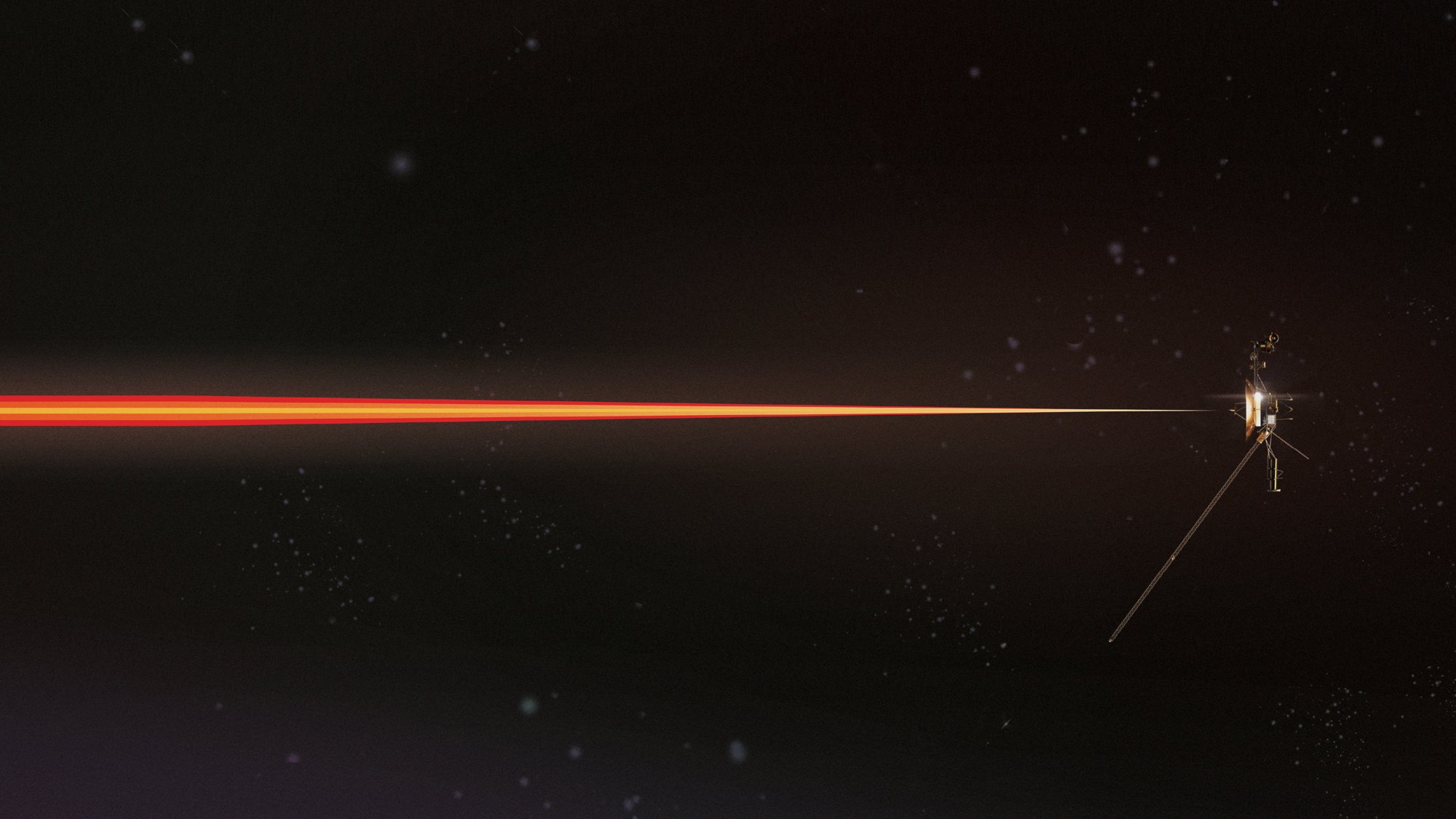
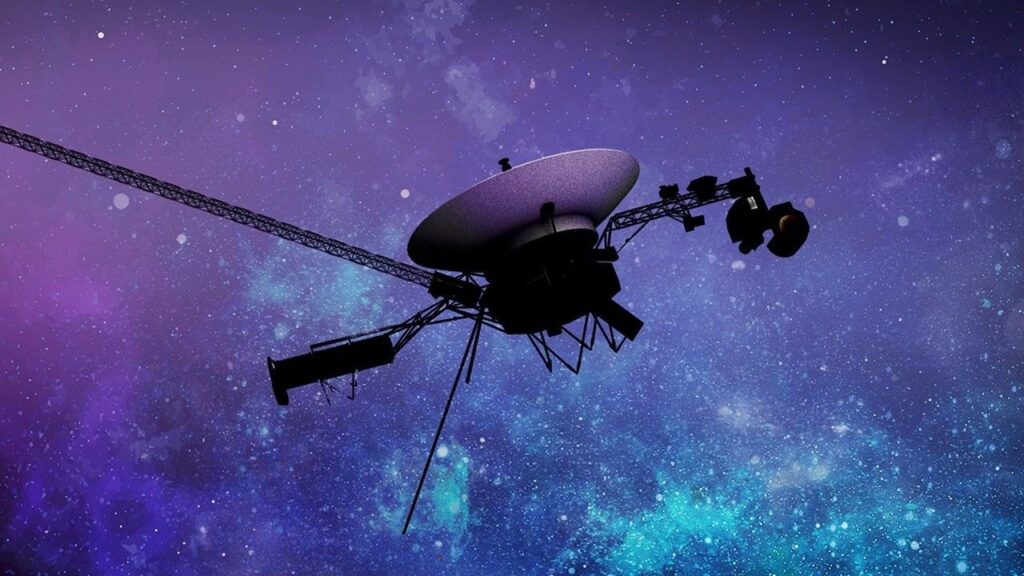
NASA announced that Voyager 1 reached one light-day from Earth at 2:16 a.m. PST (5:16 a.m. EST, 10:16 UTC) on Nov. 18, 2026, the first spacecraft to do so. A fault has kept its science and engineering data from reaching Earth since Nov. 14.
A day at the speed of light
A light-day is the distance light travels in 24 hours: about 16.1 billion miles (25.9 billion kilometers), according to NASA. For comparison, the release says sunlight needs about 1.3 seconds to reach the Moon and about four hours to reach Neptune. It takes another 20 hours to reach Voyager 1, which has been traveling for more than 49 years at about 38,000 mph (61,155 kph).
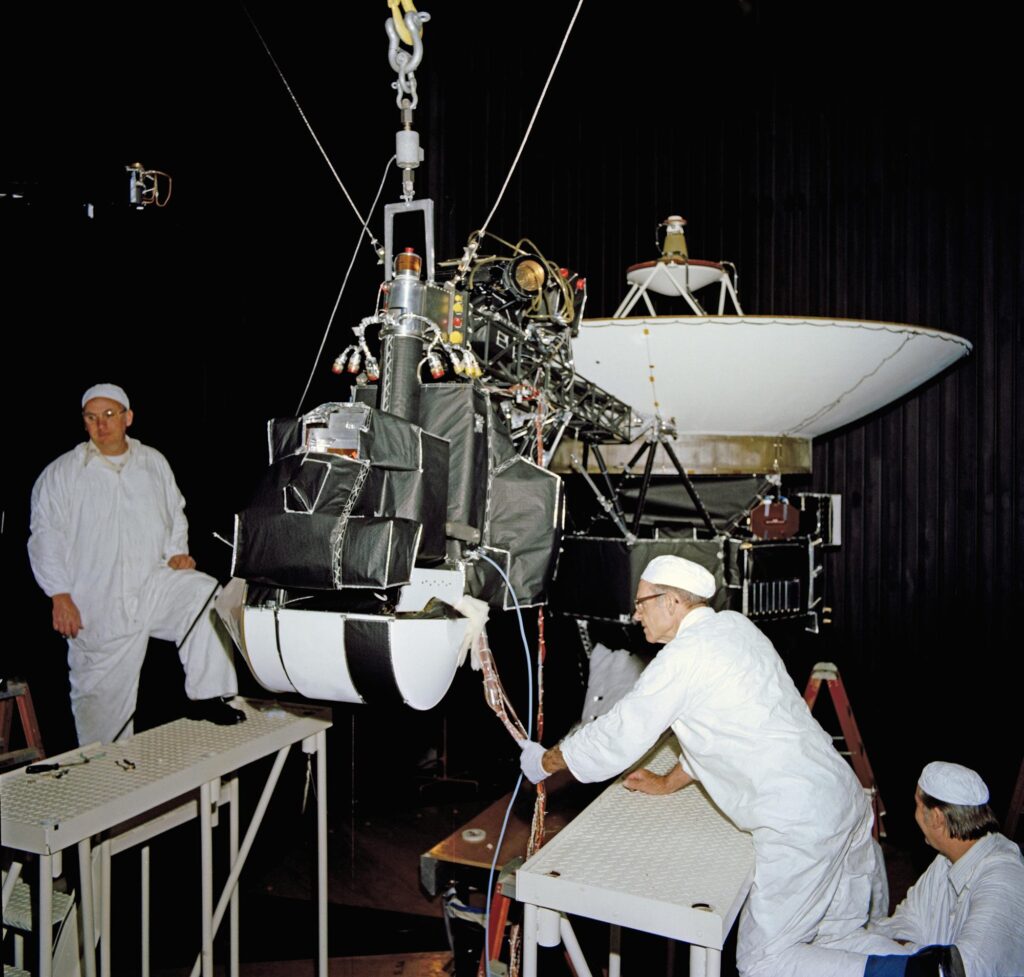
The distance sets the pace of every conversation with the probe. JPL project manager Suzanne Dodd said: “We listen to Voyager 1 every day and send commands to the spacecraft weekly.” Signals now take 24 hours to reach the spacecraft and 24 hours to come back, so a command and its answer are two days apart. The Deep Space Network, NASA’s set of large antennas at three sites around the world, handles that traffic.
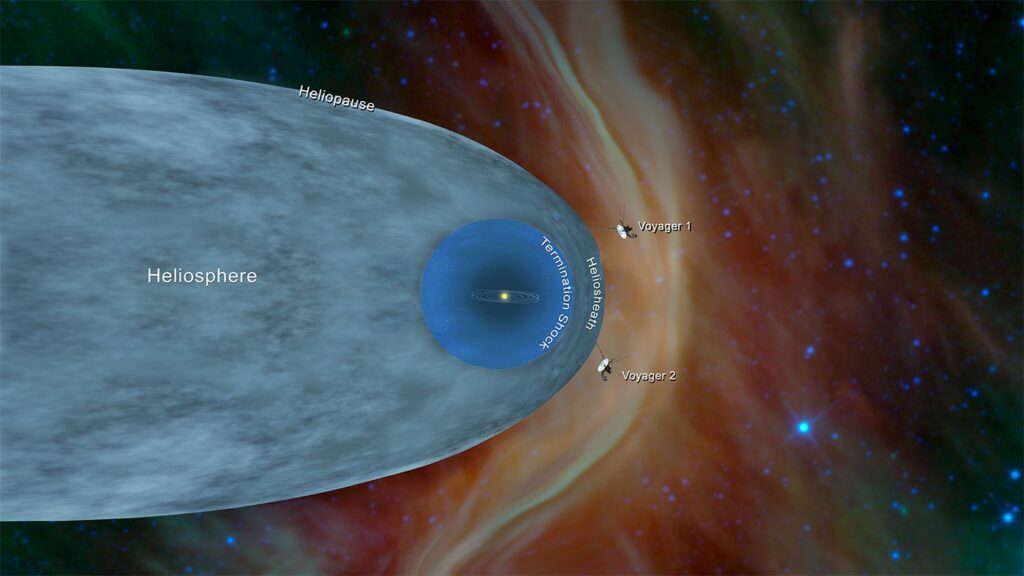
NASA said the team heard from the probe 24 hours after the milestone, early on Thursday, Nov. 19. Voyager 1 launched in 1977 with its twin Voyager 2, and in 2012 it became the first human-made spacecraft to enter interstellar space by leaving the heliosphere, the bubble of space shaped by the Sun’s wind. Voyager 2 crossed that boundary in 2018. Our earlier piece on the Voyager probes covers that region in more detail.
Carrier signal, but no data
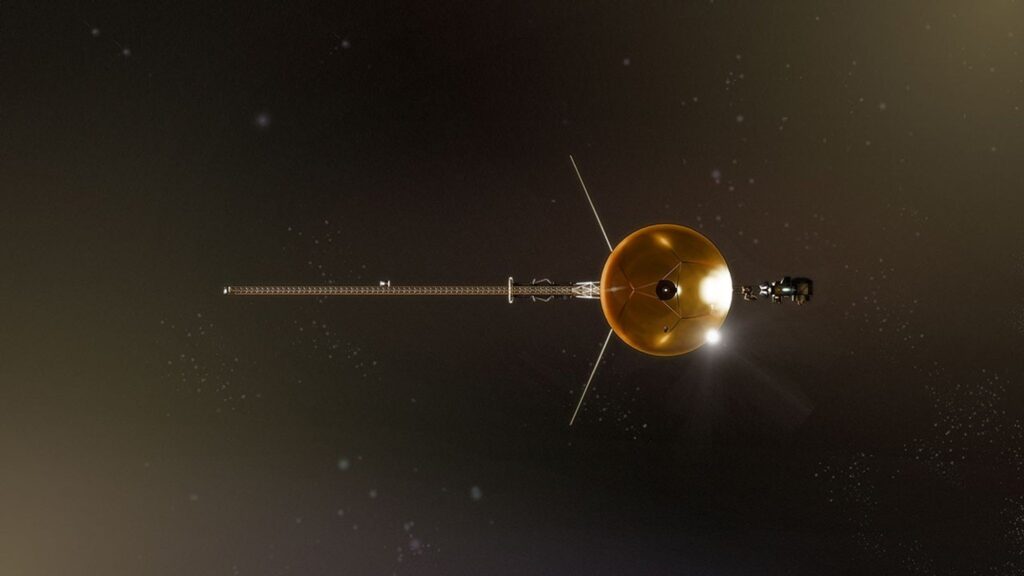
The release says NASA has not received science or engineering data from Voyager 1 since Nov. 14. The spacecraft still sends a carrier signal, the bare radio tone that normally carries the data. Engineers used that tone and trajectory calculations to confirm the light-day milestone, and they are still analyzing what went wrong.
A NASA Science blog post dated Nov. 18 adds detail. A Deep Space Network antenna in Canberra, Australia, locked onto the carrier signal but received no data. According to the blog, that suggests the computer that keeps the spacecraft pointed at Earth is still working, and so are the antenna and broadcast equipment. The missing data points instead to the onboard computer that collects and formats information from the science instruments for transmission.
The same post says diagnosis could take weeks or longer because of the 24-hour round-trip delay. The team is drawing on a similar 2023 event that was traced to an onboard computer, and it is checking whether the new problem is linked to the October communications gap. NASA does not give a date for restoring the data.
A 49-year-old probe on a shrinking power budget
Putting the milestone next to the probe’s recent record shows how thin the margins are. In an Oct. 29 JPL update, NASA said the Deep Space Network could not detect Voyager 1 on Oct. 18 and 19, two attempts 24 hours apart, and the signal returned on Oct. 20 on its own. Engineers found that one group of thrusters had gone offline and its backups had switched on, a built-in safety response. We reported that episode in Voyager 1 went silent for two days, then returned on its own.
The power budget explains why every fault matters. Each Voyager loses about 4 watts a year as the plutonium in its radioisotope generator decays. That generator is, in NASA’s words, essentially a nuclear battery. JPL says the probe launched with 10 dedicated science instruments and has already switched off two. In September, engineers swapped three devices that help keep the spacecraft warm for three lower-power ones, about six weeks after doing the same on Voyager 2. Without that swap, JPL said, another Voyager 1 instrument would have had to be shut down as early as summer 2027. NASA now expects both probes to keep their current instruments running until at least their 50th launch anniversaries next summer.
For scale, the 4 watts lost each year is far less than the power of a household bulb, yet at this point in the mission it decides which instruments stay on.
What the farthest probe still measures
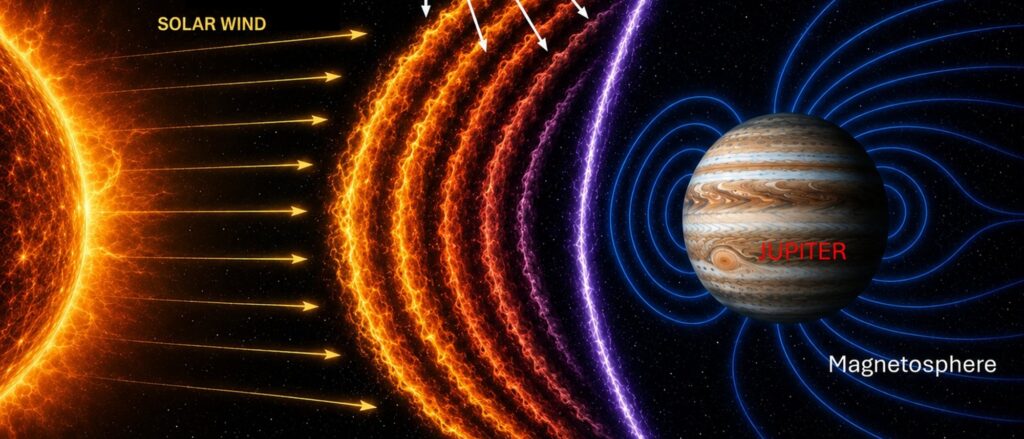
NASA’s heliophysics director Joe Westlake said: “Traveling a light-day is a singular feat for a spacecraft, but Voyager is so much more than a distant traveler.” Both probes continue to measure changes in the Sun’s magnetic field. Linda Spilker, the Voyager project scientist at JPL, said the Sun’s influence reaches all the way out to Voyager 1, and she hopes the probe lasts long enough to show where it ends and pristine interstellar space begins.
That is why the data outage is more than an inconvenience. The milestone was confirmed from the carrier signal alone, but the measurements that make the distance scientifically useful are the ones currently missing. NASA says that one day, when Voyager 1 can no longer communicate with Earth, it will become humanity’s silent ambassador to the stars. The team’s priority now is to keep that day from arriving early. Our earlier report on the JPL event has the background to the milestone.