Voyager 1 hits one light-day from Earth: A radio call now takes a full day
NASA says Voyager 1 will reach one light-day from Earth on Nov. 18, 2026, so a message to the probe takes 24 hours to arrive and another 24 for the reply.
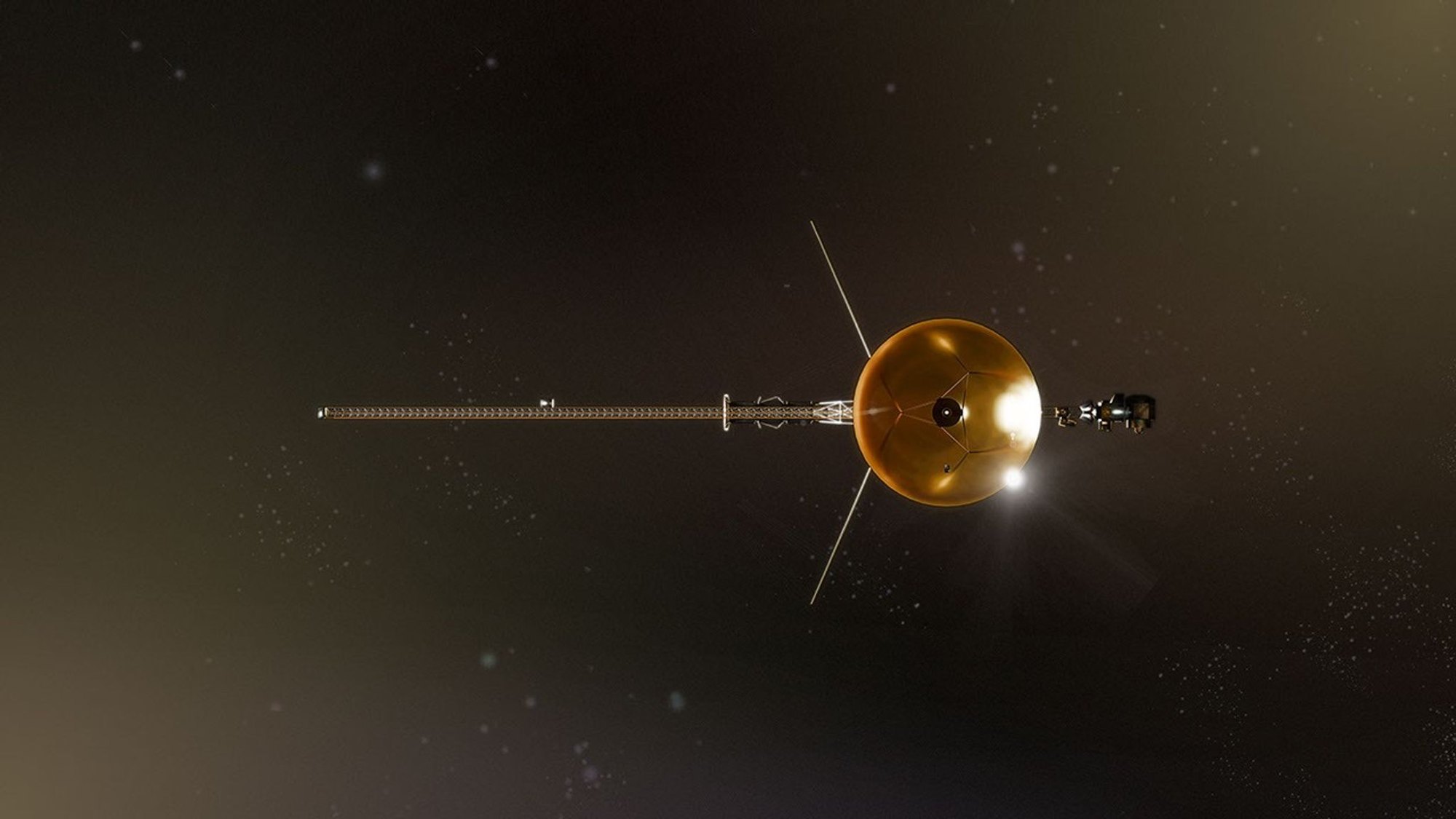
NASA says Voyager 1 will reach a distance of one light-day from Earth on Nov. 18, 2026, at 5:16 a.m. US Eastern time (10:16 UTC). A radio signal sent to the probe will then take 24 hours to arrive, and the reply another 24 hours.
The milestone is the subject of a new episode of NASA’s Curious Universe podcast, “What Voyager Teaches Us From One Light-Day Away”, released Nov. 17. The episode features Jamie Rankin, the mission’s deputy project scientist, who is a research scientist at Princeton University.
What a light-day measures
A light-day is the distance light travels in 24 hours. According to NASA, that is more than 16 billion miles (25.9 billion kilometers), about 170 times the distance from Earth to the Sun. The podcast compares it to flying from Earth to Pluto more than four and a half times.
The spacecraft covers this ground slowly by comparison. Rankin says the Voyagers travel at an average of about a million miles a day, which is why reaching one light-day took roughly 50 years. She called it a tangible distance people can relate to, and said an object humans built that can still send a signal back is “incredible”.

Two probes, one lucky alignment
Voyager 2 launched on Aug. 20, 1977, and Voyager 1 followed on Sept. 5, 1977, though it was placed on the faster path to Jupiter and Saturn. The mission was designed around an alignment of the outer planets that, in NASA’s account, comes once in 176 years.
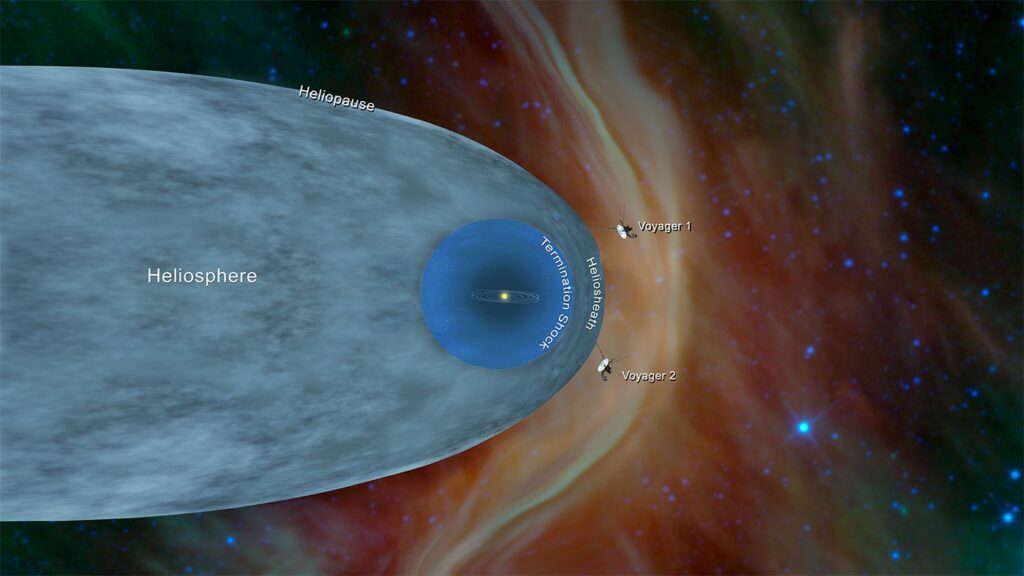
After the Saturn flybys in 1980 and 1981 the probes split. Voyager 2 went on to Uranus and Neptune, and Voyager 1 headed out of the plane of the planets. Mission managers then turned the cameras off to save resources for other instruments. Voyager 1 crossed into interstellar space, the region between the stars, in 2012, and Voyager 2 followed in 2018. The boundary they crossed is the heliopause, the edge of the Sun’s magnetic bubble, called the heliosphere.
What the probes still measure
Only a few instruments are still switched on. Each probe carries a plutonium-fueled generator that is still running but fading, so the team has turned off instruments over the years to save power. The ones left are those most likely to return data about the Sun and the space beyond its bubble.
Rankin describes Voyager as being on a distant shore. It can still feel “ripples” from the Sun: coronal mass ejections, which are blasts of solar material, can merge on the way out and disturb the gas around the probe. One surprise was the magnetic field outside the bubble. It meets the solar system at an angle, which squeezes the heliosphere into a slightly lopsided shape instead of the sudden change in direction scientists had expected.
She also points out that newer missions image the shape of the heliosphere from a distance, like an aerial view. The Voyagers instead take a road trip through it, measuring the plasma (electrified gas) and protons directly.
A mission with no successor on the way
The podcast notes that no other spacecraft has reached interstellar space, and that any new interstellar mission would take a very long time to pay off. That leaves Voyager as the only source of direct measurements there, which is part of why NASA keeps it running.
NASA’s news release adds details on how the mission is run. The Jet Propulsion Laboratory (JPL), managed by Caltech, built and operates the spacecraft. NASA’s Deep Space Network, also managed by JPL, handles communication, and the mission is funded by NASA’s Heliophysics Division. The release also gives a distance of more than 16 billion miles, making Voyager 1 the most distant human-made object.
For the public, NASA has organized a worldwide light show on Nov. 17, in which people flash lights after sunset, with a website that flashes the Voyager call sign “VGR” in Morse code. On Thursday, Nov. 19, at 12 p.m. EST (17:00 UTC), JPL will hold a panel and question session at its von Karman Auditorium, streamed at nasa.gov/live. It will include a preview of a NASA+ Voyager documentary planned for 2027, with Voyager project manager Suzanne Dodd and project scientist Linda Spilker among the participants.