Starship will wait in Earth orbit for Orion; Blue Moon takes a polar route
NASA, SpaceX and Blue Origin have redesigned how their crewed landers reach the Moon and meet Orion, so that astronauts can land in 2028. Each company now flies its own route.
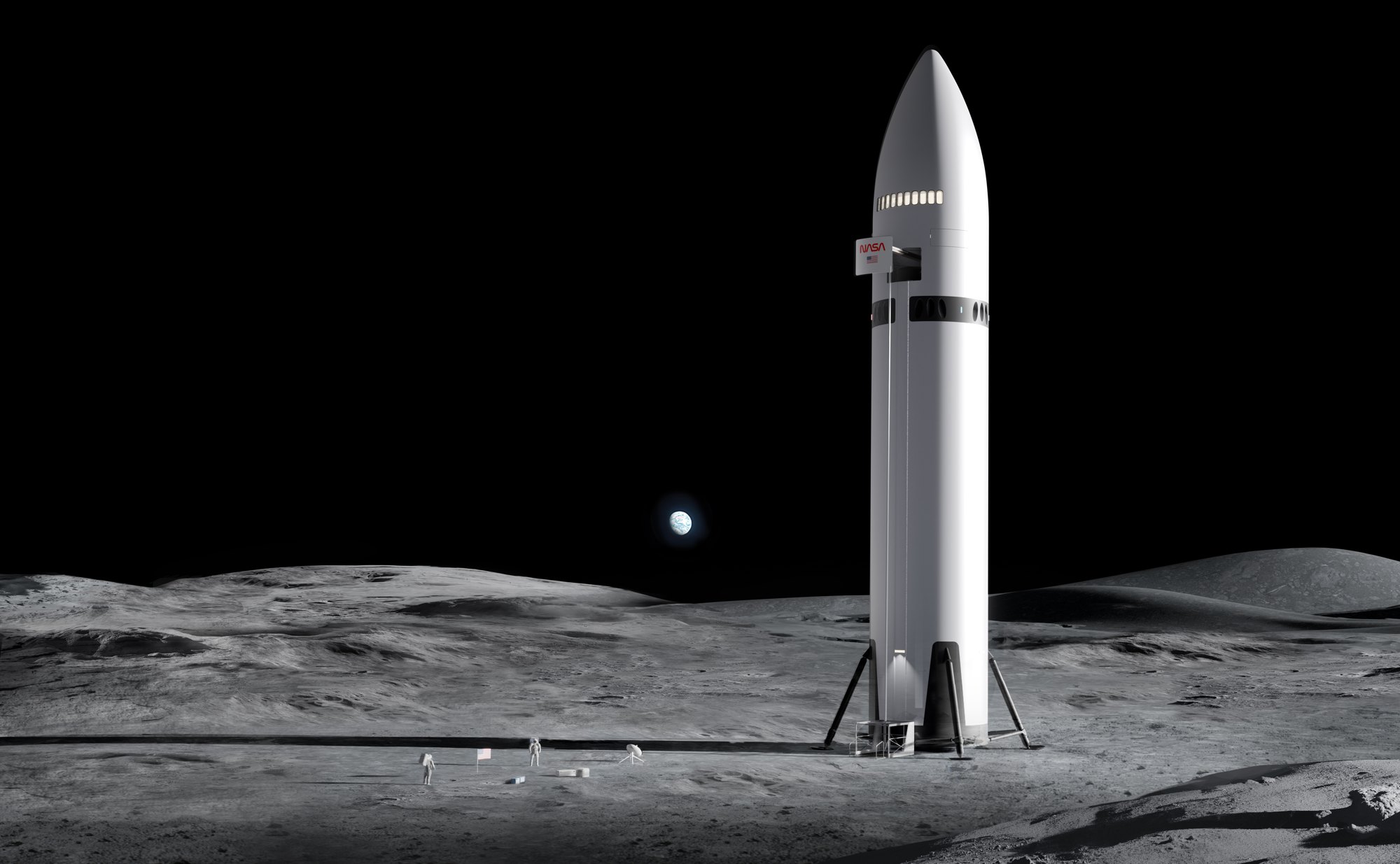
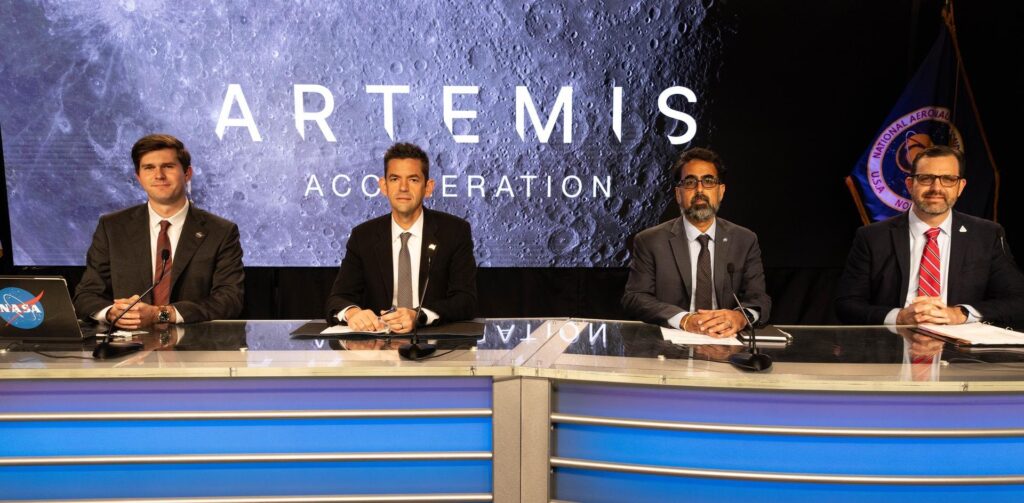
NASA, SpaceX and Blue Origin have streamlined their crewed Moon landers and changed how each one meets the Orion capsule, NASA said on Oct. 23. The aim is a crewed landing in 2028, with the two companies no longer flying the same route.
Two landers, two different meeting points
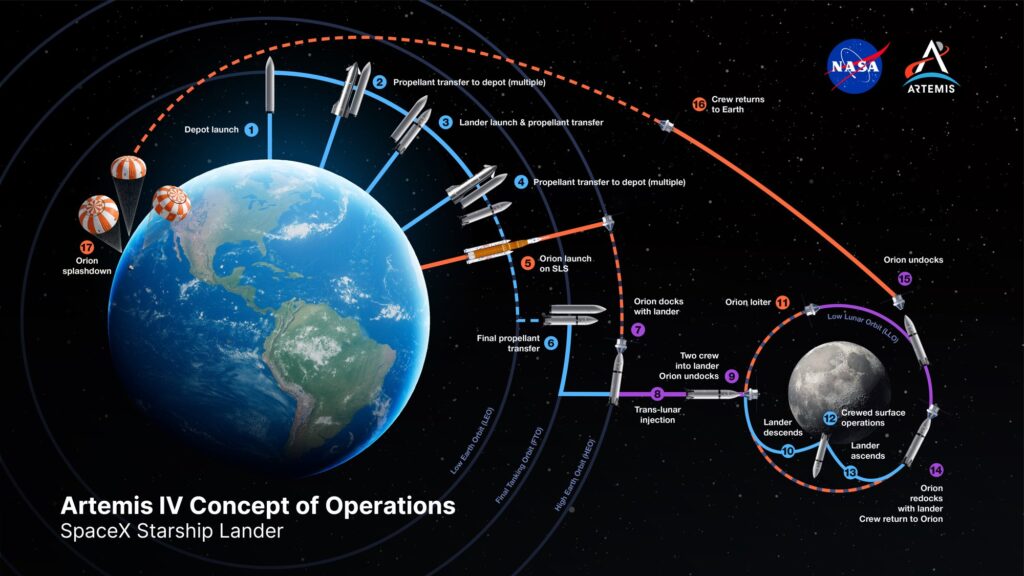
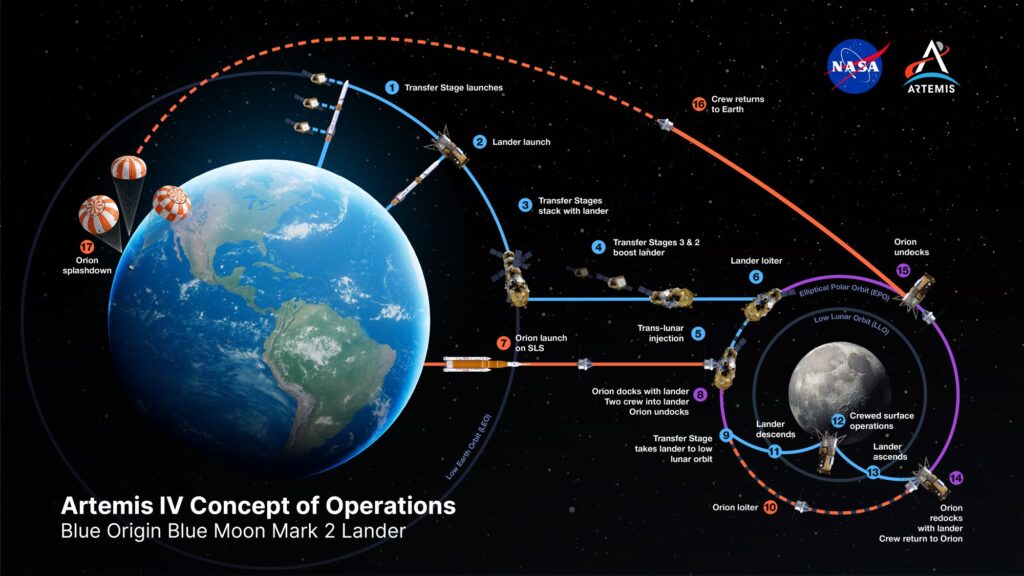
Every crewed Artemis landing follows the same basic pattern. Four astronauts launch in Orion on NASA’s Space Launch System (SLS) rocket from Kennedy Space Center in Florida. A commercial lander links up with Orion, two crew members ride it to the surface, and two stay aboard Orion. The change is where that meeting happens. NASA had planned a near-rectilinear halo orbit, a long, stretched path around the Moon. Now each lander gets an orbit that suits its own design.
SpaceX’s Starship will wait for Orion in Earth orbit. The two dock there, and Starship then fires its engines in a trans-lunar injection burn, the push that sends a spacecraft toward the Moon, carrying Orion with it into low lunar orbit. NASA said it is working to modify Orion so Starship can push it. According to NASA, this plan lowers the propellant Starship must gather in space and shortens the reunion after astronauts lift off from the surface. Starship still needs a fleet of tanker Starships to fill a “depot” Starship with cryogenic (super cold) propellant in low Earth orbit first, and SpaceX will prove that on an uncrewed demonstration mission.
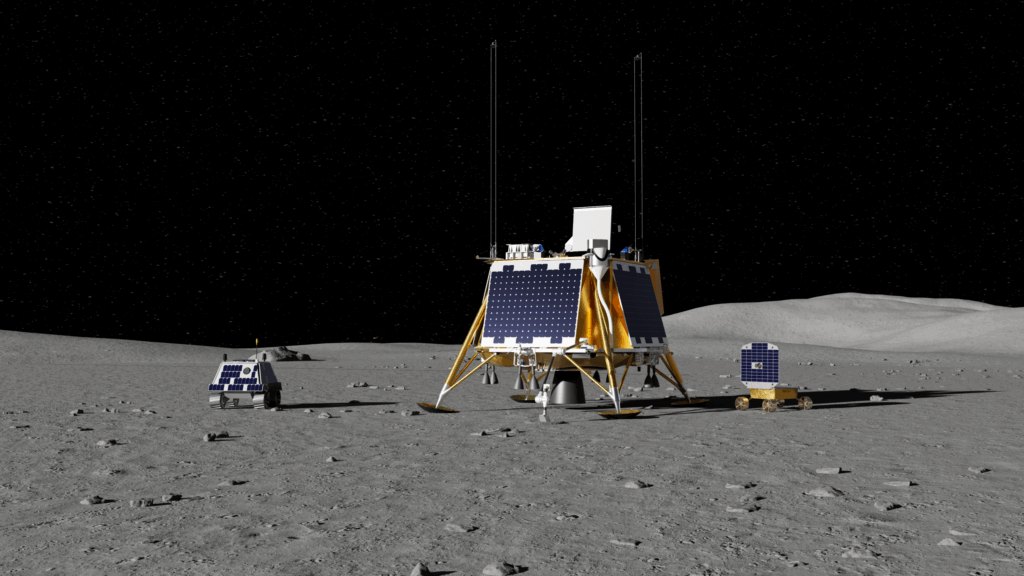
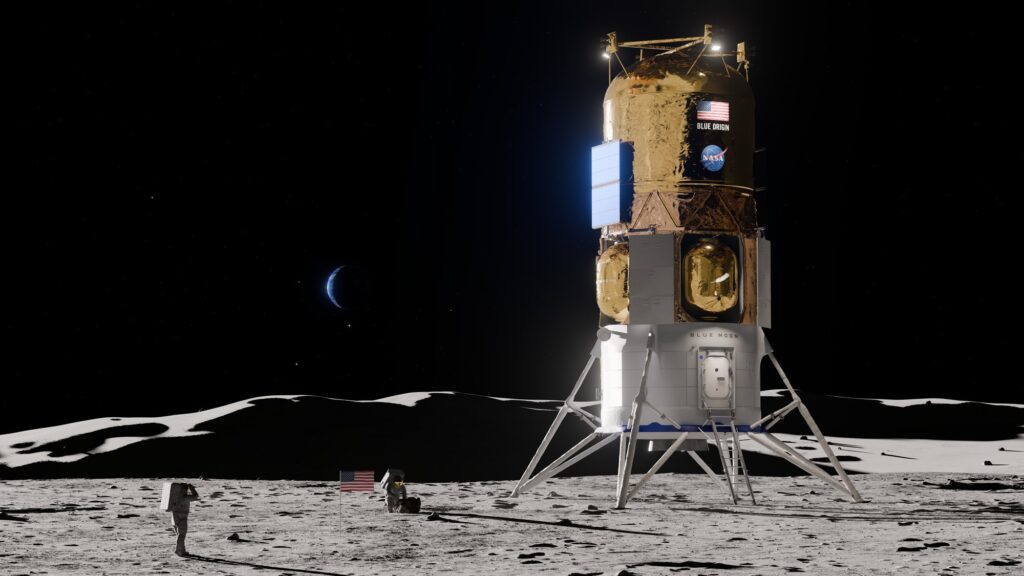
Blue Origin is dropping in-space propellant transfer for now. It will send its Blue Moon Mark 2 Alpha lander to the Moon with three transfer stages, built from existing Mark 1 and Mark 2 hardware, that work like the stages of a rocket and separate as their propellant runs out. The stack heads for an elliptical polar orbit, which NASA says gives faster trips from the surface back to Orion, needs less lander propellant and makes the most of what SLS can deliver. The crew then descends to the Moon’s South Pole. Blue Origin will fly an uncrewed transfer stage demonstration first, using lessons from its robotic Mark 1 missions for NASA’s Moon Base Program.
Contracts rewritten, milestones added
NASA updated its contracts with both companies earlier this year. Under the original deals, Starship was assigned to Artemis III and IV and Blue Moon to Artemis V. Now both providers take part in Artemis III, which NASA has redefined as a low Earth orbit test of docking between Orion and test versions of each lander next year. Neither company is tied to a specific landing mission. Based on readiness, NASA will choose which lander goes first, and a second crewed landing opportunity will follow. NASA will certify the landers before any crew flies.
The companies have also added checkpoints that give NASA more insight. SpaceX is adding two demonstrations of its crew cabin, called Cabin 1. Blue Origin is adding human-in-the-loop testing, where people operate the hardware, and hardware readiness milestones that also streamline training and operations.
NASA is energized, our core capabilities are being rebuilt, our machine shops are running 24/7, and our experts are in the field attacking the critical path.
That was NASA Administrator Jared Isaacman, who tied the effort to the National Space Policy and a Moon Base.

What the split means for the two companies
The rewrite changes the commercial picture. Blue Moon was previously scheduled for Artemis V, the later flight. According to our earlier report, NASA now plans the first Moon landing on Artemis IV, in 2028, and with no lander assigned in advance, either company can take that first flight. Whoever is ready earlier wins the mission.
The two test articles also meet Orion in orbit before any landing attempt. As we reported, Artemis III will dock Orion with both commercial landers in Earth orbit. That gives NASA a direct comparison of two docking systems with a crew aboard, a check the original plan did not include.
The approaches carry different risks. Starship’s plan depends on repeated tanker flights from Florida, a cadence that has not yet been shown with cryogenic propellant in orbit. Blue Origin’s plan avoids that step but depends on three stages firing and separating in sequence. Both must be shown on uncrewed flights first, which is where the real schedule pressure will sit.
Two Moonwalks of about two hours
NASA is targeting two Moonwalks of about two hours each on the first surface missions. Astronauts will collect lunar samples and test the spacesuit provided by Axiom Space. NASA described the landings as the start of increasingly difficult missions near the lunar South Pole.