Station crew starts the week with lung cells, a spacesuit overhaul and Dragon packing
Expedition 75 crew members studied blood flow and human lung cells, serviced spacesuits and stowed frozen samples in Dragon on Monday, NASA reported.
The Expedition 75 crew spent Monday on health research, spacesuit servicing and cargo loading aboard the International Space Station, NASA said. Frozen research samples were stowed in a SpaceX Dragon that will return to Earth soon.
Blood flow, lung cells and a blood test kit
In space, body fluids shift toward the head because gravity no longer pulls them down, and this can disturb blood flow. NASA flight engineers Jessica Watkins and Luke Delaney worked in the Columbus laboratory module on a study of how to prevent such abnormalities. Watkins scanned her veins with the Ultrasound 3 device and measured her blood pressure with a specialized Thigh Cuff. Delaney assisted while doctors on the ground watched in real time. NASA said the results may inform new cardiovascular techniques that protect crews in space and patients on Earth.
Flight engineer Anil Menon thawed and fed human lung epithelial cells, the cells that line the respiratory tract and lungs. The investigation aims to learn how to grow and maintain lung cells in microgravity, which NASA said may improve future space biology studies and lead to higher quality disease therapies.
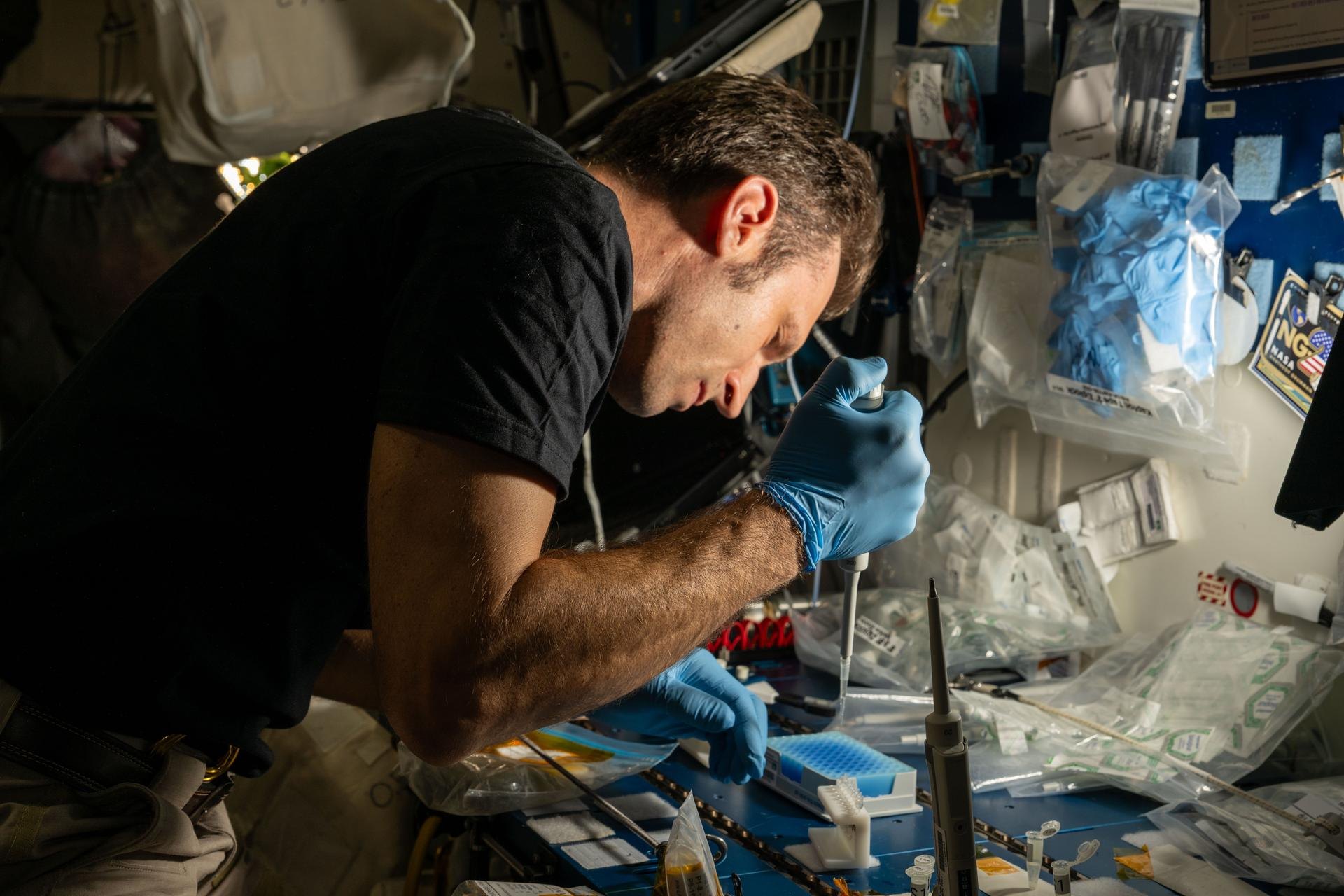
Joshua Kutryk of the Canadian Space Agency (CSA) switched on the Acute Care Testing in Space (ACTIS) facility and tested blood samples to help doctors monitor crew health. NASA’s lead image shows Kutryk processing bacterial colonies for DNA extraction and purification in the Harmony module, work on antibiotic-resistant microbes that may show how they adapt to microgravity.
Suit batteries out, a delivered suit assembled
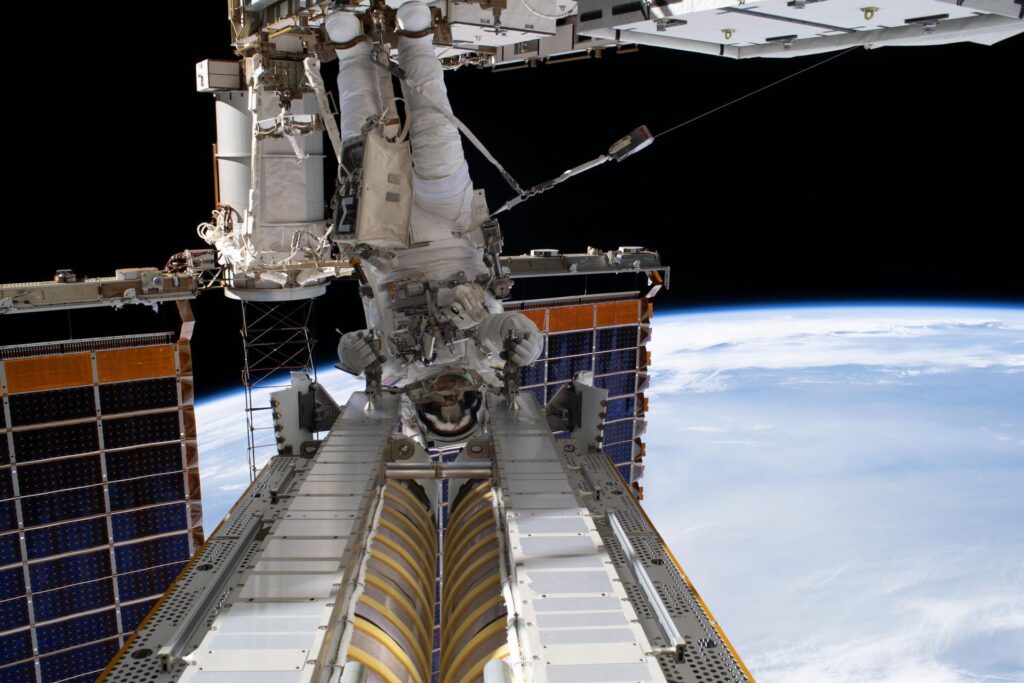
After lunch, Watkins and Delaney moved to the Quest airlock, the module spacewalkers use to leave and re-enter the station. Watkins inspected a spacesuit that arrived on a SpaceX Dragon cargo spacecraft on Oct. 15. She assembled its helmet, arms and legs, installed communications gear and stowed it.
Delaney removed batteries from the emergency jet packs attached to spacesuits. These packs would help a spacewalker fly back to the station in the unlikely event of becoming untethered.
The suit work follows our report on Dragon’s return cargo, which includes a used spacesuit that engineers will examine on Earth.
Dragon: Loading frozen samples before splashdown
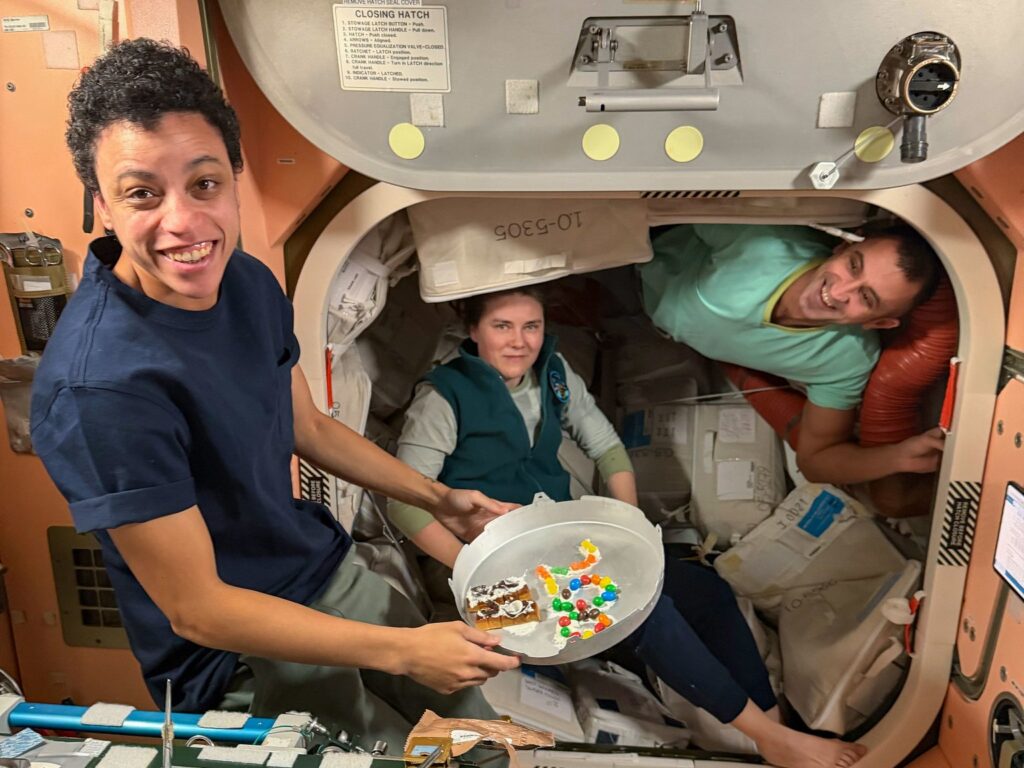
Menon and Kutryk moved research samples from finished experiments out of the station’s science freezers and into portable freezers, then stowed them inside Dragon. NASA said Dragon is nearing the end of its stay and will return soon for a splashdown in the Pacific Ocean, where NASA and SpaceX personnel will recover the spacecraft and its payloads for analysis. The post gives no departure date.
NASA’s Nov. 9 post said the crew was already packing microbe samples collected from station surfaces and a second spacesuit for the trip home.
A crew that is also keeping the station running
Roscosmos flight engineer Sergey Teteryatnikov ran Earth observation sessions all day, photographing landmarks from South America across the Atlantic Ocean to Africa. Cosmonauts Pyotr Dubrov, the station commander, and Anna Kikina, a flight engineer, did lab maintenance on communications gear, electronics and life support hardware.
Seven people, one cargo ship: The mission in numbers
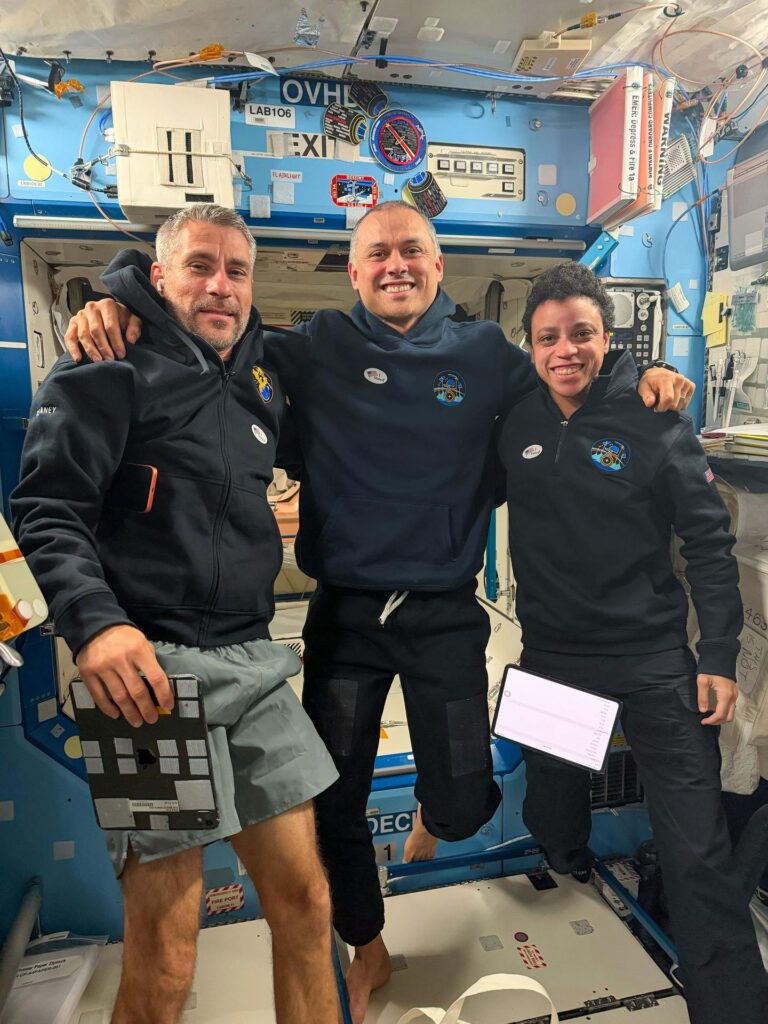
Monday’s work shows how the station splits seven people between research and upkeep. The crew is NASA’s Watkins, Delaney and Menon, CSA’s Kutryk, and Roscosmos’ Dubrov, Kikina and Teteryatnikov. The Dragon being packed docked on Oct. 15 carrying more than 6,300 pounds of science, supplies and hardware, according to NASA’s earlier coverage that we reported.
Spacesuit care is routine but demanding. NASA’s earlier blog posts said suits worn on spacewalks on Oct. 29 and Nov. 5 were cleaned in the Quest airlock. Each suit has to be checked, cleaned and restocked before the next outing. Watkins also reached 200 cumulative days in space across two expeditions on Oct. 31, per NASA’s Nov. 9 post.
Another cargo ship is due soon. As we reported, Watkins has cleared space in the Kibo module for a Northrop Grumman Cygnus XL, expected in a few weeks. More on station research is in our piece on research on the space station.