Gravitational waves could expose planets circling dead stars, NASA team shows
Two studies led by NASA astrophysicists show how LISA could find planets around pairs of white dwarfs, a population no telescope has yet detected, and how Webb could check the results.
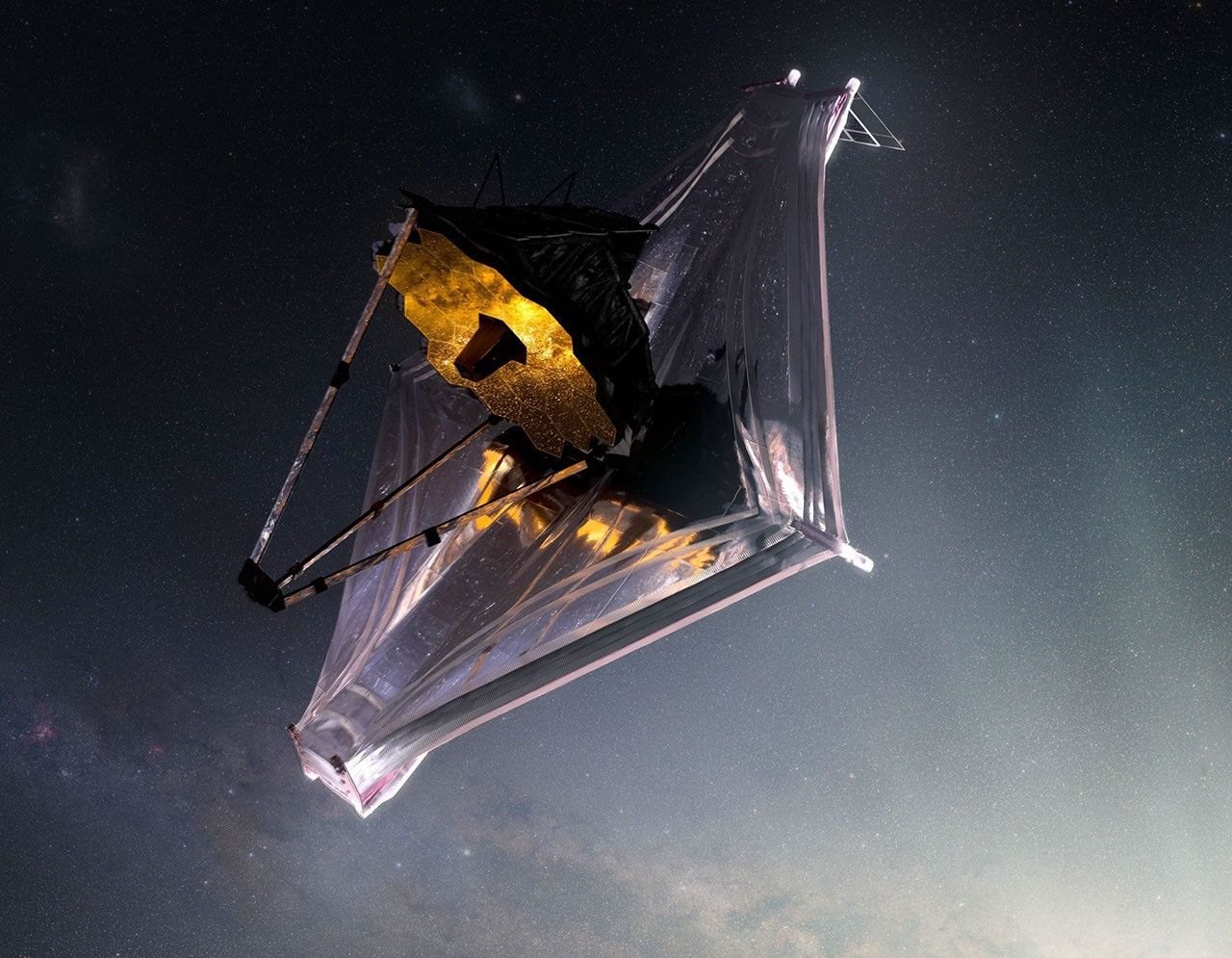
NASA-led researchers have shown how the future LISA observatory could find planets orbiting pairs of white dwarfs, the dead cores of Sun-like stars, by reading tiny shifts in their gravitational waves. Two papers appeared in The Astrophysical Journal on Tuesday, NASA said.
A planet’s tug leaves a signature in the waves
Gravitational waves are tiny ripples in space-time, produced whenever massive objects accelerate, such as two stars circling each other. LISA (Laser Interferometer Space Antenna) is designed to detect them from space. According to NASA, its most common targets should be double white dwarfs: two white dwarfs, each about Earth-sized, locked in a tight orbit.
On their own, such a pair emits waves at a nearly steady frequency. A planet changes that. Its gravity makes the pair wobble slightly around the common center of the system, which adds a Doppler modulation to the signal. The Doppler effect is the same shift that makes a moving source look slightly redder or bluer in light. In LISA’s data it would show up as sidebands, weaker secondary signals just above and below the main frequency. NASA’s Scott Noble compared this to the radial velocity method, which already finds planets around nearby stars by watching their light shift.
The idea was first proposed in 2008 by Japanese astronomer Naoki Seto. The first new paper, by Casey McGrath of the University of Maryland, Baltimore County and NASA’s Goddard Space Flight Center, works out which planet masses and orbital periods the method suits best. “If an exoplanet also orbits within one of these systems, its presence becomes imprinted on the gravitational wave signal in a way we’ll be able to uncover,” McGrath said.
No planet has yet been found around a binary white dwarf, although a few have been found around single ones. Any LISA detection would therefore reveal a new kind of exoplanet population. Astronomers estimate the Milky Way holds 10 million double white dwarfs with orbits shorter than an hour. LISA is expected to resolve about 10,000 of them individually, plus roughly 100 mixed pairs that include neutron stars or black holes.
Webb as the second opinion
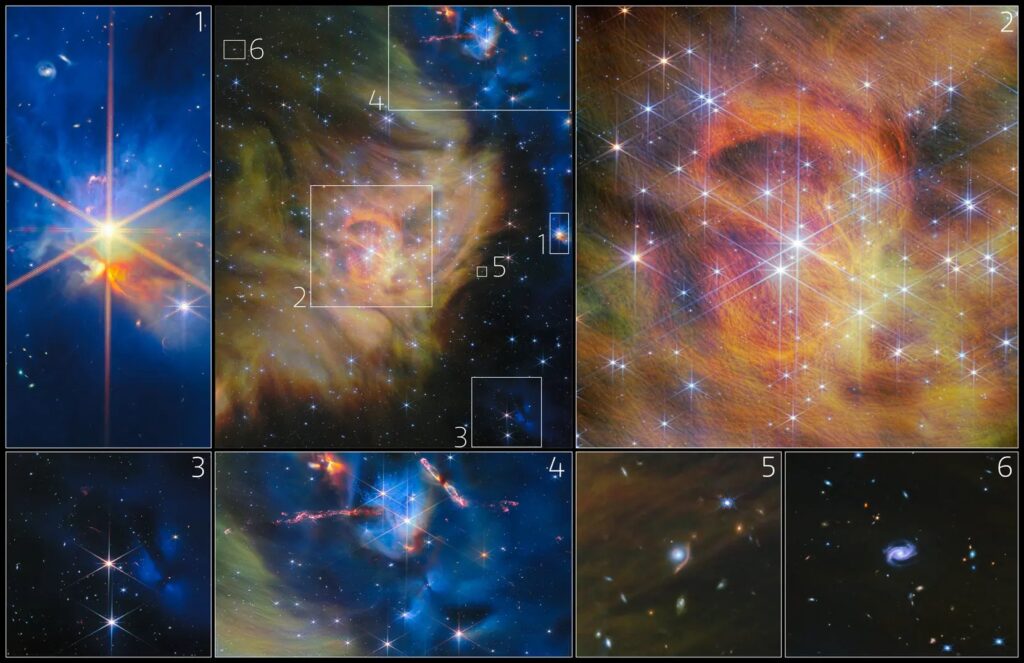
A gravitational-wave wobble alone could be a false alarm, so the second paper, with McGrath as lead author, proposes a check with NASA’s James Webb Space Telescope. A planet in such a system adds infrared light beyond what the two white dwarfs produce, and Webb is sensitive to infrared. The team says Webb can detect this excess out to at least 500 light-years.
For a test system at that distance, the researchers find Webb could detect a planet about five times Jupiter’s mass. LISA, under ideal conditions, could detect one lighter than Jupiter. NASA says LISA could find a Jupiter-mass planet in such systems thousands of light-years away, while Webb’s confirmations would cover systems within a few hundred light-years. Mary Anne Limbach of the University of Michigan said joint detections would show that the signals “correspond to genuine planets rather than false positives.”
What stands between the idea and a first planet
The method is a prediction from models, not an observation. LISA has not launched, and the Webb check works only for the nearest systems, so most candidates far across the galaxy would have to stand on the gravitational-wave data alone. The 500 light-year test case also assumes a particular system, and the ideal-conditions result for a sub-Jupiter planet may not hold for real, noisier signals.
The timeline is long. ESA, which leads the mission, says LISA was approved by its Science Programme Committee in January 2024 and is planned to launch in 2035 on an Ariane 6 rocket from French Guiana. NASA describes the launch as slated for the mid-2030s. Webb will need to stay operating until then to take part in the follow-up the new paper describes.
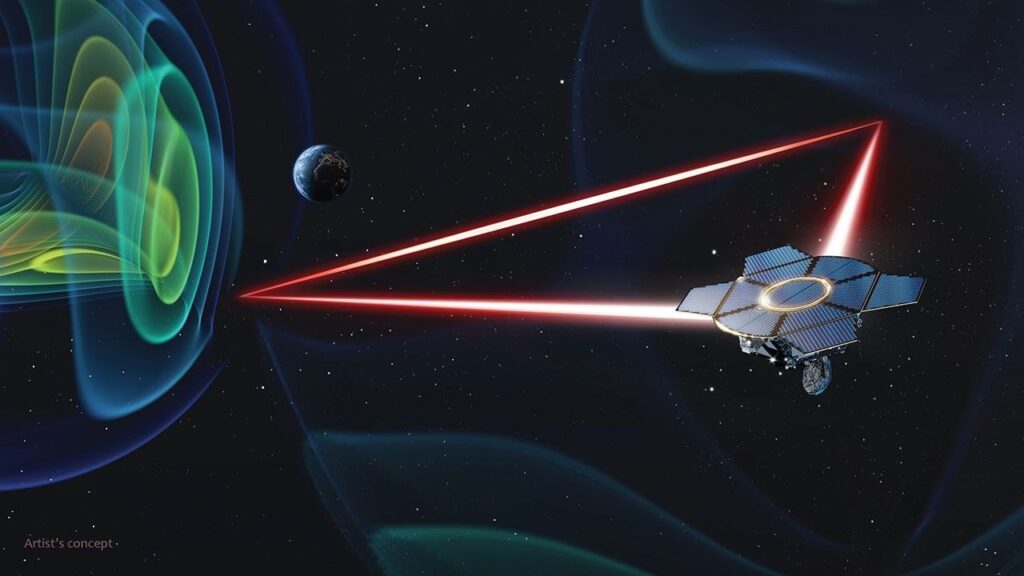
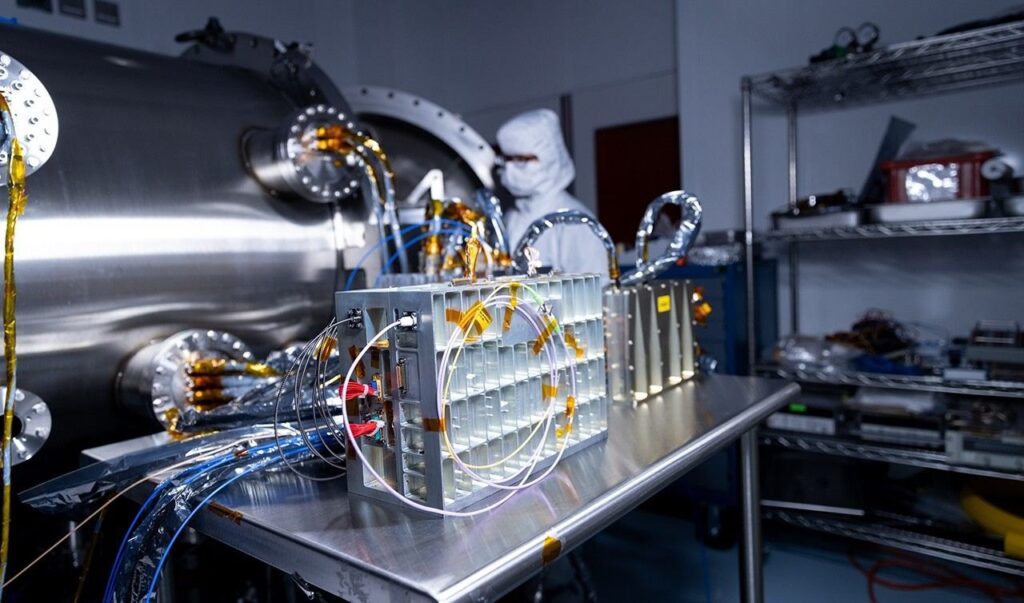
The hardware is also demanding. LISA will be three spacecraft trailing Earth around the Sun, forming a triangle 1.6 million miles (2.5 million kilometers) on each side. Infrared lasers will track changes in their separation smaller than the width of a helium atom. NASA is contributing the telescopes, the laser system, devices that control electric charge buildup on the free-floating test masses, and data analysis for identifying individual sources.