Balloon telescope finds hair-thin magnetic threads above the quiet Sun
Japan's NAOJ reports that Sunrise-III, a balloon-borne solar telescope, found thin magnetic threads in the Sun's lower atmosphere, which could help explain how the atmosphere is heated.
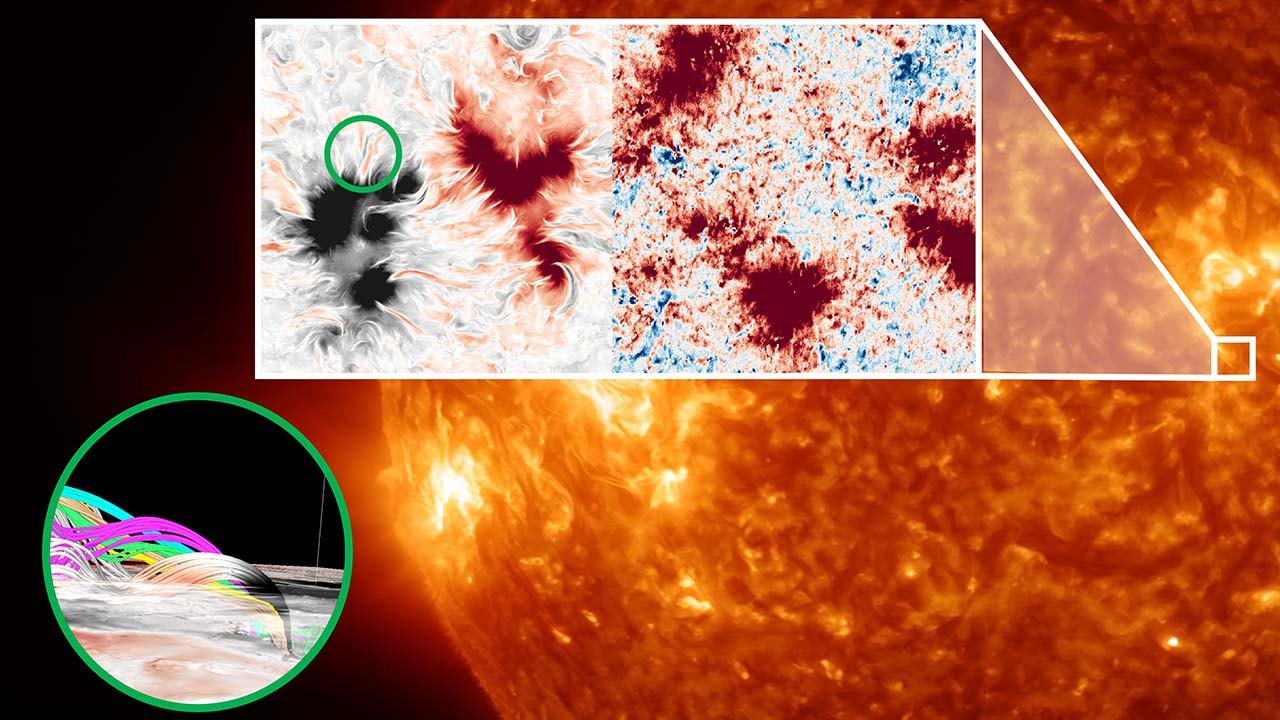
Researchers using the Sunrise-III balloon observatory have found thin, thread-like magnetic structures in the Sun’s lower atmosphere above a calm region, according to the National Astronomical Observatory of Japan (NAOJ). Computer simulations suggest the threads are twisted magnetic field lines.
The observations were made during Sunrise-III’s 2024 flight in Earth’s stratosphere. The results appear in three papers in The Astrophysical Journal Letters.
A magnetic canopy that is not smooth
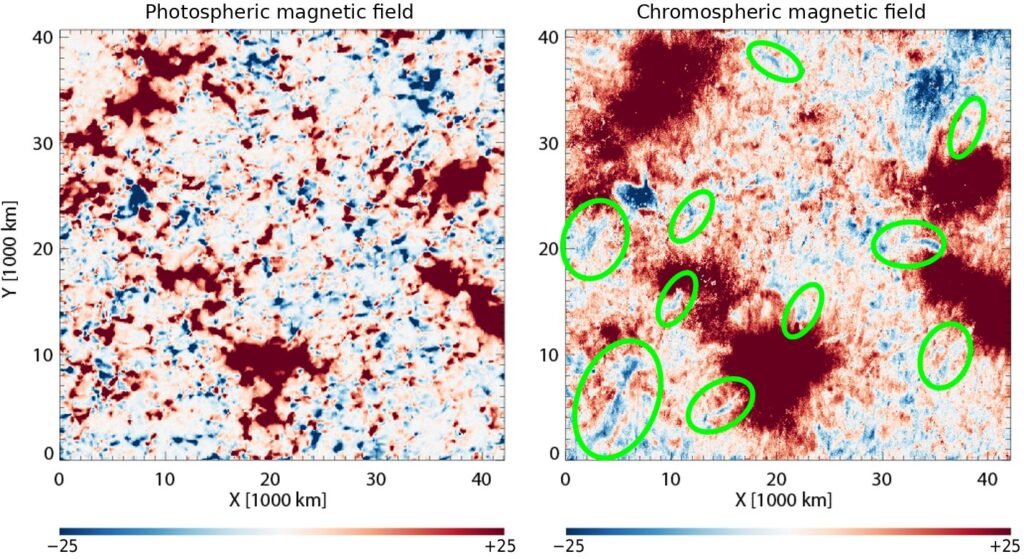
The Sun’s visible surface is called the photosphere. Above it lies the chromosphere, a thin layer of the atmosphere. In the chromosphere, magnetic fields rising from the surface spread outward and arc over, forming what researchers call a magnetic canopy.
The canopy was not a simple, evenly spreading structure. Using the SCIP instrument, NAOJ’s team found it contains many thin, elongated, thread-like magnetic substructures. SCIP, short for Sunrise Chromospheric Infrared spectroPolarimeter, measures magnetic fields continuously from the photosphere up through the chromosphere. It does this by analyzing the polarization of near-infrared light.
The region studied was part of the quiet Sun, meaning areas without sunspots or similar activity. These regions cover most of the solar surface, but their magnetic fields are weaker than those in active regions. That makes them hard to measure from the ground, because the blurring caused by Earth’s atmosphere washes out fine detail.
A numerical simulation reproduced the threads. In the model they appear as magnetic field lines twisted by motions at the solar surface. The detailed release from the observatory’s Solar Science Observatory adds that some of the threads have polarity opposite to the canopy around them, which could allow magnetic reconnection. That is a process in which field lines break and rejoin, releasing energy. The lead author of this part of the study is Masahito Kubo of NAOJ’s SOLAR-C Project.
Mapping the magnetic fields of spicules
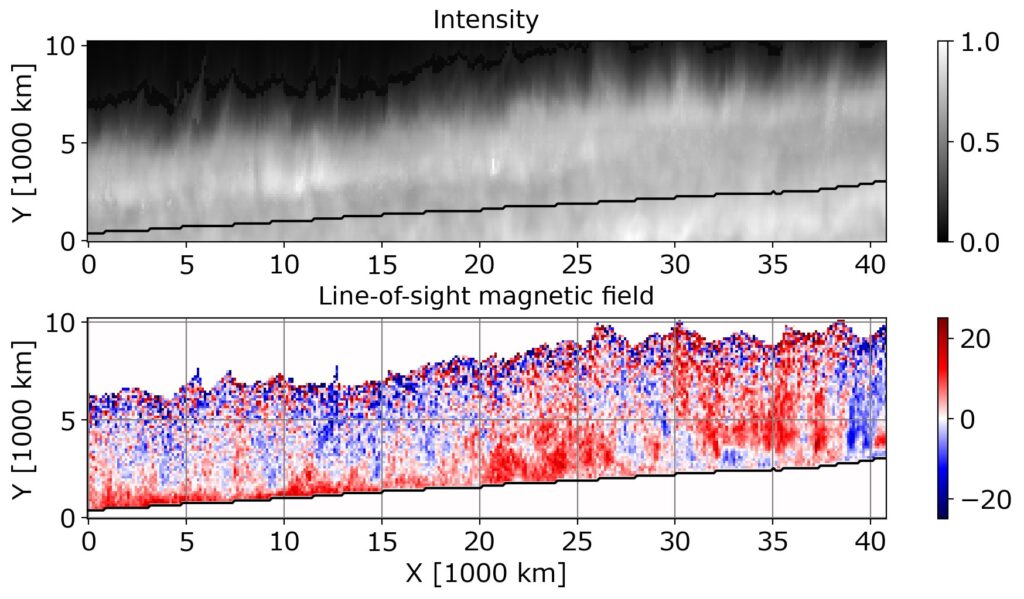
In a separate observation, Sunrise-III looked at a quiet-Sun region near the solar limb, the visible edge of the Sun. There it mapped the magnetic fields of spicules, jet-like structures that shoot upward from the surface. The data also showed how the field distribution changes with height above the limb. This work is led by Yoshihiro Naito of the Graduate University for Advanced Studies.
The third paper, led by Patrick A. Ondratschek, connects the polarity-reversed patches seen in SCIP data to twisted flux ropes in simulations. A flux rope is a bundle of twisted magnetic field lines.
NAOJ says the findings may help explain how energy travels from the solar surface to heat the solar atmosphere. Why the outer atmosphere is far hotter than the surface is one of the long-standing open questions in solar physics.
Why put a telescope under a balloon
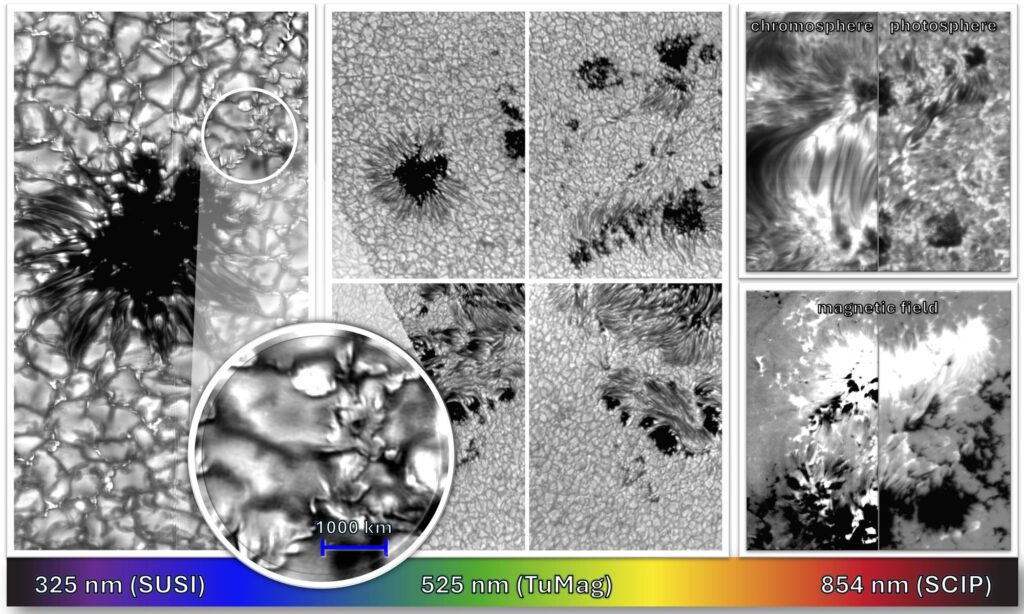
Sunrise-III is an international project built around a 1-meter telescope. It floats on a balloon at about 35 km altitude, above most of the atmosphere, so the blurring that limits ground telescopes is very low. Its gondola carried three instruments developed by different countries, with NAOJ leading SCIP.
The mission shows how a relatively small, short-lived platform can complement large observatories. In NAOJ’s first-images release from January 2025, the flight lasted about 6.5 days, produced roughly 200 terabytes of data, and showed solar structures as small as 50 km across. The mission also observed two solar flares.
It is also a case of shared effort. The first-images release names the Max Planck Institute for Solar System Research (MPS) in the credit line for the mission’s pictures, and a Spanish team of amateur astronomers mounted four cameras on the gondola to photograph the balloon during the flight. On the Japanese side, the observatory’s detailed release lists funding from Japan’s JSPS research grants and from the Institute of Space and Astronautical Science (ISAS) at JAXA under its Small Mission-of-Opportunity program.
For Japan, that arrangement offers a way to lead instrument development for a flagship solar mission without building the whole observatory. NAOJ is also preparing SOLAR-C, a dedicated solar mission, and its SOLAR-C Project is where Kubo works. The 2024 balloon data give that effort a view of what fine magnetic detail looks like at the scale a future mission would need to resolve.