A lost rover, no GPS and a lunar night coming: ESA opens a navigation contest
From 1 November 2026, anyone can try to teach a virtual lunar rover to find its position from a panoramic photo and an orbital map, with no help from Earth.
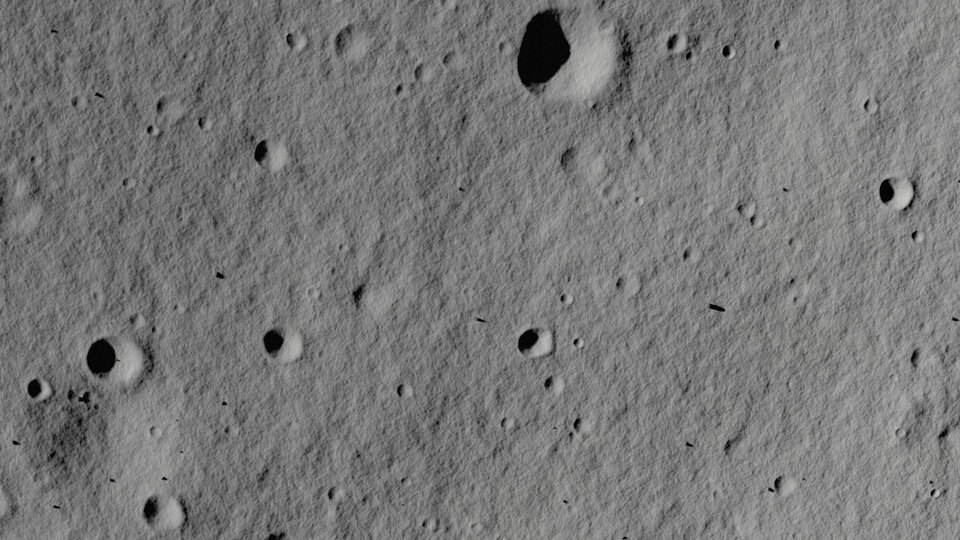
The European Space Agency’s Advanced Concepts Team will open a public competition on 1 November 2026 that asks entrants to locate a lost lunar rover. The task: match a panoramic photo from the rover with a satellite map of the Moon’s surface, with no signal from Earth.
A rover with a camera, a map and a deadline
According to ESA’s announcement, the Lunar X-view challenge sets a simple scene. An imaginary rover is alone on the Moon, cannot contact Earth and does not know where it is. It carries only a panoramic camera and an aerial map taken from orbit. The lunar night is approaching, so it must work out its position quickly.
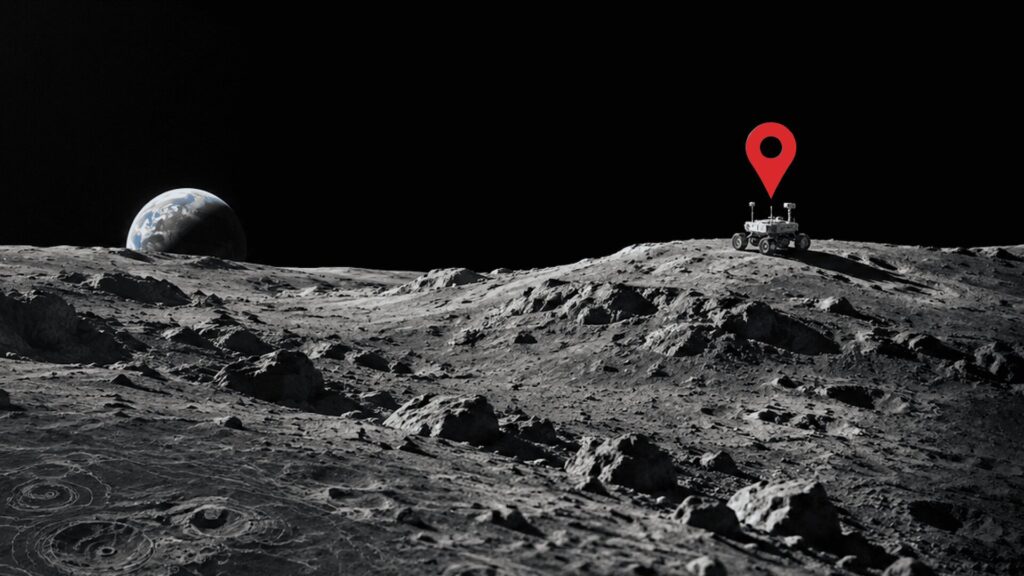
Entrants have to write an algorithm that links the rover’s ground-level panorama to an image of the surface taken by a satellite orbiting the Moon, and from that fix the rover’s exact position. Dario Izzo, the team’s scientific coordinator, described the situation this way: “A rover is alone on the Moon, has no contact with Earth and is unsure of its position.”
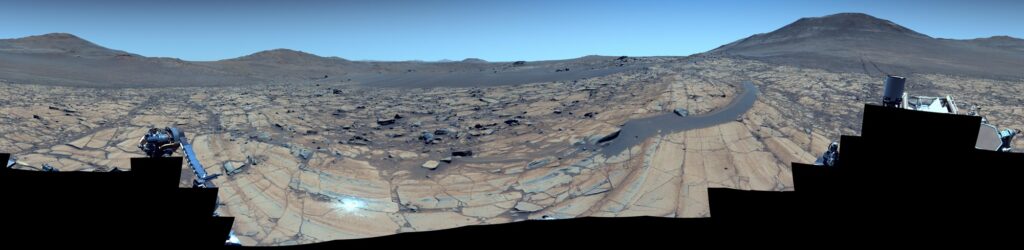
The problem is harder than it sounds. A panorama shows the terrain from the rover’s own low viewpoint, with hills, rocks and craters seen from the side. The orbital map shows the same terrain from straight above. A program has to recognize that these two very different views show the same place.
Who runs it and how to enter
The contest is hosted on Kelvins, the team’s portal for public aerospace challenges. ESA says it is free and open to everyone, and that submissions are scored automatically on the platform. The datasets and rules will be published on 1 November 2026 on the competition website.
The Advanced Concepts Team is ESA’s multidisciplinary think tank for emerging technologies. It designed the challenge with the Institute of Science Tokyo, the University of Adelaide and Politecnico di Milano. Izzo pointed to earlier Kelvins contests, including the Pose Estimation challenges, ELOPE and the Collision Avoidance Challenge. His conclusion from them is that a clearly posed hard problem with a public scoreboard gets results in months that no single team could reach in years.
Stefano Silvestrini of Politecnico di Milano, who helped design it, framed the goal as helping rovers to “leave the comfort of constant navigation support and learn to find their own way”.
Why self-location pays off in science
ESA’s argument is that a rover which knows exactly where it is can travel farther and reach scientific targets on its own. That matters on the Moon for a practical reason: there is no satellite positioning network there like GPS on Earth, so a rover cannot simply ask where it is. Positions estimated from a rover’s own motion become less certain the farther it drives, so they need to be corrected against something fixed, such as a map.
Time pressure is real as well. NASA says a lunar night lasts about 14 Earth days, and the surface cools to roughly minus 173 degrees Celsius. A rover that spends its remaining daylight unsure of its position loses time it cannot get back, while one that localizes itself quickly can spend those hours driving or taking measurements.
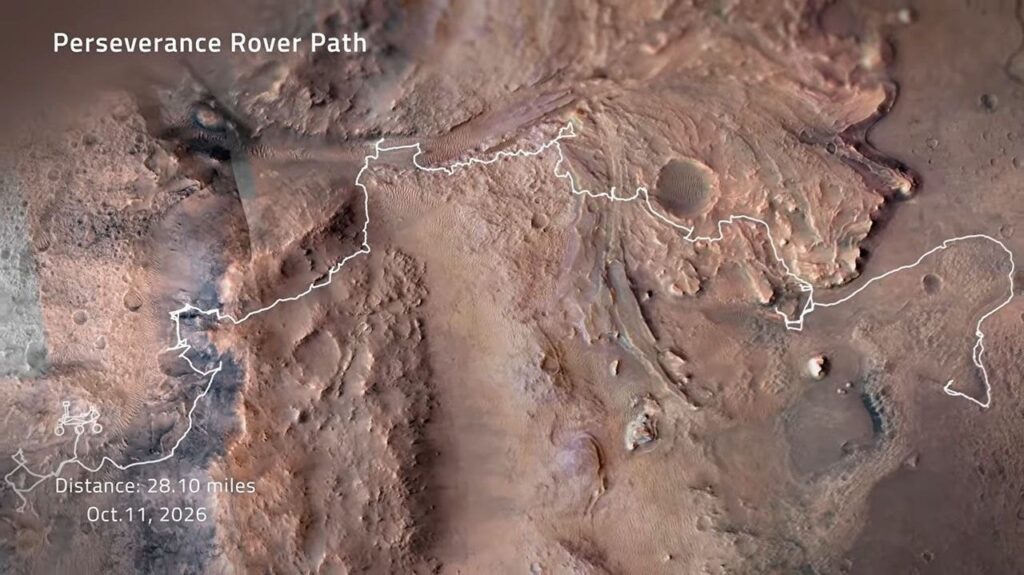
The idea already has a working precedent on another world. ESA notes that researchers at NASA’s Jet Propulsion Laboratory have built and tested a method that compares images taken by the Perseverance Mars rover with maps made from orbit, which removes position errors that build up over a drive. Lunar X-view brings a similar navigation problem to the wider scientific community, with the Moon as the setting.
Plans for the Moon increasingly involve staying through the night. Our report on ispace’s JAXA study for a solar tower at the Moon’s south pole is one example of projects aimed at long-term activity on the surface, where vehicles that can navigate without waiting for instructions from Earth would help.
ESA has not said what prizes, if any, the winners will receive, or how long the competition will run. Those details are expected with the rules on 1 November.