Eight AI computing satellites ride Zhuque-2E in a 10-satellite launch
LandSpace said its Zhuque-2E Y4 rocket completed a one-launch, ten-satellite mission from Jiuquan on Oct. 14, carrying eight ADAspace computing satellites.
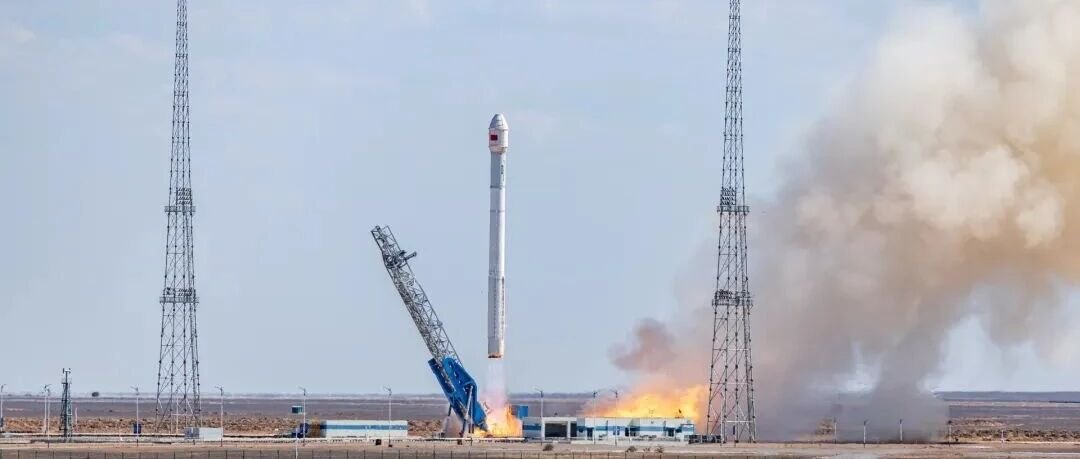
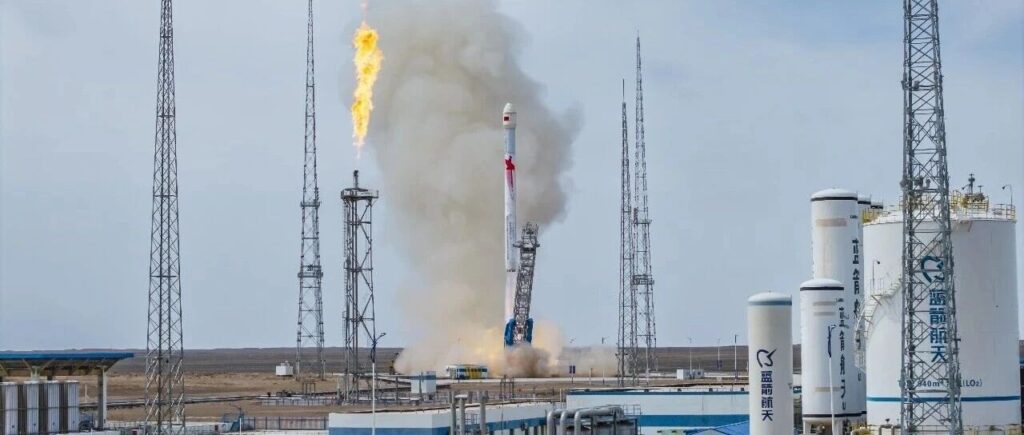
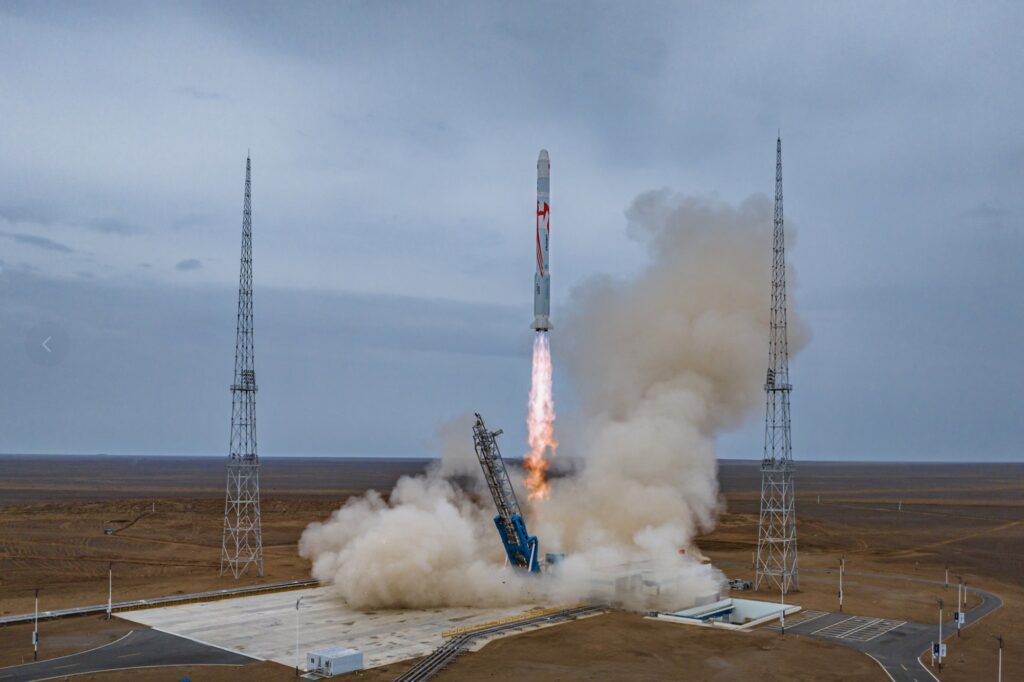
LandSpace’s Zhuque-2E Y4 rocket lifted off from Jiuquan on Oct. 14 at 11:40 UTC (19:40 Beijing time) and delivered 10 satellites to their planned orbits. The company declared the mission a complete success, and eight of the payloads were computing satellites for ADAspace.
One rocket, ten satellites, two operators
LandSpace announced the result on its website on Oct. 14. The launch record lists the pad as Launch Area 96A at the Jiuquan Satellite Launch Center and the target as sun-synchronous orbit. Xinhua, China’s state news agency, reported the same liftoff time and said all 10 satellites were placed in their preset orbits.
According to Xinhua, eight of the satellites belong to the 02 group of the “star compute” plan run by Adaspace Technology Co., Ltd (ADAspace). They are designed for dawn-dusk orbits, sun-synchronous paths that follow the line between day and night. Xinhua did not detail the other two satellites, so their operators and roles are unknown.
You can follow upcoming Chinese and international flights on our live rocket launch schedule.
What the computing satellites will test in orbit
Xinhua said the ADAspace satellites carry high-performance computing payloads, high-speed laser communication payloads for inter-satellite and satellite-to-ground links, and low-light cameras. ADAspace plans in-orbit tests of several technologies:
- 10,000-watt-level liquid-cooled fluid loops
- ultra-large deployable radiative cooling wings
- a full-domain laser communication network
- in-orbit training of foundation models
Heat is the central engineering problem for computing in space, because a satellite can only shed it by radiating it away. That is why the cooling hardware, rather than the processors alone, is a main item on the test list.
A constellation of 2,800 starts with batches of eight
Xinhua said ADAspace aims to build AI space infrastructure made up of 2,800 computing satellites. The first group flew in May 2025, and a third group is scheduled for 2026. Against a target of 2,800, the eight satellites launched on Oct. 14 are well under 1 percent of the planned fleet. The 02 group is therefore best read as a step in a long build-out, and the in-orbit results will show whether the cooling and laser-link designs can be repeated at scale.
LandSpace’s own site lists Zhuque-2E missions designated Y4, Y5, Y6 and Y7, with posts dated from May to October 2026, so the vehicle is flying repeatedly this year. Sharing one rocket among ten satellites spreads the launch cost across several customers, which suits constellation builders that need many small spacecraft in the same type of orbit.
What remains to be reported
Neither LandSpace nor Xinhua gave test dates or performance figures for the in-orbit tests, so the results are still to come.