A dead star has two rings of debris, and a glimpse of the Sun’s far future
ESO's Very Large Telescope has found two concentric rings of gas and debris around the white dwarf J1328-1450, the first double ring of its kind, probably shaped by planetary bodies that survived.
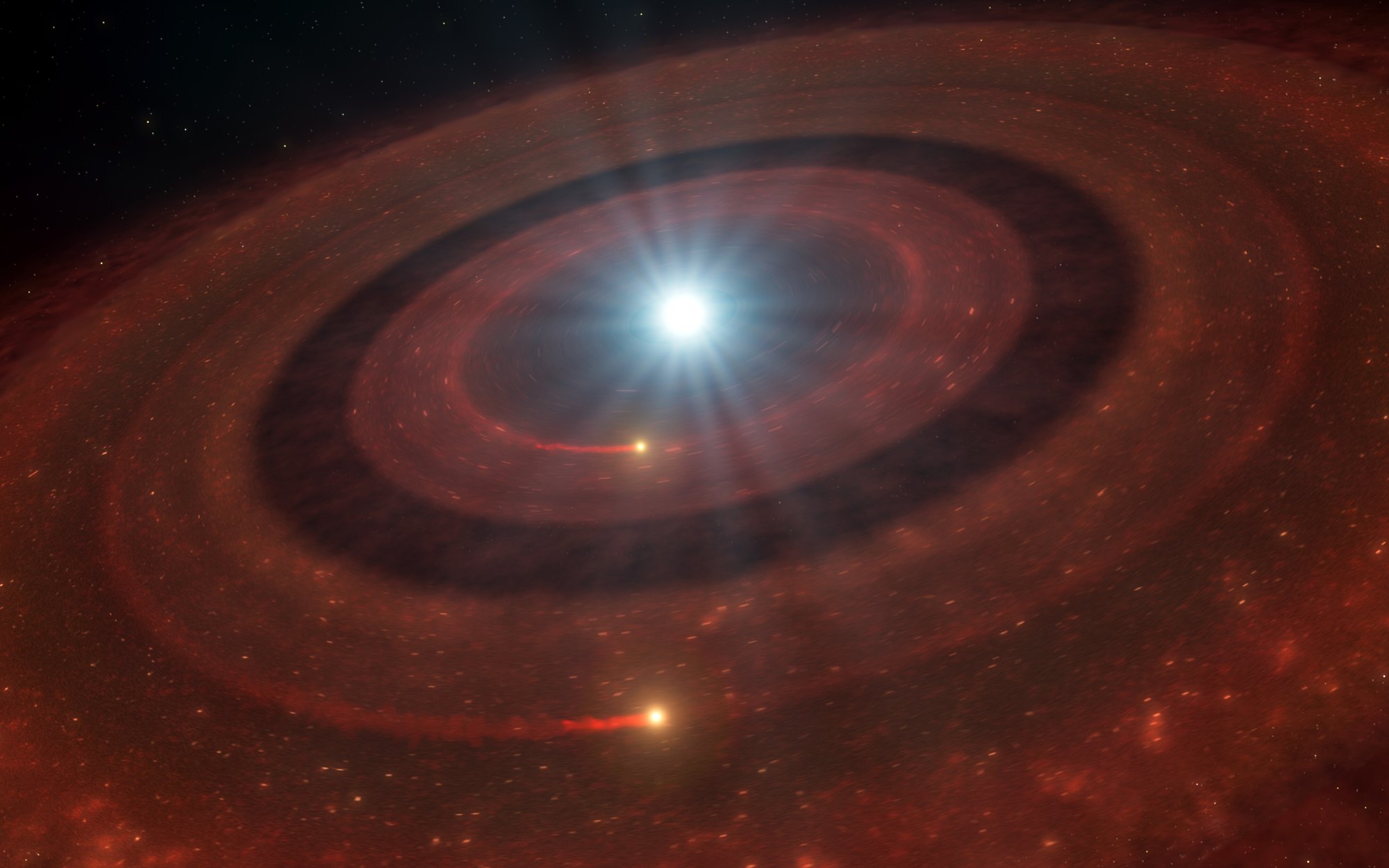
Astronomers have found two concentric rings of debris around the white dwarf J1328−1450, the first double ring seen around a star of this kind. ESO says the rings, separated by a clear gap, were detected with the X-Shooter instrument on the Very Large Telescope.
Four peaks where two were expected
A white dwarf is the dense, dim core left behind when a Sun-like star runs out of fuel, swells up and sheds its outer layers. Those swollen outer layers can engulf nearby planets, and rocky survivors can be torn apart into a disc of debris circling the dead star. Until now, every known debris disc around a white dwarf looked like a single flat, rotating ring.
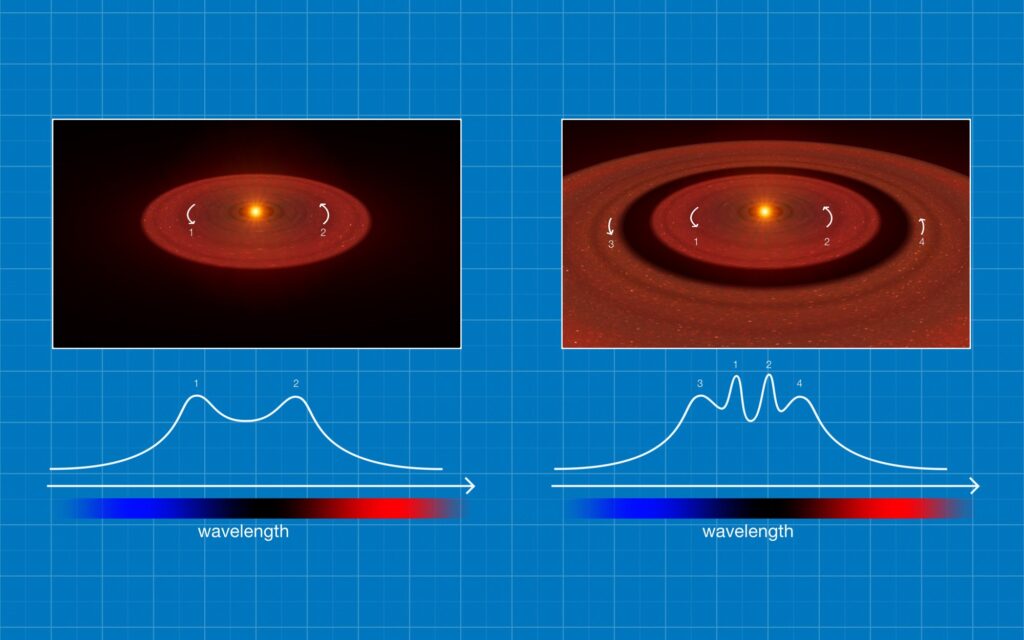
The new system was identified from its light, not from a direct picture. Gas emits light only at specific colors, or wavelengths, which a spectrograph (an instrument that spreads light into its component colors) can measure. If gas circles a star, one side of the disc moves toward us and the other away, so the color is shifted bluer on one side and redder on the other. That gives a spectrum with two peaks, and the faster the disc spins, the further apart they sit.
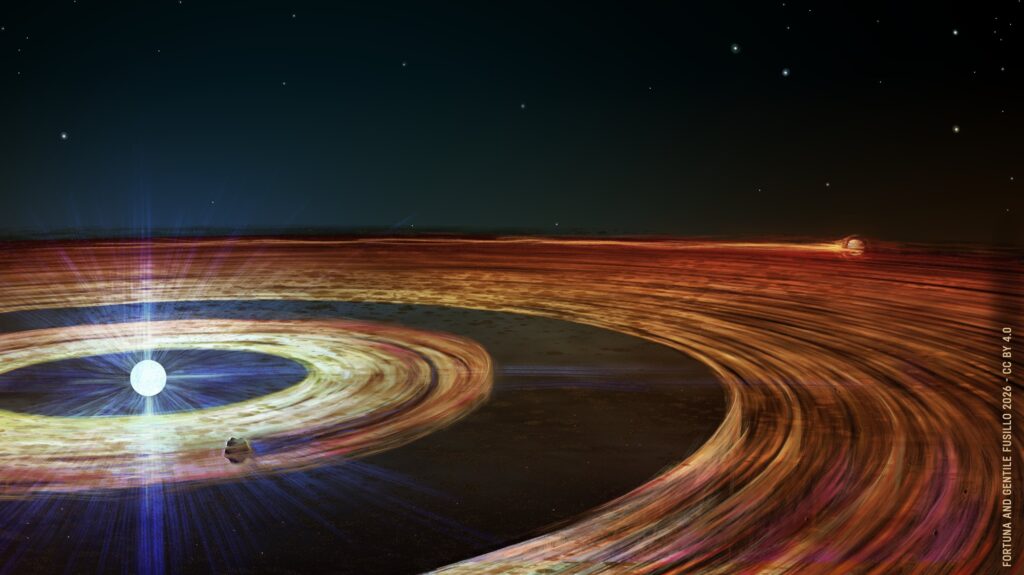
For J1328−1450, ESO describes a spectrum with four symmetric peaks instead of just two. Two rings at different distances move at different speeds, and each makes its own pair of peaks. The outer ring rotates more slowly, so its peaks sit closer together. ESO’s illustrations, including an alternative artist’s impression, show the rings with the gap between them.
Two small worlds that may hold the rings in place
The team, led by Nicola Pietro Gentile Fusillo of the University of Trieste, reports that the gas contains calcium, oxygen, magnesium and iron, which points to rocky material similar to that in our own Solar System. The inner ring is rich in magnesium gas, while the outer ring is largely stripped of it.
That difference could mean the rings came from two planets of different composition, or from different layers of one broken-up body, such as its crust and its core. ESO adds that two surviving bodies on separate orbits probably maintain the structure. The inner one is estimated at a few kilometers across, about the size of a typical asteroid. The outer one could be as large as Pluto, or even the Moon.
Those are very different scales. NASA lists Pluto’s diameter as about 2,377 kilometers and the Moon’s as about 3,474 kilometers, so the outer body could be a genuine small world, while the inner one is more like a rock. Co-author Felipe Lagos-Vilches, of the University of Warwick and Universidad Técnica Federico Santa María, said the two gaseous rings are “remarkably stable”, which supports the idea that something is holding them in shape. The work is published in Nature Astronomy (doi: 10.1038/s41550-026-03004-3).
What a single object adds to a young field
This result fits a pattern of discoveries showing that planetary material can outlast the death of its star. ESO describes the system as a glimpse of what could happen to planetary systems like ours. The Sun is expected to become a white dwarf in the far future, and a process that may destroy Earth, according to ESO. NASA estimates that the Sun will begin swelling into a red giant in about 5 billion years.
The instrument behind the finding matters too. X-Shooter is a spectrograph on the Very Large Telescope, which ESO operates at Paranal in Chile’s Atacama Desert and which consists of four main telescopes with 8.2-meter mirrors. A second spectrum, taken in the same way, of another white dwarf could show whether double rings are a rarity or simply were missed before. The ESO text does not say how many other white dwarfs show this signature, and the distance to J1328−1450 is not given on the pages it released.
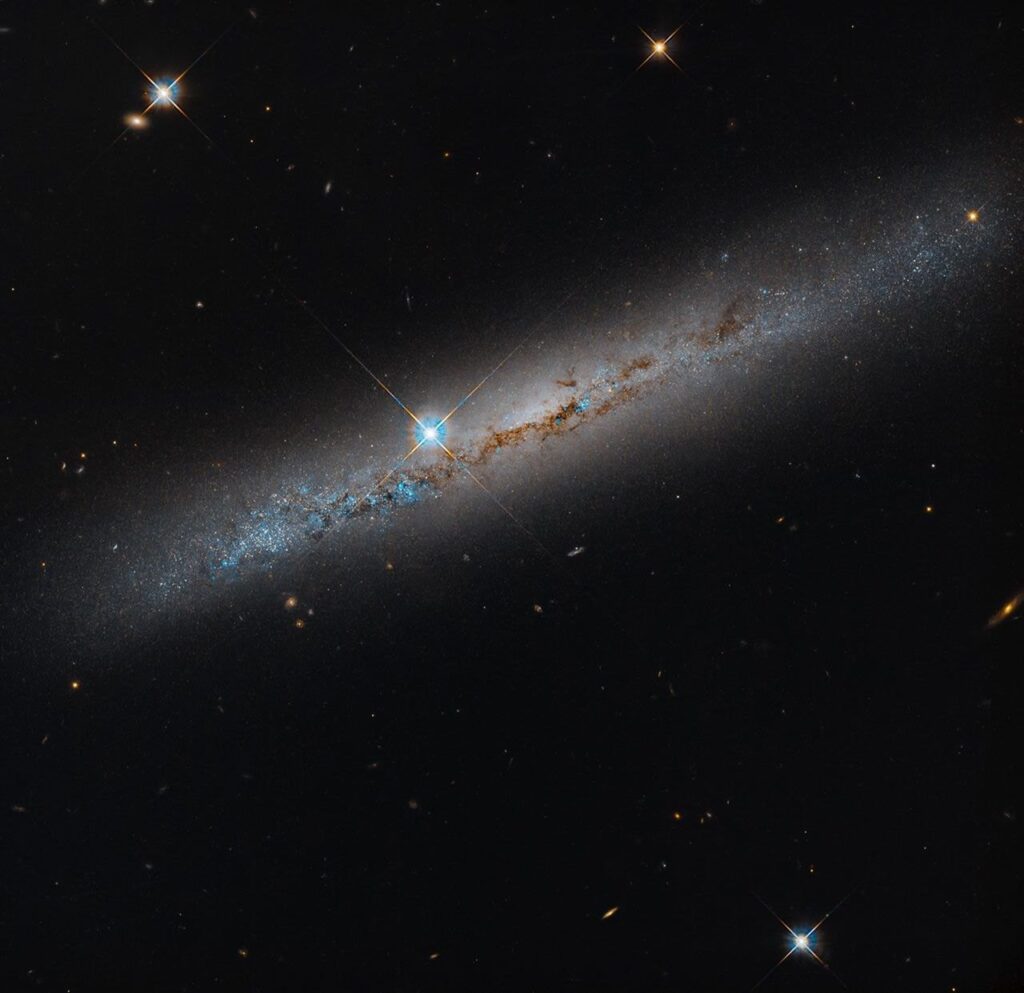
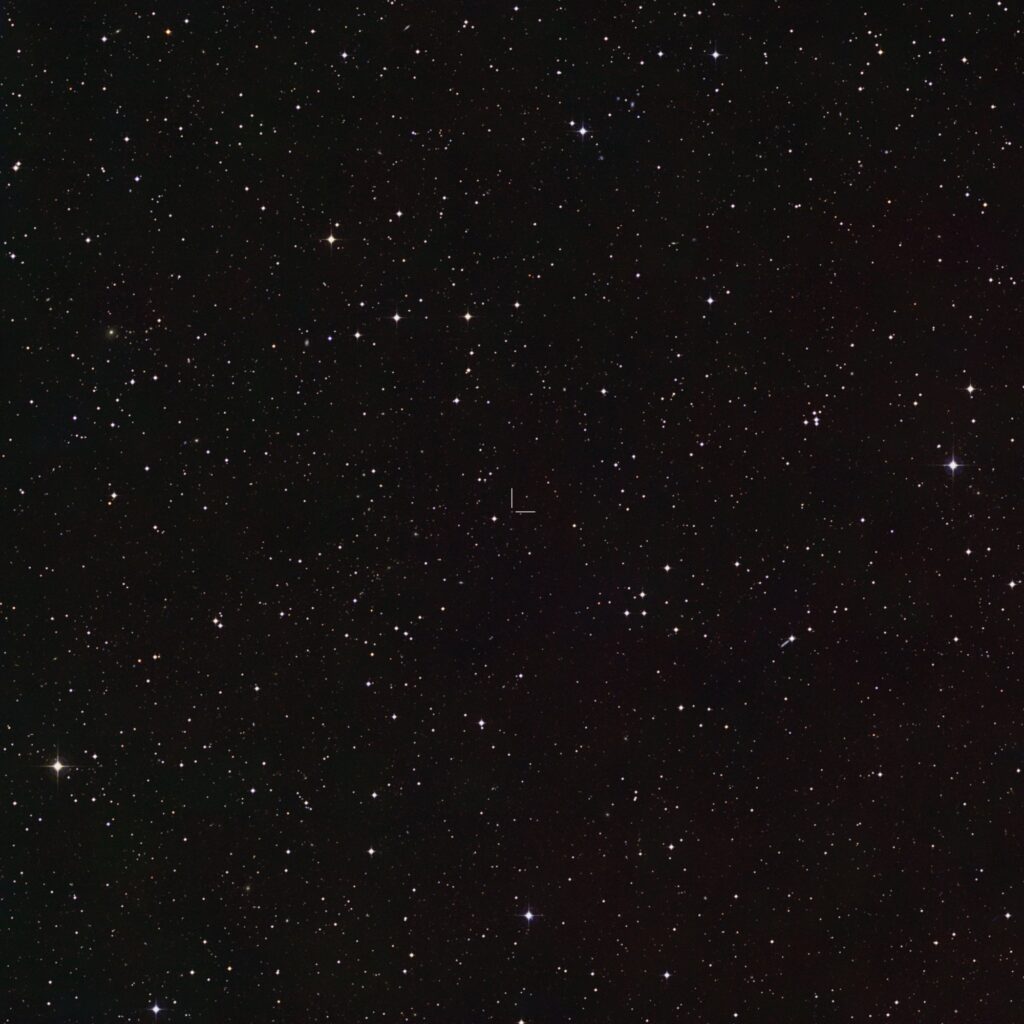
For now the finding rests on one star and on a reading of its spectrum. The explanation with two surviving bodies is the team’s most likely one, and the ESO release describes it as likely, not proven. The wide-field view of the sky around J1328−1450 shows how ordinary the star looks to an ordinary camera.