Thinner Mars helicopter blades could stretch one flight from 0.7 to 18.7 km
A thinner, sharper blade shape called roamx-0201, designed with simulations and wind tunnel tests, could let a future Mars helicopter fly up to 18.7 kilometers in one go.
NASA researchers have designed a thinner, sharper rotor blade for Mars helicopters. In simulations, it could stretch one uninterrupted flight from the 0.7 kilometers Ingenuity managed to as much as 18.7 kilometers while carrying science instruments, NASA said.
A new blade shape built for thin air
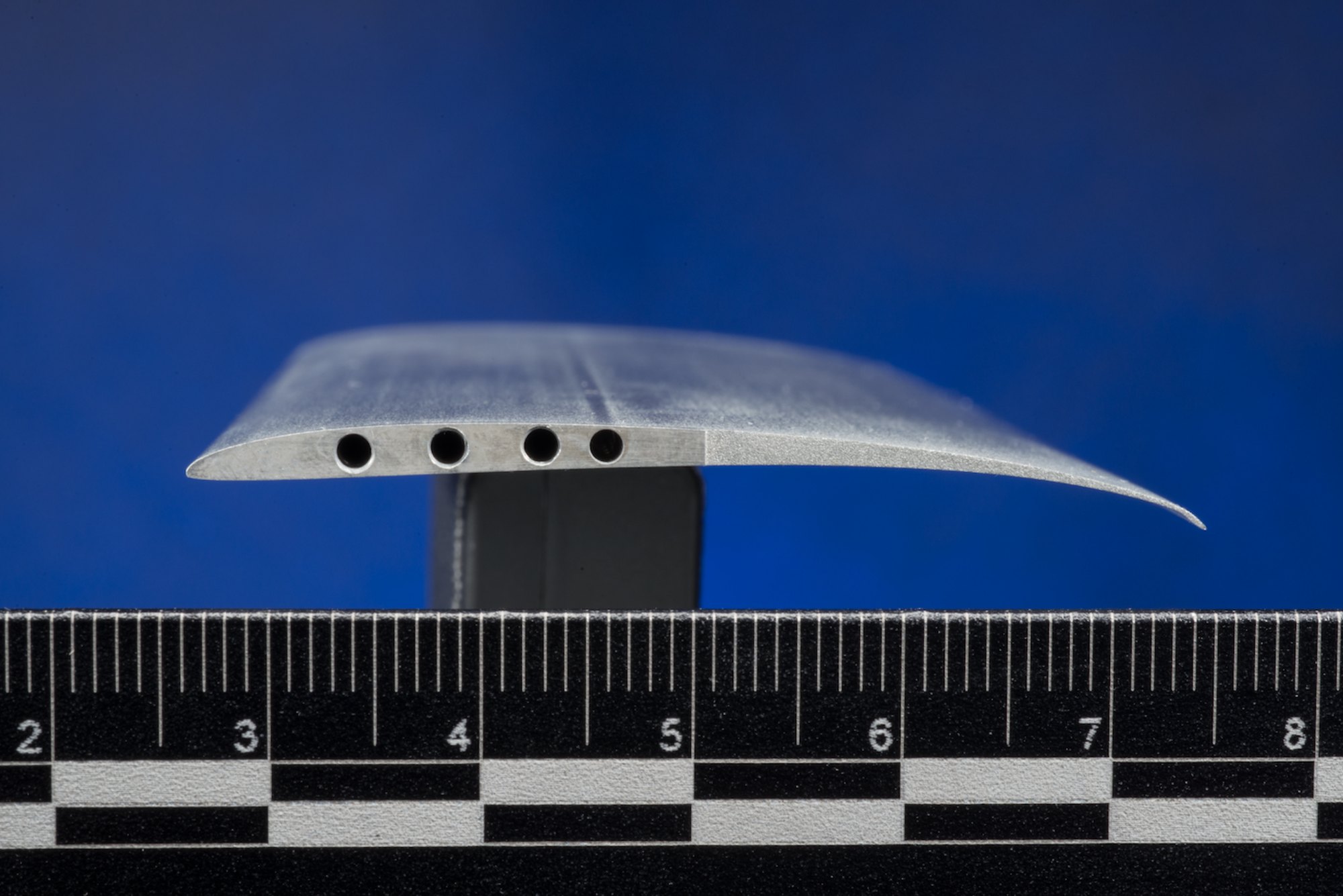
The design is an airfoil, the cross-section you would see if you sliced a rotor blade across its width. Ingenuity’s blade had a rounded, arched-teardrop profile. The new one, named roamx-0201, is thinner and asymmetrical. A team at NASA’s Ames Research Center in California’s Silicon Valley created it with Imperial College London in the United Kingdom and Nagoya University in Japan, using simulations and algorithms tuned to Mars conditions.
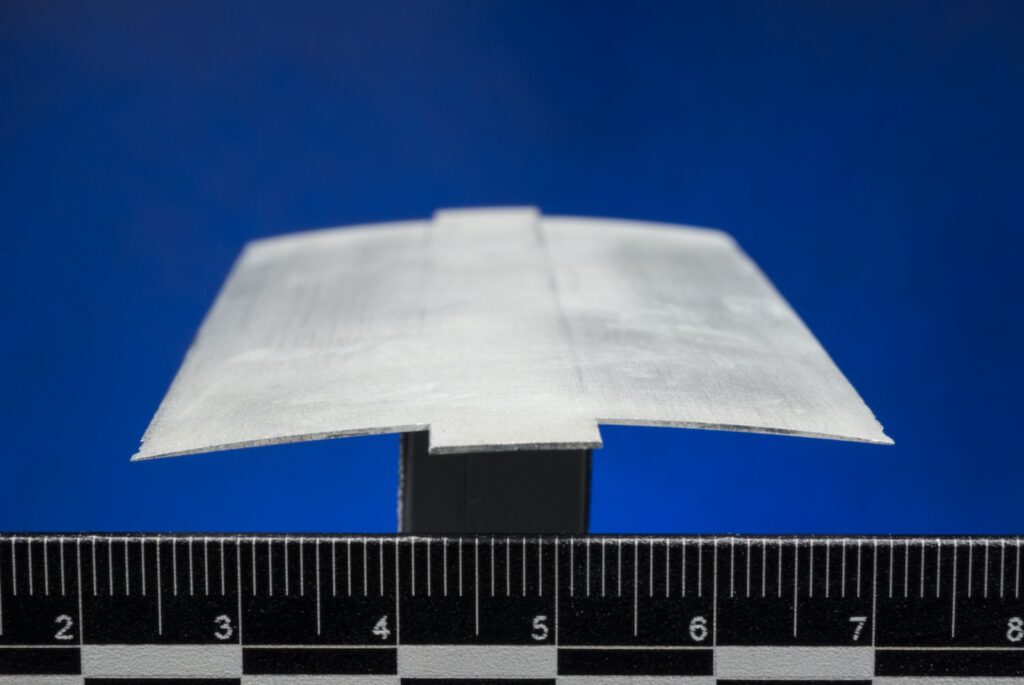
Wind tunnel tests followed. According to NASA, the optimized shape performed better than the earlier design and recovered better in risky flight conditions. The results were published Sept. 22 in a journal of the American Institute of Aeronautics and Astronautics.
NASA’s simulations compared roamx-0201 with Ingenuity’s blades. The longest uninterrupted flight a helicopter could make rose from 0.7 kilometers to as much as 18.7 kilometers, while still carrying scientific instruments.
Three aerodynamic tricks behind the gain
Staying fast for longer. A blade loses efficiency abruptly as its tip nears the speed of sound, a problem called drag divergence. Sound travels more slowly in Mars’ thin air than on Earth, so the limit arrives sooner. NASA says roamx-0201 can run at higher speeds for longer before reaching it.
Turbulence on purpose. Air flowing over a blade forms a thin layer called the boundary layer. The new airfoil deliberately disturbs that layer right at the leading edge. Counterintuitively, NASA says, this pulls the blade upward and gives more lift than earlier designs.
A gentler stall. A stall is a sudden drop in performance that makes flight unstable when the angle of the airflow changes. Ingenuity’s blades degraded steeply when they stalled. Under the conditions studied, NASA reports “significantly improved stall behavior” for the new blade, meaning a helicopter could operate safely across a wider range of flight angles.
Why a blade tweak is a big deal on Mars
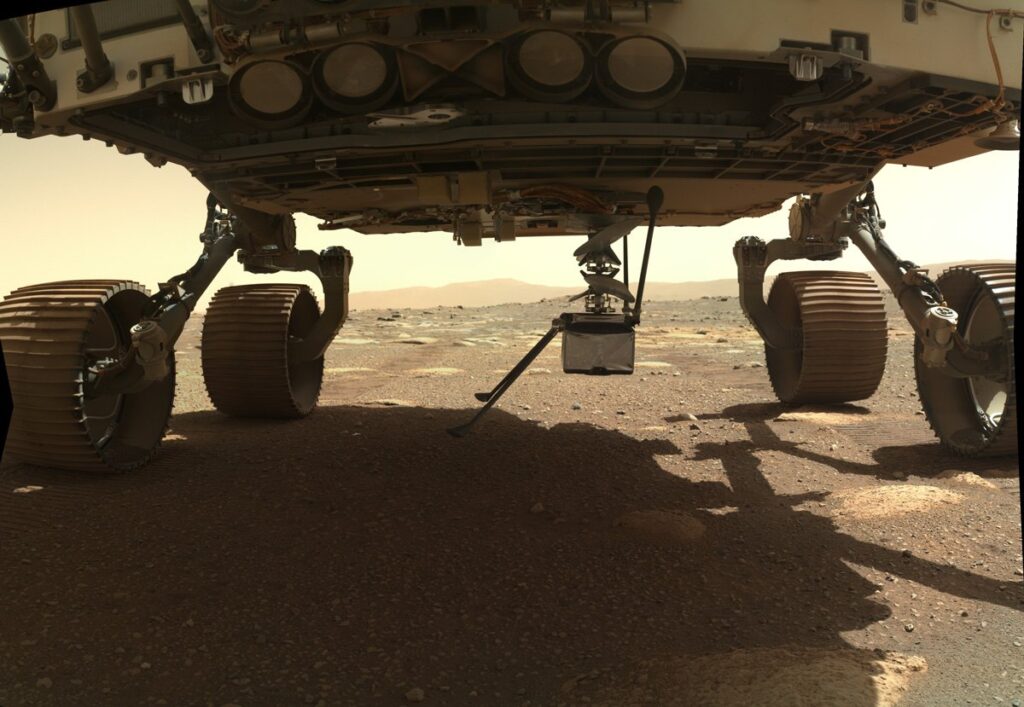
Flying on Mars is hard because the air is so thin. NASA’s Ingenuity mission page describes the environment as less than 1 percent as dense as Earth’s. For comparison, our Mars facts guide notes that surface pressure averages 6.36 millibars. A helicopter there must spin its rotors very fast to get any lift, and that pushes the blade tips toward the speed-of-sound limit described above. Improving the airfoil raises the ceiling without adding weight, which matters because Ingenuity itself weighed just 1.8 kilograms (3.97 pounds) according to NASA.
Ingenuity set the benchmark. NASA reports it completed 72 flights between April 19, 2021 and January 18, 2024, covering about 10.5 miles (17.0 kilometers) in total. The 18.7 kilometers in the new simulations would therefore exceed that whole career in a single hop, though the figure is a computed upper bound for a helicopter carrying instruments, not a flown result.
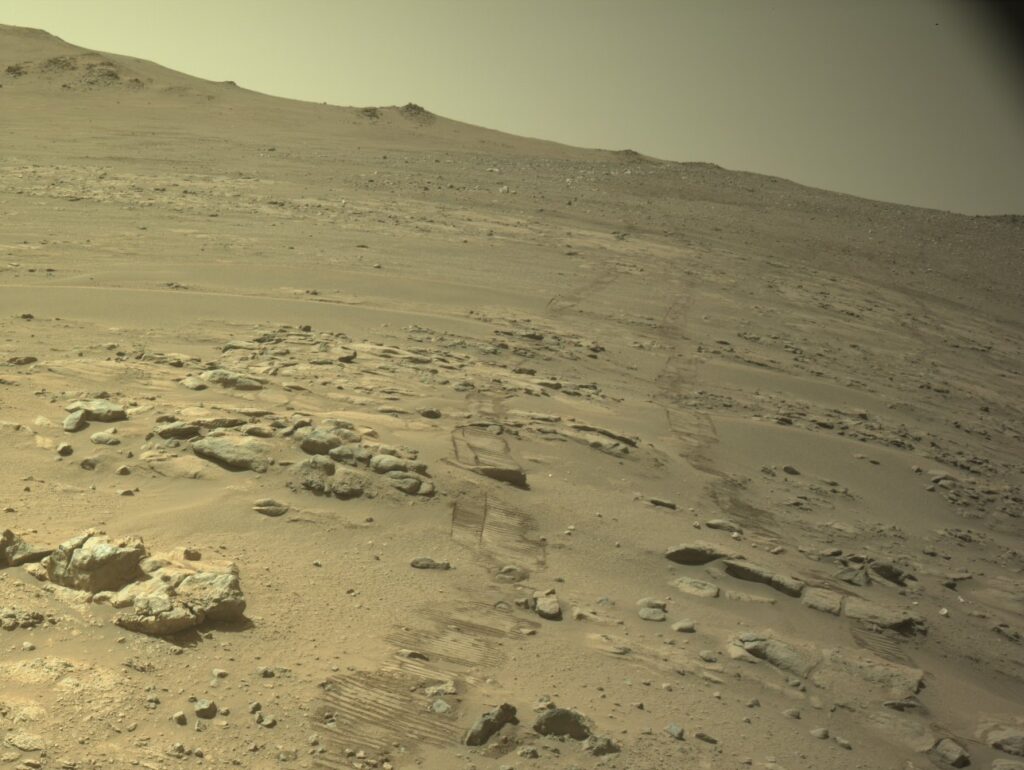
The practical payoff is range. A helicopter that covers kilometers per flight could scout terrain far beyond what a rover can drive to, such as the landscapes explored by Perseverance and Curiosity. Greater payload capacity would also leave room for more capable instruments.
From computer models to a Mars flight
NASA’s SkyFall mission, scheduled for launch in 2028, will send a trio of helicopters to Mars. Both Ingenuity and SkyFall use a blade designed for Mars’ thin atmosphere, with a curved edge. The agency describes roamx-0201 as research aimed at missions after SkyFall.
The technology is not ready for Mars yet. NASA says the tests are also helping engineers understand and resolve differences between computer predictions and real-world performance, a gap that has to close before any new blade is trusted on another planet. Ongoing research across the agency aims to produce Mars helicopters that fly farther, carry more payload and open up new science missions.