Voyager 1 went silent for two days, then returned on its own
NASA's Voyager 1 went quiet on Oct. 18 and 19 and reappeared on Oct. 20 without any commands, while a power-saving swap now keeps its instruments running longer.
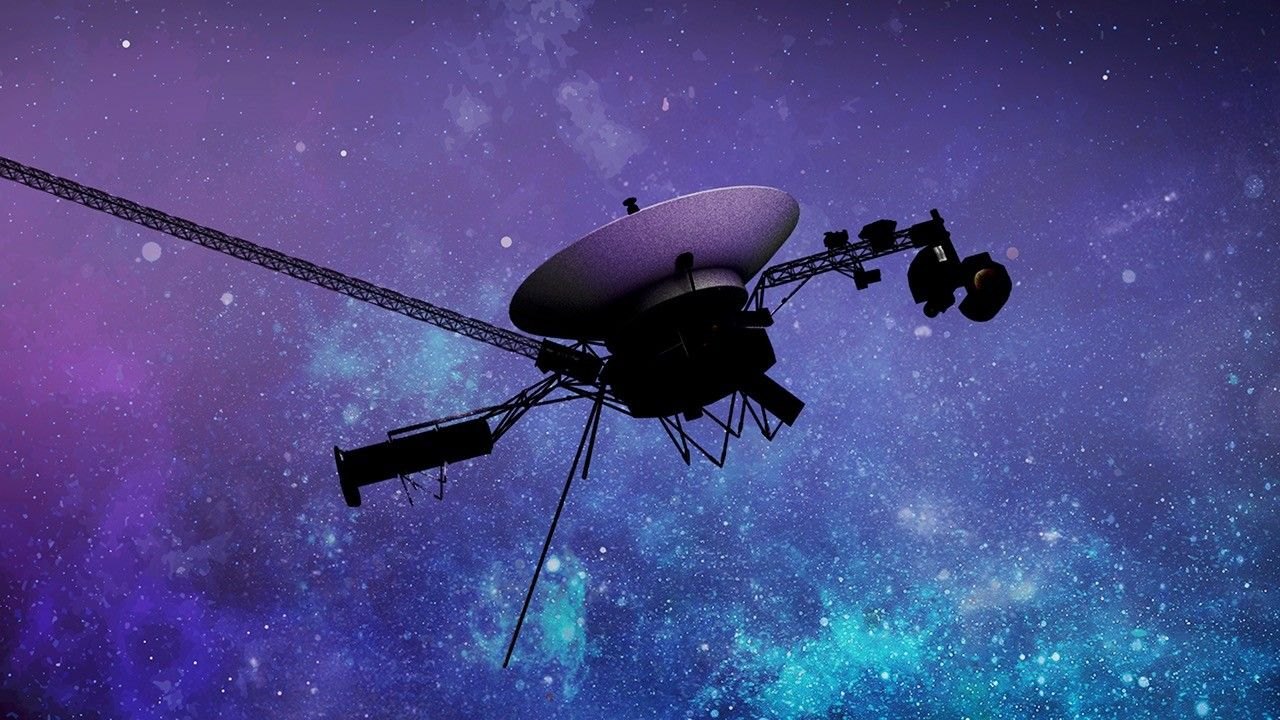
NASA’s Voyager 1 stopped answering Earth on Oct. 18 and 19, then reappeared on Oct. 20 before engineers sent any commands, NASA said. The team had also just finished a power-saving swap that extends the probe’s science.
Two missed calls, then a signal from 16 billion miles
NASA’s Deep Space Network, three sets of large antennas around the globe used to talk to spacecraft at the Moon and beyond, could not detect a radio signal from the probe in two scheduled attempts 24 hours apart. Voyager 1 is 16 billion miles (24 billion kilometers) from Earth. The signal returned 24 hours after the second attempt, on Oct. 20, and contact has held since.
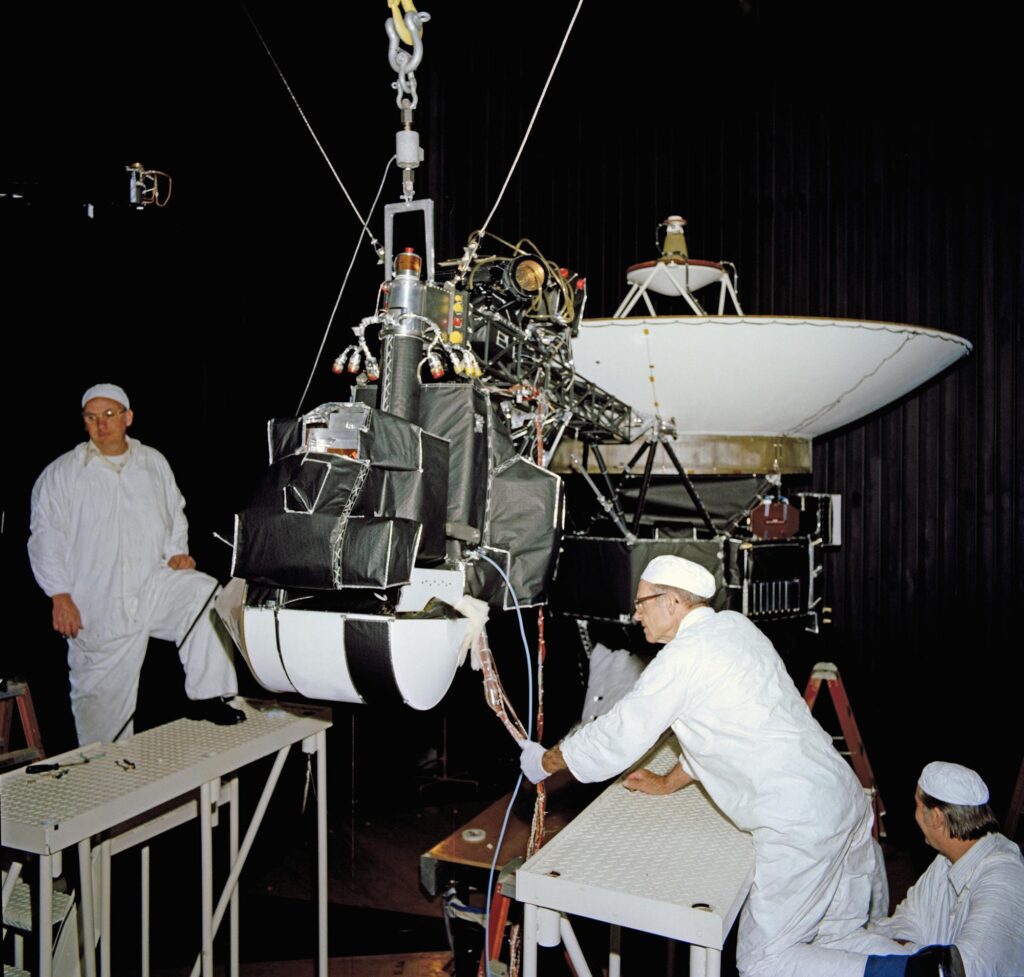
The cause is still under investigation. So far the team has found that one group of thrusters went offline and their backups switched on. That swap is programmed to happen automatically when the spacecraft’s computers sense something wrong with the active thrusters. This built-in response, called fault protection, puts the craft into a safe, stable configuration and pauses normal operations, buying engineers time to diagnose the problem.
NASA did not say why the radio signal vanished during that period. It did say the episode was new.
“This is the first time we’ve seen the spacecraft do something like this, but we are also at a point in the mission where we have to expect the unexpected,”
said Kareem Badaruddin, Voyager mission manager at NASA’s Jet Propulsion Laboratory (JPL) in Southern California.
The “Big Bang”: Three heaters swapped at once
The other development is quieter but matters for the mission’s lifespan. In early September, engineers turned off three devices on Voyager 1 and replaced them with three lower-power alternatives. The team nicknamed the effort the “Big Bang.” It came about six weeks after the same swap on Voyager 2.
The three swaps had to happen together. According to NASA, the six devices help keep the spacecraft warm enough to operate in deep space, and only by changing all three could the team cut power use and still spread heat properly around the craft.
The payoff is time. Without it, the mission would have had to shut down another science instrument on Voyager 1 as early as summer 2027, NASA said. Two science instruments have already been turned off in recent years. The probes launched in 1977 with 10 dedicated science instruments, and today they are the only spacecraft to study interstellar space, the region outside the heliosphere (the bubble of particles and magnetic fields the Sun creates), directly. Our guide to Voyager 1 and Voyager 2 covers what they found at the edge of that bubble.
A power budget that shrinks by 4 watts a year
Think of the Voyagers as running on a household budget that falls every year. They draw electricity from radioisotope thermoelectric generators, which turn the heat of decaying plutonium into power. Each probe loses about 4 watts a year, NASA says. For comparison, a typical LED bulb draws a few watts, so every year of flight is roughly a bulb’s worth of margin gone.
That arithmetic explains the team’s choices. With no way to add power, the only lever is spending less: switching off non-essential systems one at a time and trading hardware for cheaper equivalents. The Big Bang is the largest such trade so far because it avoids sacrificing another instrument. Each instrument kept alive means more years of data from a place no other spacecraft has reached.
The thrusters point to a second cost. As margins thin, the spacecraft has less room to absorb faults, and the safe mode that protected Voyager 1 this time also interrupts its work. The fix for that has to come from careful diagnosis rather than new hardware, since the nearest repair crew is 16 billion miles away.
NASA’s own account of the mission notes that Voyager 1 left the heliosphere and entered interstellar space in 2012, and that both craft were launched in 1977. That makes the four-watt annual decline the clock the whole extended mission runs against.
One light-day away on Nov. 18
While the investigation goes on, Voyager 1 is moving at 38,000 mph (61,155 kph). On Nov. 18 it will be 16.09 billion miles (25.89 billion kilometers) from Earth, a distance equal to one light-day, the distance light travels in 24 hours. A radio message will take a full day to arrive, and the reply another day to return.
“If you want to say ‘hello’ to Voyager, you send your message and then you go home and you wait two days before you finally get a response,” said Suzanne Dodd, Voyager project manager at JPL.
Nothing will change on the spacecraft when it crosses that mark. NASA describes the milestone as a measure of how large space is and how far the most distant human-made object has traveled.