James Webb Space Telescope images: Where to find them and what they have shown
NASA's image gallery holds every public Webb picture, free to download; here is how the images are made, how Webb differs from Hubble, and what they have revealed.
Dates and facts checked on the official pages on October 25, 2026.
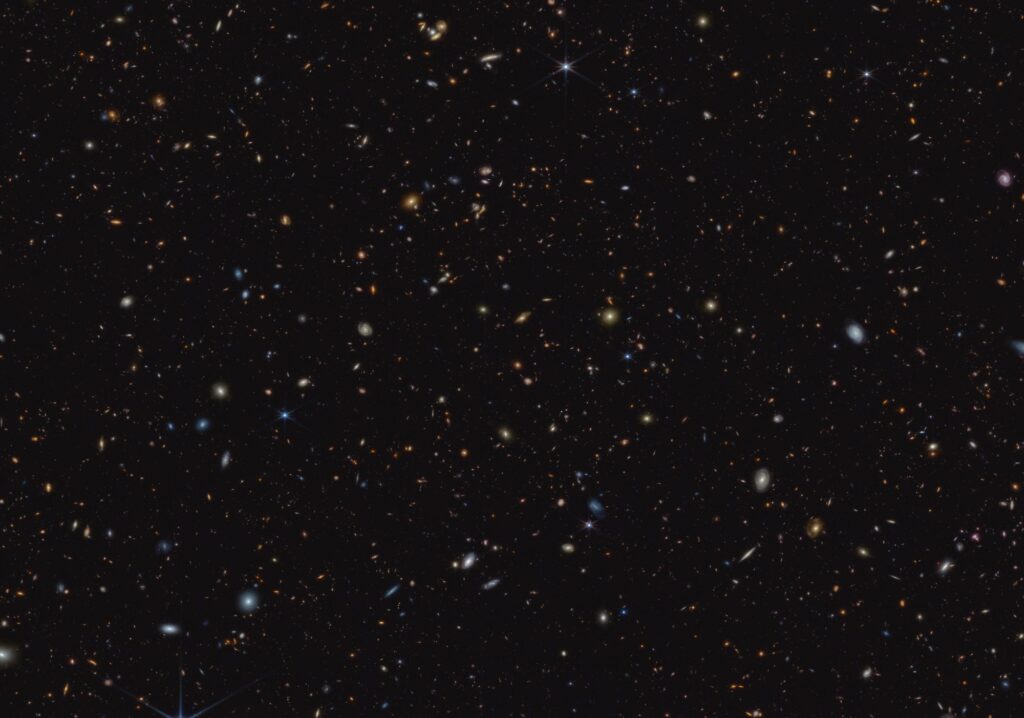
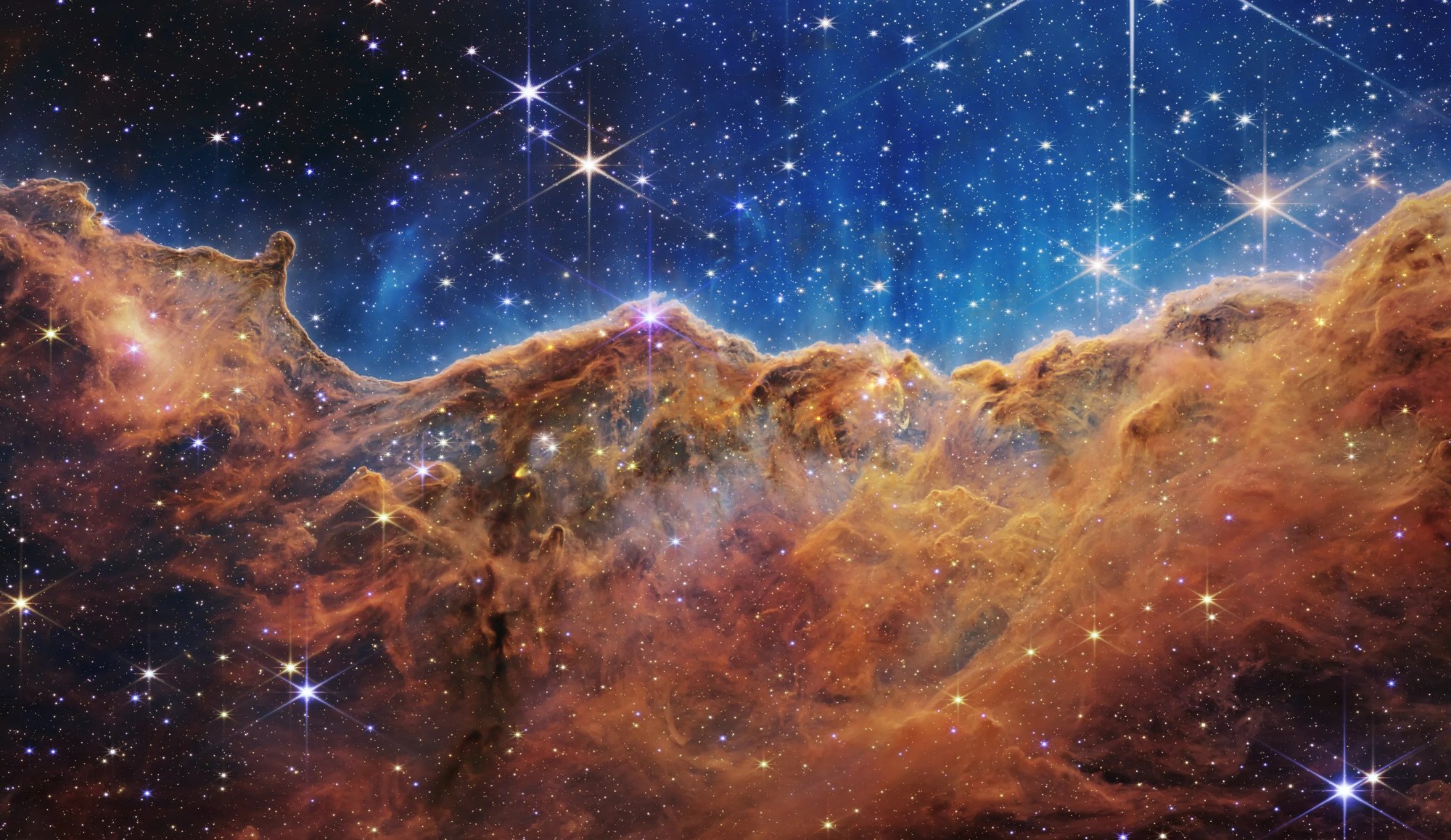
The best place to see James Webb Space Telescope images is NASA’s Webb image gallery, where every public release is free to view and download at several resolutions. The pictures are real data from the telescope, but Webb sees infrared light that human eyes cannot, so specialists assign visible colors to it afterward.
As of October 25, 2026, the newest releases in that gallery date from early October 2026. The sections below explain where to look, how the images are made, and what the best-known ones have shown.
The official gallery holds every public Webb image, free to download
NASA’s Webb image gallery is the main source. It has a slideshow of the latest releases for 2026, separate slideshows for 2022 to 2025, and a searchable feed that can be filtered by image type, theme (galaxies, stars, black holes and others), and date range. The feed can be sorted by publish date, title or relevance.
To download a picture, follow these steps:
- Open the gallery and click any image to reach its detail page.
- Read the caption and the credit line (usually NASA, ESA, CSA, STScI).
- Click the downward arrow in the lower right corner and pick a resolution.
Full-resolution files are large. NASA’s page for a recent infographic, for example, lists a 5100 by 3300 pixel version alongside a 2000 by 1294 pixel JPG, so wallpaper and 4K needs are well covered. Each slideshow also links to a Flickr album of thumbnails. The gallery additionally links to ESA’s own Webb site, ESAWebb.org, and to Webb’s video page.
NASA’s latest-news page for the mission is the place for fresh releases. Its entries are dated, so it shows at a glance what is new.
The first five images arrived in July 2022 and set the template
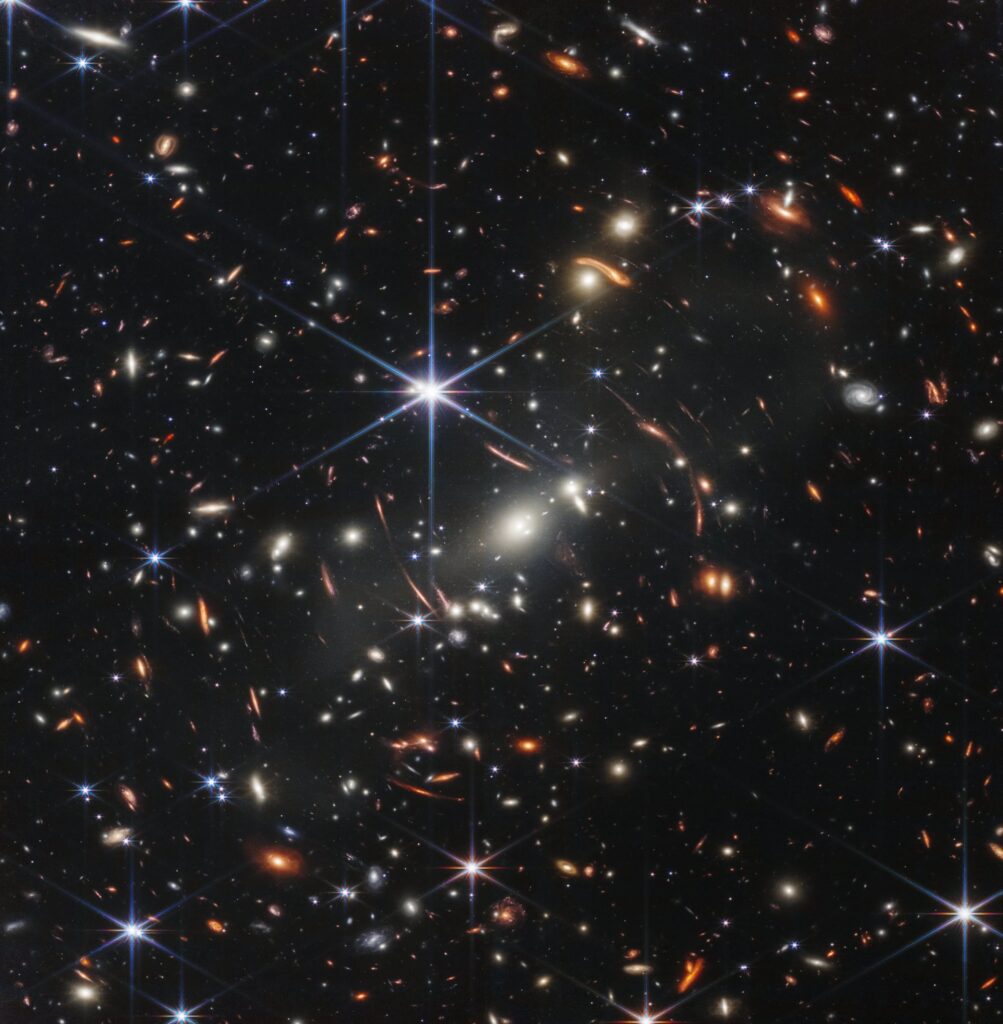
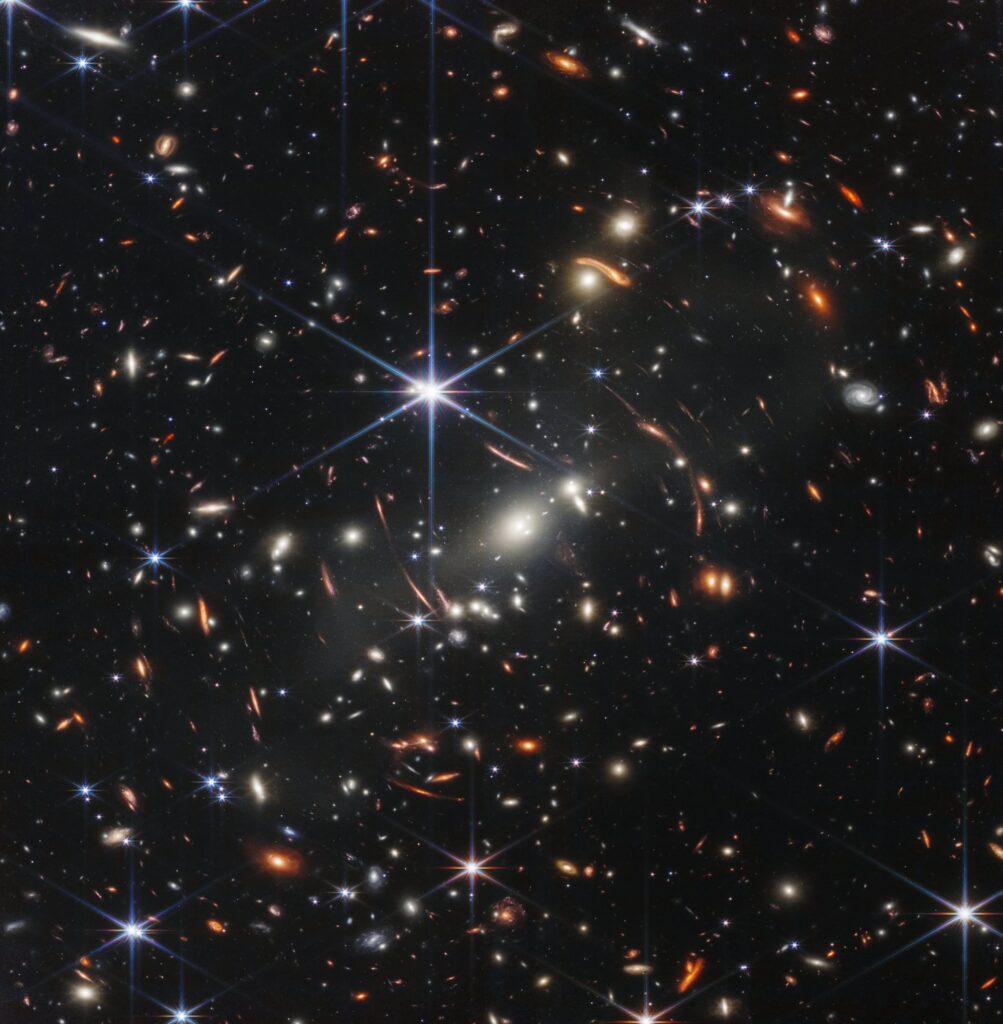
Webb launched on December 25, 2021, and reached its working position about 1.5 million kilometers (1 million miles) from Earth on January 24, 2022. That position is called the second Lagrange point, L2, a spot where the telescope stays in step with Earth as both circle the Sun. After about six months of commissioning, the first science images were released in July 2022. NASA’s articles on them are dated July 12, 2022.
| Target | What it is | What Webb showed |
|---|---|---|
| SMACS 0723 | Galaxy cluster, Webb’s First Deep Field | Thousands of galaxies in a patch of sky about the size of a grain of sand held at arm’s length |
| WASP-96 b | Hot, puffy gas giant planet | Water, clouds and haze in its atmosphere, found with the NIRISS instrument |
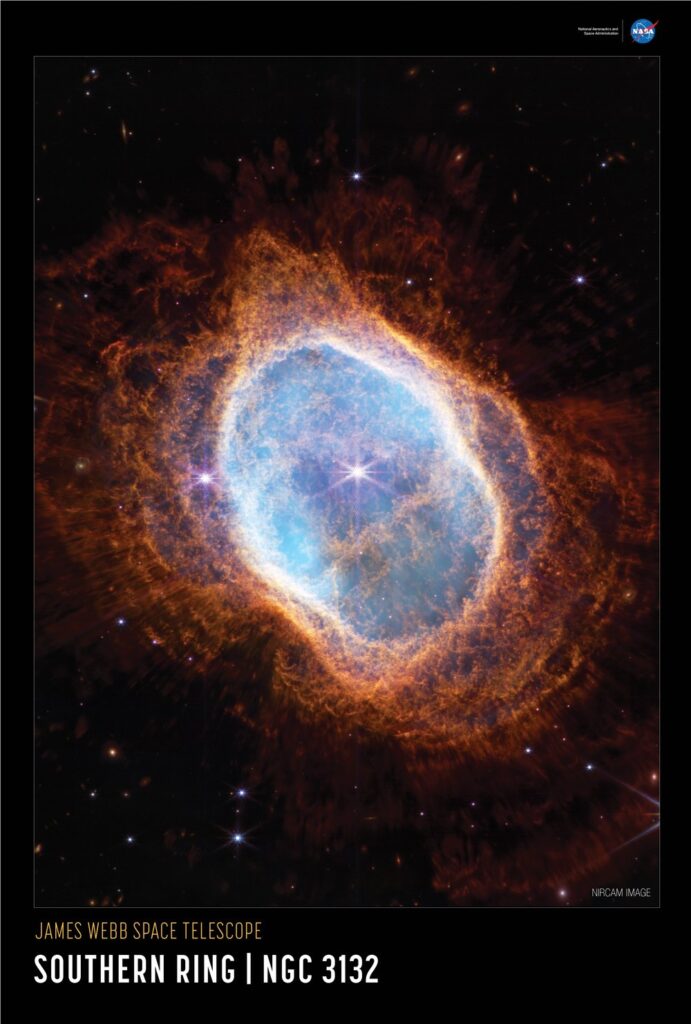
| Southern Ring Nebula (NGC 3132) | Shells of gas shed by a dying star, about 2,500 light-years away | A central star cloaked in dust |
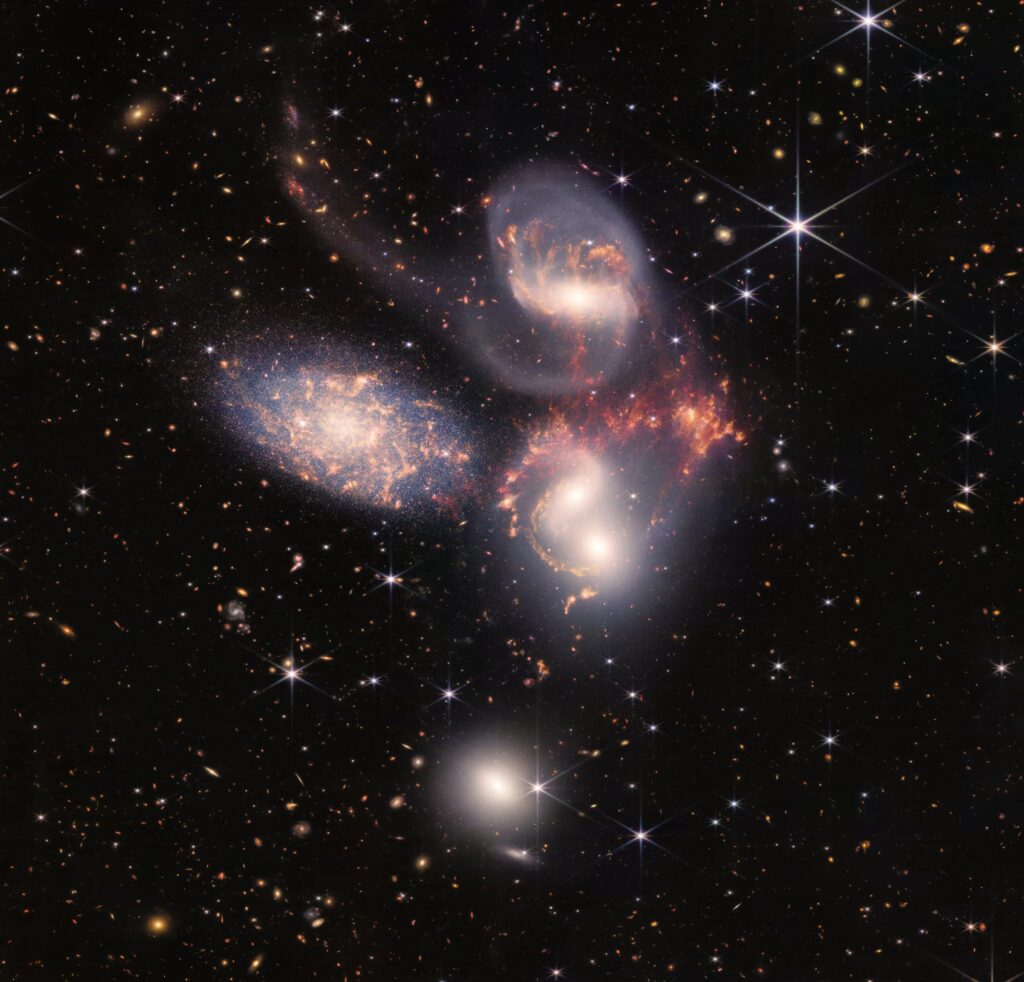
| Stephan’s Quintet | Group of five galaxies, four of them interacting | A mosaic of over 150 million pixels covering about one-fifth of the Moon’s diameter |
| Carina Nebula (NGC 3324) | Edge of a young star-forming region, the “Cosmic Cliffs” | Star birth hidden behind dust and gas |
Figures from NASA’s First Images page, checked October 25, 2026.
Webb sees infrared light, so its colors are assigned, not photographed
Infrared is light with wavelengths longer than red, which we feel as heat but cannot see. Webb’s detectors record only brightness through each filter, and the result is a set of black-and-white exposures. NASA’s explainer on how the images are made says that specialists then map each filter’s image to a visible color in chromatic order: the shortest wavelengths become blue, the middle ones green, and the longest red. Extra filters can add purple, teal or orange.
So the answer to whether Webb images are real is yes in data and no in appearance. The structure, brightness and positions come from the telescope. The colors are a translation, and NASA’s FAQ notes that they may not match what a visitor would see. The process aims to keep the integrity of the original data, and STScI image processors sometimes reassign a filter to support the science.
Webb has two main cameras for images. The Near-Infrared Camera (NIRCam) has 29 filters spanning about 0.7 to 4.4 microns, and composites typically use four or five of them. The Mid-Infrared Instrument (MIRI) has 9 filters spanning about 5.6 to 25.5 microns, with three or four used per picture. A micron is a millionth of a meter. MIRI views often show dust and cooler gas that NIRCam shows only faintly, which is why the same object can look quite different in the two.
The eight-pronged spikes around bright stars are not features of the stars. NASA’s description of a 2026 image of the star-forming region NGC 7129 points to them as Webb’s diffraction spikes, which are patterns created by the telescope’s mirror and support structure.
Webb versus Hubble: A bigger mirror, a different kind of light
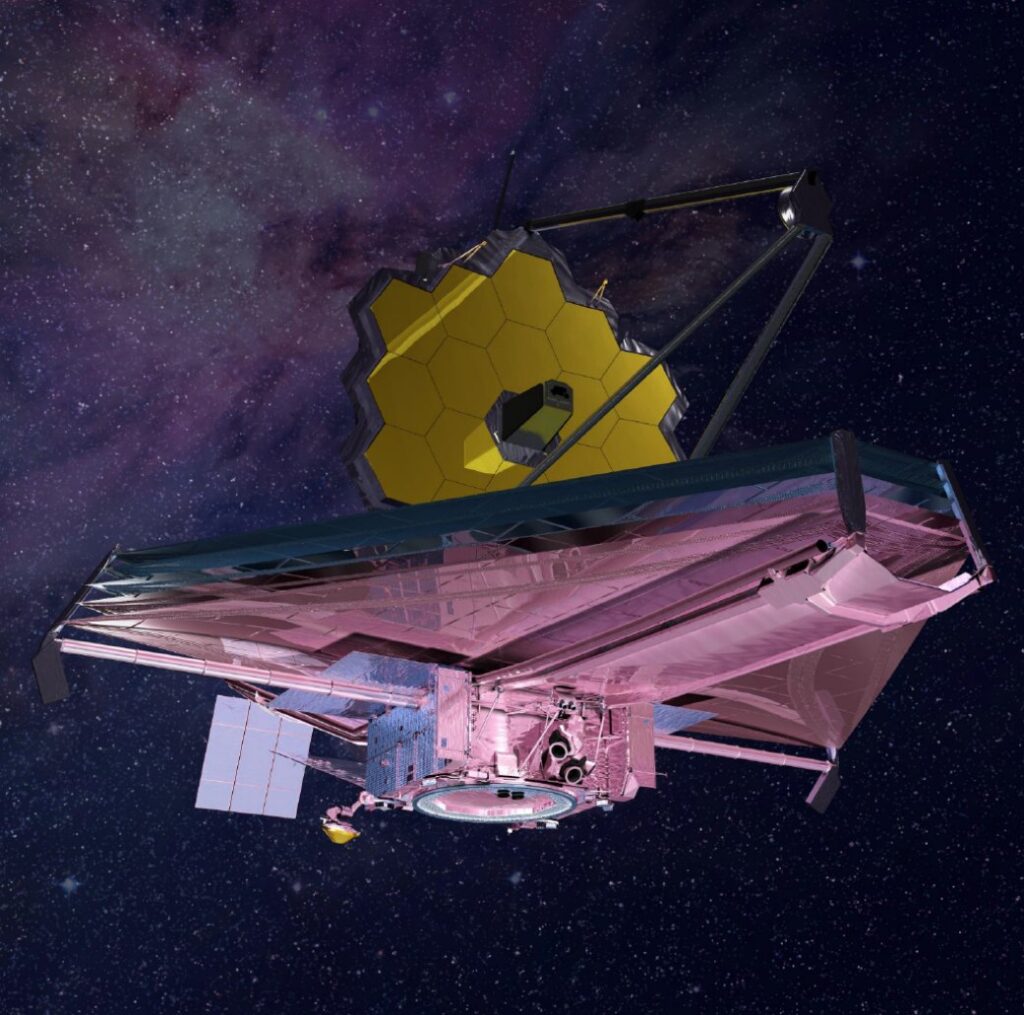
The two telescopes complement each other more than they compete. According to NASA, Webb’s primary mirror is 6.5 meters (21.3 feet) across, against 2.4 meters (7.9 feet) for Hubble, which gives Webb more than six times the light-collecting area. It is built from 18 hexagonal segments, and it can see objects up to 100 times fainter than Hubble can.
| Webb | Hubble | |
|---|---|---|
| Main wavelengths | 0.6 to 28.5 microns (infrared) | 0.1 to 2.5 microns (mostly ultraviolet and visible) |
| Location | About 1 million miles from Earth, at L2 | About 300 miles (483 km) above Earth |
| Operating temperature | -364°F (-220°C) | Optical bench kept at 70°F (21°C) |
Figures from NASA’s Hubble vs. Webb page, checked October 25, 2026.
Webb must be this cold so that its own heat does not drown out the faint infrared signals it collects. Infrared also passes through dust that blocks visible light, so Webb sees stars inside clouds and reaches the very distant universe, where expansion has stretched light into the infrared. Despite the larger mirror, NASA says Webb’s near-infrared sharpness is about the same as Hubble’s in visible light, so the two are often used together. A 2026 NASA release on Saturn, for instance, pairs a Webb infrared view taken November 29, 2024 with a Hubble visible-light view from August 22, 2024.
Recent releases cover black hole seeds, a jet-filled nebula and a record radio burst
The gallery’s October 2026 entries show the range of what Webb now does. On October 9, 2026, NASA released a set of graphics on supermassive black holes and “little red dots,” compact red objects Webb first found in 2022. Astronomers theorize, according to NASA, that little red dots could be active supermassive black holes themselves. NASA’s infographic notes that most are found 0.5 to 1.5 billion years after the Big Bang and show little X-ray emission.
Webb does not photograph a black hole itself. Pictures of black holes in the gallery are either of the galaxies that host them or illustrations and infographics, such as the diagram of five ways black hole seeds, the starting points of giant black holes, may form.
Other recent entries include:
- October 8, 2026: NIRCam images and a spectrum tied to the farthest fast radio burst measured by Webb.
- October 6, 2026: the NGC 7129 image, a region about 3,300 light-years away in Cepheus where protostars drive red jets of shocked gas.
- October 1, 2026: an artist’s concept of an extreme debris disk, tied to a study of planet-shattering collisions.
A related field is star formation in nearby galaxies, covered in Webb’s view of newborn stars in the Large Magellanic Cloud.
Planets, Saturn and an interstellar comet show Webb is not only a deep-space camera
Inside the solar system, Webb’s Saturn image from November 29, 2024, released in March 2026, shows the rings bright with reflected sunlight off water ice, banded clouds, a long-lived northern jet stream and a remnant of the 2010 to 2012 “Great Springtime Storm.” The moons Janus, Dione and Enceladus appear in the frame.
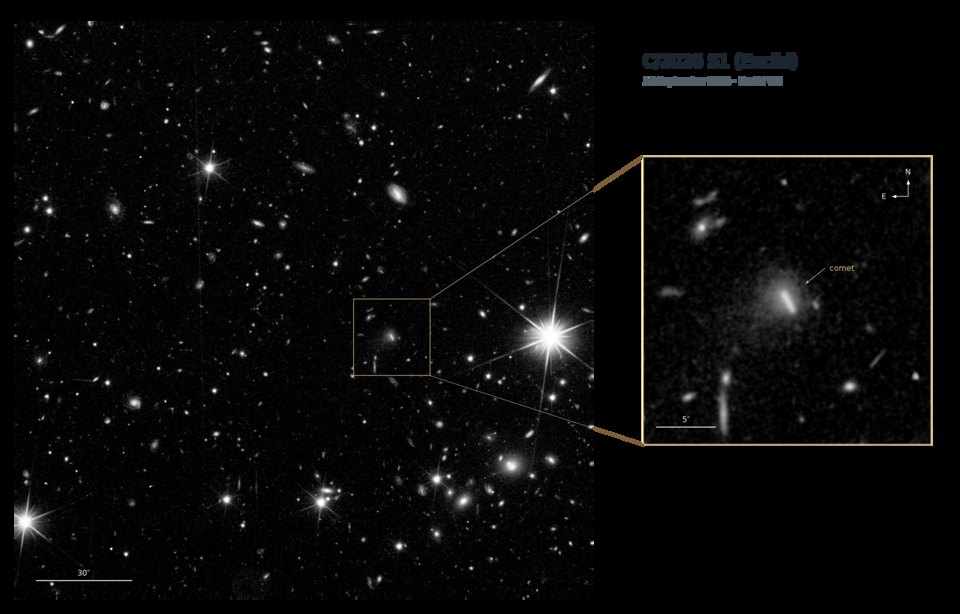
Webb also watched the interstellar comet 3I/ATLAS. NASA’s Near-Infrared Spectrograph observed it on August 6, 2025, and a revisit produced Webb’s first mid-infrared chemical fingerprint, with methane detected, according to a NASA release of June 1, 2026. The details are in the guide to the methane and heavy hydrogen found in 3I/ATLAS. These are mostly spectra, charts of light split by wavelength, rather than pretty pictures, and they are what reveal the chemistry.
For planets beyond our solar system, the pattern is the same. WASP-96 b in 2022 gave a spectrum, not a portrait, and a July 15, 2026 NASA release reports a giant exoplanet found hiding in a famous star system.
The deepest views reach galaxies from the first few hundred million years
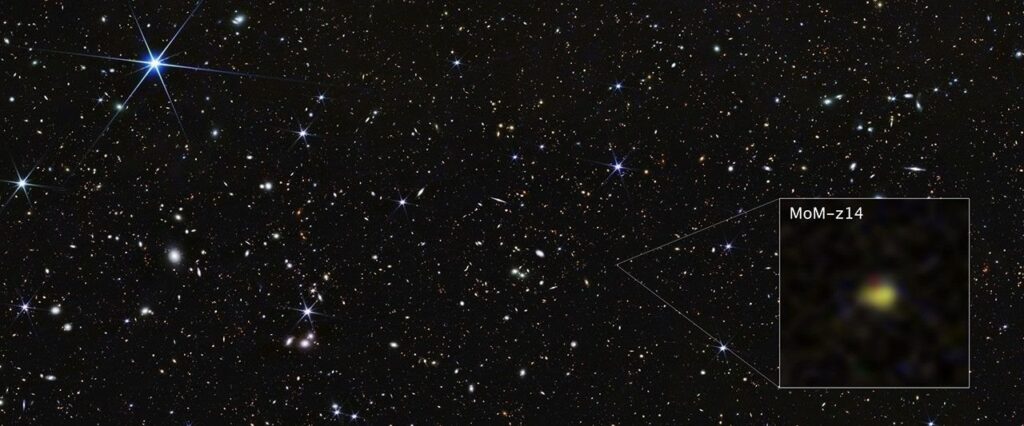
NASA says Webb’s infrared sensitivity is key to observing Cosmic Dawn, the period from roughly 50 million years to one billion years after the big bang. Galaxies that formed then are seen today only in the infrared, because their light has stretched on the way here. The current distance record and what it means are covered in the guide to Webb’s earliest galaxies.
NASA designed Webb for at least five years of operations with a goal of ten. The team later found enough propellant for more than a 20-year science lifetime, though hardware wear could shorten that. New releases should therefore keep arriving for years.
Common questions
Are James Webb telescope images real?
Yes, they are built from real measurements. The raw exposures are grayscale, and specialists assign visible colors by wavelength, shortest as blue and longest as red. The colors are a representation of invisible light, not what an eye or a camera would record.
When were the first James Webb telescope images released?
The first science images were released in July 2022, with NASA’s articles dated July 12, 2022. They covered SMACS 0723, WASP-96 b, the Southern Ring Nebula, Stephan’s Quintet and the Carina Nebula.
Where can I download James Webb telescope images?
Use NASA’s Webb image gallery. Open an image, then click the downward arrow in the lower right corner of its detail page to choose a resolution. Flickr albums and ESAWebb.org carry many of the same pictures.
How does the James Webb telescope take pictures?
Its cameras, NIRCam and MIRI, record infrared light through filters, one grayscale image per filter. Processors stretch each exposure to bring out detail, assign colors in chromatic order and combine the layers into one picture.
Is Webb better than Hubble?
It is more powerful in infrared, with over six times the light-collecting area, but the two see different light. Hubble covers mainly ultraviolet and visible wavelengths, so astronomers often combine them for one object.