Space dust caught by a NASA plane points to a hidden ice reservoir beyond Neptune
Twelve dust grains collected by a high-altitude NASA aircraft carry minerals shaped by water enriched in heavy oxygen, pointing to an ancient ice reservoir in the Kuiper Belt.
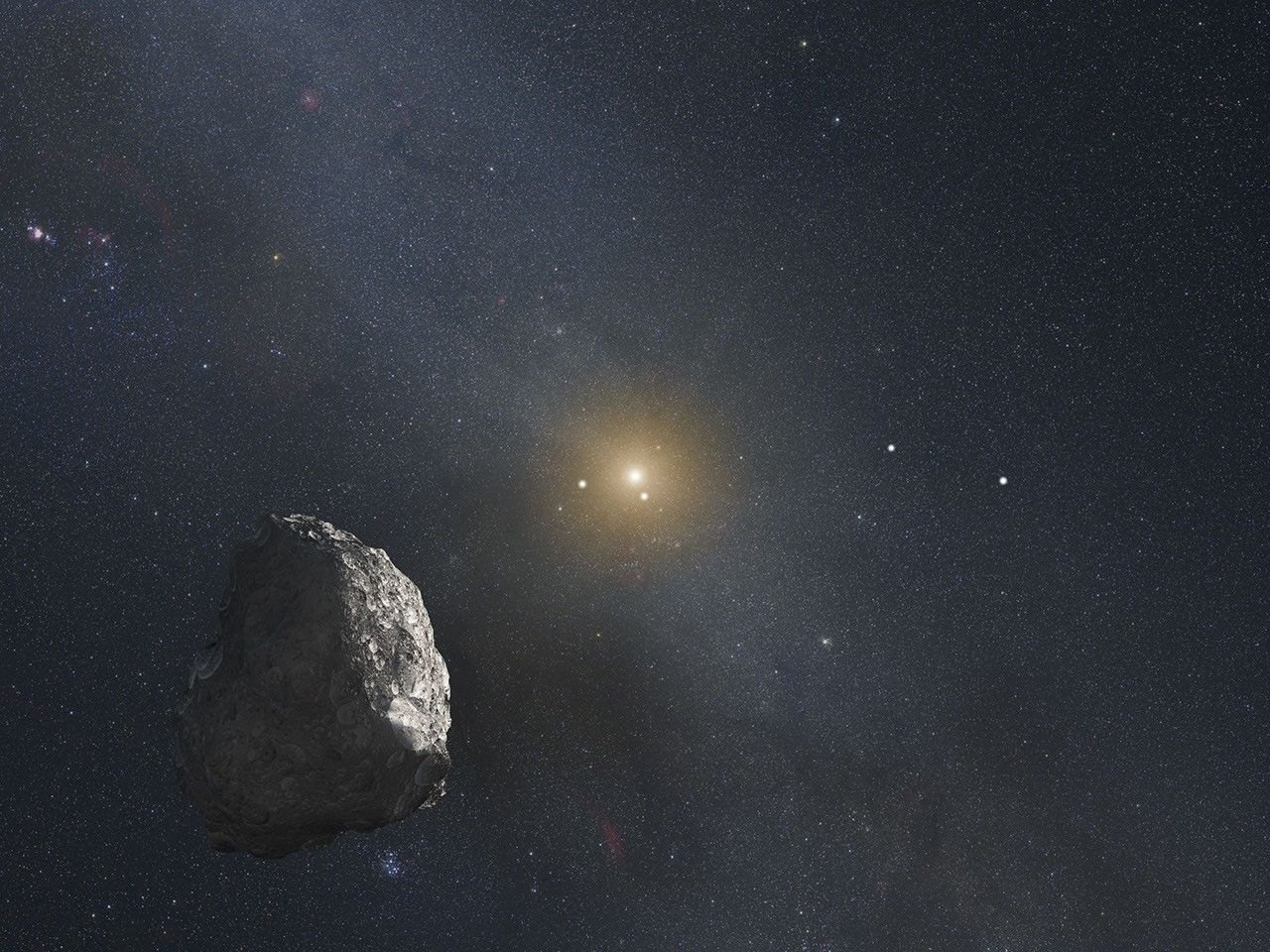
NASA scientists who examined 12 tiny dust grains caught high in Earth’s atmosphere report strong evidence for an ancient store of ice in the Kuiper Belt, the region beyond Neptune, according to a NASA science blog post.
Grains from the stratosphere, traced back past Neptune
The Kuiper Belt is a doughnut-shaped region of icy bodies far beyond Neptune’s orbit. It is home to Pluto, most known dwarf planets and some comets, and NASA says it may hold millions of other icy worlds left over from the solar system’s formation.
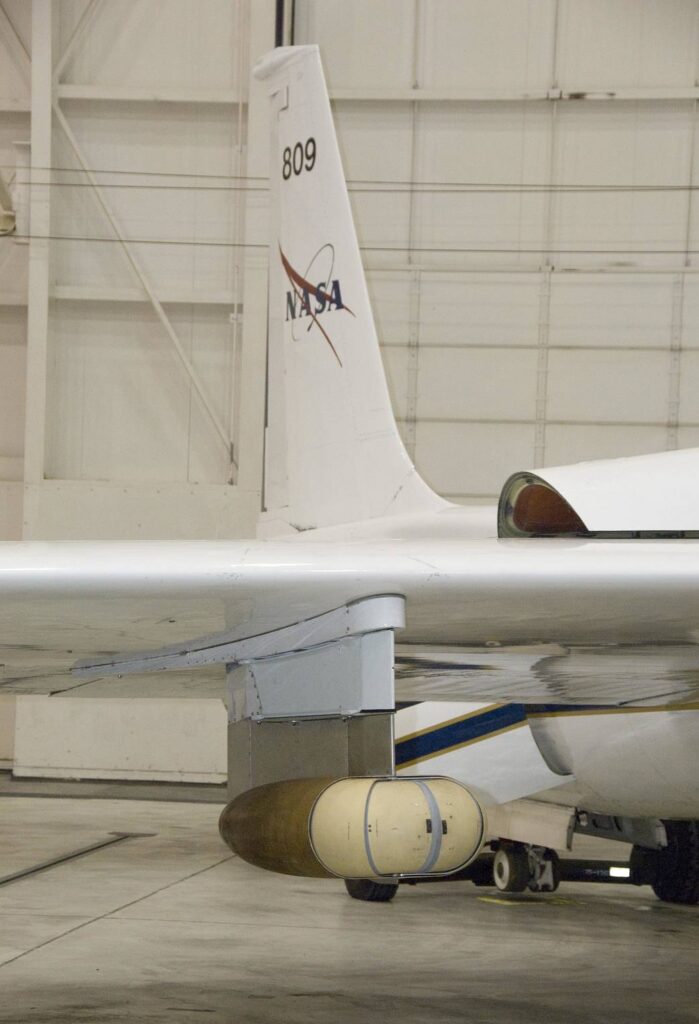
A team at NASA’s Johnson Space Center in Houston studied 12 dust particles that the agency’s ER-2 high-altitude research aircraft had collected in the stratosphere, the layer of air above where airliners fly. The grains were tied to the Kuiper Belt by their dense records of solar energetic particle tracks. These are marks left in a grain by fast particles streaming from the Sun, and NASA says the heavy marking helped point to that distant region as their source.
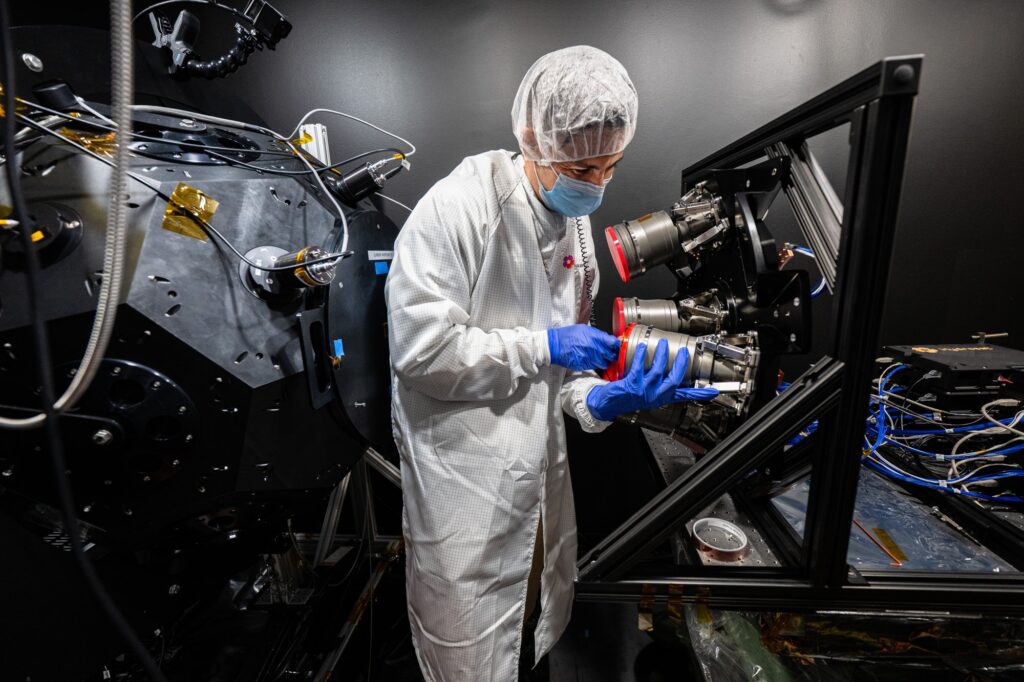
The team teamed up with colleagues at the University of California, Los Angeles (UCLA). Electron microscopes at NASA and an ion microprobe at UCLA, an instrument that analyzes tiny spots of a sample, revealed what the grains are made of and which oxygen isotopes they hold. Isotopes are versions of the same element with slightly different masses, so the balance of heavy and light oxygen works like a fingerprint for where material formed.
Some of the minerals in the grains were produced when water reacted with dust in the solar system’s earliest days. Their chemistry shows that this primordial water carried extra heavy oxygen.
A long-suspected ice, now with direct evidence
Scientists have expected for decades that the outer solar system held ice rich in the heavier oxygen isotopes. Meteorites and samples brought back from carbon-rich asteroids hinted at it, but NASA says the evidence stayed thin. Grains that carry this signature and can be tied to the Kuiper Belt add a more direct line of evidence.
NASA also points to its Genesis mission, which collected samples of the Sun’s own material. Those measurements serve as a reference for oxygen isotopes, so scientists can tell how far a grain’s oxygen departs from the starting mix of the solar system.
The post adds that similar signatures are rare in meteorites. NASA says this suggests the giant planets may have limited mixing between the outer and inner solar system, in effect keeping far-off material from flowing inward to the zone where the rocky planets formed.
Why a plane is a good dust collector
Researchers have three main routes to physical samples of early solar system material. Meteorites reach the ground after a fiery and often messy fall, and asteroid samples come from a handful of spacecraft missions. Stratospheric dust is gathered high above most weather and surface contamination, which is why NASA’s collectors fly on the ER-2.
NASA’s Airborne Science program says its Large Area Collectors on the ER-2 gather comparatively unaltered cosmic dust at flight altitudes of 65,000 feet and above. Johnson Space Center curates the samples: the collectors are processed in a clean laboratory, and individual particles are retrieved, examined and cataloged before being made available to researchers. One JSC cosmic dust catalog describes collection flights that began in May 1981, so the grains studied now come from a program with more than four decades of material to draw on.
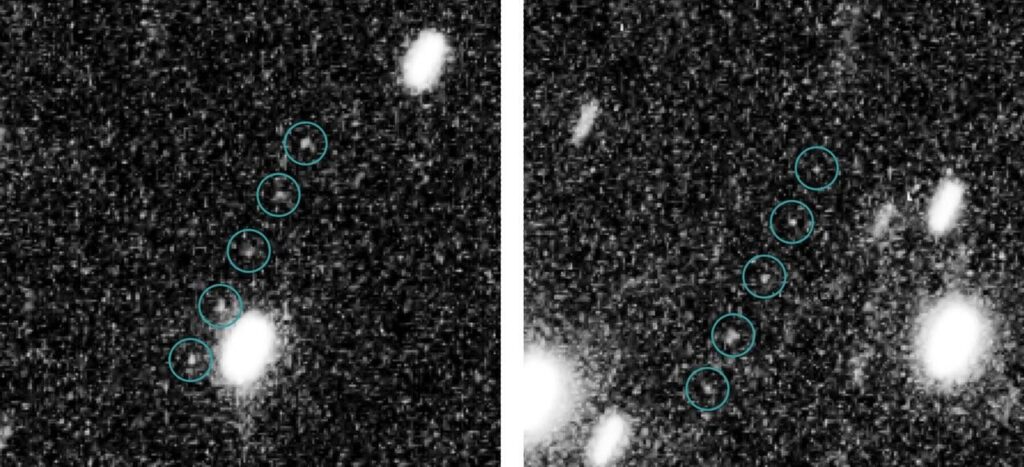
The distances involved explain why such samples matter. Two Kuiper Belt objects in Hubble images on NASA’s Kuiper Belt page are roughly 4 billion miles from Earth, and the Arrokoth object, visited by a NASA spacecraft, orbits about 1 billion miles (1.6 billion kilometers) beyond Pluto. No spacecraft has brought back material from there, so dust that drifts to Earth is one of the few ways to examine it in a laboratory.