NASA offers $500,000 for mid-power Hall thrusters that run on krypton
NASA's AMPERE Challenge will pay up to two U.S. companies $250,000 each to build mid-power electric thrusters, with free licensing and testing at NASA Glenn.
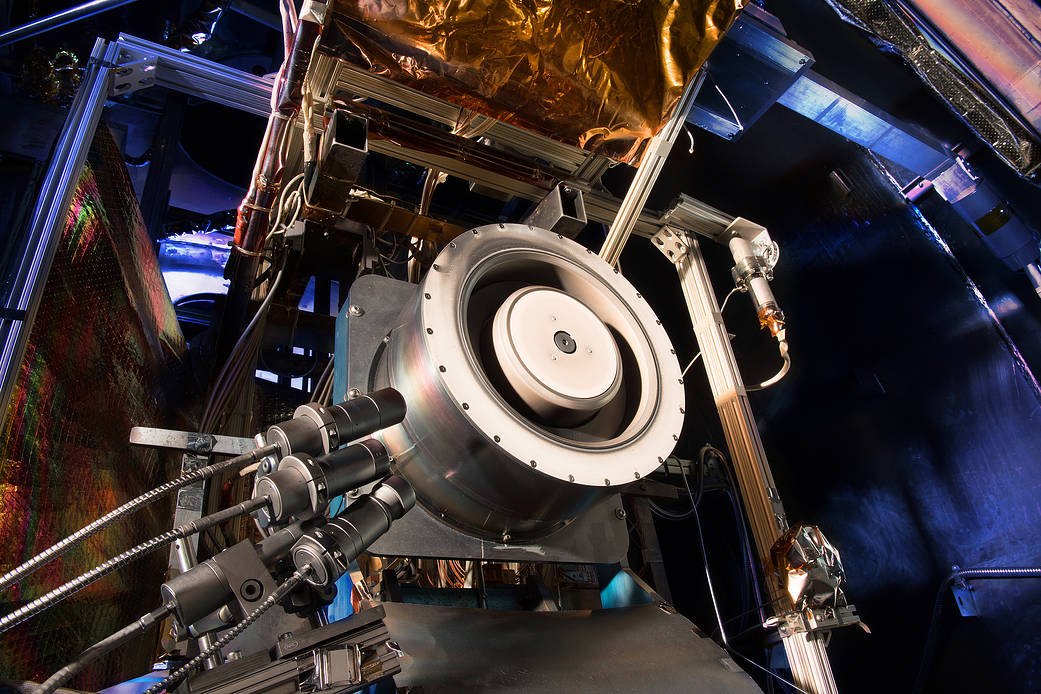
NASA has opened a competition for U.S. companies to build prototypes of mid-power Hall effect thrusters, a kind of electric engine for spacecraft. The AMPERE Challenge will split $500,000 between up to two winners, and registration is open until Jan. 27, 2027, according to NASA.
How a Hall thruster works, and what the challenge asks for
A Hall effect thruster uses an electric field to accelerate a propellant gas, which produces a gentle but very efficient push. It cannot lift a rocket off the ground, but it can move satellites and deep space robotic vehicles for months or years on little fuel. NASA says a solar electric propulsion system built around such a thruster uses 10 times less propellant than an equivalent chemical rocket.
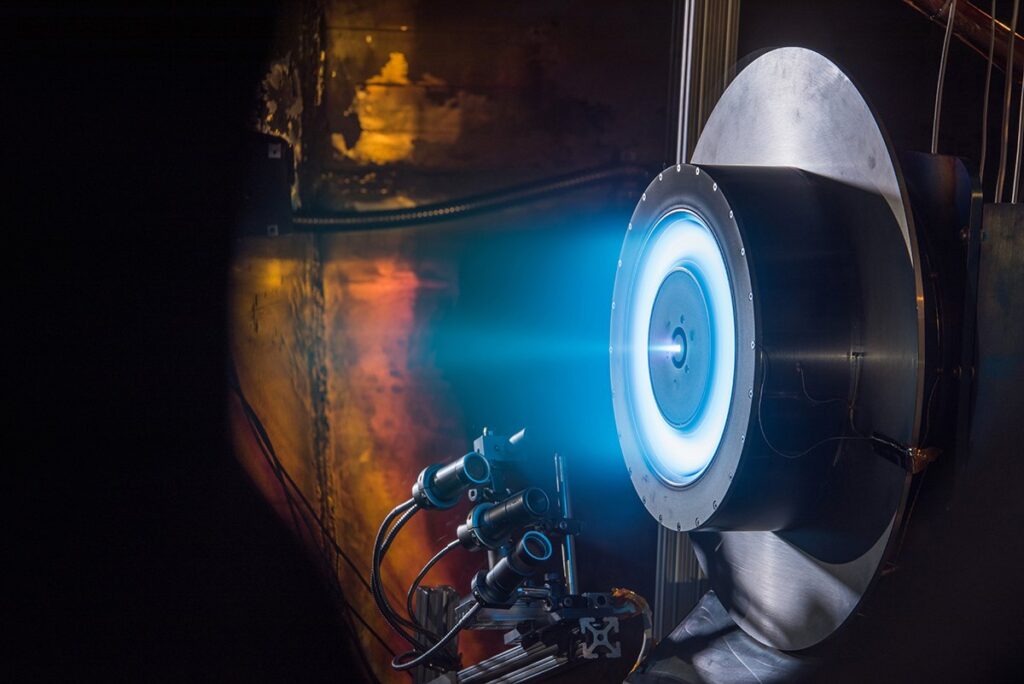
The Advanced Mid-Power Electric Rocket (AMPERE) Challenge targets thrusters in the middle of the power range. NASA’s challenge page puts that range at 3 to 7 kilowatts and limits entry to commercial companies incorporated in the United States with their primary place of business there.
The contest runs in three phases:
- Phase 1: each team submits a concept design, a manufacturing plan, and cost and performance projections.
- Phase 2: NASA may pick two winners to build prototypes and work with NASA staff. Through no-cost licensing, they can get early access to NASA-developed Hall thruster technology that uses krypton as the propellant.
- Phase 3: the prototypes are tested at NASA’s Glenn Research Center in Cleveland, again at no cost to the teams.
Each of the two winning teams may receive up to $250,000. NASA will hold a virtual industry day on Thursday, Nov. 19, for interested companies.
Free test time as part of the prize
Dr. Jason Frieman, AMPERE project co-owner at Glenn, said the approach aims to “remove key barriers and facilitate commercialization by providing access to NASA subject matter expertise, state-of-the-art technologies, and world-class facilities at no cost to challenge winners.” He added that NASA hopes participants will use it to show what they can do to the agency and to other government and commercial stakeholders.
The contest is the first in NASA’s Tech Maturation Prize series, which is meant to speed up breakthrough technologies for NASA missions while strengthening the U.S. space economy. It supports the Advanced Mid-Power Electric Rocket project, managed by Glenn and NASA’s Jet Propulsion Laboratory in Southern California and funded by the agency’s Research and Technology Mission Directorate. The company Yet2 runs the challenge under contract with NASA’s Center of Excellence for Collaborative Innovation.
Small cash, large in-kind value
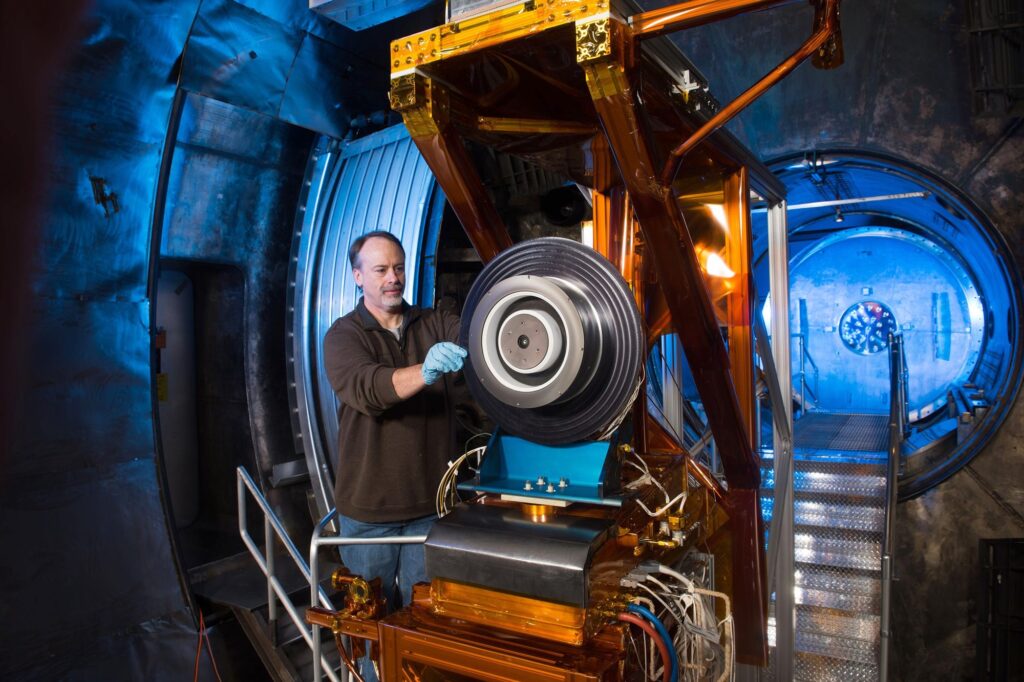
The cash is modest next to what the winners receive in kind. Thruster development normally depends on vacuum chambers, which are large test rooms that mimic the emptiness of space, and few small companies own one. NASA’s image library describes Glenn engineers preparing a Hall thruster for ground testing in exactly such a chamber, and the challenge gives winners that access without charge, plus a licence to thruster designs NASA has already developed.
Compared with other recent NASA prizes, $500,000 is mid-sized. NASA’s digital twin challenge for an Artemis II astronaut’s bone marrow offers $150,000, while NASA’s Moon Base challenge for students carries $1 million, according to NASA’s announcement. The difference is that AMPERE ties the money to a hardware pipeline: a paper design in Phase 1, a prototype in Phase 2 and a test campaign in Phase 3, so the prize pays for steps a company would otherwise fund itself.
The krypton detail is also worth noting. NASA’s image library says the thrusters on the Psyche spacecraft glow blue from xenon plasma, so xenon is the established propellant for many electric engines. By offering krypton-based designs for licence, NASA is pointing U.S. companies toward a different gas for this power class. The announcement does not say why, and it gives no performance targets beyond the cost and performance projections teams must submit in Phase 1.
NASA does not say whether it plans to buy thrusters from the winners. It describes the aim as supporting future NASA and commercial missions and helping the companies show their capabilities. Full rules and eligibility details are on the challenge website, ampere.nasatechmaturation.org.