Tiny asteroid 2026 VL5 passed Earth at 0.14 lunar distances, first seen a day earlier
NASA/JPL data show asteroid 2026 VL5 passed Earth at 09:08 UTC on Nov. 7, about 55,545 km away, or 0.14 lunar distances. It is not on NASA's Sentry impact-risk list.
Asteroid 2026 VL5 passed Earth at 09:08 UTC on Nov. 7, 2026, at a nominal distance of 55,545 km, or 0.14 lunar distances, according to NASA/JPL’s Center for Near Earth Object Studies (CNEOS). It was moving at 13.7 km/s relative to Earth.
A lunar distance is the average gap between Earth and the Moon, so 0.14 means the asteroid came about one-seventh of the way to the Moon. CNEOS publishes a table of such close approaches and updates it as new observations arrive.
The numbers behind the pass
CNEOS lists the closest approach at 09:08 UTC, with a timing uncertainty of less than one minute. The nominal distance, the single best estimate, is 0.000371 astronomical units (the average Earth-Sun distance, used as a yardstick in the solar system). That converts to 55,545 km, or 0.14 lunar distances.
The table also gives a 3-sigma range, meaning the span inside which the true value almost certainly lies. For 2026 VL5 it runs from 0.000371018 to 0.000371572 au, a very narrow window, so the path of the flyby is pinned down tightly.
The relative velocity is 13.7 km/s, roughly 49,000 km/h, measured against Earth. Part of that figure comes from Earth’s own gravity pulling the rock in; the speed it would have far from Earth, which CNEOS lists as v-infinity, is 13.2 km/s.
How big is it, and when was it found?
NASA lists no diameter for 2026 VL5. What it does list is an absolute magnitude, H, of 30.768. H is a brightness scale for asteroids: the higher the number, the fainter the object would look under standard conditions and, other things equal, the smaller it is. A value near 30.8 is at the very faint end of what surveys catalog, which marks 2026 VL5 as a very small object.
JPL’s Small-Body Database classifies the object as an Apollo asteroid, a group of near-Earth asteroids whose orbits cross Earth’s path. Its record shows the first observation dates from Nov. 6, 2026, about a day before the flyby, and the discovery field is empty. Objects this small are typically detected only when they are already close to Earth, which is why discovery and closest approach often fall within days of each other.
No impact risk is listed
NASA’s Sentry impact-monitoring system, which tracks asteroids with any possible future impact, returns “specified object not found” for 2026 VL5. In other words, the object is not on that list, and nothing in the CNEOS data points to a threat.
Seen only briefly, but not rare
For astronomers, a pass at 55,545 km is a chance to measure a tiny body, but the window is short because the object fades quickly as it recedes. The Nov. 6 first observation shows how little warning such objects give.
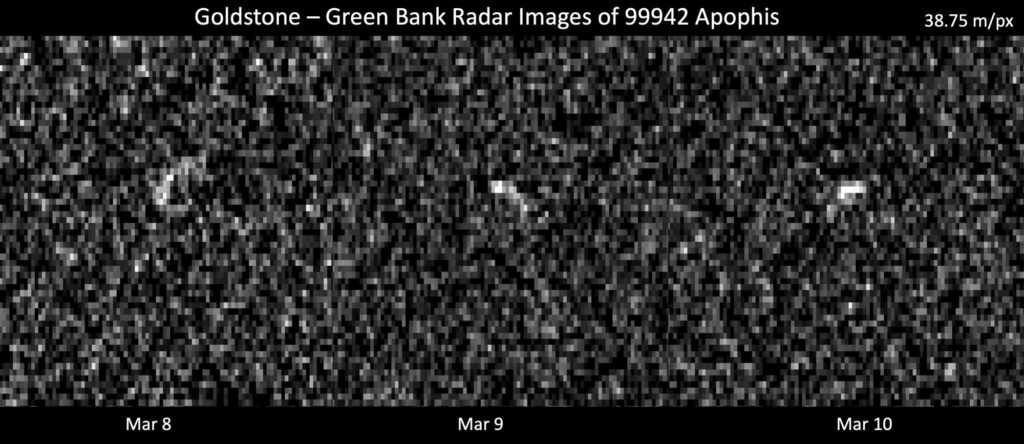
Encounters like this are now routine. On Oct. 31, tiny asteroid 2025 UK9 also passed closer than the Moon. The famous close pass is still ahead: asteroid 99942 Apophis, a far larger body, will pass Earth on April 13, 2029, as covered in our guide to the Apophis flyby.
For anyone on the ground, 2026 VL5 was never a sky event: an object this faint is far beyond what backyard telescopes can follow, and it had already passed by the time CNEOS published the entry.