Hera’s first look at Didymos and Dimorphos shows two separate asteroids
From 1,280 km away, ESA's planetary defence probe has split what used to be a single dot into the asteroid pair that NASA's DART spacecraft struck in 2022.
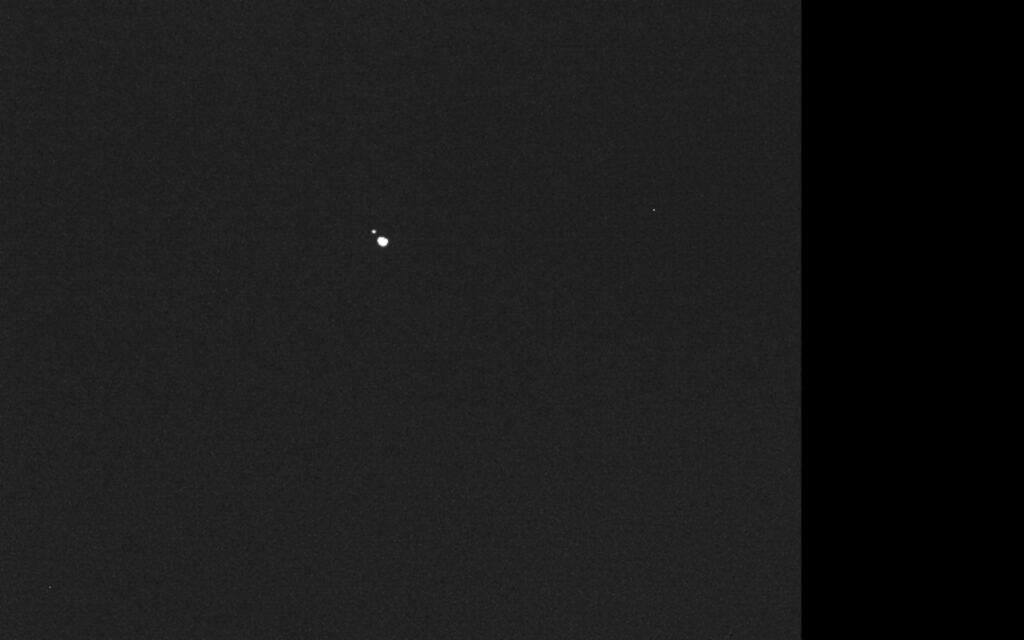
ESA’s Hera spacecraft has imaged the asteroids Didymos and Dimorphos as two separate objects for the first time, the agency reported. The picture was taken from 1,280 km away, and detailed views of Dimorphos are promised for 25 November.
One dot becomes a pair
Hera took the image on the evening of 18 October with its Asteroid Framing Camera, a black-and-white camera built for navigating around the asteroids. Until now the spacecraft saw the Didymos system as a single point of light. The system is about 197 million km from Earth.
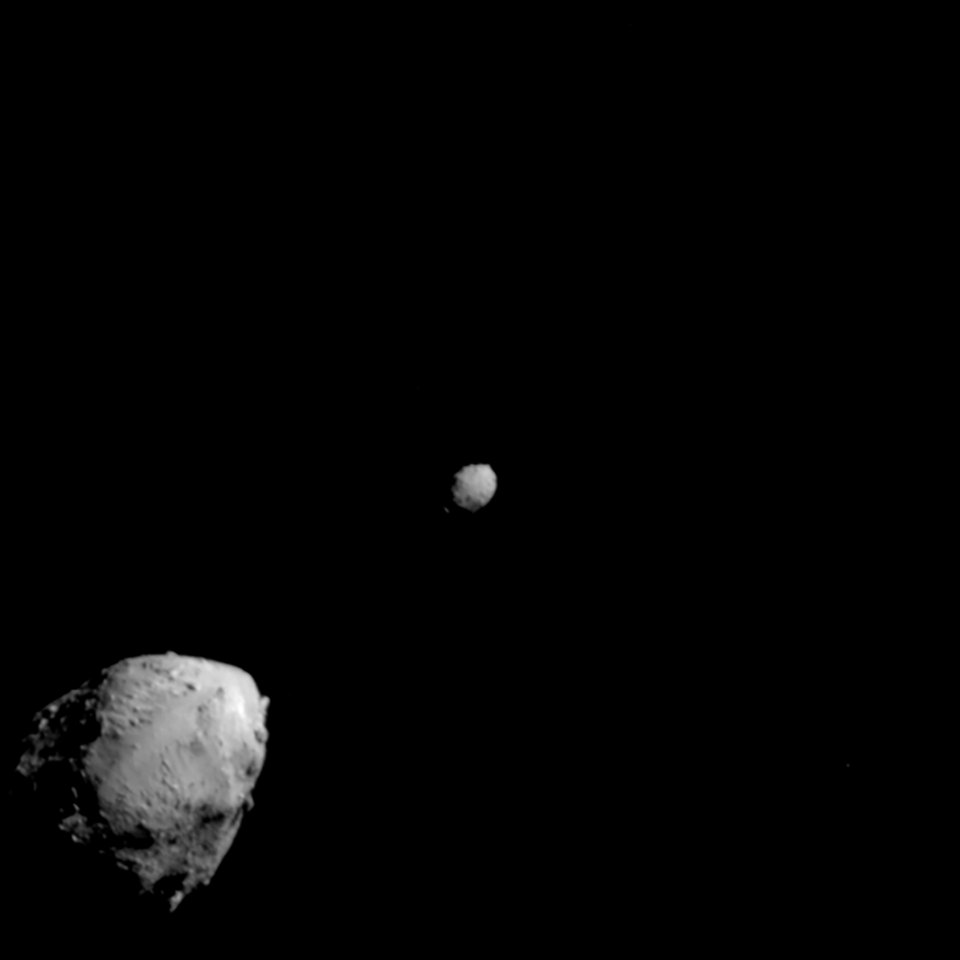
Didymos is the larger body, 780 m across, and Dimorphos is a small moon that circles it. At 151 m across, Dimorphos shows up as just one pixel, but ESA says it is clearly separated from its parent. Mission scientist Michael Kueppers said: “With this image the smaller Dimorphos asteroid becomes visible for the first time.”
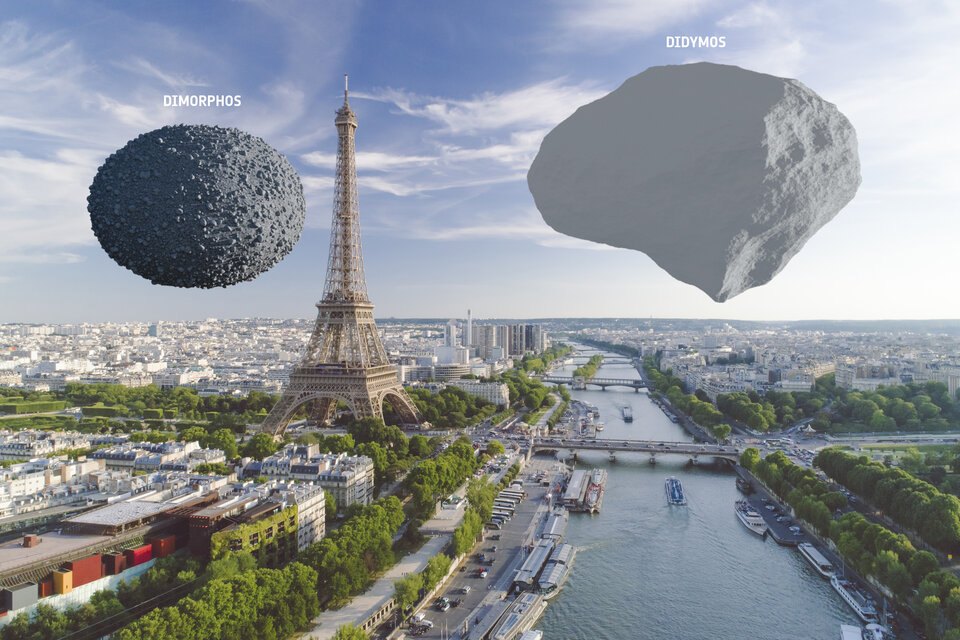
ESA compares Dimorphos to the Great Pyramid of Giza and Didymos to a skyscraper slightly shorter than Dubai’s Burj Khalifa. The two orbit each other at an average distance of 1.15 km, and Dimorphos moves around Didymos at about 18 cm/s, slower than a walking pace.
The image followed two thruster firings, a week apart, earlier this month. They slowed Hera to 20 m/s relative to the pair, so it can creep closer in small, controlled steps. Mission manager Ian Carnelli said the views “will much grow sharper as Hera comes closer.”
The target that human action has already moved
On 26 September 2022, NASA’s DART spacecraft hit Dimorphos at 6.1 km/s in a test of the kinetic impact method, which means deflecting an asteroid by hitting it with a spacecraft. The collision threw a plume of debris across 10,000 km of space and shortened Dimorphos’s orbit around Didymos by about 33 minutes. Carnelli called it “the first object in the Solar System to have had its orbit measurably shifted by human action.”
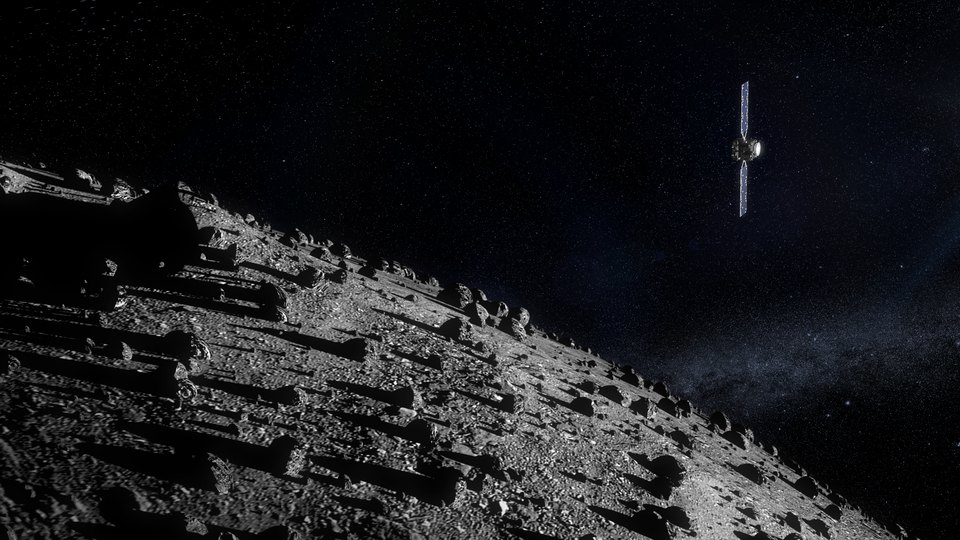
Hera was built to inspect the result up close. It launched on 7 October 2024, and ESA says it will carry out a detailed survey of the crash site, using two shoebox-sized CubeSats (very small satellites) for a still closer look, before eventually moving on to landing.
What Hera still has to answer
The DART team measured the orbit change from Earth, but ESA says the cause is not yet understood. The change was far larger than impact simulations predicted. The open questions are what the impact did to Dimorphos itself, whether it left a crater or reshaped the whole body, and what the asteroid’s mass, structure and makeup are.
These matter because, according to ESA’s Hera pages, the efficiency of the momentum transfer cannot be fully assessed until the mass and make-up of Dimorphos and the shape of the impact crater are known. Without those figures, the 2022 result is hard to turn into a method that could be reliably used on a different asteroid.
Hera carries instruments for high-resolution visual, laser and radio science mapping. ESA says its two CubeSats have separate jobs: Milani will study the mineral makeup of Dimorphos, and Juventas will make the first radar sounding inside an asteroid, which should show how the interior is built.
For now, Dimorphos is a single pixel. The next milestone is the first detailed images of the asteroid, which ESA has scheduled for 25 November.