Moon phase today: How the lunar cycle works, with full Moon dates for 2026 and 2027
The Moon cycles through eight phases every 29.5 days; here is how to read tonight's phase, why the Moon looks orange or red, and all full Moon dates for 2026 and 2027.
Dates and facts checked on the official pages on October 23, 2026.
The Moon’s phase is how much of its sunlit half faces Earth, and it repeats every 29.5 days. To see tonight’s phase, moonrise and moonset for your location, use the Moon phase today page. The next full Moon is on October 26, 2026, at about 04:12 UTC.
The dates below are listed in UTC (Coordinated Universal Time, the world’s reference clock). Convert them to your own time zone; a full Moon at 04:12 UTC is the evening of October 25 in the Americas.
Why the Moon changes shape every night
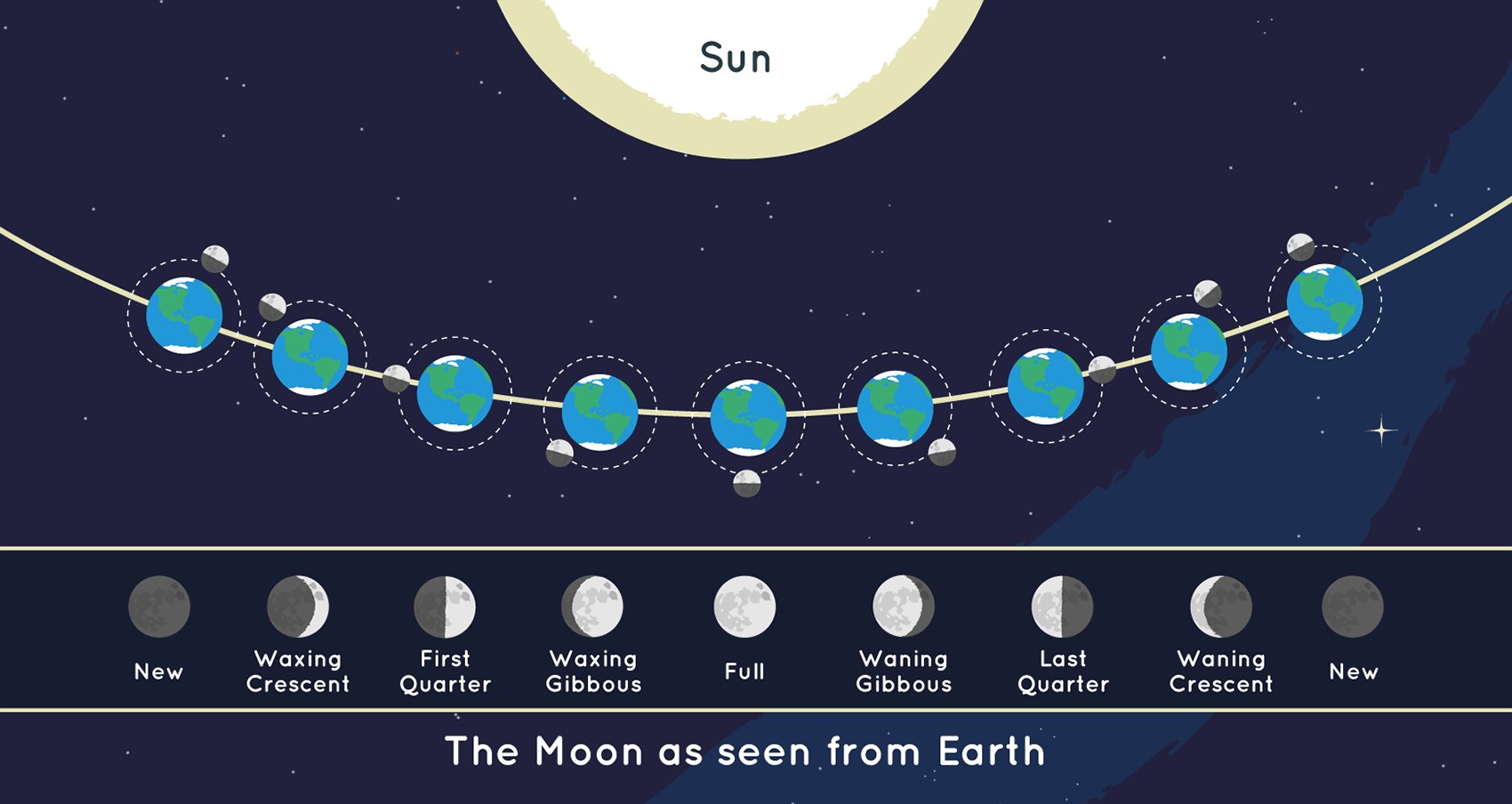
The Sun always lights half of the Moon, just as it lights half of Earth. The phases appear because, as the Moon circles Earth, we see a different share of that lit half. According to NASA, the Moon is never actually changing shape or being shadowed by Earth during a normal phase cycle; only our viewing angle changes.
At new Moon, the lit side points away from us and the Moon is almost invisible. At full Moon, Earth sits roughly between the Sun and the Moon, so the whole near side is lit. In between, we see a crescent, a half Moon or a gibbous Moon (more than half lit, but not full).
Two terms describe the direction of change. The Moon is waxing while the lit part grows from new toward full, and waning while it shrinks back toward new.
The eight phases, in order
NASA lists the cycle as eight named phases. Each lasts a few days, and the quarter phases are named for how far the Moon has traveled around its orbit, not for how much of it is lit (a quarter Moon looks half lit).
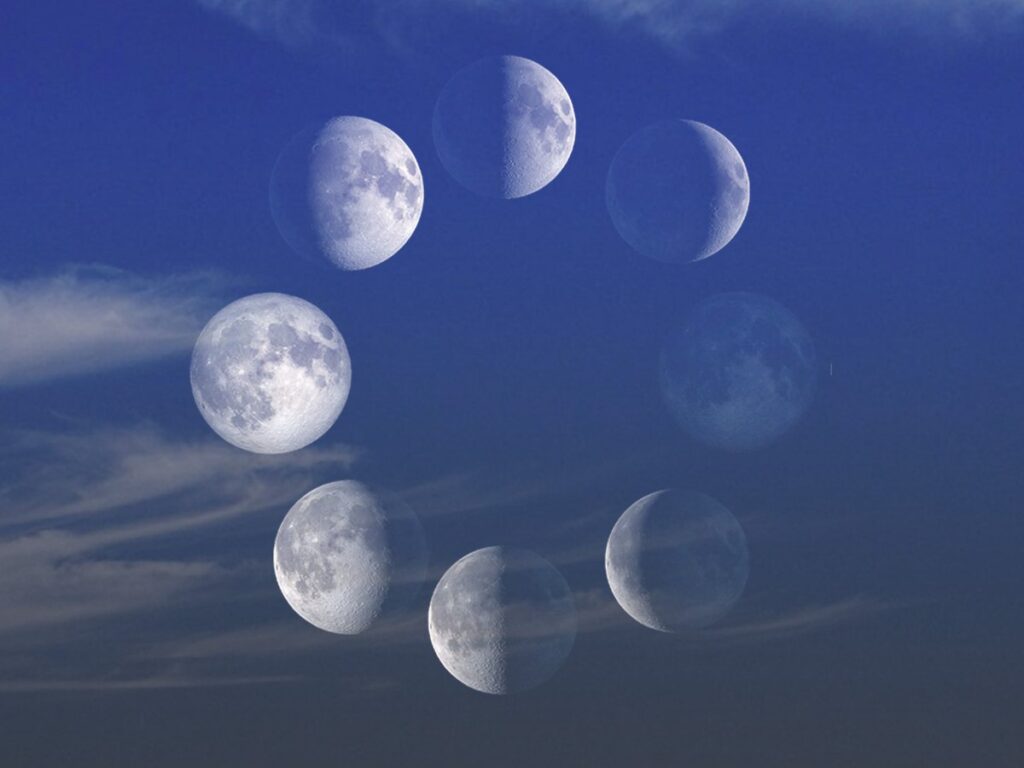
- New Moon: lit side faces away from Earth.
- Waxing crescent: a thin sliver grows.
- First quarter: half the disk is lit.
- Waxing gibbous: more than half is lit.
- Full Moon: the entire near side is lit.
- Waning gibbous: the lit part begins to shrink.
- Third quarter (also called last quarter): half lit again, on the opposite side from first quarter.
- Waning crescent: a thin sliver before the next new Moon.
The cycle is 29.5 days, but the Moon orbits in 27.3
NASA gives two different lengths. The Moon takes 27.322 days to circle Earth once, but the phase cycle from one new Moon to the next takes 29.5 days. The gap exists because Earth also moves around the Sun during the month, so the Moon has to travel a little farther to line up with the Sun again.
That is why the full Moon dates in the tables below slip about 29 or 30 days from one month to the next, and why some years have a second full Moon in one calendar month.
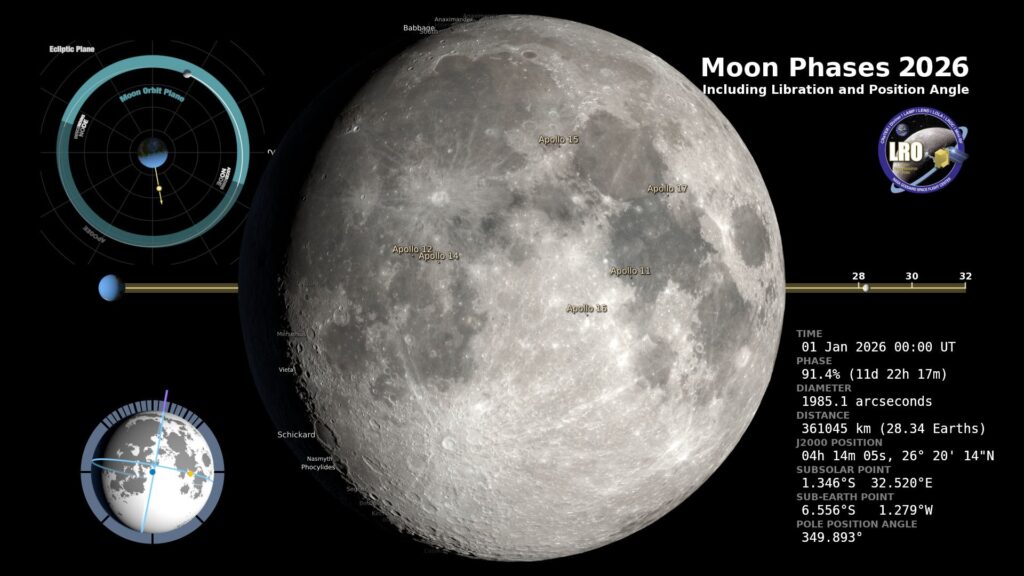
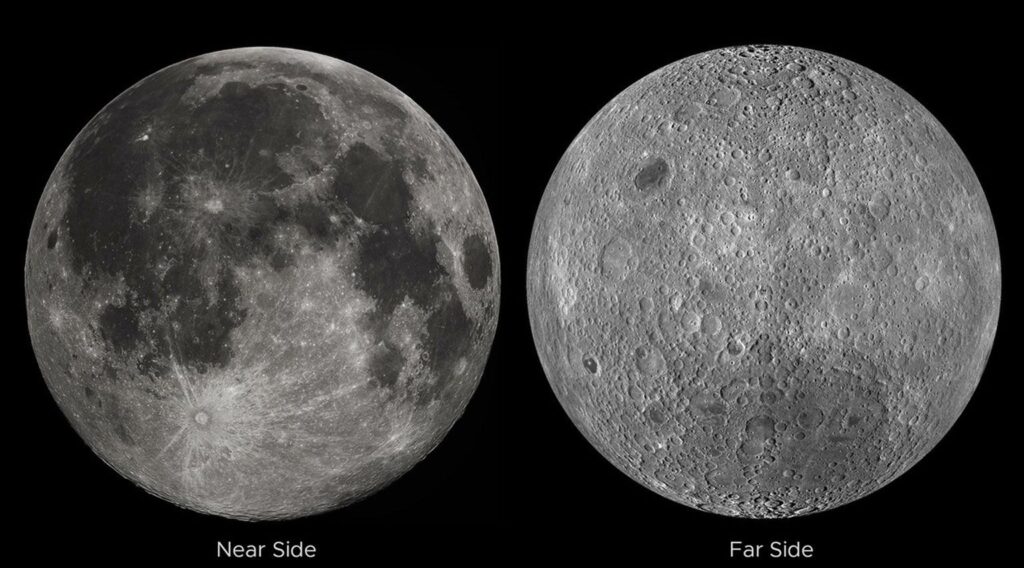
Because the Moon is tidally locked with Earth, meaning it spins exactly once per orbit, the same face always points toward us. NASA notes that a slight wobble called libration lets observers see a bit more than half of the surface over time, but the far side is never visible from Earth.
How to check the Moon phase and moonrise tonight
Phase, rise time and set time all depend on where you stand, so a live, location-based tool is more reliable than a fixed table. The Moon phase today page linked above shows tonight’s phase; the U.S. Naval Observatory and NASA also publish phase data.
A few rules of thumb from the geometry of the cycle help you find the Moon in the sky without a tool:
- A full Moon rises around sunset and is high in the sky near midnight, according to NASA’s Scientific Visualization Studio.
- A waxing Moon (growing) is up in the evening; a waning Moon (shrinking) rises late and is visible in the morning.
- A new Moon rises and sets with the Sun and cannot be seen.
For the October 2026 full Moon, the lit share peaks around 04:00 UTC on October 26, as covered in the Hunter’s Moon 2026 guide.
Full Moon dates and times for 2026
The Royal Observatory of Belgium publishes its times in Belgian local time (UTC+1 in winter, UTC+2 in summer). The table converts them to UTC. The October 26 time matches NASA’s hourly data, which places the peak between 04:00 and 05:00 UTC.
| Full Moon | Date (UTC) | Time (UTC) |
|---|---|---|
| January | Jan. 3 | 10:03 |
| February | Feb. 1 | 22:09 |
| March | Mar. 3 | 11:38 |
| April | Apr. 2 | 02:12 |
| May (first) | May 1 | 17:23 |
| May (second) | May 31 | 08:45 |
| June | June 29 | 23:57 |
| July | July 29 | 14:36 |
| August | Aug. 28 | 04:19 |
| September | Sept. 26 | 16:49 |
| October | Oct. 26 | 04:12 |
| November | Nov. 24 | 14:54 |
| December | Dec. 24 | 01:28 |
Checked October 23, 2026, against the Royal Observatory of Belgium table, converted to UTC.
The second full Moon in May, on May 31, is what many people call a blue Moon, the informal name for a second full Moon within one calendar month.
Full Moon dates and times for 2027
The U.S. Naval Observatory’s table lists the first six 2027 full Moons in UT: January 22 at 12:17, February 20 at 23:23, March 22 at 10:44, April 20 at 22:27, May 20 at 10:59 and June 19 at 00:44. The Royal Observatory of Belgium’s table, converted to UTC, gives the same moments to within a minute and covers the rest of the year.
| Full Moon | Date (UTC) | Time (UTC) |
|---|---|---|
| January | Jan. 22 | 12:17 |
| February | Feb. 20 | 23:23 |
| March | Mar. 22 | 10:44 |
| April | Apr. 20 | 22:27 |
| May | May 20 | 10:59 |
| June | June 19 | 00:44 |
| July | July 18 | 15:44 |
| August | Aug. 17 | 07:28 |
| September | Sept. 15 | 23:03 |
| October | Oct. 15 | 13:47 |
| November | Nov. 14 | 03:25 |
| December | Dec. 13 | 16:08 |
Checked October 23, 2026. January to June from the U.S. Naval Observatory; July to December from the Royal Observatory of Belgium, converted to UTC (the minute may differ by one from other almanacs).
NASA lists two eclipses of the Moon in 2027, both penumbral (the Moon passes only through the faint outer shadow of Earth, so the dimming is subtle): February 20-21 and August 16-17. Both fall on a full Moon date in the table. For the other eclipse event of that month, see the August 2, 2027 total solar eclipse, which NASA says is total in southern Spain, North Africa, Saudi Arabia and Yemen.
Why the Moon looks orange or red
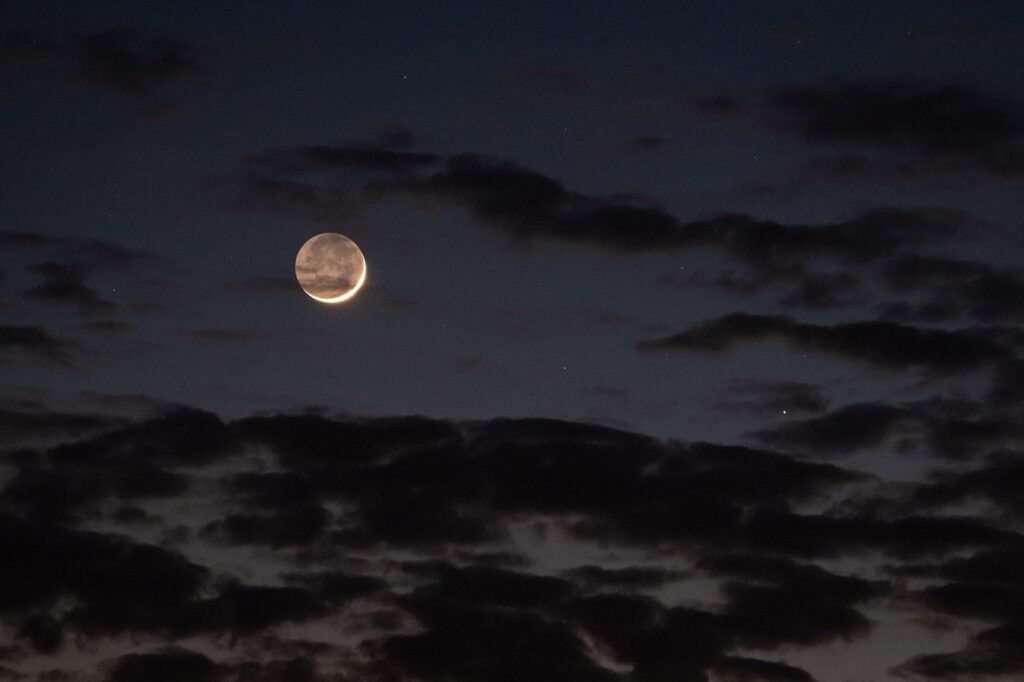
A Moon low on the horizon often looks orange or red. Its light then passes through a thicker layer of atmosphere, and air scatters blue light more than red, so the warmer colors are what reach your eye. The same effect reddens the Sun at sunrise and sunset.
A “blood Moon” is a different case: a total lunar eclipse, when Earth’s shadow covers the Moon and only sunlight bent through Earth’s atmosphere reaches it, mostly red. Time and Date describes the same mechanism. Smoke or haze can deepen the color on any night.
Meteor showers are best watched when the Moon is dim; see every major meteor shower peak through August 2027 for how each year’s Moon phase helps or hurts.
Common questions
What moon phase is it tonight?
The answer changes daily and depends on the date, so check a live tool. Given the October 26, 2026 full Moon, the Moon on October 23 is a waxing gibbous, more than half lit and growing. The Moon phase today page shows the current phase for your date.
When is the next full Moon?
The next full Moon after October 23, 2026 is on October 26 at about 04:12 UTC, followed by November 24 at about 14:54 UTC and December 24 at about 01:28 UTC.
When was the Moon landing?
NASA’s Apollo 11 mission landed on the Moon on July 20, 1969. The crew were Neil Armstrong, commander; Edwin “Buzz” Aldrin, lunar module pilot; and Michael Collins, who stayed in the command module in lunar orbit.
Why do we always see the same side of the Moon?
The Moon rotates exactly once for every orbit around Earth, a lock called synchronous rotation. NASA says libration reveals a little more than half of the surface over time, but the far side never faces us.
Is the Moon in the sky only at night?
No. The Moon is above the horizon about half of every 24 hours, and from first quarter to third quarter it is often visible in daylight. Only near new Moon is it lost in the Sun’s glare.