Canada funds a $1.5 million push to sniff out Mars’s methane mystery
The Canadian Space Agency has hired Quebec City's ABB to sharpen and test a laser instrument that could measure tiny amounts of methane near the Martian surface.
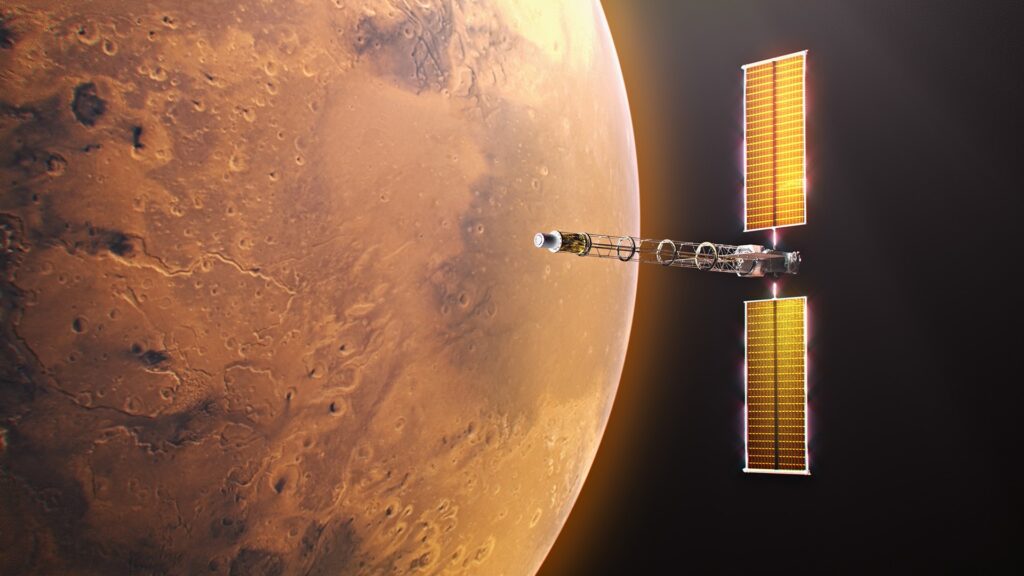
The Canadian Space Agency (CSA) has awarded a contract worth about $1.5 million to ABB Inc. of Quebec City to develop MAGE-ICOS, an instrument designed to measure trace amounts of methane directly in the Martian atmosphere, the agency said on Oct. 29.
A gas that scientists cannot yet explain
Methane is a simple molecule of one carbon atom and four hydrogen atoms. On Earth, living things produce much of it, though geological processes can too. That is why finding it on Mars draws so much attention: according to the CSA, it could offer clues to the planet’s past and present, including whether Mars once supported life.
Signals pointing to methane on Mars have been detected, the agency says, but where it comes from and what processes drive it are still not fully understood. The CSA calls this one of the planet’s biggest scientific mysteries, and says more frequent measurements near the surface could help answer it.
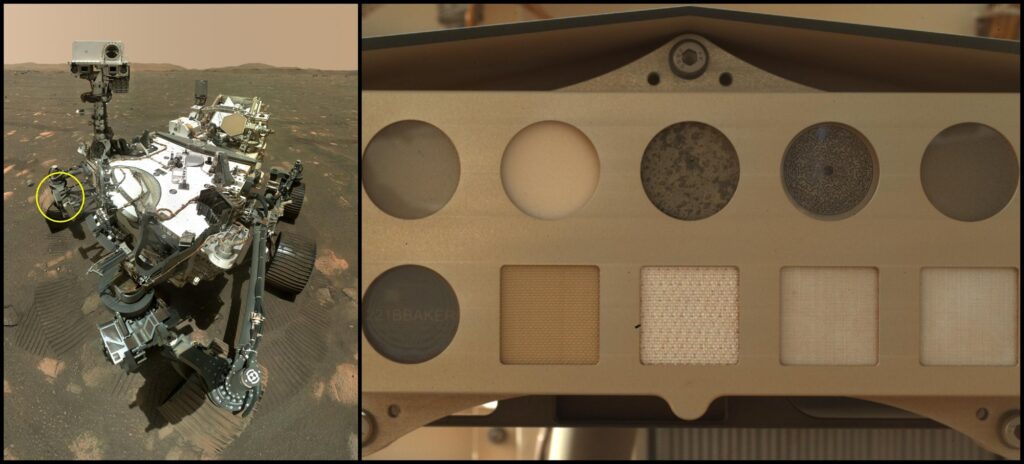
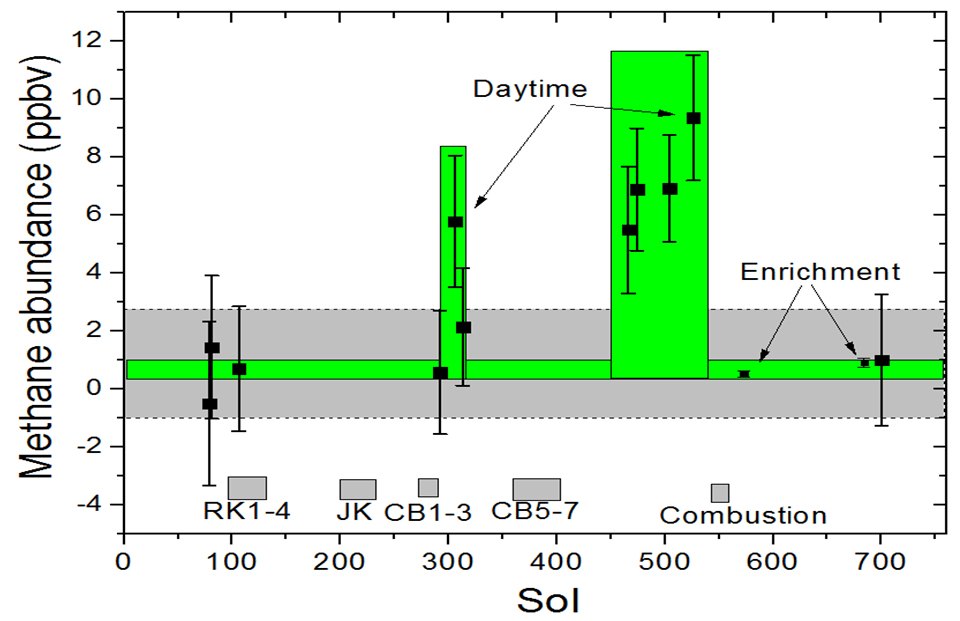
Earlier measurements show why the question is hard. NASA’s Curiosity rover carries a laser instrument, the Tunable Laser Spectrometer, which measures gases by how they absorb light. According to NASA’s Jet Propulsion Laboratory, it found no methane in six analyses between October 2012 and June 2013, and the team concluded the amount could be no more than 1.3 parts per billion. Then, between roughly August 2012 and September 2014, NASA reported a short-lived spike averaging about 7 parts per billion by volume, with levels before and after at or below about 1 part per billion, averaging 0.7. A gas that appears and vanishes like this is hard to explain, and it is the kind of puzzle that denser measurements are meant to settle.
What ABB will build and test
MAGE-ICOS stands for Martian Atmospheric Gas Evolution Experiment – Inter-Cavity Optical Spectroscopy. The CSA describes it as an instrument that could detect trace amounts of methane directly in Mars’s atmosphere. The agency does not explain the optical method in detail.
The new contract builds on earlier CSA-funded work. ABB will do three things, according to the agency:
- refine and test the instrument’s technology;
- reduce measurement noise, the random variation that can mask a faint signal, and improve sensitivity under conditions representative of the Martian atmosphere;
- develop and test a prototype to demonstrate the instrument’s performance.
The award comes through the CSA’s Space Technology Development Program, which the agency says aims to advance the capabilities and competitiveness of Canadian space companies and help them pursue new commercial opportunities. The CSA frames the work as strengthening Canada’s capabilities in planetary science and moving the instrument one step closer to a possible contribution to future international missions to Mars.
Why the prototype is the milestone to follow
The announcement does not name a mission, a launch date or a partner agency, and the CSA speaks only of a potential contribution. That makes the prototype the point at which this project becomes concrete. A working unit with measured sensitivity and noise figures would give mission planners something to compare against existing instruments such as Curiosity’s laser spectrometer, whose reported baseline sits around 0.7 parts per billion.
The CSA’s emphasis on measuring close to the surface, and doing so more often, also points to the gap it wants to fill. Curiosity’s record shows how a gas can rise and fall within a short stretch of time. An instrument that samples frequently and is sensitive enough to separate a faint signal from its own noise would be better placed to catch such changes.
For Canada, the value of the contract is also industrial. It keeps a Quebec company working on a space-qualified measurement technique, which can help in bidding for a place on a foreign-led mission. Whether MAGE-ICOS flies depends on decisions that have not been announced.