NASA’s 368-page ISAM guide now lists only hardware that exists, and industry is asking for it
NASA Langley's 2026 ISAM State of Play covers 11 capability areas in 368 pages, and admits only hardware that has been built, not slide-deck ideas.
NASA’s Langley Research Center has published the 2026 edition of its ISAM State of Play, a 368-page catalog of in-orbit servicing, assembly and manufacturing hardware. Companies are now asking for it as competitive intelligence, NASA says.
Only hardware that physically exists makes the list
ISAM stands for In-Space Servicing, Assembly, and Manufacturing: repairing, refueling, upgrading, building and making things in orbit instead of launching every spacecraft as one finished piece. The State of Play, published since 2021, documents what has actually been built across 11 functional areas, from robotic manipulation to refueling and structural assembly.
The entry rule is strict. A technology must exist either as a ground prototype or as an in-flight demonstration. Dale Arney, senior team lead for the ISAM Technology Portfolio at Langley, said some companies send a presentation of an idea with little sign that any work has started. Those concepts wait until the following year’s review.
That discipline is why the document has found a wider audience. Arney said some unnamed companies asked whether NASA holds proprietary information. It does not, and Arney said that impartiality is what makes the report valuable. In his words, the field has “expanded more than linearly since we started.”
The report is built with outside help. Team member John Mulvaney called it “a crowdsource document.” Each year brings more interviews with industry partners, and contributions come from NASA’s Ames, Glenn, Marshall, Kennedy and Johnson centers, plus international developers who meet the hardware test. The 2026 edition adds developer profiles and facility documentation, so mission designers can see who is building what and where the work is done.
“We like to refer to it as kind of a crowdsource document.”
The missions that need it
NASA points to three kinds of future mission that single-launch designs cannot deliver: telescopes larger than any rocket fairing (the nose cone that protects a payload during launch), national security satellites that can move and recover, and commercial spacecraft that can take on newer technology in orbit without being replaced.
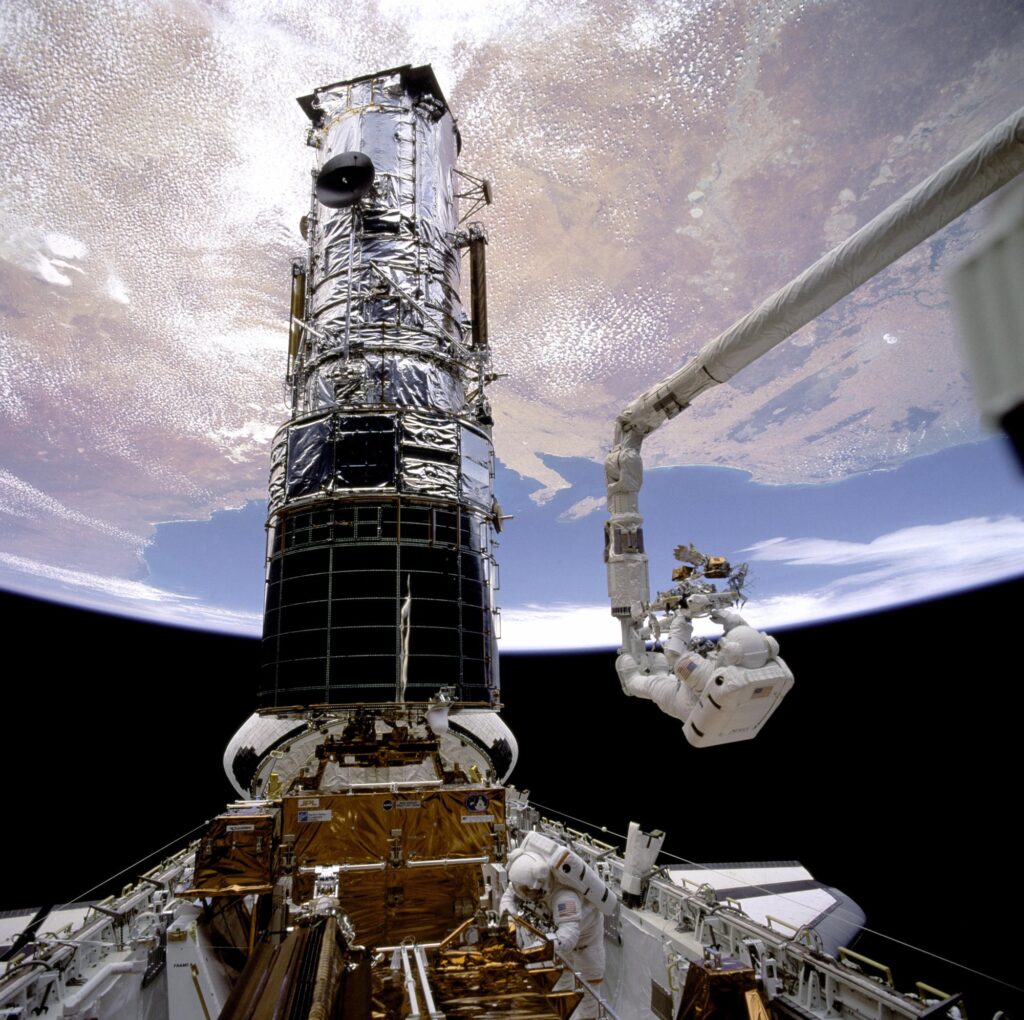
The cover image makes the point. It shows astronaut F. Story Musgrave on the Space Shuttle Endeavour’s robotic arm, being raised to the top of the Hubble Space Telescope during the first Hubble servicing mission in 1993.
Eight years of a yearly inventory
This is the latest in a yearly series. NASA’s technical reports server lists the 2025 edition as published on October 1, 2025, and it already organized the field into the same 11 functional capability areas, with the stated aim of helping mission designers, technology planners and developers. The 2026 edition is listed there as a white paper dated October 8, 2026, with Langley authors including Mulvaney, Arney and Jaden Caradine, plus two authors from Analytical Mechanics Associates.
What has changed is the audience and the scale rather than the structure. The document began as a way to make sure NASA’s own centers shared one reference point. NASA now describes it as the industry’s go-to resource for separating what is possible from what is still conceptual.
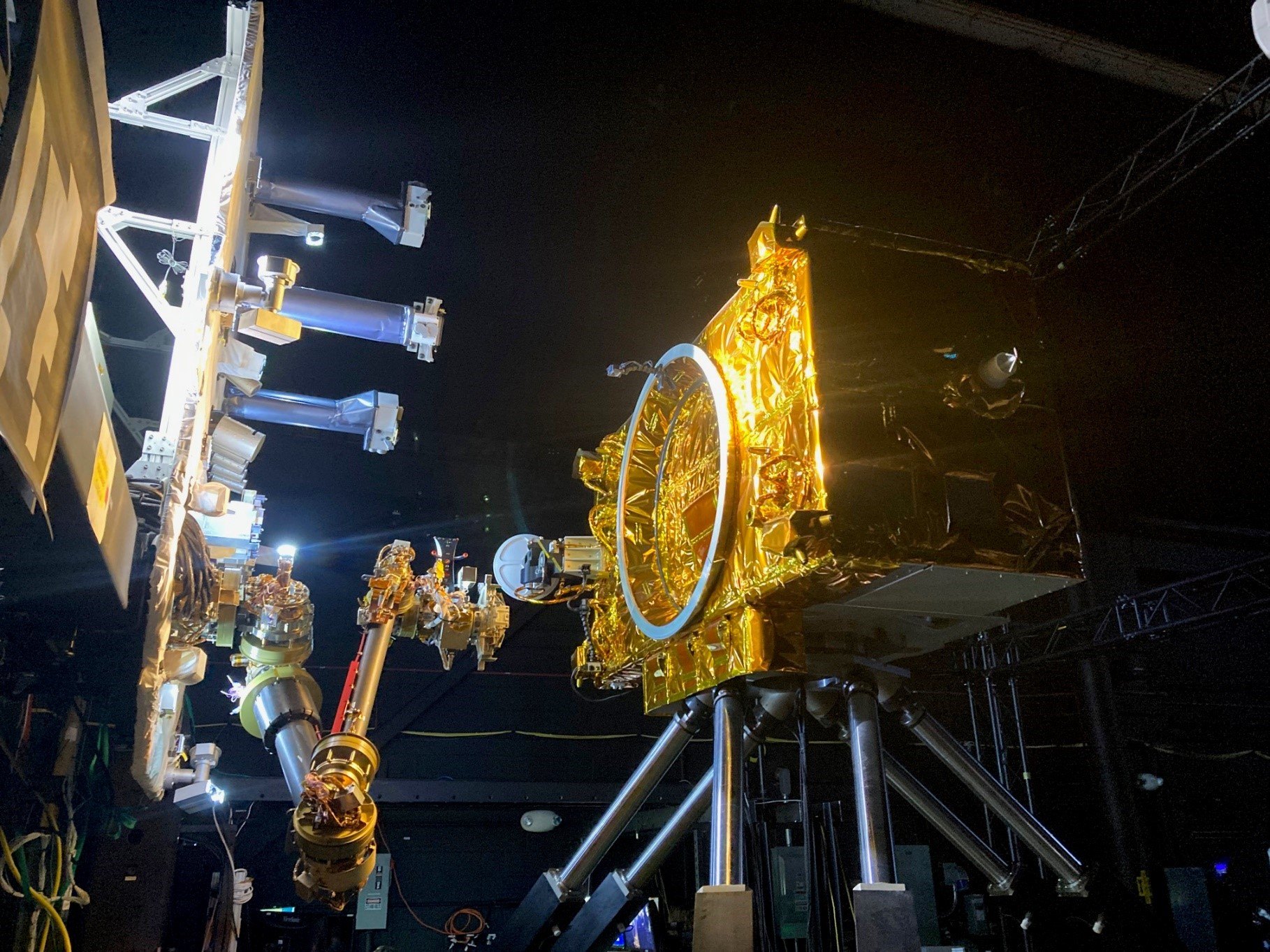
The record also shows how NASA itself works in this area. The agency’s ISAM page features hardware tests such as the OSAM-1 servicing spacecraft’s autonomous capture test in February 2023, and NASA Ames’ ARMADAS demonstration, in which a builder robot carries a small structural block called a voxel. Marshall, with Ohio State, has tested laser beam welding during parabolic flights on a Boeing 727. Those hardware-first demonstrations are the type of entry the State of Play is designed to count.
For anyone planning lunar infrastructure or on-orbit manufacturing, the report offers a shared vocabulary and a baseline of what can be bought or built today. NASA says the 2026 edition can be downloaded from its ISAM page.