Lucy becomes the first spacecraft to enter the Jupiter Trojan asteroid region
Five years and 2.2 billion miles after launch, NASA's Lucy is the first spacecraft to reach the swarm of Trojan asteroids that share Jupiter's orbit, with its first flyby set for Aug. 11, 2027.
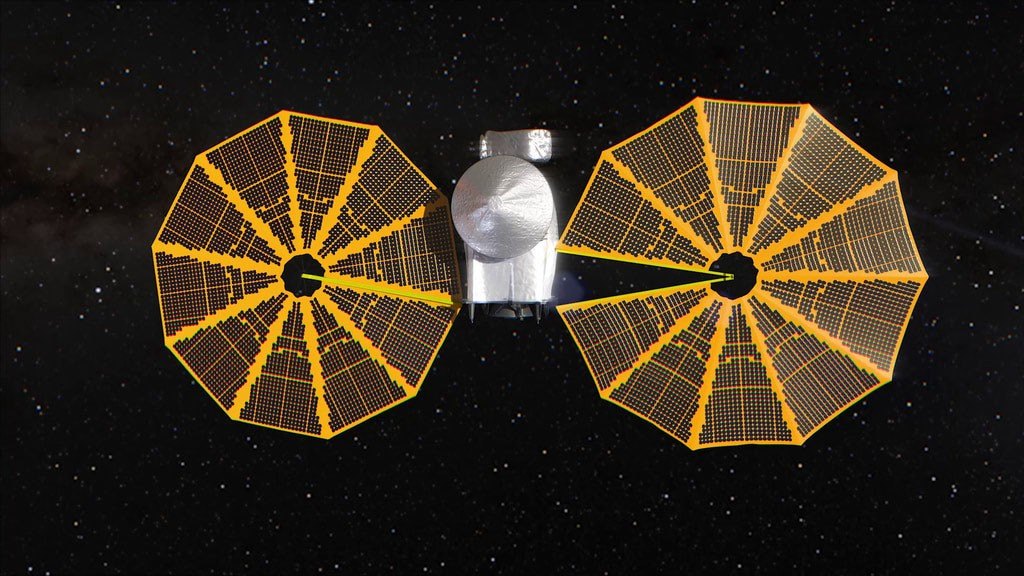
NASA’s Lucy has become the first spacecraft to enter the region of the Jupiter Trojan asteroids, the agency said on Oct. 28. It is approaching Jupiter’s L4 point after traveling more than 2.2 billion miles (about 3.5 billion km) since its Oct. 16, 2021 launch.
A region with no border, found by tracking stars
The Trojans are thousands of primitive asteroids that share Jupiter’s path around the Sun. They gather in two huge clouds, one ahead of the planet and one behind it. Each cloud sits near a Lagrange point, a spot where the pull of the Sun and Jupiter combine to hold objects in a stable place. NASA calls these two regions “islands of stability”.
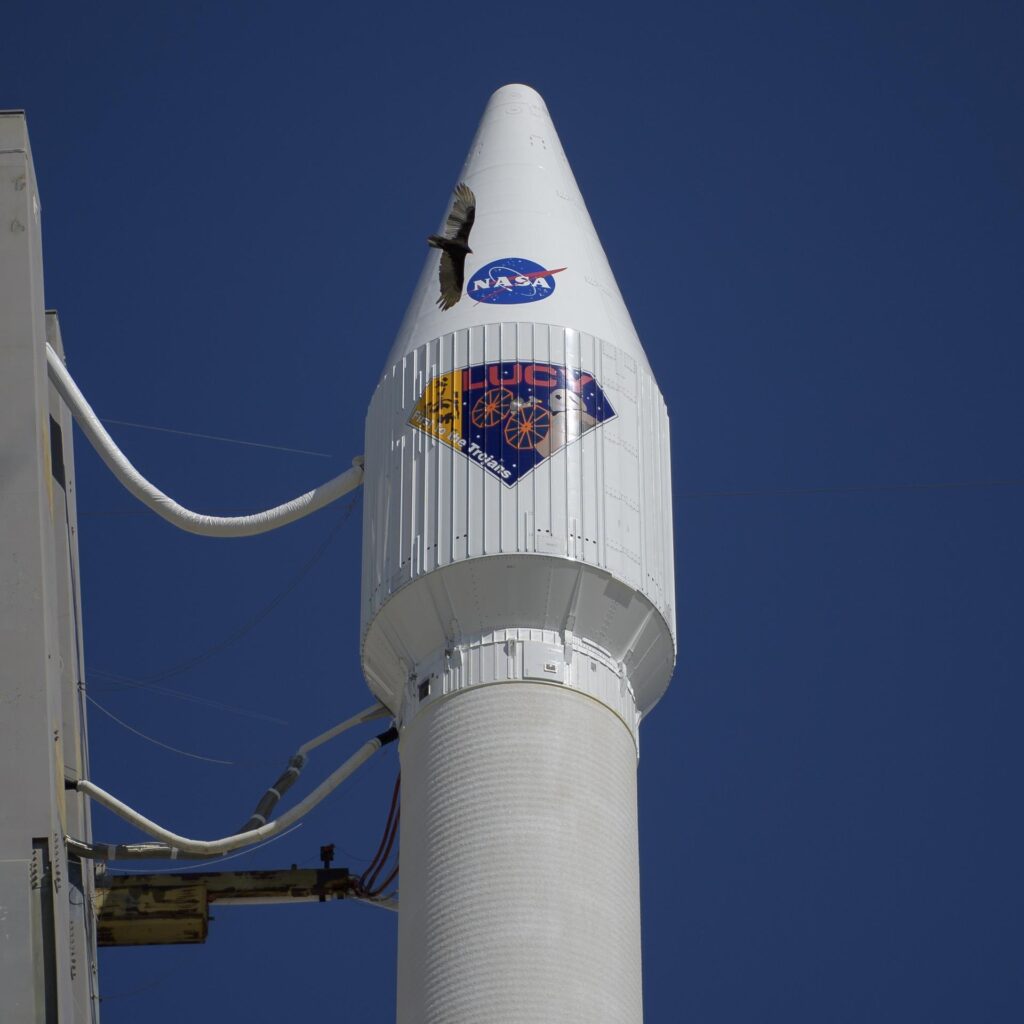
Space has no marked boundaries, so Lucy’s engineers know the spacecraft is close to the L4 point, the one in the cloud ahead of Jupiter, by other means. They follow its position through its radio signals and through images of the stars around it.
The Trojans orbit as far from Jupiter as Jupiter is from the Sun, about 484 million miles (roughly 780 million km). They are also spread thin. On average they are more than 6 million miles (about 10 million km) apart, so for most of the approach each one will look like a pinprick of light drifting across the star field. Only in the final stretch will Lucy see its chosen targets as worlds with shapes.
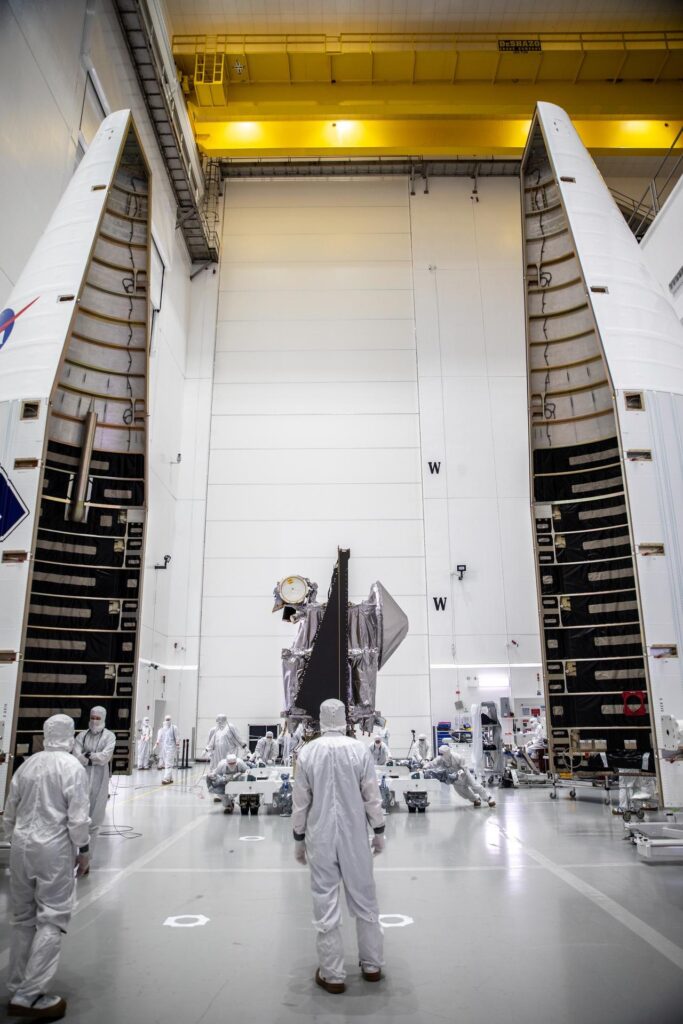
NASA says the spacecraft has adapted to the cooling temperatures and dimming sunlight. It now operates more than five times farther from the Sun than Earth does, a region its design was optimized for, and the spacecraft and instruments continue to work as expected.
Eight Trojans in five years, starting with Eurybates
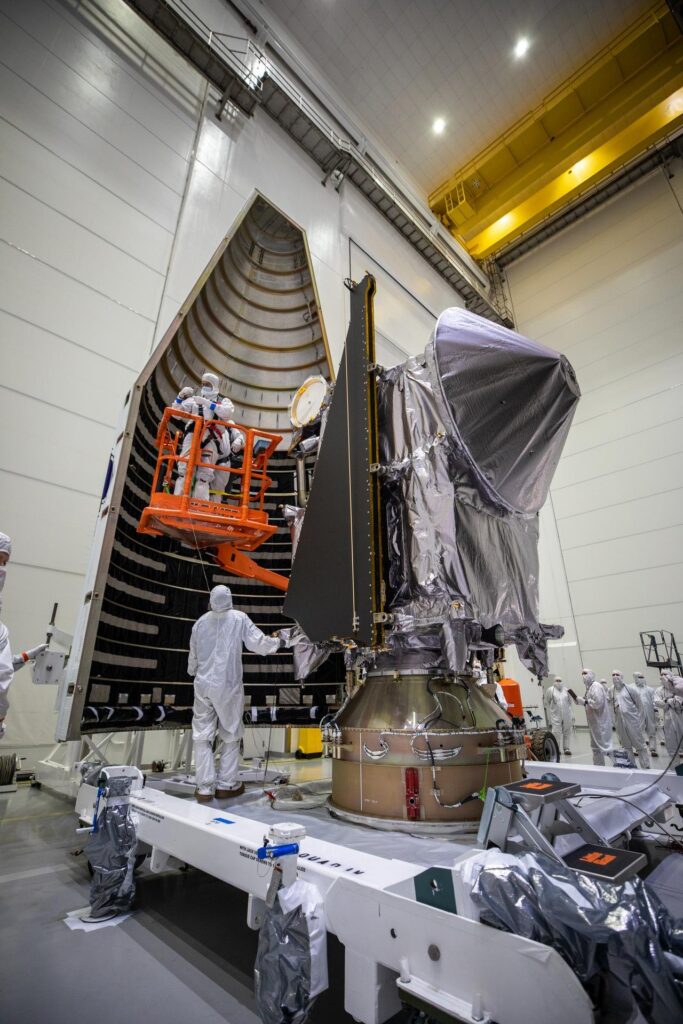
The first encounter, with the Trojan Eurybates, is on Aug. 11, 2027. NASA says the team is finishing the encounter plans, including preparing the spacecraft, the instruments and the people for the few hours Lucy will spend studying the asteroid up close.
After Eurybates the schedule runs as follows:
- Polymele in September 2027
- Leucus in April 2028
- Orus in November 2028
All four are in the cloud ahead of Jupiter. Lucy then returns to Earth in 2030 for a third and final gravity assist, a flyby that uses a planet’s gravity to change a spacecraft’s path and speed without burning much fuel. That boost sends it to the trailing cloud, where it will visit the binary pair Patroclus and Menoetius in March 2033. A binary is two asteroids orbiting each other.
Why nobody else has been here
Several spacecraft have flown past Jupiter, some using its gravity to reach destinations even farther out. None had a reason to go to the Trojans. NASA notes that they are so far from the planet that only a mission built specifically for them would make the trip, and Lucy is that mission.
That gives Lucy an unusual position among asteroid missions. Many of the probes sent to small bodies have studied one or two targets in the inner solar system. Lucy is designed to sample a whole population. According to NASA’s Lucy mission page, it will fly by 11 asteroids in total: three in the main belt, the band of rocky asteroids between Mars and Jupiter, and eight Trojans.
The main-belt flybys have already happened. NASA lists the encounter with Dinkinesh and its small companion Selam on Nov. 1, 2023, and the one with Donaldjohanson on April 20, 2025. Both worked as rehearsals for the Trojan encounters, a chance to test how the spacecraft finds and tracks a fast-moving target.
The Trojan flybys will also compare asteroids of different kinds. Because the objects are so scattered, each flyby is a rare chance to see a different sample, from a lone body to a pair orbiting each other. Scientists expect the results to sharpen their theories of how the planets formed about 4.5 billion years ago and how they came to occupy their current orbits.
Since the Trojans are thought to be primitive, they could hold clues that more heavily altered worlds lost long ago. With less than a year to go, the next milestone is the work of making sure those few hours at Eurybates are used well.