Curtains of plasma wider than Britain may feed the Sun’s jets
A simulation study suggests the Sun's small, fast jets rise from rotating sheets of magnetized gas, which may also carry energy into the corona.
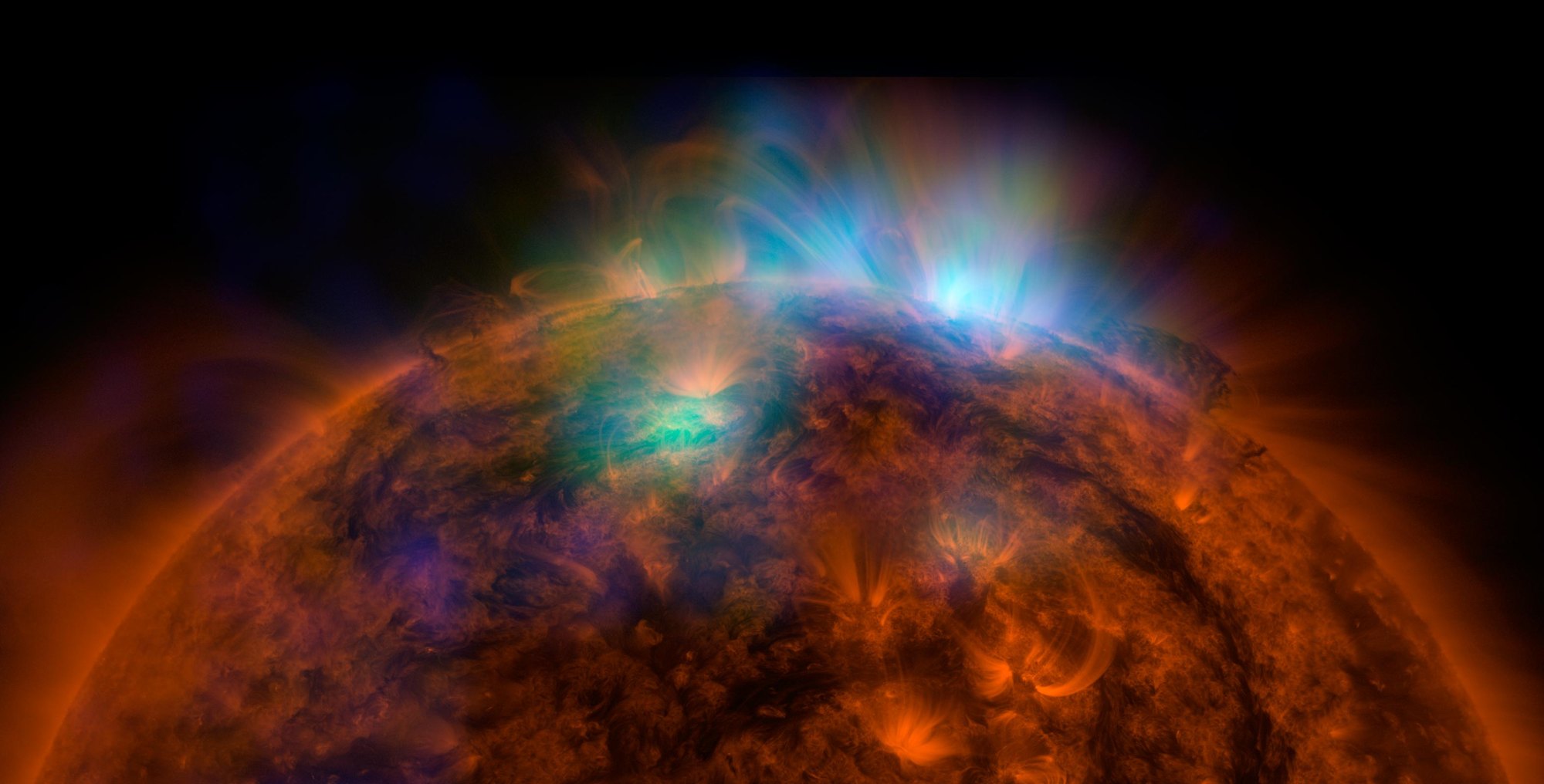
Researchers working with the University of Sheffield have used computer simulations to propose that the Sun’s smaller jets of gas rise from rotating, curtain-like sheets of magnetized plasma, each wider than Great Britain, and that millions of them may exist at any moment.
The result, described by the university in a news release, was published in The Astrophysical Journal and later highlighted by the American Astronomical Society. Plasma is gas so hot that its atoms are split into charged particles, which makes it respond strongly to magnetic fields.
Jets that turn out to be sheets
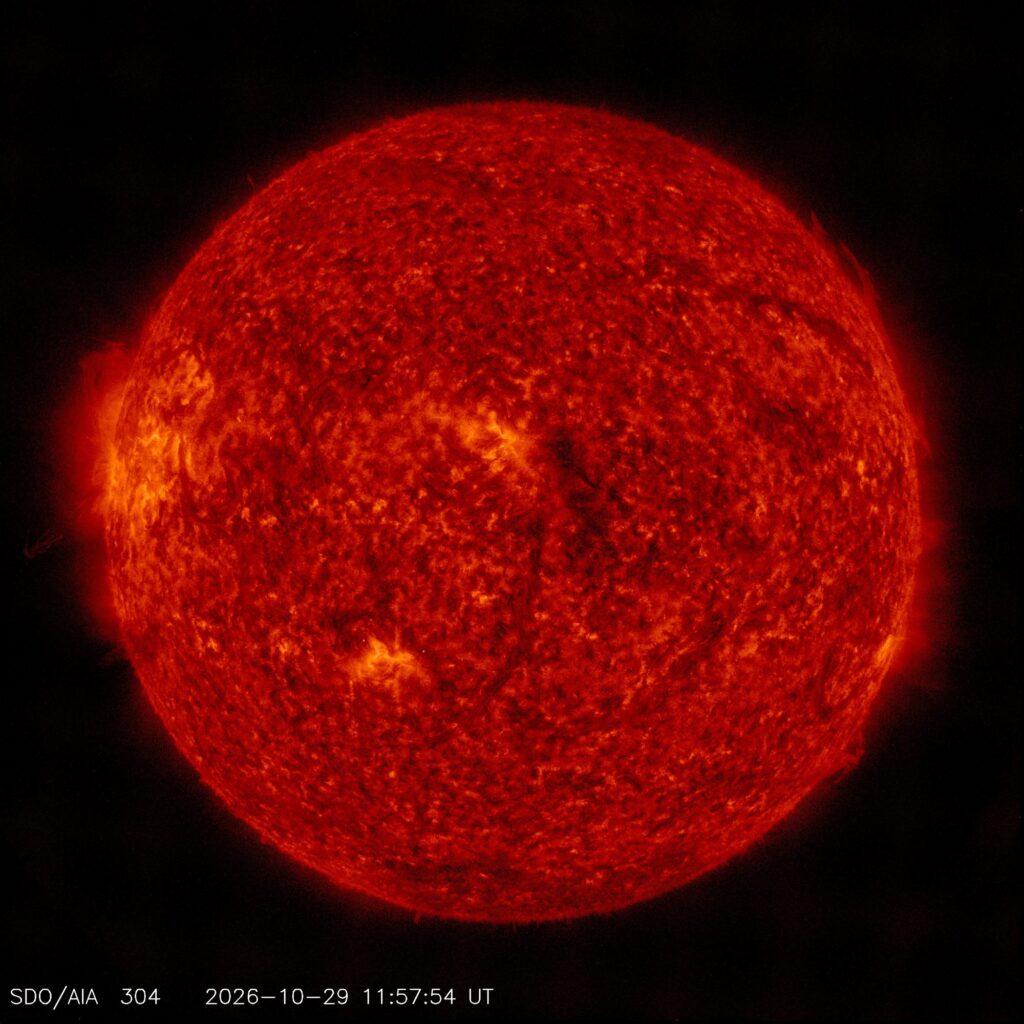
The jets in question are called spicules. They are short-lived spikes of gas that shoot up from the Sun’s lower atmosphere, and the release gives their length as roughly 6 to 8 megameters, which is 6,000 to 8,000 kilometers. For years they were pictured as thin needles or cylinders of material.
The simulations point to a different shape. According to the release, spicules appear as warped, denser sheets of plasma, and the rotation that telescopes see in them is only a two-dimensional projection of more complex three-dimensional motion. Alongside them, the model produces hundreds of spiraling columns of plasma, some tens to hundreds of kilometers across. The authors named them Coronal Swirling Conduits, or CoSCos.
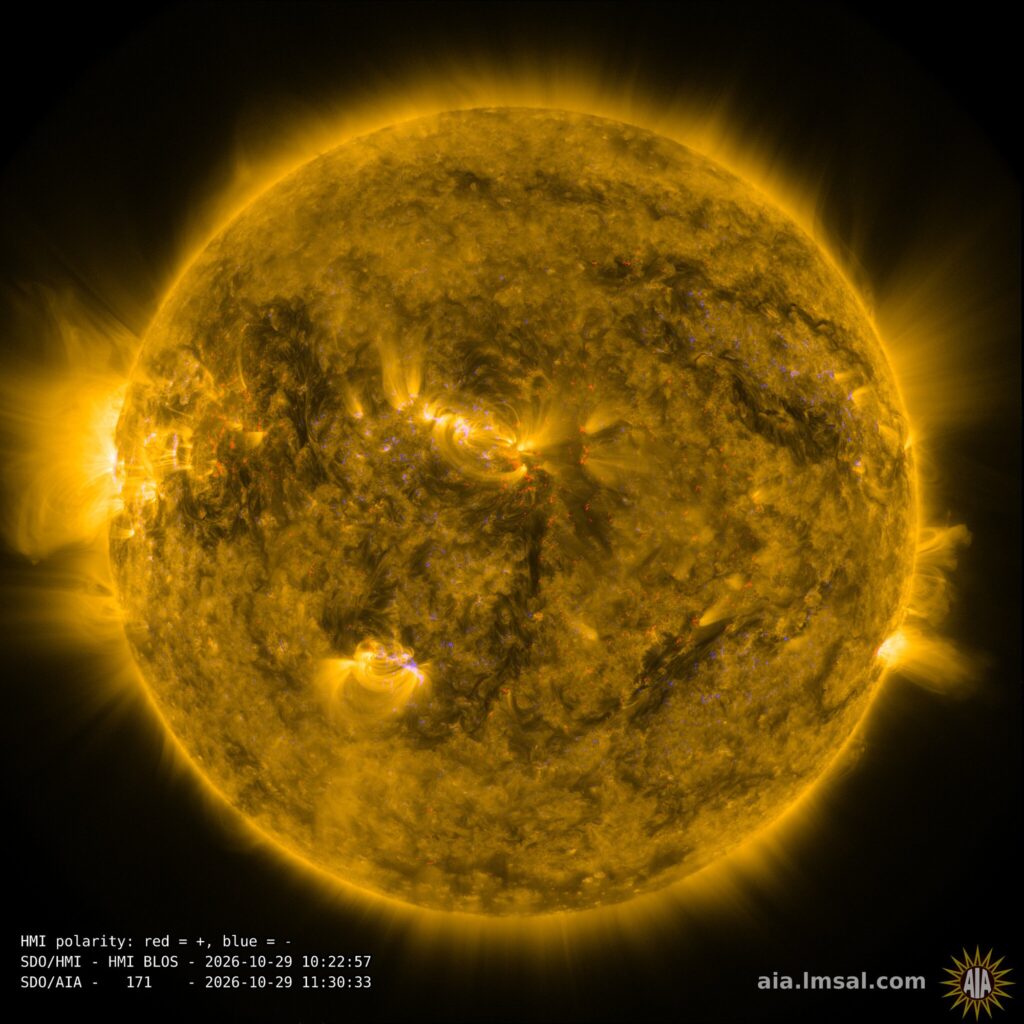
These swirls are larger than the width of Great Britain, and the team estimates that many thousands or even millions could be present at any one time. Most of the spicule material falls back toward the surface, the release says, while the swirls may move energy from the lower atmosphere up into the corona, the Sun’s outer atmosphere.
The work was led by Dr Sahel Dey of the University of Newcastle in Australia, with Dr Piyali Chatterjee of the Indian Institute of Astrophysics in Bangalore and Professor Robertus Erdélyi of Sheffield’s Solar Physics and Space Plasma Research Centre. The calculations ran on the UK high-performance computing facility Dial/CSD3. Erdélyi described the structures as promising candidates for carrying mass between the lower and upper solar atmosphere.
Why the corona’s heat is such a stubborn puzzle
The corona is where this matters. NASA lists the Sun’s visible surface at about 5,500 degrees Celsius, yet the corona above it reaches up to 2 million degrees Celsius. NASA calls the reason for that much hotter outer layer “a major unsolved puzzle in the study of the Sun.” Any mechanism that moves energy upward through the thin layer between the two is therefore a candidate answer.
Scale helps explain why the swirls are hard to see. NASA gives the Sun’s diameter as about 1.4 million kilometers, so a structure wider than Britain, which is a few hundred kilometers across, is tiny against the whole disk, while the columns inside it are far smaller still. Dey said the formation of spicules and rotating plasma draperies is “very hard to observe directly.”
That is why the claim rests on a model for now. Chatterjee said that observational confirmation “is yet to be achieved”. The release says it would need telescopes with ultra-high resolution and satellites watching from more than one vantage point, plus high-resolution measurements of the magnetic and velocity fields in the corona.
Who could use the answer
Heating of the corona and the flow of material through it shape the solar wind, the stream of charged particles that drives space weather and, in turn, the conditions satellite operators and power-grid managers have to plan for. A better picture of how energy climbs through the Sun’s atmosphere would feed directly into those forecasts, although the release does not claim an immediate forecasting benefit.
For now the finding is a theoretical prediction that observers can test. If future instruments can resolve the sheets and swirls, they would show whether the Sun’s jets really are curtains rather than needles.