A 200-second RS-25 firing at Stennis: The engine that will lift Artemis IV, tested on a stand
NASA ran RS-25 engine No. 10001 for its planned 200 seconds on Nov. 18, collecting data to improve the engines that will launch the SLS rocket on future Artemis missions.
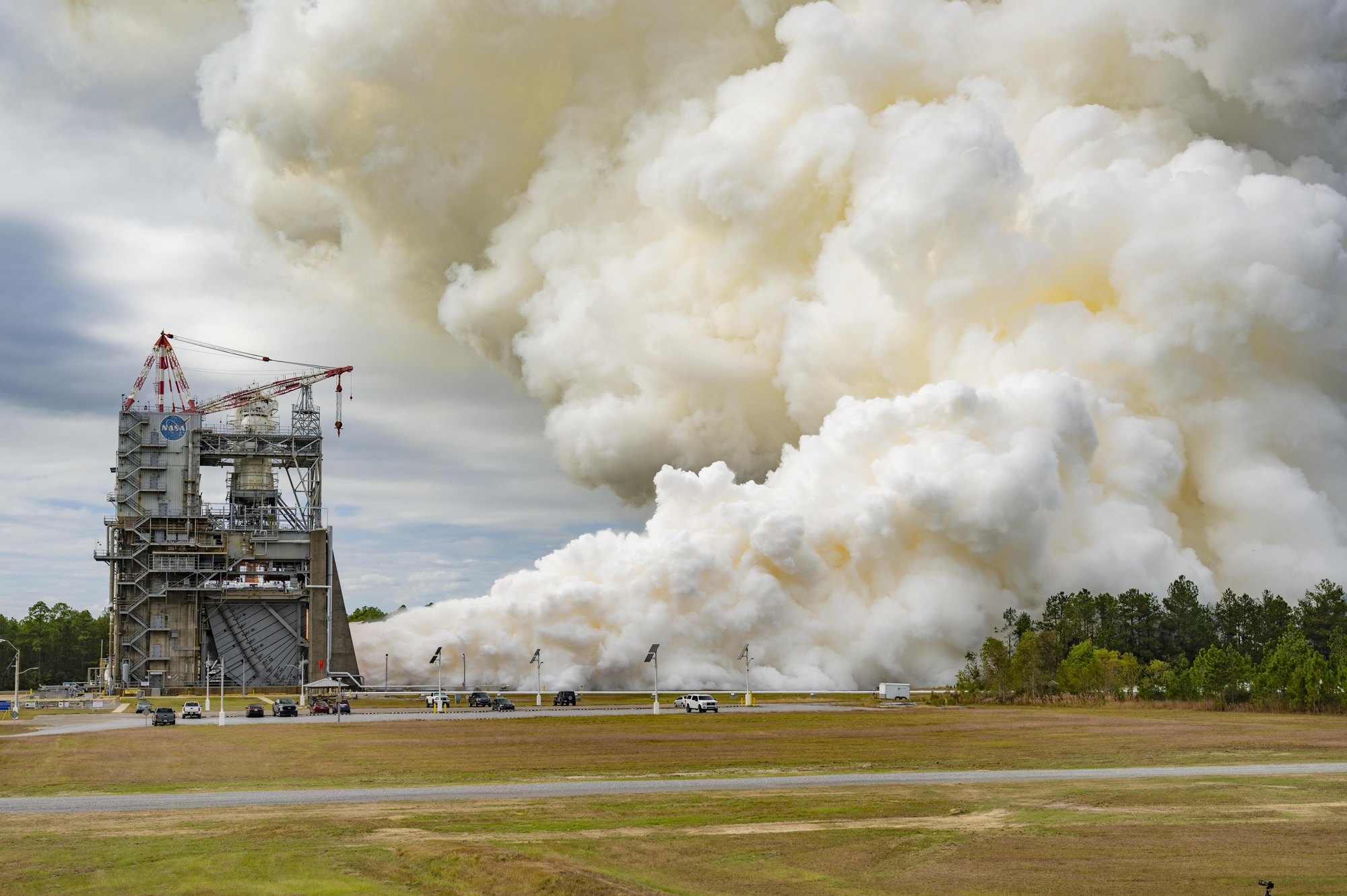
NASA fired developmental RS-25 engine No. 10001 for its planned 200 seconds on Nov. 18 at Stennis Space Center in Mississippi, according to the agency’s announcement. The data will help improve engines for future Artemis flights.
A full-duration burn on the Fred Haise stand
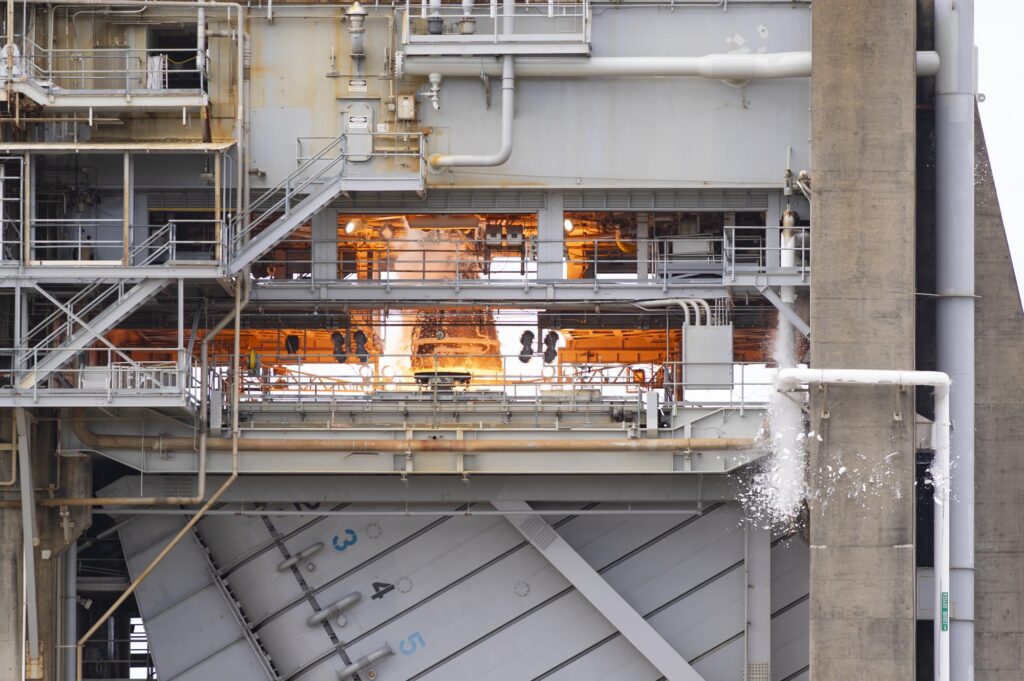
The test took place on the Fred Haise Test Stand, a structure at NASA’s Stennis Space Center near Bay St. Louis, Mississippi. A hot fire test means the engine is bolted down and run exactly as it would run in flight, but without leaving the ground. Teams ran it for three minutes and 20 seconds, the duration NASA had planned.
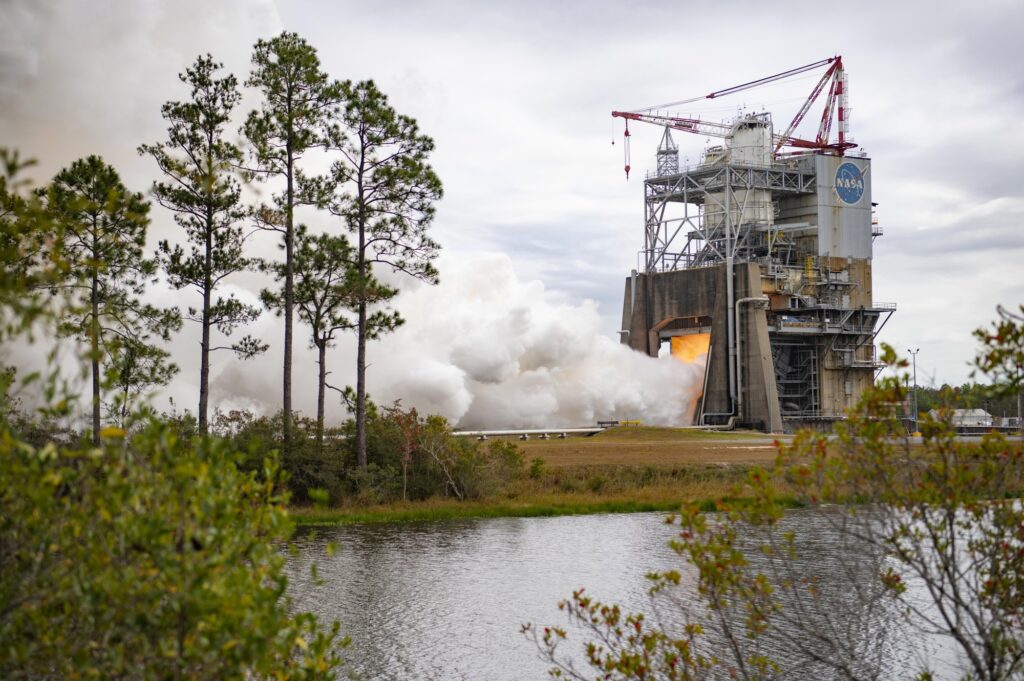
This particular engine will never fly. NASA says it is a developmental unit, built so engineers and the prime contractor, L3Harris Technologies, can collect performance and reliability data that feed into the engines that do fly. The test crew was a mix of operators from NASA, L3Harris and Nova Space Solutions.
Four engines, 2 million pounds of thrust
The RS-25 is the engine on the core stage of the Space Launch System (SLS), NASA’s heavy rocket for Artemis. Each launch uses four of them, and together they produce up to 2 million pounds of thrust. NASA adds that every RS-25 is tested and proven flightworthy at Stennis before it is used.
The agency ties this test to Artemis IV, the mission planned to land astronauts on the Moon in 2028. SLS would launch the crew aboard the Orion spacecraft from Kennedy Space Center in Florida. NASA describes the mission as a step toward exploring the lunar South Pole, establishing a lasting human presence on the Moon and, later, the first crewed mission to Mars.
What to watch between engine tests and a 2028 landing
An engine firing on the ground is only one link in a chain that has to close by 2028. The landing itself needs a lander, and NASA’s I Am Artemis feature from Nov. 12 describes Blue Origin’s Blue Moon Mark 2 as one of two commercial human landing systems that will ferry astronauts between lunar orbit and the surface on crewed Artemis missions in 2028. The feature shows a crew cabin prototype of that lander, which means the hardware is still at the prototype stage.
The surface side is also moving. Our report on NASA’s Moon Base plan covers a 2027 launch of the VIPER rover, which is meant to prospect near the lunar South Pole, the same region Artemis IV targets.
For the rocket, the useful signal is simple: further RS-25 firings at Stennis that run to full duration without surprises, and flight engines that clear the same acceptance testing before they are installed. NASA did not say in this announcement when the next test is scheduled, or whether this test revealed anything unexpected, and the data from engine No. 10001 will still need to be analyzed.