Asteroid platinum could crash prices, but only after a long gold rush, MIT study says
Two MIT-affiliated authors model what asteroid platinum would do to prices: a boom for early miners, then a fall to near the asteroid cost of production.
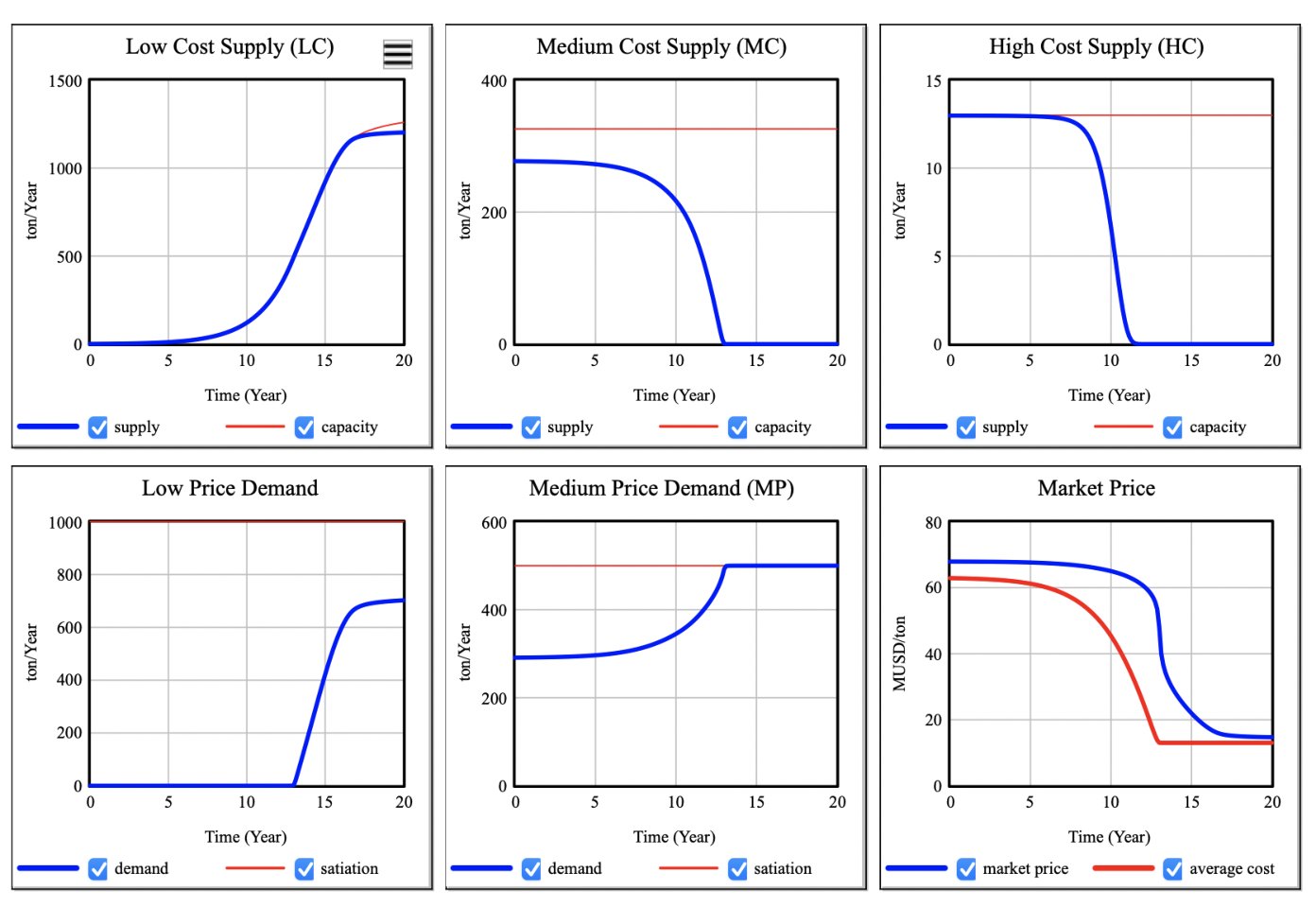
A new preprint on arXiv asks whether AstroForge, a US asteroid mining startup, could collapse the market for platinum group metals. The authors say yes, eventually: prices would fall toward asteroid mining costs, but only after supply moves off Earth.
A model built on a gold rush and a falling price
The paper, by Robert T. Nachtrieb of MIT Sloan School of Management and Steven J. Smith of MIT Alumni System Dynamics, covers the platinum group metals (PGMs). These are platinum, palladium and related metals used mainly in car catalytic converters, which clean exhaust. The paper says converters have historically taken about 90% of supply, and that hydrogen technology is projected to become the largest platinum market by 2040.
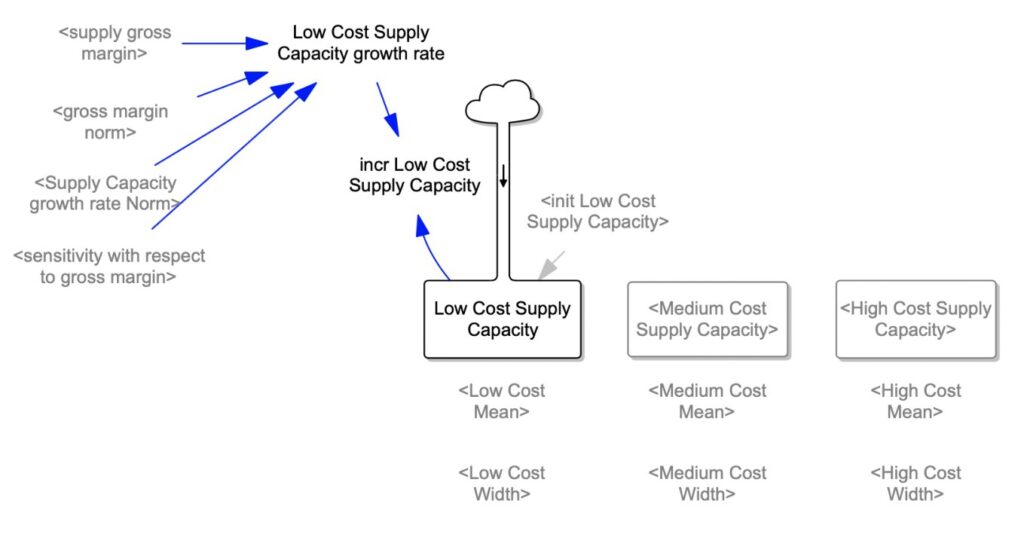
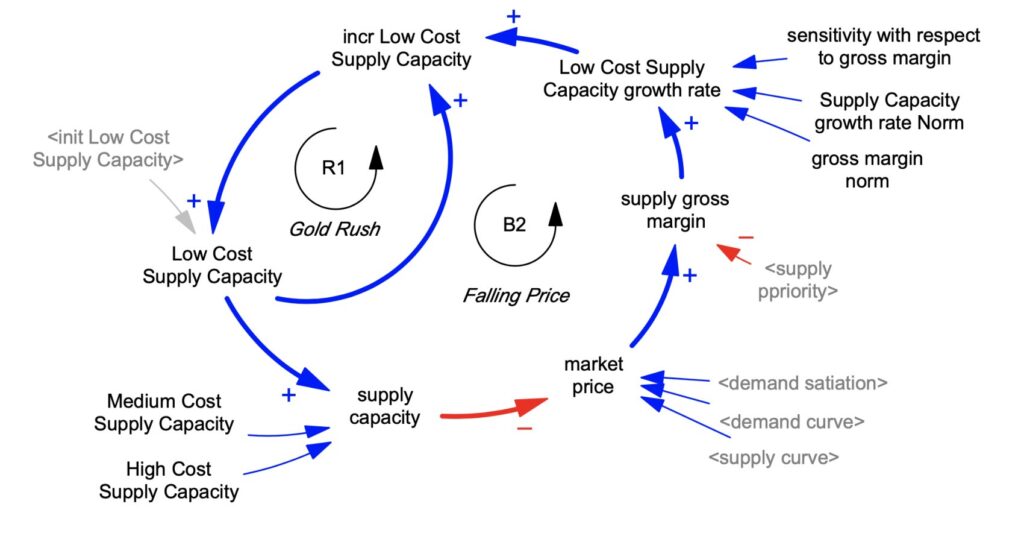
Instead of the textbook view that markets sit at a steady balance, the authors use system dynamics, a method that simulates how feedback loops play out over time. Two loops drive the model. In a reinforcing “Gold Rush” loop, high margins attract investment, which builds more capacity. In a balancing “Falling Price” loop, more supply pushes the price down and slows that investment.
Supply is split into three cost tiers: a high-cost group (for example US mines), a medium-cost group (South Africa and Russia) and a low-cost asteroid tier that starts small and grows. Demand is held constant at 400 tonnes a year in the simple calculation.
Profits eight times higher, then a fall to 18% of today’s
The authors compare three moments. Today, all supply is from Earth, with a gross margin (the share of revenue left after production costs) of 0.1. At the peak, asteroid costs are low but the old price still holds, so margin reaches 0.8. At the end, all supply is off-world and the margin returns to 0.1.
Their back-of-envelope table puts the price at 60 million dollars per tonne at the start and the peak, falling to about 11.1 million dollars at the end. Average cost drops from 54 to 12 and then 10 million dollars per tonne. Annual profit goes from 2.4 billion dollars to 19.2 billion at the peak, eight times higher, then to 444 million dollars.
In the simulation, asteroid capacity grows exponentially at first and levels off once the price nears its cost. High-cost US producers lose share first because their margins are thinnest, and South African and Russian output follows. Falling prices also stimulate new demand, so final supply ends up much larger than today’s. The authors say the window for outsized profits is finite, and that margins will settle near ten percent.
What the cost advantage rests on
The paper leans on figures that come largely from AstroForge. It cites projected margins of about 85% for asteroid mining against about 7% for terrestrial mines, and early spacecraft costing about 3.5 million dollars against about 95 million for typical government missions. High-grade ore on Earth holds 4 to 10 parts per million of PGMs, while iron meteorites are said to hold 100 to 187.
AstroForge’s own pages show how early the company still is. Its progress update records that the Brokkr-1 refinery demonstrator launched on April 15, 2023, and that Odin, a flyby spacecraft meant to image a target asteroid, was then planned to ride on Intuitive Machines’ IM-2 lunar mission. The company’s payload page describes its DeepSpace bus as 200 kg in total mass, with room for up to 50 kg of payload and electric propulsion. Spacecraft of that size are a long way from hauling home enough metal to move a 400-tonne-a-year market. The paper itself flags that the model covers supply, price and cost tiers only, not technical feasibility or launch and recovery risk.
Gaps in the numbers
The paper also has loose ends. Its text says final profit falls to less than half the starting level, yet its own table shows 444 million against 2,400 million dollars, closer to 18%. Terrestrial reserve figures differ between the text, which gives about 100,000 tonnes, and a table, which gives over 81,000 tonnes. Model parameters are not listed in the text, and some claims rest on company materials and secondary reports rather than peer-reviewed work.
The preprint has not, as far as its page shows, been through peer review. Read as a thought experiment, it makes a clear point: the value of asteroid platinum lies in the head start, and the more successfully the technology works, the faster that advantage disappears.