Station’s new solar array is already unrolled, with one more due Nov. 5
Anil Menon and Joshua Kutryk spent 7 hours 11 minutes outside the station to attach a roll-out solar array. A final one goes up on Nov. 5.
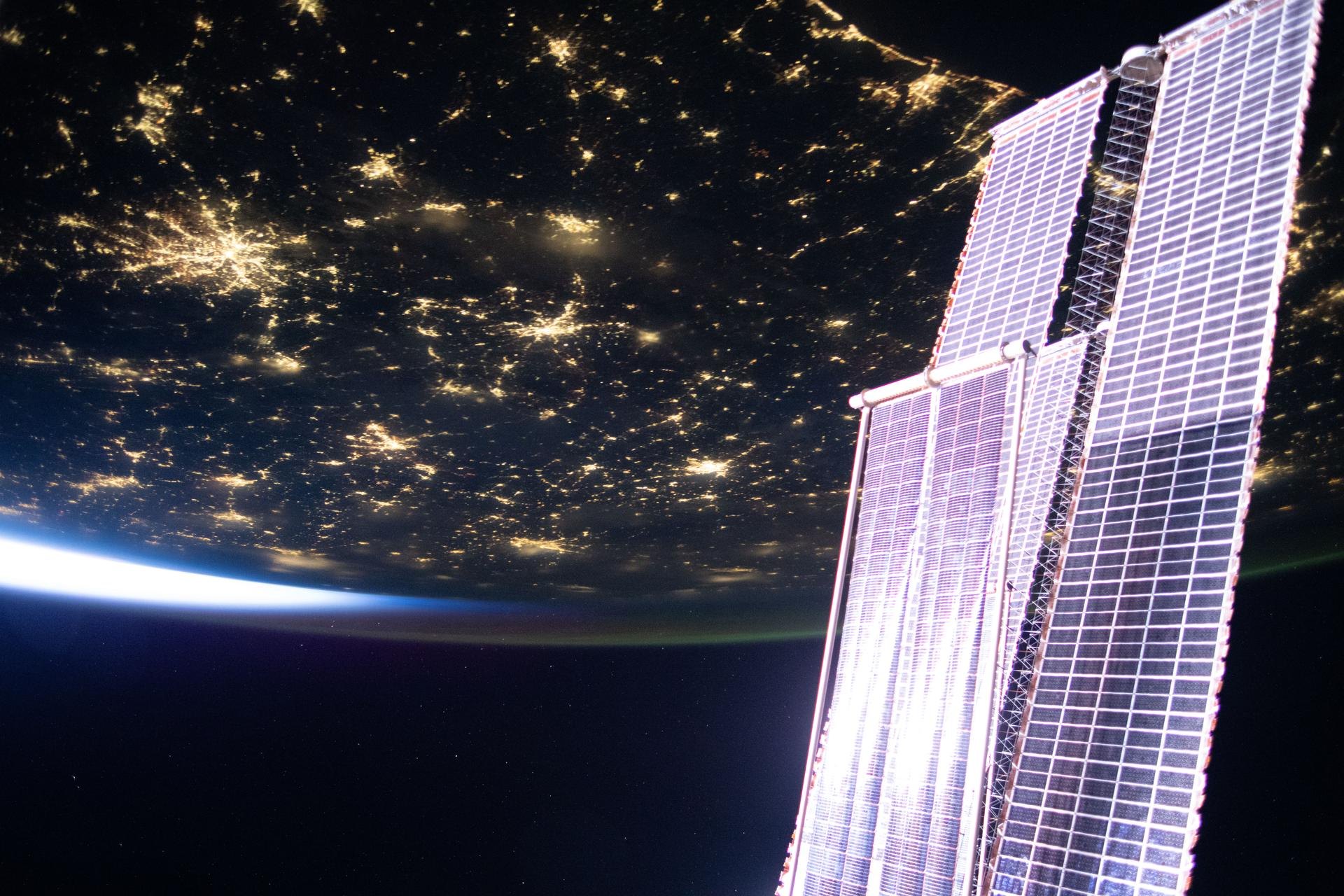
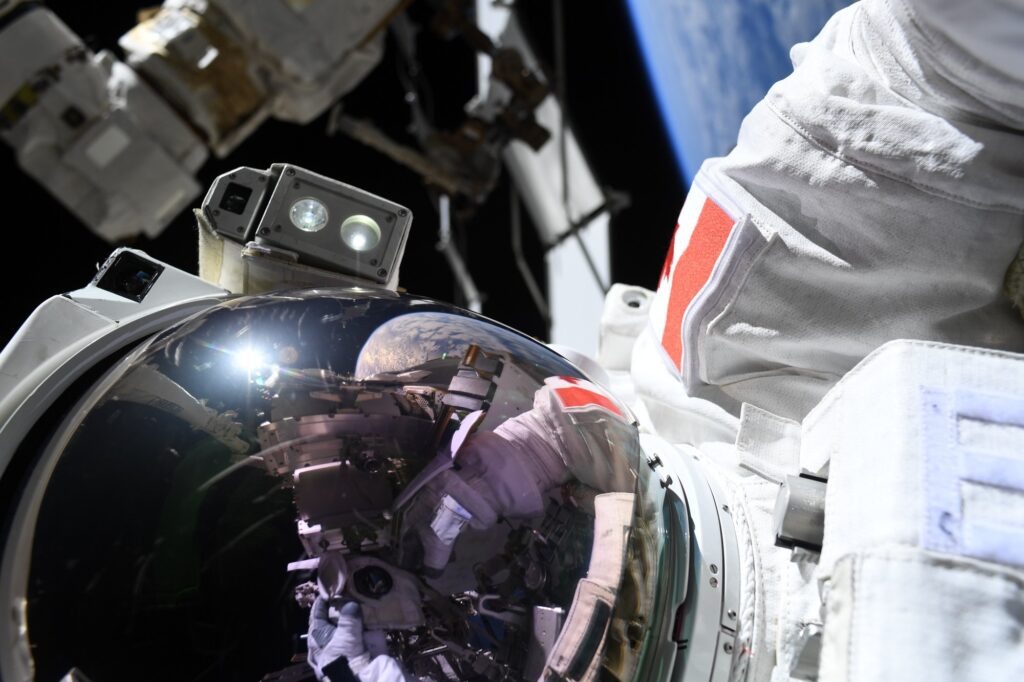
NASA astronauts and Canadian Space Agency crew member Joshua Kutryk installed a new roll-out solar array on the International Space Station on Thursday, Oct. 29. It is now generating power, and a second spacewalk on Nov. 5 will install the last of eight, NASA said.
The details come from NASA’s space station blog, which wrapped up the week on Oct. 30.
Seven hours outside, then a ten-minute unfurl
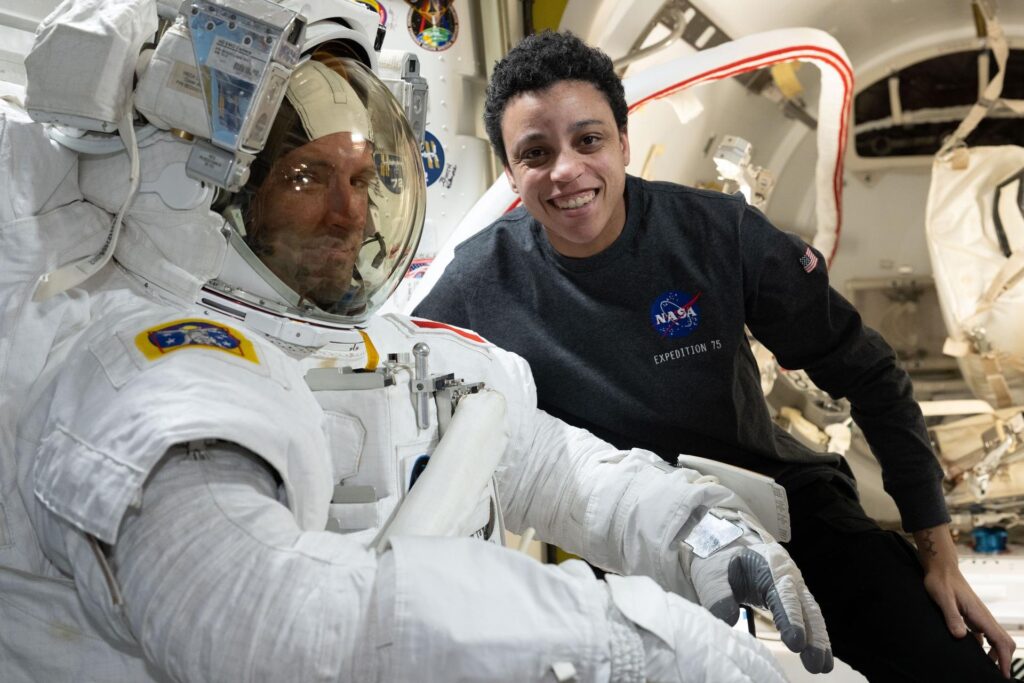
Flight engineers Anil Menon of NASA and Joshua Kutryk spent 7 hours and 11 minutes in the vacuum of space. They attached the array to the port (left-hand) side of the station’s truss, the long backbone that carries its solar wings and radiators. They then released the tension bolts that hold the array tightly rolled up for launch. Freed, the array unfurled on its own in about ten minutes.
That ran longer than planned. In its preview on Oct. 26, NASA scheduled the outing for six hours and 45 minutes, starting at 8 a.m. EDT (12:00 UTC). The agency’s blog does not say what accounted for the extra 26 minutes.
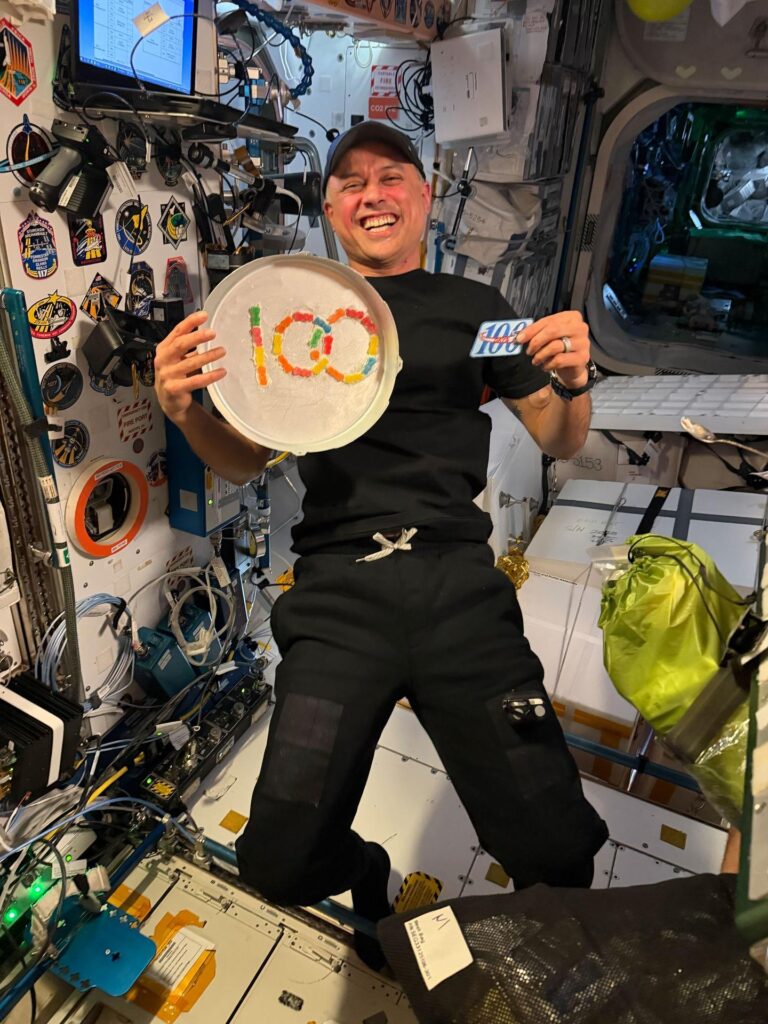
The pair will install one more roll-out solar array on Thursday, Nov. 5.
How a tightly rolled array gets to its worksite
Roll-out arrays are packed as compact rolls, which makes them far easier to carry to orbit than rigid panels. The hard part is moving one safely from its external pallet to the truss. NASA’s preview described the plan: Menon would attach himself to the Canadarm2 robotic arm, retrieve the array, and ride the arm to the installation site. Kutryk, tethered to the truss, would move to the port worksite and help finish the job. Inside the station, Jessica Watkins and Luke Delaney helped both spacewalkers into and out of their suits and assisted with the arm.
The same preview shows how much rehearsal sits behind a single outing. The four crew members practiced the Canadarm2 moves on Monday. Menon and Kutryk also checked the fuel, battery power and thrusters of their emergency spacesuit jetpacks, and Watkins helped Kutryk confirm his suit’s cooling and water systems were configured safely.
From 160 to about 215 kilowatts
The final array goes on the starboard (right-hand) side of the truss, again installed by Menon and Kutryk. NASA says the full set will raise the station’s power generating capacity from 160 kilowatts to about 215 kilowatts. That is roughly a third more electricity for experiments, life support and the hardware around them. The work began in June 2021 and, with the second spacewalk, will have taken more than five years.
The new arrays are a supplement, not a replacement: NASA’s own photo of the station shows the main solar arrays with a smaller roll-out set mounted in front of them. Power matters more as research on the space station grows more demanding, with equipment like the temperature-controlled furnace chamber that commander Pyotr Dubrov was servicing on Friday.
A quiet Friday of plant and balance experiments
Friday was a light day for the crew, with research on a short schedule. Much of it had to do with growing food away from Earth:
- Menon studied how microgravity affects cell division in green algae and cultured tobacco cells in the Kibo laboratory module. NASA says the results may support food crop production on the Moon and Mars.
- Delaney inoculated thale cress samples that had been exposed to a fungal pathogen, then stowed them in an incubator that generates artificial gravity. The aim is better disease resistance in crops, on Earth and in space.
- Kutryk pedaled on the European Enhanced Exploration Exercise Device (E4D), a compact all-in-one exercise machine being tested for keeping crews fit on long flights.
- Watkins serviced research hardware, including swapping moisture absorbers in portable science freezers that carry frozen samples to the station and back.
- Dubrov swapped hardware in a chamber used to study making high-purity semiconductor crystals in microgravity.
- Sergey Teteryatnikov wore a virtual reality headset to test how his sense of balance and orientation is adapting, while Anna Kikina studied how super intelligence tools might make operations and communications aboard a spacecraft more efficient.
For a wider look at the daily routine behind these tasks, see our piece on life aboard the International Space Station.
Dragon and the next spacewalk
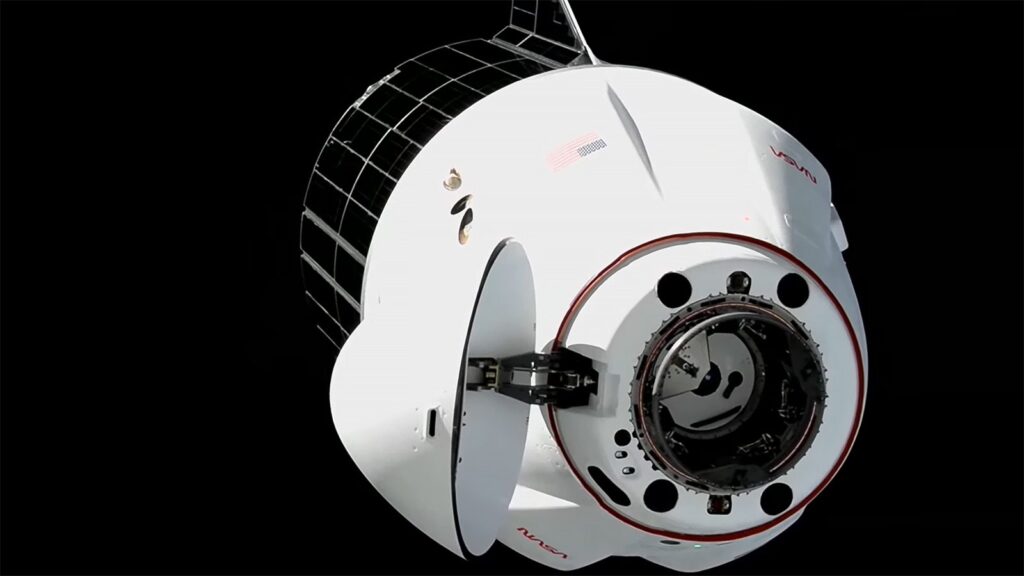
A SpaceX Dragon cargo spacecraft has been docked to the Harmony module since Oct. 15, and Watkins and Menon have been moving supplies to and from it. According to NASA, it is due back on Earth in mid-November with science and hardware, after the Nov. 5 spacewalk.