NASA’s Moon Base plan: Three phases, four rovers and drones, and a 2027 VIPER launch
NASA has laid out how its Moon Base near the lunar South Pole will grow in three phases, from robotic scouts now to a permanent outpost where astronauts live and work.

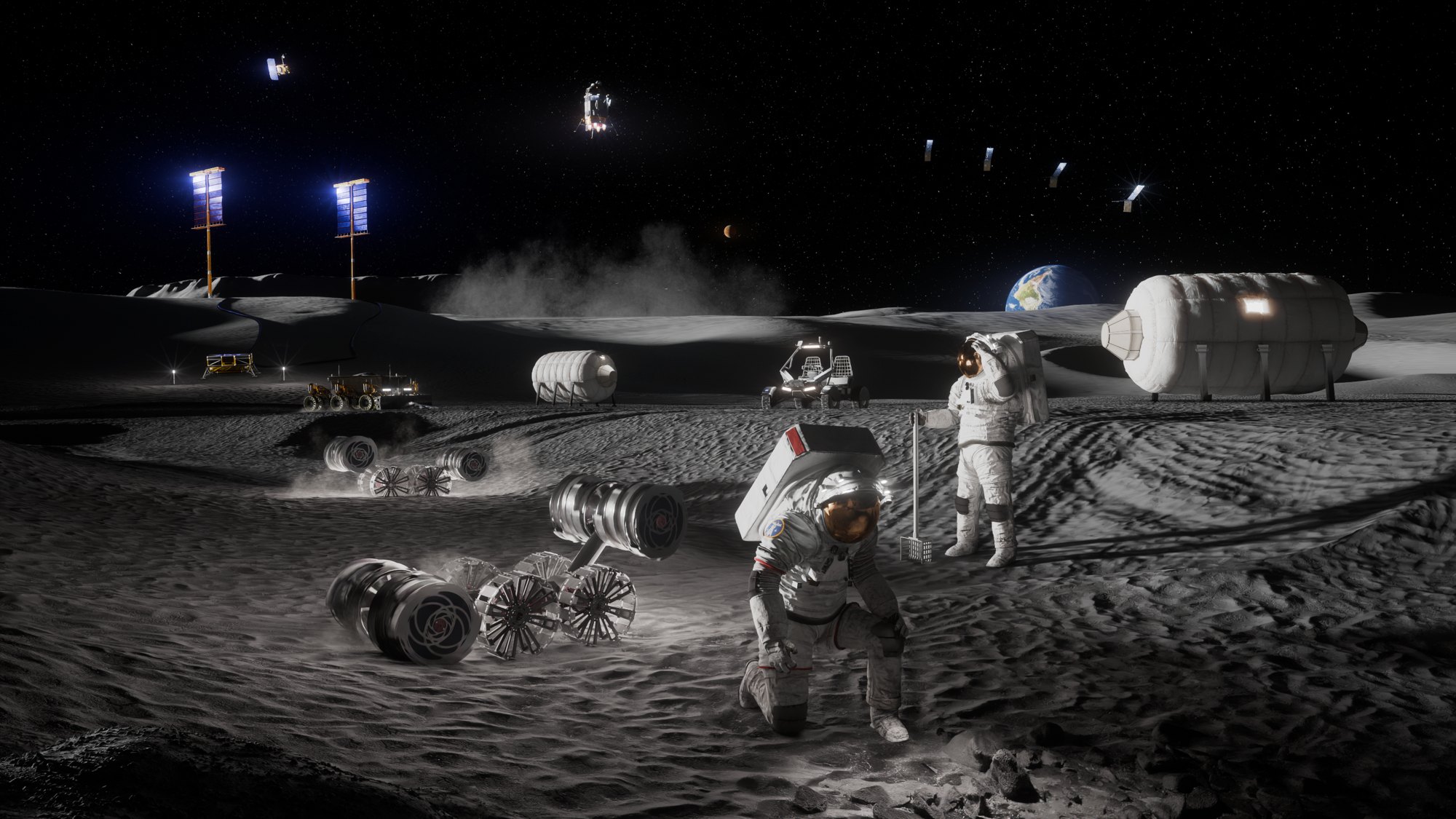
NASA has published a guide to the Moon Base, its planned first lunar outpost, built near the Moon’s South Pole in three phases. Robotic scouts come first, long-term infrastructure follows in 2029-2032, and a permanent crewed outpost comes last.
The student guide from NASA’s STEM team describes the base as a place where astronauts will live, work and explore, and spend more time on the surface than in earlier missions. It also names the first machines in the plan and the hazards they must survive.

Why the South Pole, and how the base grows
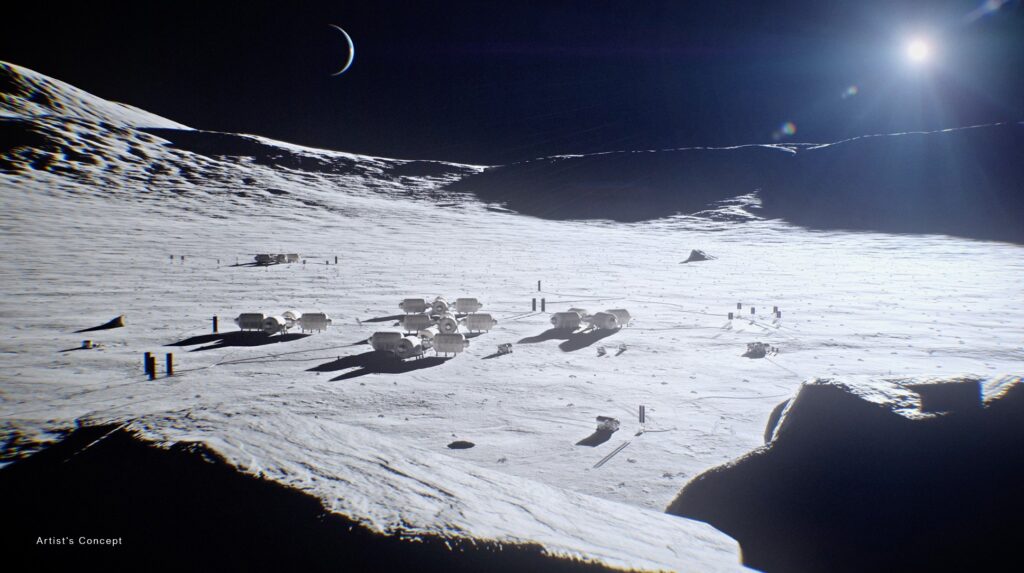
The Sun stays low on the horizon near the lunar South Pole. Some ridges get long stretches of sunlight, which helps with solar power and with navigating. Some craters get none at all, and those permanently shadowed areas are among the coldest on the Moon. NASA says scientists hope to find frozen water there.
Phase One is under way now. Over the next few years, NASA and its partners will send robotic missions, several landers and lunar terrain vehicles among them, to test technology, practice landing and look for the best building sites. Phase Two, planned for 2029-2032, begins the long-term infrastructure: power systems, cargo transport and communications hardware, spread across several locations so the base can expand. In Phase Three, NASA will start assembling the permanent outpost, bringing habitats, power, communications and transport together.

The machines that go first
NASA’s VIPER rover (Volatiles Investigating Polar Exploration Rover) is fully built and being tested at Johnson Space Center in Houston. It is due to launch from Kennedy Space Center in Florida in 2027, to explore permanently shadowed craters for water and other resources over more than 15 miles.
PROMISE (Polar Rover for Observation, Mapping, and In-Situ Exploration) is nuclear-powered and built from hardware made for NASA’s Mars rover missions. It will look for resources such as water ice on and below the surface and will carry several instruments also flown on VIPER. NASA targets a launch by late 2028.
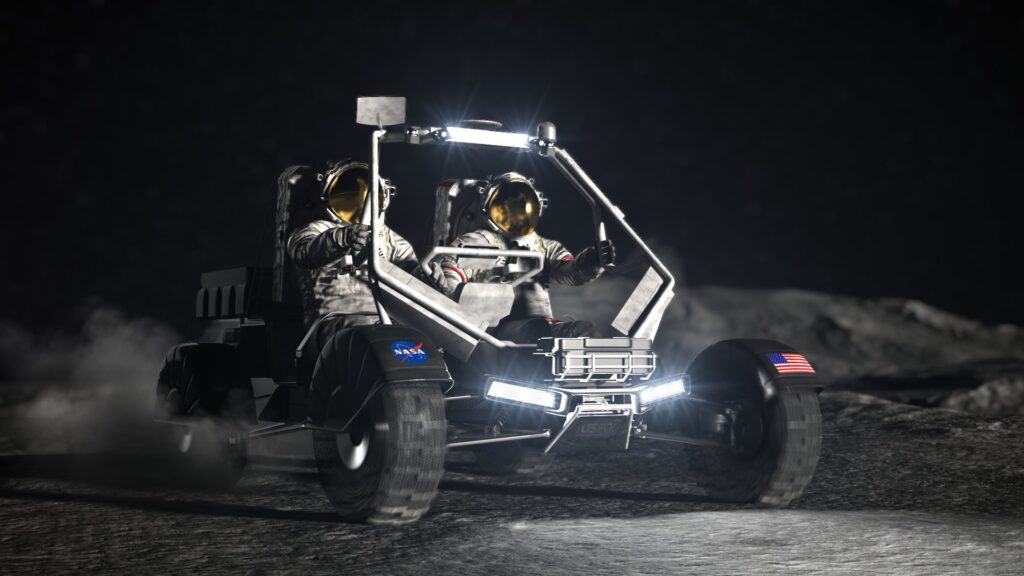
Lunar terrain vehicles will reach the South Pole region by 2028. Astronauts will drive them to cover wider ground and collect geology samples, and when no crew is present they will be operated remotely from Earth to map the surface. The MoonFall mission adds a group of propulsive drones, also landing by 2028. Each descends on its own and works independently for one lunar day, about 14 Earth days, using high-definition cameras to map hard-to-reach terrain. NASA says that data will help choose Artemis landing sites.
Dust, slopes and a 237-degree temperature swing
With no noticeable atmosphere, temperatures can pass 130°F (54°C) in sunlit areas and fall to -334°F (-203°C) inside permanently shadowed craters. Slopes, ridges, rocks and deep craters complicate landing and driving; NASA notes that Shackleton Crater is more than twice as deep as the Grand Canyon.
Regolith, the loose rock and dust covering the surface, is a separate problem. With no wind or rain to wear them down, its grains stay sharp, so it can quickly abrade spacesuits and equipment and is hazardous if inhaled. NASA says precautions must keep it out of living areas.
Science payoff: Proving there is water to use
The whole plan leans on one question: how much usable water ice is at the poles, and in what form. Several missions are built to answer it from different angles. ESA’s PROSPECT package, built by Leonardo, is a drill that can go up to one meter into the regolith, with a small lab that heats samples to almost 1,000 °C. It is due to launch in 2027 on Intuitive Machines’ Nova-C lander, according to our report on ESA’s PROSPECT drill. VIPER and PROMISE come at the same question from the surface, with wheels and instruments rather than a drill.
Power is the other half. NASA and the Department of Energy announced in January 2026 a goal of a nuclear reactor on the Moon by early fiscal year 2030, a source that would keep running through the long polar shadows. No builder has been named in our coverage of that plan.
Ice maps, ground truth from a drill and a power source would together decide where the permanent outpost goes. That is why the early phase puts science instruments and cameras ahead of habitats.
Students are being recruited too
On Nov. 8 NASA announced $1 million for U.S. student teams in a Moon Base Challenge. Teams must register through the NASA STEM Gateway by Jan. 25, 2027, and work on power, construction, life support, surface mobility, communications or astronaut safety.