G2 storm warning: NOAA expects Kp 6, with aurora possible as far south as New York
NOAA's Space Weather Prediction Center issued a warning at 19:08 UTC on Oct. 31 for a moderate G2 geomagnetic storm, with aurora possibly visible as low as New York, Wisconsin and Washington state.

NOAA’s Space Weather Prediction Center issued a warning at 19:08 UTC on Oct. 31 that a moderate G2 geomagnetic storm, reaching Kp 6, is expected. The warning is valid until 23:59 UTC the same day.
A geomagnetic storm is a disturbance of Earth’s magnetic field caused by solar wind, the stream of charged particles flowing from the Sun. NOAA rates these storms on a G scale from G1 (minor) to G5 (extreme). Kp is a 0-to-9 measure of how disturbed the field is, so Kp 6 corresponds to G2.

What NOAA’s warning says
The message, serial number 673, lists the warning condition as “Onset”, meaning the storm conditions are beginning. The issue time and the start of the valid period are the same, 19:08 UTC, which indicates the activity is arriving now rather than being forecast for later. The warning covers roughly the next five hours.
NOAA says the area of impact is primarily poleward of 55 degrees geomagnetic latitude. That is a latitude measured from the magnetic poles rather than the geographic ones, so it does not match ordinary latitude lines on a map. On its list of potential impacts, NOAA names:
- Power grids: fluctuations can occur, and high-latitude power systems may see voltage alarms.
- Satellites: orientation irregularities may occur, and drag on satellites in low Earth orbit may increase.
- Radio: high frequency (HF) radio propagation can fade at higher latitudes.
- Aurora: it may be seen as low as New York to Wisconsin to Washington state.
Anyone hoping to see the lights should check the live northern lights forecast and aurora oval for the current strength. Our explainer on how to read NOAA’s aurora forecast and the Kp index covers the maps in more detail.
How rare a G2 is, and how far south the lights have been seen
G2 is a step above the lowest storm level. NOAA’s scale page puts a G1 at Kp 5, with about 1,700 such events per 11-year solar cycle (900 days). A G2 at Kp 6 happens about 600 times per cycle (360 days). A G3 (strong), at Kp 7, is about 200 per cycle (130 days). So a G2 is not unusual, but it is much less common than the minor storms that pass with little notice.

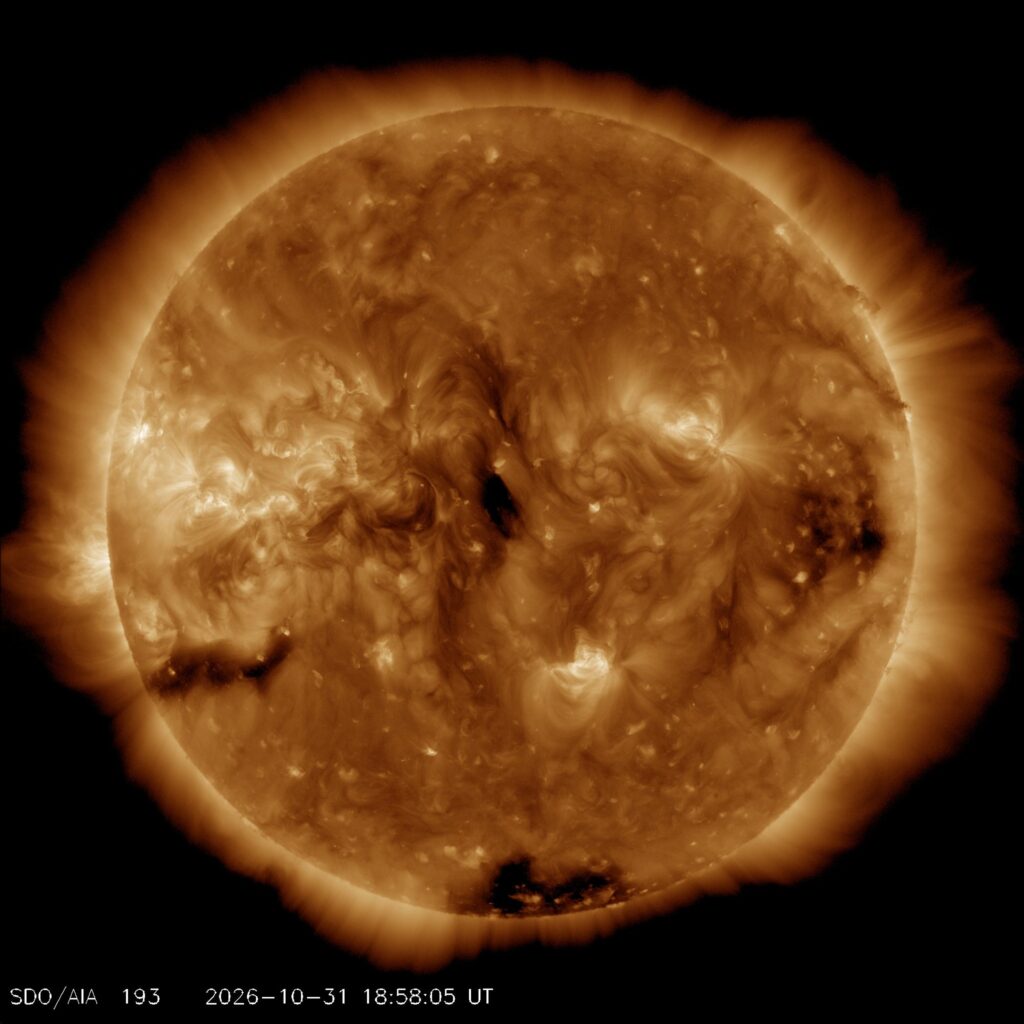
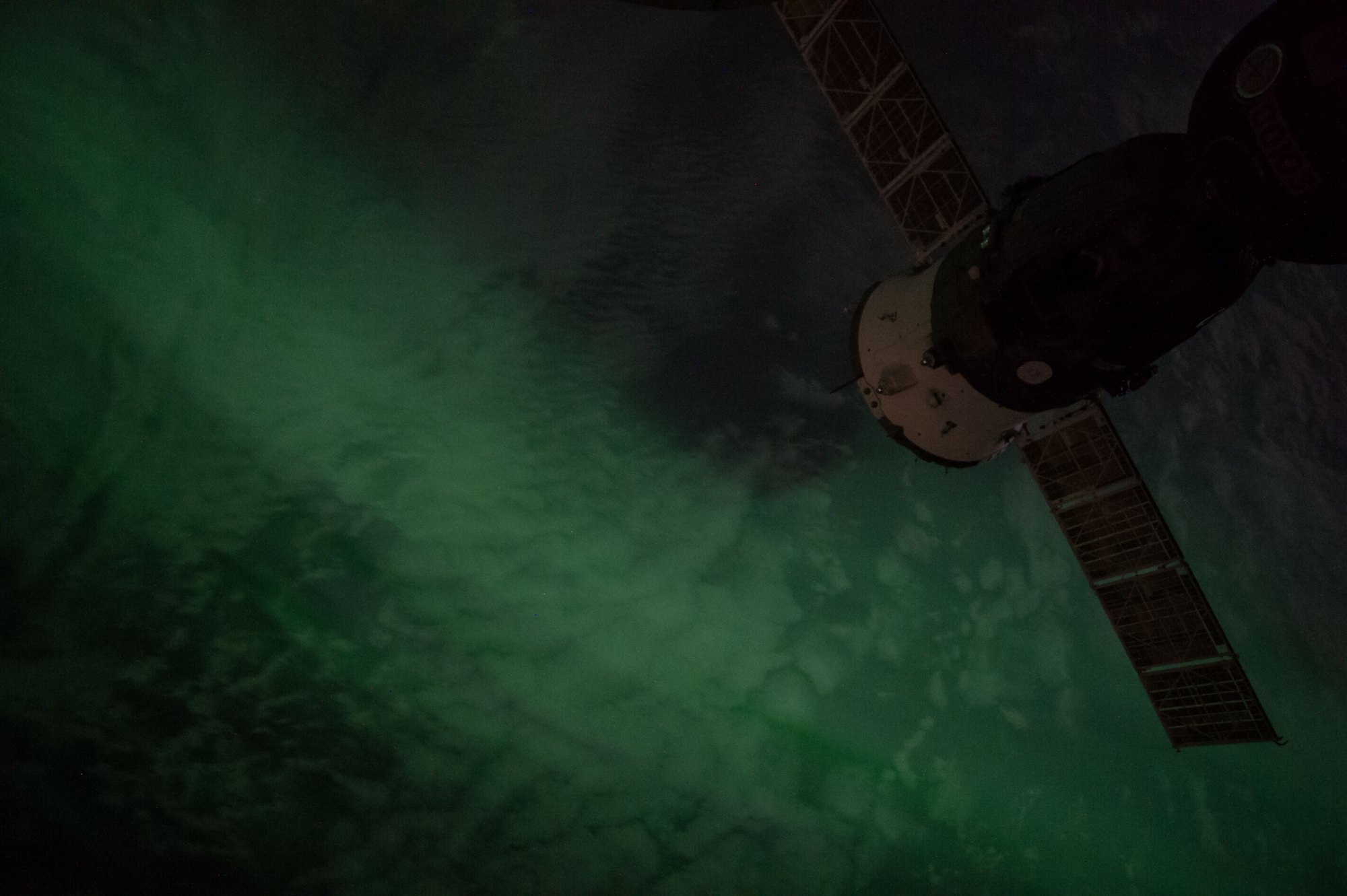
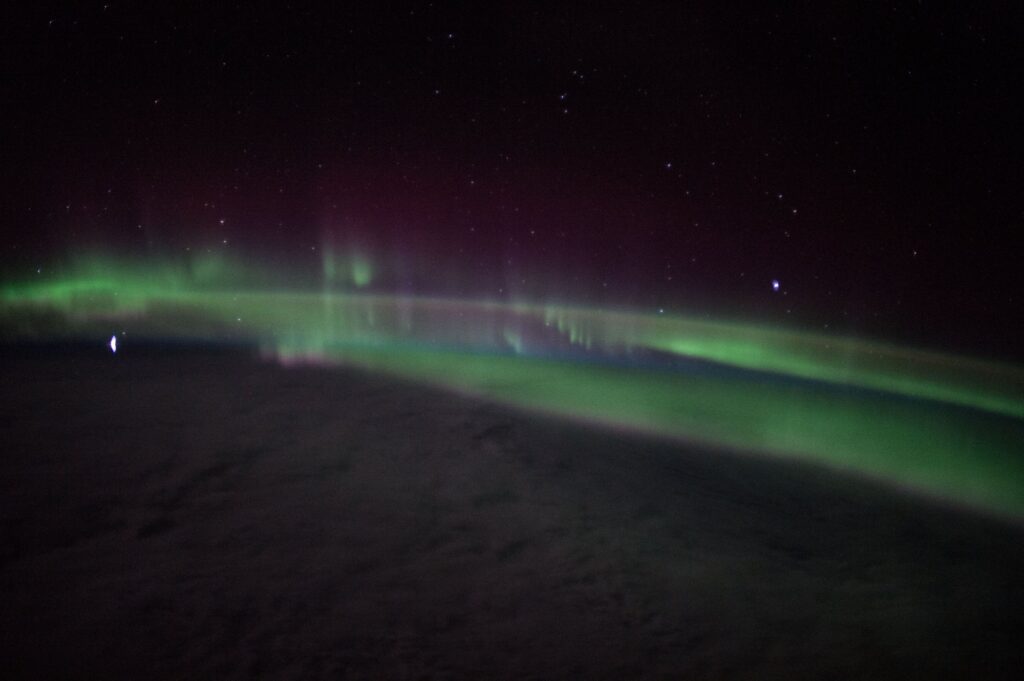
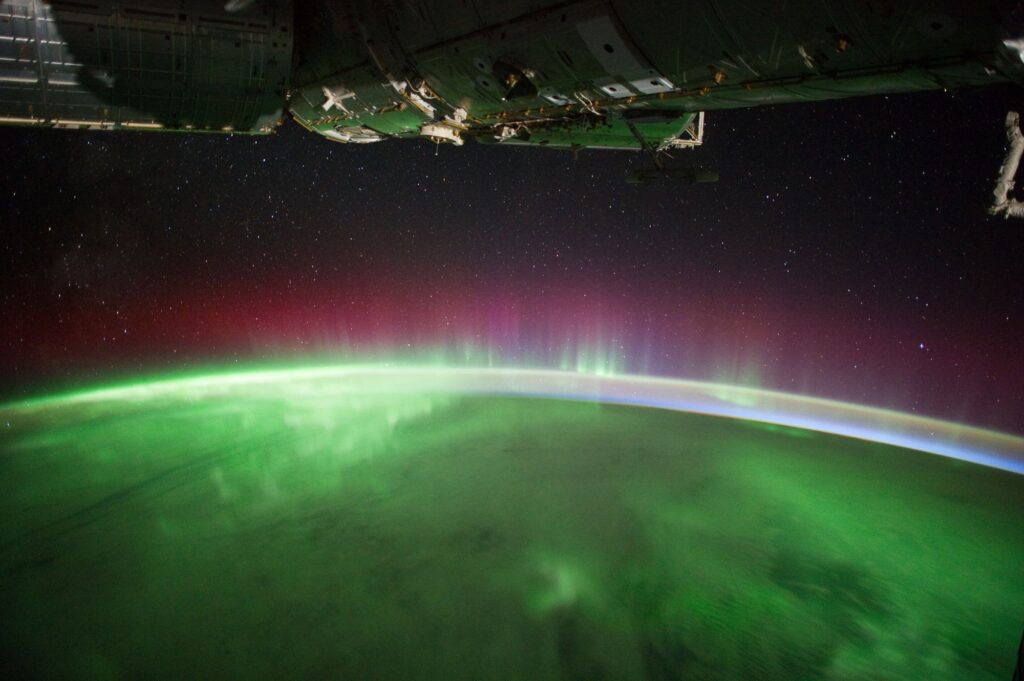
The same NOAA page says aurora has been seen as low as New York and Idaho during G2 storms, at about 55 degrees geomagnetic latitude. That is consistent with the alert text, which names New York, Wisconsin and Washington state. The aurora itself forms when electrons collide with gases in the upper atmosphere, typically 80 to 500 km above the surface, according to NOAA. The glow follows two ovals centered near the magnetic poles, and strong activity pushes them toward the equator.
What is still uncertain at this hour
A warning of this type says Kp 6 is expected, not that it has been reached or will stay there. NOAA’s message gives no peak time, and it does not say how long conditions will last beyond the end of the valid period at 23:59 UTC. Storm strength can rise or fall as the solar wind changes, and NOAA can issue a new product that raises or cancels the warning.

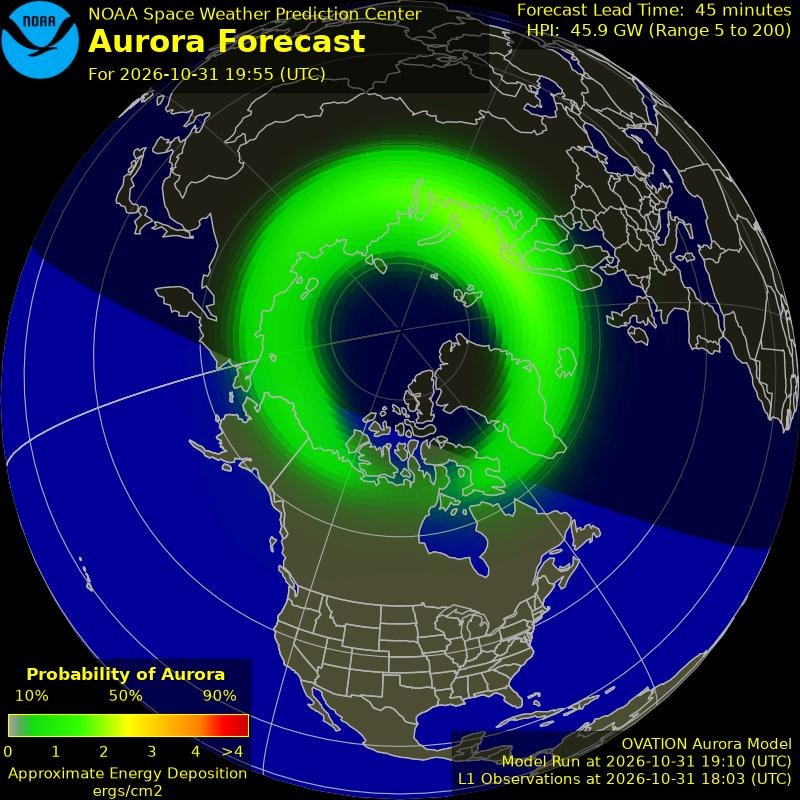
The impacts NOAA lists are possibilities. “Can occur” and “may” are the message’s own words, and a G2 mostly affects regions close to the poles. For most observers, the practical question is the sky. Aurora needs darkness and clear weather, and the potential visibility to a state as far south as New York depends on local conditions as well as the storm. NOAA’s G2 description also notes that long-duration storms may cause transformer damage in power systems, which is a reason utilities at high latitudes track the warning even when a storm is moderate.
Observers can follow updates on the NOAA alerts page, which carries every new warning, watch and alert as it is issued.