Perseverance finds pale, silica-rich rocks at Idubi, a rare target for ancient water and life
SuperCam data show that the bright rocks at Idubi are rich in hydrated silica, a material that forms in water and can preserve microfossils. A detailed close-up campaign has begun.

NASA’s Perseverance rover has found a cluster of pale rocks at a site called “Idubi” that are rich in hydrated silica, a water-formed mineral that can preserve microscopic fossils. The rover team says a detailed close-up study is already underway.
The finding was described in a mission blog post by Candice Bedford, a research scientist at Purdue University, dated Nov. 16, 2026.

Rocks that stood out against the dust
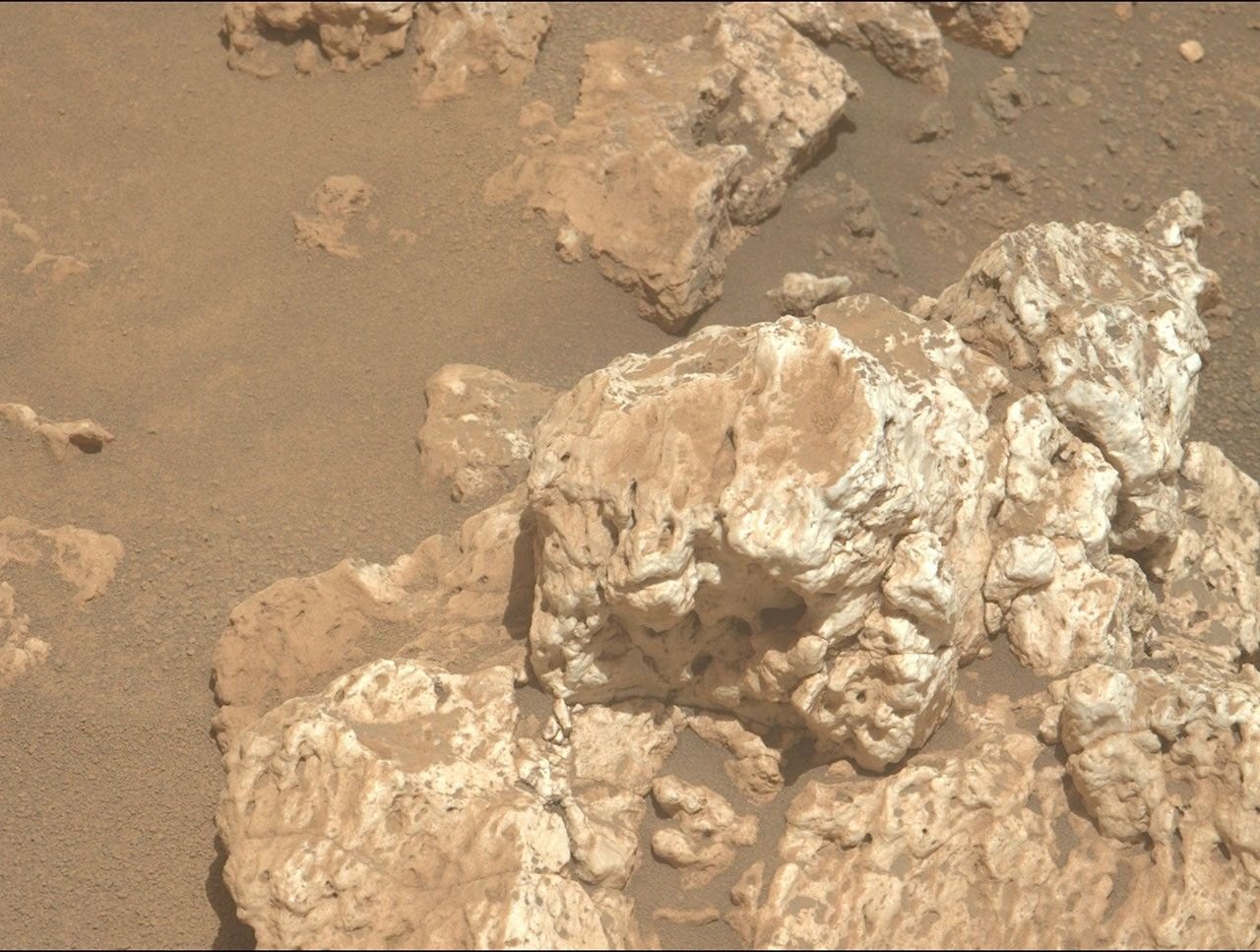
Idubi is an area of ancient Martian crust exposed in a region called “Lac de Charmes.” It lies outside Jezero crater, the basin where Perseverance landed. The team noticed bright, light-toned fragments that contrast sharply with the darker, often dust-covered ground around them. NASA says they are even brighter than the igneous rocks (formed from cooled molten material) and impactite rocks (shaped by meteorite impacts) the rover examined earlier.
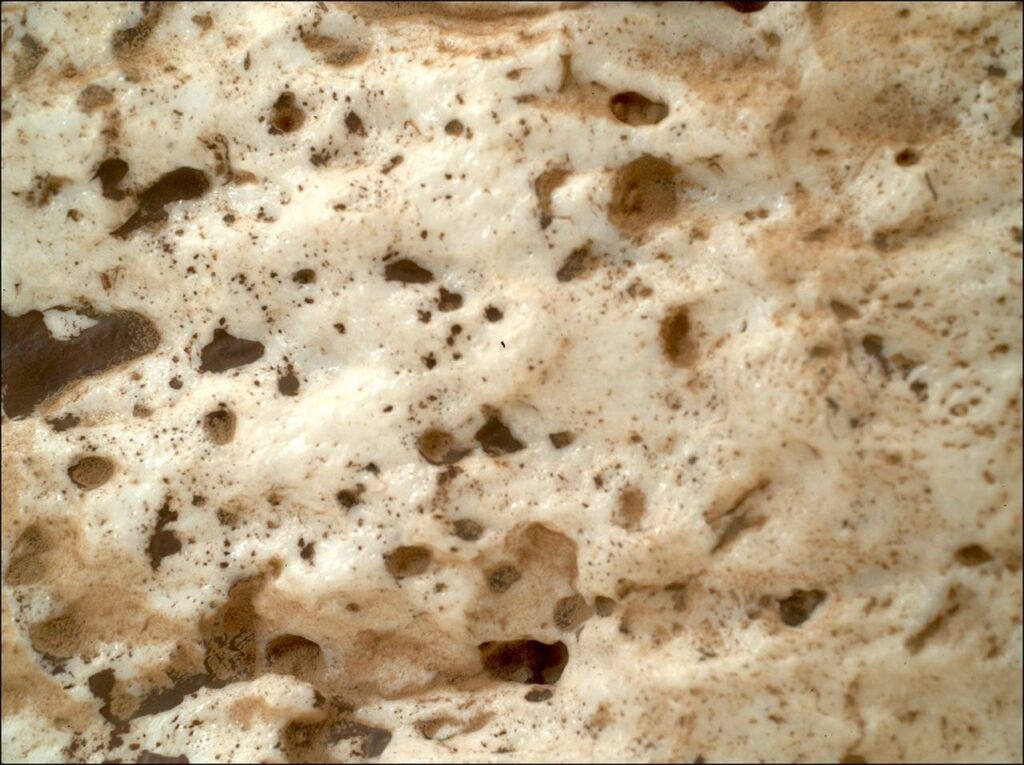
Suspecting they were not ordinary igneous rocks, the team sent Perseverance to investigate. Newly downlinked data from the SuperCam instrument, which analyzes rock composition from a distance, confirmed that they are not igneous. They are rich in hydrated silica, which is silica that has water locked into its structure. NASA released a Mastcam-Z image of one of these rocks taken on Oct. 29, 2026 (sol 2023, meaning the 2,023rd Martian day of the mission), and a close-up from the SHERLOC WATSON camera on the robotic arm taken the same day.


Why silica draws so much attention
According to NASA, hydrated silica can form in several watery settings on Earth: hydrothermal systems (hot water moving through rock), soils, and groundwater. Several of these environments could have supported life, so such deposits are prime targets for reconstructing Mars’s water history. NASA also notes that hydrated silica is especially good at preserving microfossils. The post asks whether these pale rocks “could hold signs of ancient life,” but does not claim that they do. That question is still open.
This is not the first time the rover has met silica-rich rock. On the inner rim of Jezero crater, the deposits were too small for the arm-mounted proximity instruments to get the high-resolution chemical and mineral data needed to pin down their origin and how well they might preserve biosignatures. The Idubi rocks are on a much more workable scale, according to the team.
Technical significance: A bigger target, and a site chosen for its water history
The practical gain is size. A deposit has to be large enough for the arm to place its instruments on it, and the earlier rim finds were not. A site with many bright fragments gives the team repeated chances to measure the same material and compare it from rock to rock.
The location also fits a plan already on record. In our report on Perseverance passing 28.10 miles of driving, the rover was heading for Idubi in Lac de Charmes, off the western rim, in the hope of finding traces of ancient hydrothermal systems. That record came on sol 2,006, on Oct. 11, 2026, only 17 sols before the Idubi images were taken. The silica now points to water-altered rock at the very place the team had aimed for.
Context from NASA’s mission page on Mars 2020 Perseverance: the rover landed in Jezero crater on Feb. 18, 2021, to search for signs of ancient microbial life and to collect rock samples that a future mission could return to Earth. During its first five years it gathered more than two dozen rock samples. Whether any sample comes from Idubi has not been announced, and the blog post does not say.
The close-up campaign has begun
NASA says the proximity science campaign at Idubi is already underway. That work uses the instruments on the arm to read the rock’s chemistry and mineral makeup at fine scale. Those readings are what the team needs to decide how the silica formed and whether the rock would keep signs of life if any had been there. The post gives no results from the campaign and no timeline, so the answer to where this silica came from will come with later updates from the mission team. You can follow the rovers’ positions and latest images on our page on the Perseverance and Curiosity rovers.