ESCAPADE’s twin Mars probes swing past Earth with a 9-minute burn on Nov. 7 and 9
Each of NASA's two ESCAPADE spacecraft will fly past Earth on Nov. 7 and Nov. 9 and fire its engine for about nine minutes. The combined push sends them toward Mars, where they arrive in September 2027.

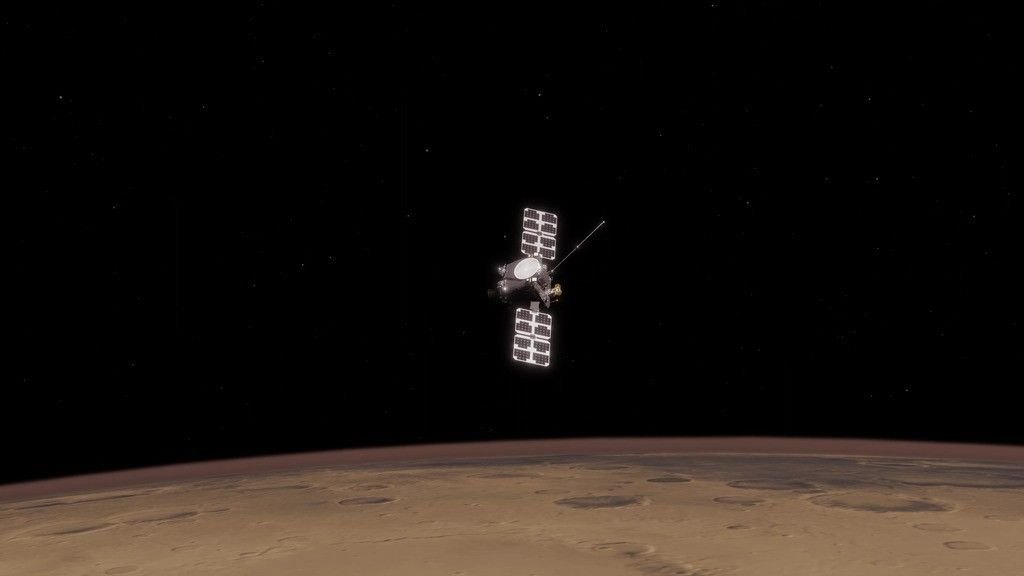
NASA’s two ESCAPADE spacecraft will each fly close past Earth and fire their engines for about nine minutes, using our planet’s gravity to sling themselves toward Mars. The first flyby is on Nov. 7, the second on Nov. 9.
Two flybys, two days apart
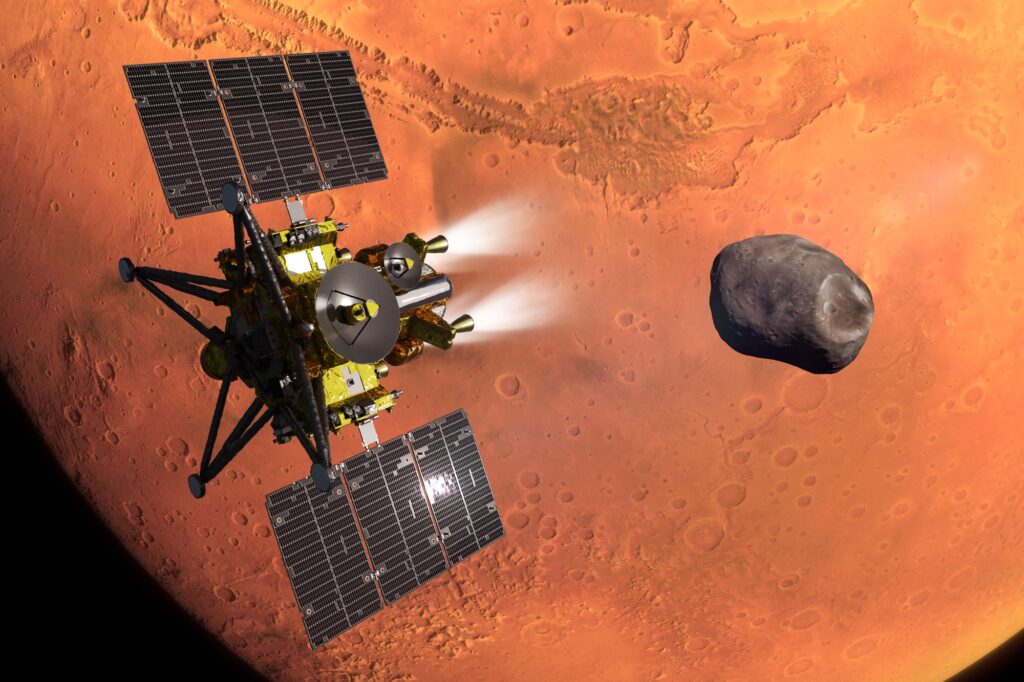
ESCAPADE (Escape and Plasma Acceleration and Dynamics Explorers) is a pair of identical spacecraft. NASA says each will perform a “powered” flyby: it passes close to Earth so gravity speeds it up and bends its path, and at the closest point it also fires its engine for an extra push. This engine burn is called a trans-Mars injection burn.

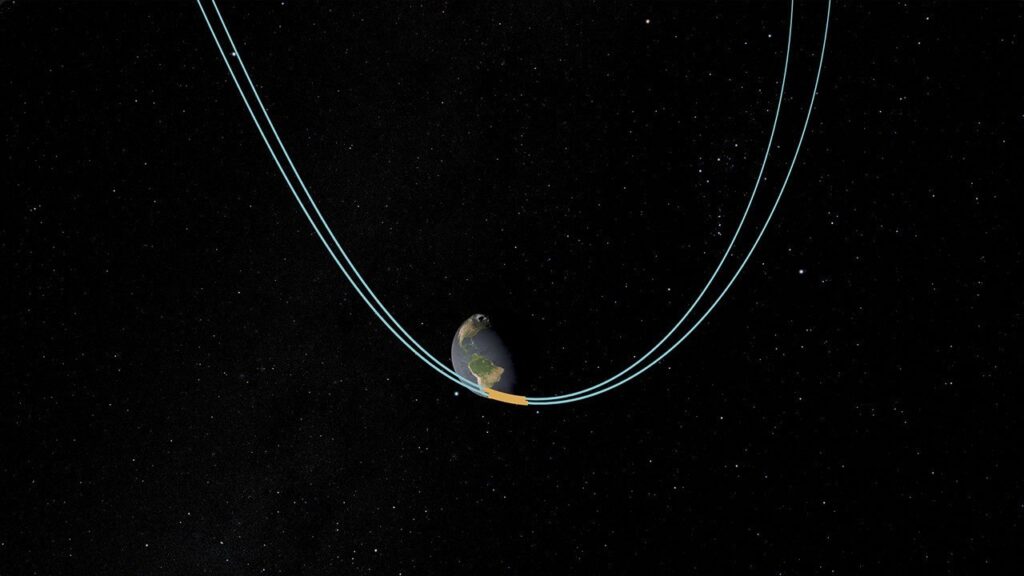
The first spacecraft reaches its closest approach and completes its burn around 5 a.m. EST on Saturday, Nov. 7 (about 10:00 UTC). The second does the same around 6 a.m. EST on Monday, Nov. 9 (about 11:00 UTC). The burns begin a little earlier, at 4:51 a.m. EST (09:51 UTC) on Nov. 7 and 5:51 a.m. EST (10:51 UTC) on Nov. 9, while each craft is over southern Australia.
The burn adds more than 1,000 miles per hour. NASA gives the speed change as roughly 6.3 to 6.7 miles per second, or about Mach 30 to Mach 31. At the faster speed, the agency notes, a spacecraft could cross from Washington, D.C., to San Francisco in under 7 minutes. Each spacecraft passes between 600 and 1,100 miles above the surface, higher than most Earth-orbiting satellites.
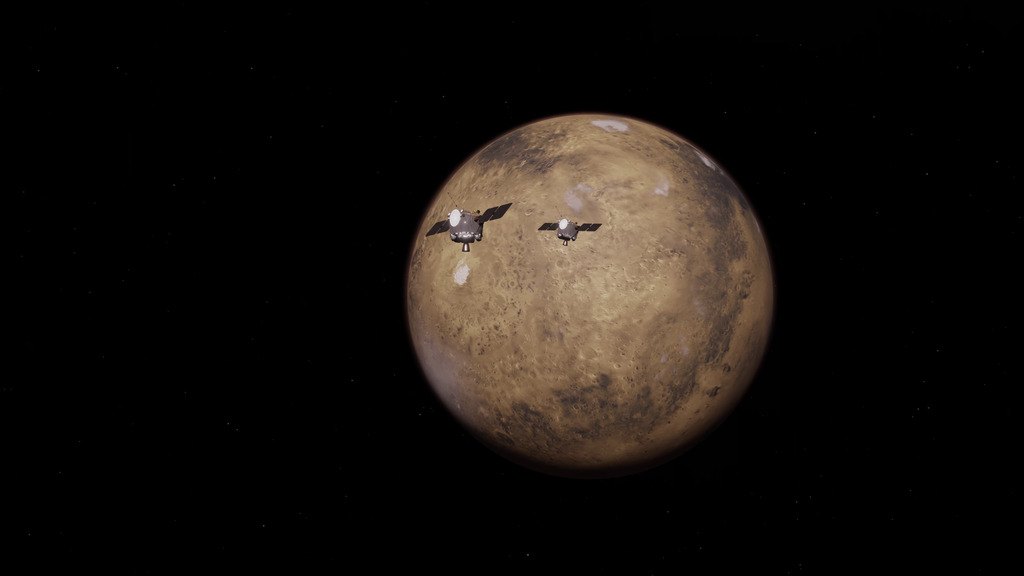
NASA says no Mars-bound spacecraft has yet carried out a powered flyby, which is also known as an Oberth maneuver. After the burns, the two craft cruise for about 10 months and reach Mars on Sept. 7 and Sept. 9, 2027.
How to spot them from the ground
The spacecraft are each about the size of a standard refrigerator, so they will be faint. NASA says a telescope will most likely be needed to find them as dim points moving slowly against the stars, taking several hours to cross the sky.
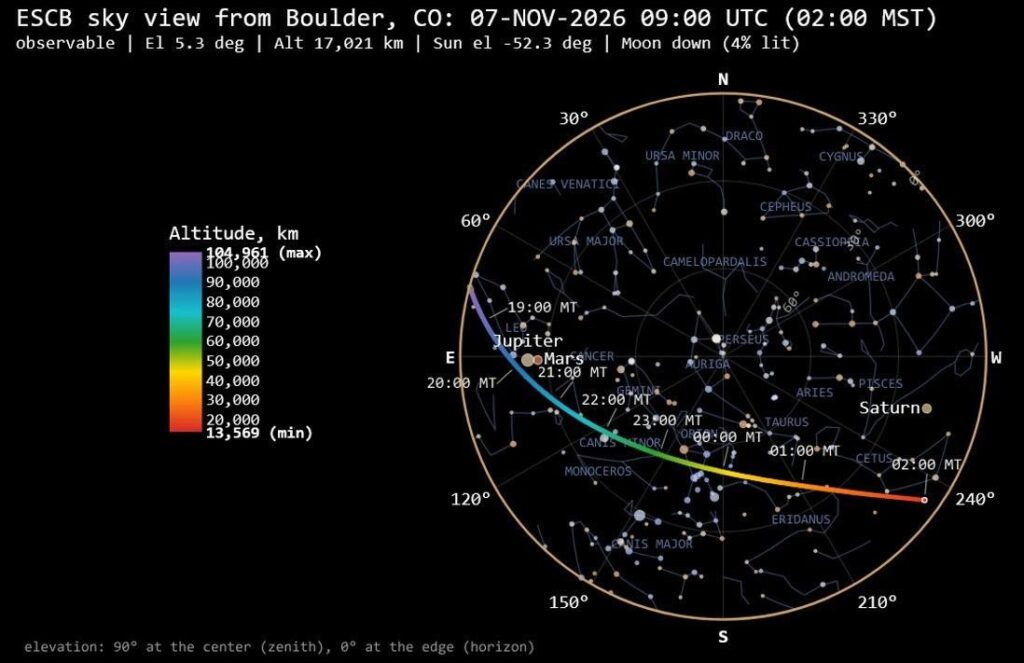
For the western United States, each craft should be visible until about an hour before its burn, when it drops below the horizon. NASA expects the first to be brightest between midnight and 1 a.m. PST on Nov. 7, and the second between 1 and 2 a.m. PST on Nov. 9. Observers in southern Australia can watch the burns themselves, which start at 8:51 p.m. and 9:51 p.m. AEDT on those dates. NASA points to the Jet Propulsion Laboratory’s Horizons System for coordinates at a given location, and to star charts for other cities at svs.gsfc.nasa.gov/15114.
Why the long way round
Earth and Mars line up well for a direct trip only about every 26 months, and earlier missions launched at those moments to save fuel and time. ESCAPADE lifted off in November 2025, when the planets sat on opposite sides of the Sun. Instead of heading straight out, the pair flew a kidney-bean-shaped loop around the Earth-Sun Lagrange point 2, a spot where the combined pull of the two bodies keeps a spacecraft in a steady position. They then returned toward Earth, timing the return for when the planets realign.
This detour had a bonus. NASA says the loop took the craft through a distant stretch of Earth’s magnetotail, the part of our magnetic environment that the solar wind stretches away from the planet, which no spacecraft had explored directly. Mission scientists report interesting activity and structure there and plan to share findings soon.
A different bet from the usual Mars schedule
The route changes the usual trade-off. Most Mars missions are tied to a launch window every 26 months; ESCAPADE instead went up on Blue Origin’s New Glenn on Nov. 13, 2025, from Launch Complex 36 at Cape Canaveral, and waited in space for the planets to line up. The wait costs about a year of travel time compared with a direct trip, but it frees the launch date from the planetary calendar. That matters for a small mission: NASA lists each spacecraft at 209 kg (460 lb) dry and 535 kg (1,179 lb) fueled, so most of the mass at launch is propellant and every kilogram counts.
Arriving in 2027 also sets up the first multi-spacecraft formation around Mars. Per NASA’s mission page, one craft will orbit every 8.5 hours and the other every 9.5 hours, covering altitudes of roughly 160 to 10,000 km. In one campaign they trail each other in nearly the same orbit for six months; in the other they sit in different orbits for five months and observe separate regions at once. Single orbiters such as those already at Mars cannot separate changes over time from changes over place; two craft can.
Checking the aim before the long cruise
Several days after the burns, the team will know how well each spacecraft is aimed at Mars. NASA says it will then use several trajectory correction maneuvers to refine the paths so both arrive on a precise course in September 2027. There, ESCAPADE will study how the solar wind, a stream of material flowing from the Sun at about a million miles per hour, interacts with the Martian environment and drives the loss of its atmosphere.
Sources: NASA’s ESCAPADE blog post of Nov. 2, 2026, and NASA’s ESCAPADE mission page.