Moon navigation test gets a ride: QASCOM’s COLLINS will fly on Firefly’s Elytra orbiter
Italy's QASCOM will test GNSS and LunaNet navigation signals from lunar orbit aboard Firefly's Elytra Dark, on a Blue Ghost mission targeting no earlier than 2028.

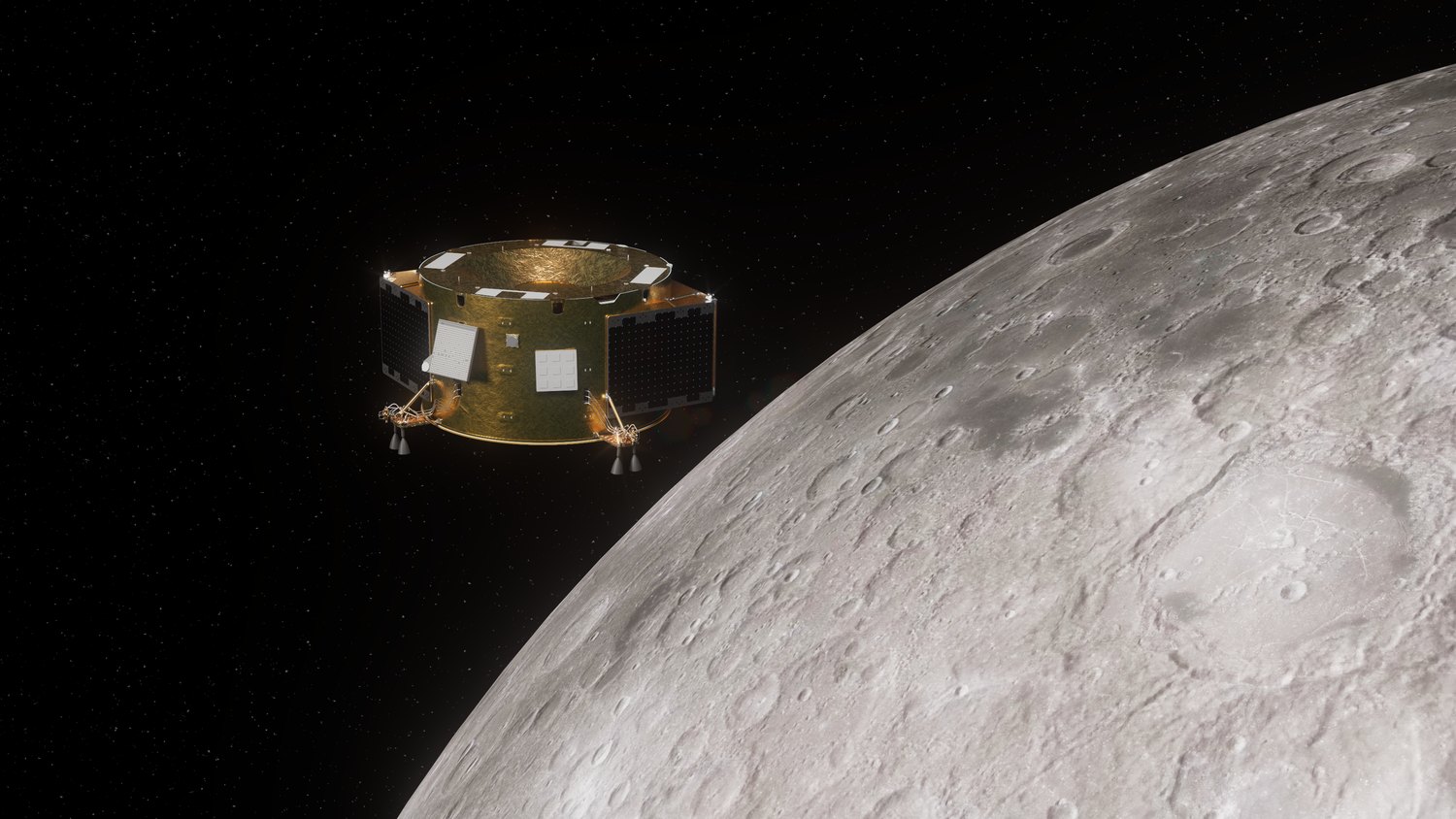
Firefly Aerospace has signed QASCOM to fly a navigation experiment called COLLINS on its Elytra orbiter around the Moon, the company announced on November 17. The mission is targeted for no earlier than 2028.
A navigation test that rides above the lander
COLLINS stands for Cislunar Orbiting L-band and LunaNet Integrated Navigation System. In plain terms, it is a receiver that will test how a spacecraft can work out where it is, and what time it is, near the Moon. It will use signals from Earth’s GNSS satellites, the family that includes GPS, and from future LunaNet services. LunaNet is a planned set of navigation and communication services for the Moon, and Firefly names the European Space Agency’s Moonlight services among them.


QASCOM built COLLINS on behalf of the Italian Space Agency (ASI). Firefly says the demonstration follows LuGRE, an ASI and NASA payload from QASCOM that flew on Blue Ghost Mission 1 and tracked GNSS signals on the lunar surface for the first time. LuGRE was bought through NASA’s Commercial Lunar Payload Services (CLPS) program. COLLINS is different: it is a direct commercial contract with Firefly, part of a public-private co-investment between ASI and QASCOM.
QASCOM’s CEO Oscar Pozzobon said the company and Firefly will be launching “the first combined GNSS/LunaNet PNT technology into lunar orbit.” PNT means position, navigation and timing. He listed autonomous lunar navigation, mobility and precision landing as capabilities it should enable.

How the two-spacecraft mission is meant to run
The mission goes to the Moon’s Gruithuisen Domes, a region of volcanic-looking hills on the near side. Elytra Dark, the orbiter, will first release the Blue Ghost lander into lunar orbit. Blue Ghost will then land and support payloads on the surface for about 14 days.
Elytra stays up. It will relay communications for the lander and run COLLINS for six months, with an option to extend. After that it remains in lunar orbit for five years, taking high-resolution images for Firefly’s Ocula imaging service. With COLLINS, the mission now carries eight payloads, six of them through CLPS.
Who benefits from a better lunar signal
The angle that matters beyond Firefly is navigation. Today, spacecraft near the Moon depend heavily on tracking from Earth. A receiver that can use GNSS and LunaNet signals directly would let a lander or rover estimate its own position, which is what precision landing and autonomous driving need. Flying it in orbit tests the part of the sky that surface experiments like LuGRE could not.
Elytra is also becoming a regular platform. Firefly says this will be its second Elytra in lunar orbit, after its upcoming far-side mission. Our earlier report on Blue Ghost Mission 4 described the same pattern: an Elytra Dark carrying the lander to lunar orbit, then staying more than five years for Ocula imaging. That mission, on a $176.7 million NASA CLPS task order, is targeted for the south pole no earlier than 2029. The same report lists the far-side mission as no earlier than 2027 and the Gruithuisen mission as no earlier than 2028.
For Firefly, a paying commercial customer on an orbiter is a different kind of revenue from a NASA task order. NASA is also lining up more lunar delivery firms, as we reported in its CLPS 2 plan, so hosting private payloads on repeat flights is one way to build business around that demand. Firefly CEO Jason Kim said the company is “rapidly growing spacecraft production” amid rising commercial and government demand.
The 2028 date is a target, and the company’s own forward-looking statement notes that timing and demonstrations may change. If the schedule holds, COLLINS would give ASI and its partners orbital data on combined GNSS and LunaNet navigation before such services are fully in place.