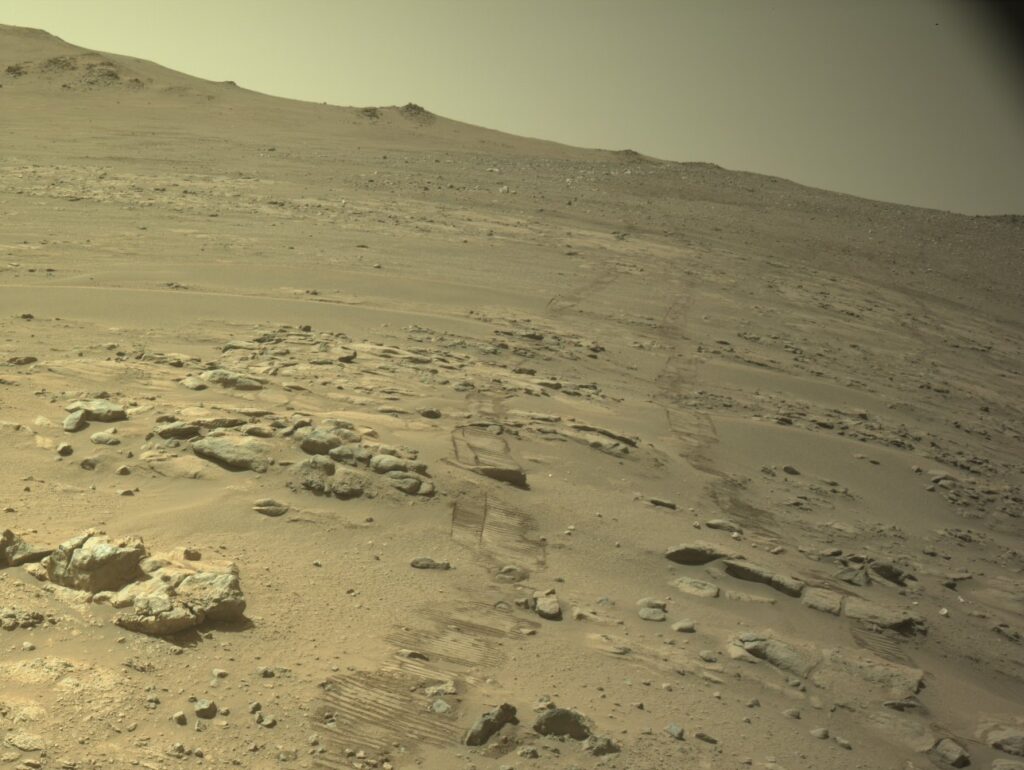
49 holes in Mars: Curiosity’s drill collage ends with Nazca
NASA has published a collage of all 49 holes Curiosity has drilled on Mars. The newest, Nazca, was chosen for disc-shaped features the team suspects are crystals.

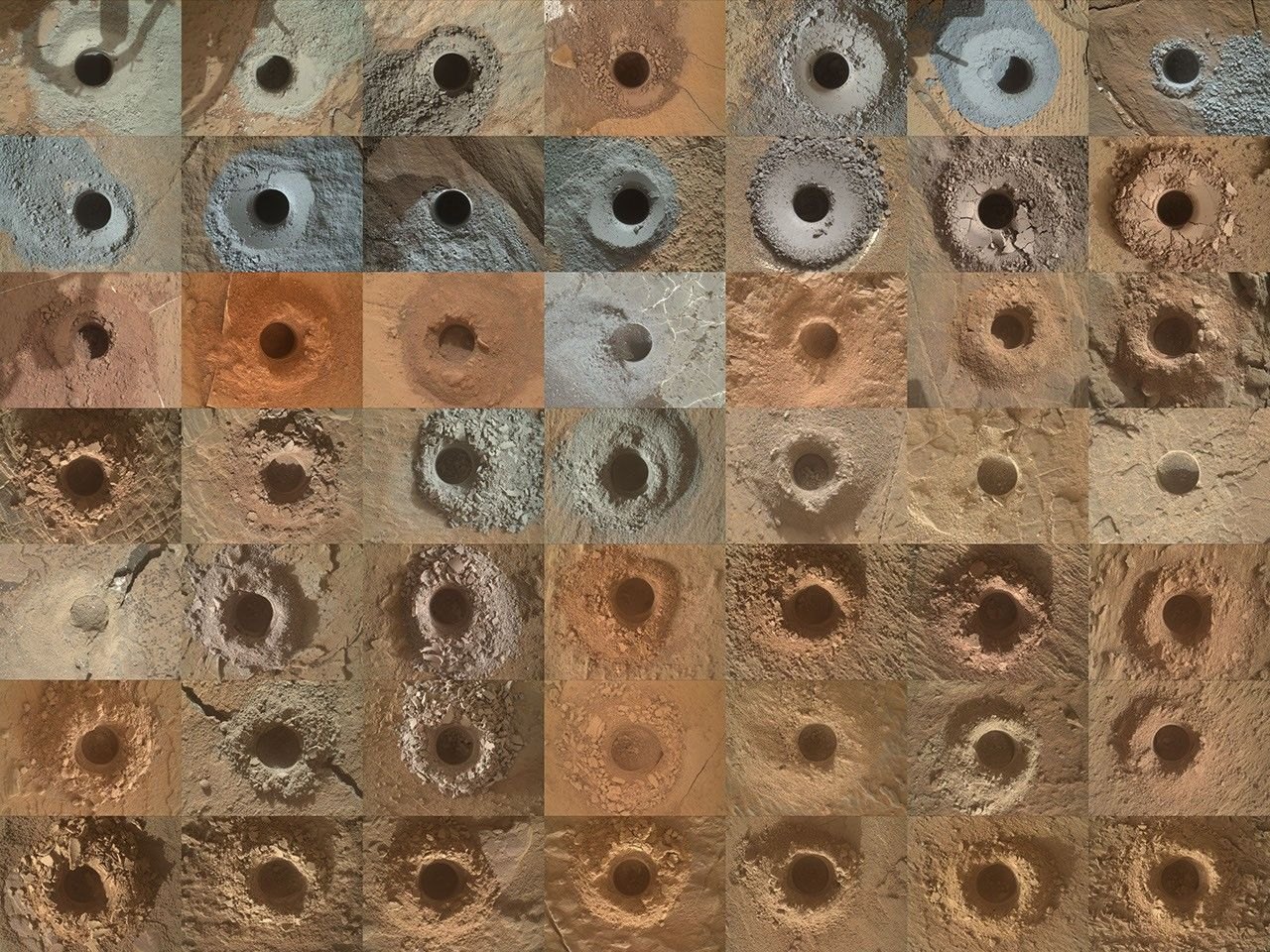
NASA has released a collage of all 49 drill holes made by its Curiosity rover on Mars. Each hole is 0.63 inches (16 millimeters) wide, and each one marks a rock sample the rover analyzed.
Forty-nine small holes, one per sample
The collage is a seven-by-seven grid of overhead close-ups. Each frame shows a circular hole in Martian rock, ringed by mounds of pulverized dust that range from gray to brown to reddish-orange. NASA says the images were taken by the Mars Hand Lens Imager (MAHLI), a camera on the end of the rover’s robotic arm, and the collection is current as of November 2026.

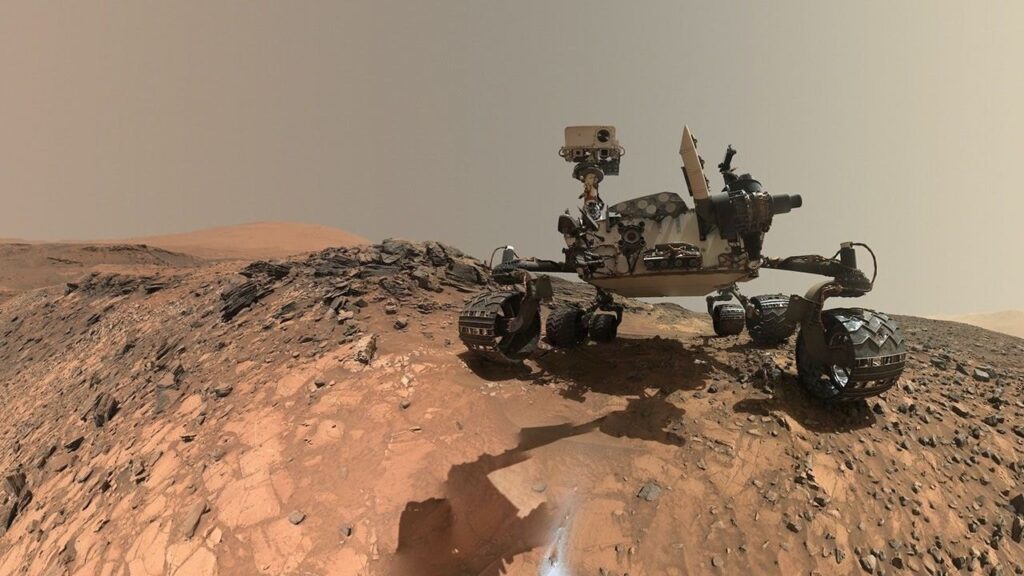
The same arm carries the drill. It grinds into a rock and drops the powder into instruments inside the rover’s body, which work out what the rock is made of. A hole is therefore a record of a place where the team wanted to know the chemistry, not only the look of the stone. The color differences in the grid reflect that variety of rock.
NASA’s Curiosity rover was built by the Jet Propulsion Laboratory, which Caltech manages in Pasadena, California. MAHLI was built by Malin Space Science Systems in San Diego.

Nazca: A block packed with possible crystals
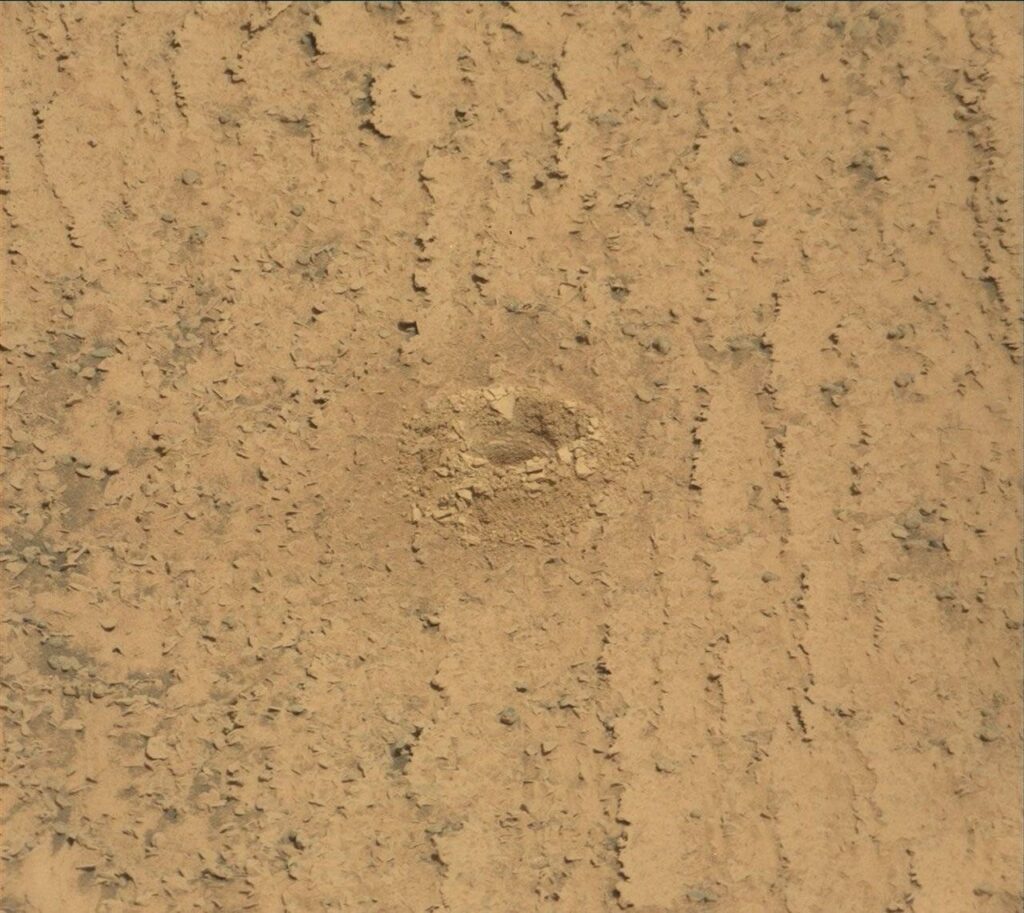
The 49th hole is called Nazca. According to the mission blog by planetary mineralogist Susanne Schwenzer of The Open University in the UK, the team went back to an area where they had earlier seen disc-shaped inclusions, small flat features embedded in the rock. They interpret these as potential crystals. A good drill target, the blog says, “contains abundant potential crystals.”
The reason is what crystals can reveal. If the discs are crystals, their composition could point to the environmental conditions in which they formed, which is a way of reading ancient Martian conditions from the rock itself.
A Mastcam image of the finished hole was taken on Sol 5050, which corresponds to Oct. 20, 2026 (23:56 UTC). A sol is one Martian day, slightly longer than an Earth day. The post describes the planning day as Oct. 23, 2026.
Checks before the bit touches rock
Drilling a rock from a robot arm is not routine. Before Nazca, the rover passed a stability test, which confirms all wheels are on solid ground before the arm extends. It then ran a preload test, which checks that the rock is steady and measures the forces on the drill bit.
Only then did the team use three instruments on the rock itself: APXS, MAHLI and ChemCam, whose laser (LIBS) vaporizes a spot to read its light. After drilling, the sample went to the CheMin instrument, and ChemCam measured the loose tailings and the wall of the hole.
What the data means for the people reading it
The audience for these results is mostly the scientists on Earth who plan each day’s work. The blog says CheMin data were still traveling from Mars and were expected over the weekend after the post. Until they arrive, the crystal idea stays a hypothesis.
Nazca was also not the only task that week. The team ran laser measurements on dark pebbles named Palpala and Puna, since pebble compositions vary and could show where they came from. They repeated a depth profile at a target called Llama to see whether earlier results hold elsewhere. They also measured more disc-shaped features at Pacaya and photographed the buttes Mishe Mokwa and Cordillera from a distance to study their sedimentary layering. That mix shows the drill is one tool among many, used when the rock justifies the effort.
NASA’s Jet Propulsion Laboratory leads the mission for the agency’s Science Mission Directorate as part of the Mars Exploration Program portfolio.