Everyday Mylar, stacked by hand, shows promise as Moon insulation
Penn Engineering researchers stacked Mylar films into a flexible insulator that kept its performance under heavy compression in a vacuum, a step toward insulating lunar habitats.

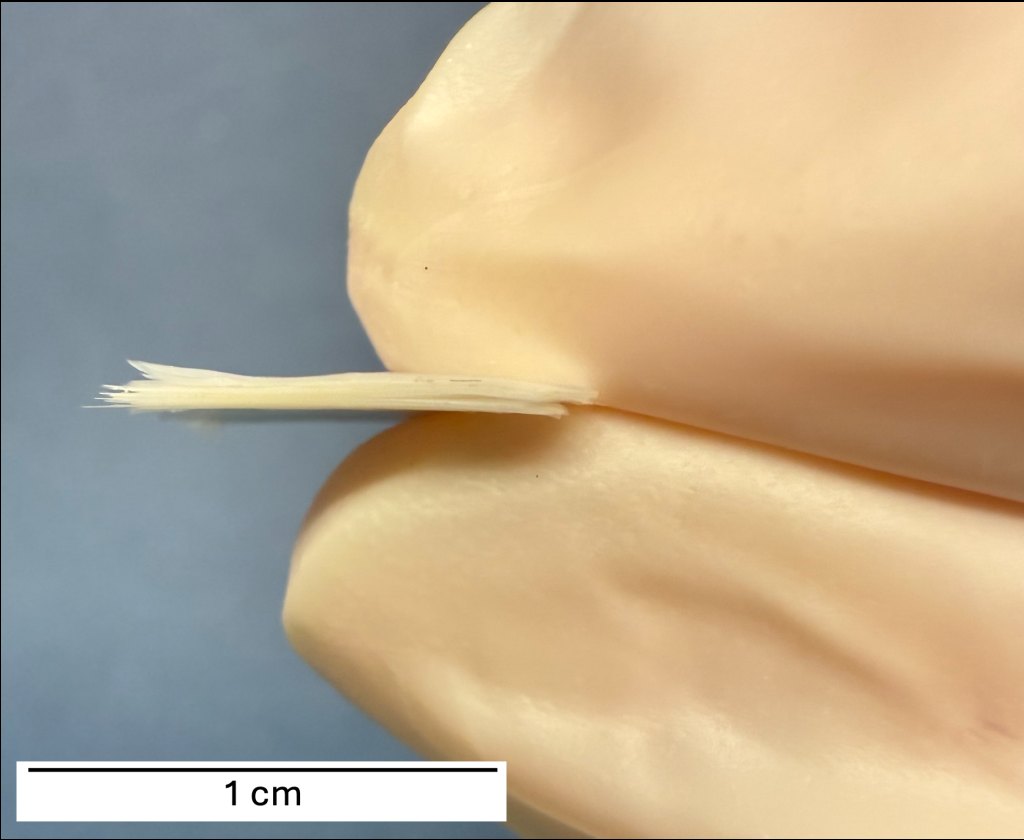
Engineers at the University of Pennsylvania have stacked hundreds of sheets of Mylar, a common lightweight plastic film, into an insulator that stays flexible and keeps its heat-blocking performance under heavy compression in a vacuum. They propose it for future Moon habitats.
The work, described by Penn Engineering and published in the journal ACS Applied Materials & Interfaces, was led by Igor Bargatin, an associate professor of mechanical engineering and applied mechanics. First author Danielle R. Levin is a recent Penn doctoral graduate in chemistry.

A tough insulator that does not give up its insulation
Insulation matters on the Moon because temperatures swing between extremes. Penn describes the range as hundreds of degrees below zero to boiling. Many of the best insulators are too fragile for the handling, squeezing and repeated use that building on the Moon would involve. Aerogels, for example, insulate very well but are brittle. Multilayer insulation, the reflective film used on spacecraft, handles radiated heat well but is not built to carry loads and tears easily.
The team calls its material HyLIFS, short for hybrid layered insulating film stacks. They coated some Mylar films with a very thin layer of aluminum oxide to stiffen them, then stacked films of several thicknesses one sheet at a time, by hand with tweezers and small weights.

Tested in a vacuum under the squeezing force typical of a habitat holding normal indoor air pressure, the best stacks had thermal conductivity (how readily they pass heat) comparable to other high-performance vacuum insulation, while staying flexible. The coated stacks kept that performance even under the highest compressive loads the lab’s equipment could apply. Samples were compressed repeatedly to about 20 megapascals, which Penn compares to roughly 200 pounds concentrated on the area of a fingertip, and survived 10 consecutive high-stress cycles.
“The ideal material is both resistant to damage and to the loss of heat.”
Tiny particles, not thin films, decide how much heat leaks
Manufacturers add microscopic particles to Mylar so that layers do not stick together. The researchers found these particles play a major role in how heat crosses the stack. Their models and data suggest that, in a vacuum, heat passes between sheets mainly at the points where the particles touch neighboring films. Future versions could therefore be designed with controlled particle size, number and distribution.
The result also overturned an expectation. The team assumed the thinnest films would insulate best, because more layers fit in the same space. With the alumina coating, the thinnest films that were successfully tested and medium-thickness films performed similarly, likely because thinner films have more particle contacts. Levin said, “The simplest configuration ended up being the best one.”
Why a cheap plastic fits the Moon’s demands
The angle that matters for lunar planning is strategy: surface systems must survive a harsh thermal environment with little mass and little power to spare. NASA gives the Moon’s surface temperature as about 127 C (260 F) in full Sun and about -173 C (-280 F) in darkness, a swing of roughly 300 degrees that a habitat’s walls, rovers and electronics must handle (NASA).
Insulation also reduces how much electricity is needed to keep things warm. NASA and the US Department of Energy signed an agreement in January 2026 aiming for a fission reactor on the Moon by the first quarter of fiscal year 2030, and NASA’s 2025 draft called for at least 100 kilowatts of electrical power, as covered in our report on the nuclear reactor on the Moon. A lunar base has a limited power budget, so heat that never escapes is power that can go elsewhere. A material made from a widely available film is attractive on that count, though Penn does not link its work to any specific mission.
From one square centimeter to meter-sized sheets
The current samples are about one square centimeter and take hours to make by hand. Practical insulation would need sheets about a meter across, which would require methods such as continuous coating of large rolls of Mylar. Open questions remain about durability under repeated bending and real-world bumps and scuffs at larger scales.
Penn lists lunar habitats, rovers, spacesuits and electronics as possible uses. The research was supported by the US National Science Foundation (grant 1845933) and Penn Engineering. Co-authors are Matthew F. Campbell, Gulzhan Aldan and Orevaoghene H. Omodior.