Greek CubeSat links up with a ground station by laser weeks after commissioning
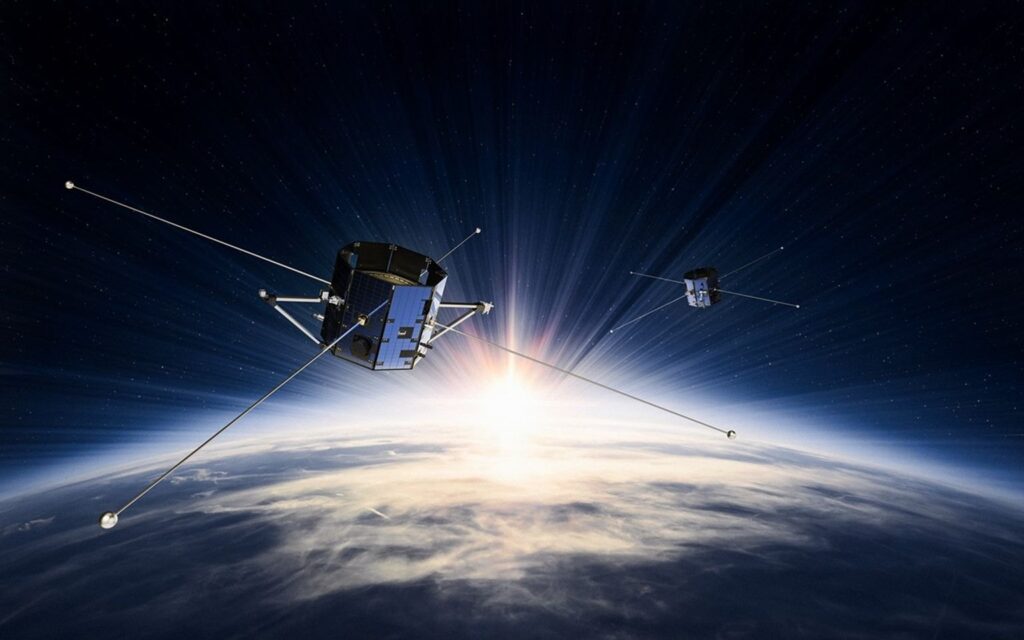
ERMIS-3, an 8U CubeSat built by the University of Athens, has linked to an optical ground station in Greece, the country's first laser link with a low Earth orbit satellite, ESA said.

ERMIS-3, an 8U CubeSat (a small satellite built from 10-centimeter units) developed by the National and Kapodistrian University of Athens, has established a laser link with an optical ground station in Greece, ESA reported. It is Greece’s first optical link with a low Earth orbit satellite.
A narrow beam that has to find a moving target
Most satellites talk to Earth by radio. Optical links use a narrow laser beam instead, which can carry data at high rates but is much harder to keep connected. ESA explains that the beam must point precisely at a receiver while the satellite moves along its orbit at several kilometers per second. Both terminals have to acquire each other’s signal and keep tracking during a short communication window.

Weather adds to the difficulty: clouds can block the link completely, and turbulence in the atmosphere can degrade the signal. ESA said the link was established quickly and demonstrated one of the mission’s main objectives, known as precise pointing, acquisition and tracking (PAT). The demonstration came only weeks after the satellite was commissioned.
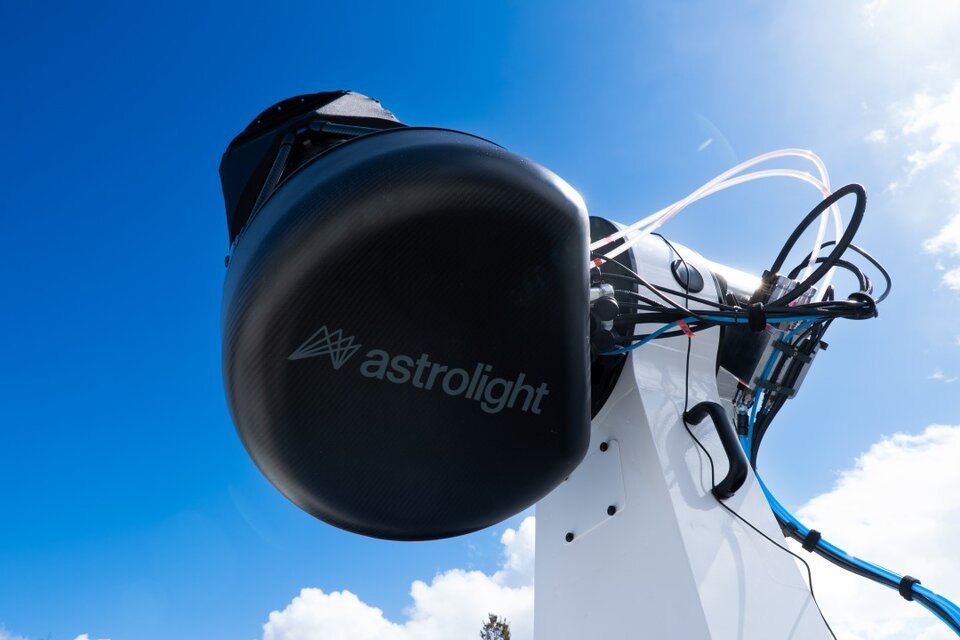
The satellite connected to the Holomondas Optical Ground Station, called HolOGS-1, developed by the Aristotle University of Thessaloniki. ERMIS-3 carries Astrolight’s ATLAS-1 optical terminal, built by the Lithuanian company Astrolight, and the ground station carries a matching terminal.

Three CubeSats, one national programme
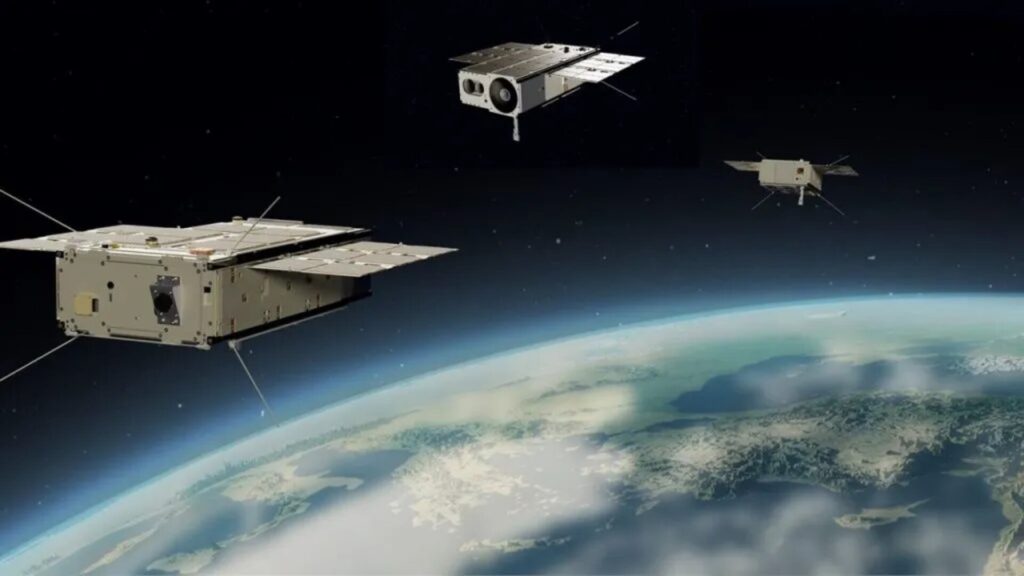
ERMIS-3 launched on 30 March 2026 together with ERMIS-1 and ERMIS-2, as part of an in-orbit demonstration programme for small-satellite communications technologies. The mission belongs to Greece’s National Space Programme, which ESA implements on behalf of the Greek government.
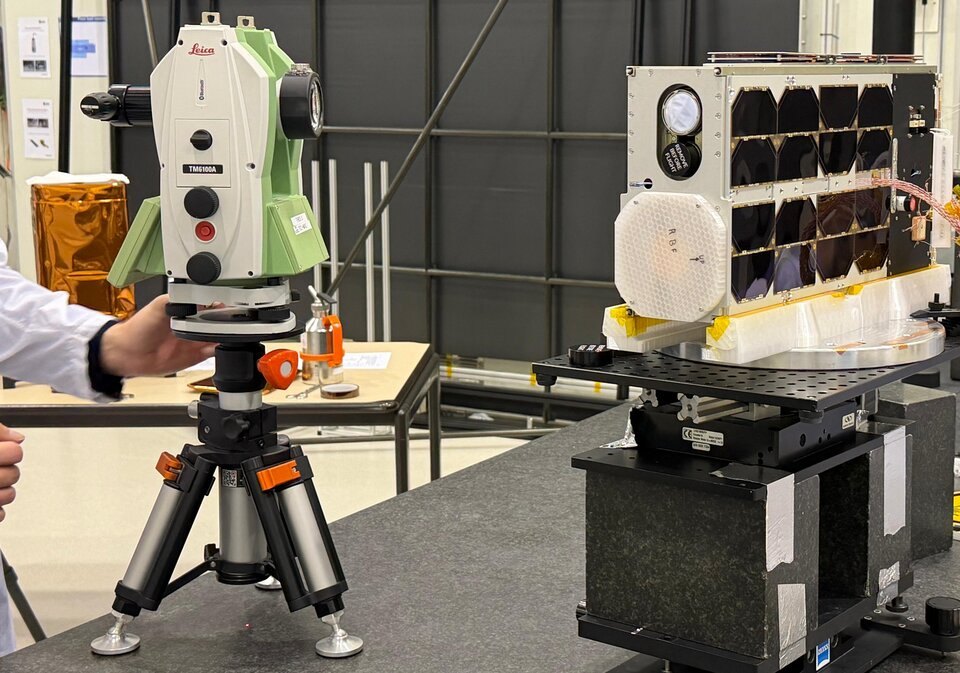
ESA’s own contribution included environmental testing and optical alignment of the satellite at its ESTEC technical center in the Netherlands.
Frederic Rouesnel, Head of the Resilience Initiatives Implementation Management Office at ESA, said the achievement shows that “Europe can deliver world-class innovation through close cooperation between industry, academia and institutions.” Professor Kleomenis Tsiganis of the Aristotle University of Thessaloniki called it the first successful optical link with a low Earth orbit satellite from Greece, and the first with a Greek space asset.
What a working laser link could free up
The payoff is data volume. ESA points to Earth observation missions, where high-resolution and hyperspectral images (pictures split into many narrow color bands) must be sent to the ground, as the kind of traffic optical links could help carry. A CubeSat is small and has little power, so a compact laser terminal that works at that size matters.
The same equipment has other uses on the ground side. In May 2026, Astrolight announced it had commissioned the Holomondas station near Thessaloniki, which it said supports data rates of up to 2.5 gigabits per second during satellite passes, according to trade-press coverage of that announcement. That coverage also says the station serves PeakSat, another Greek CubeSat that launched in March 2026 with an optical payload. ESA’s announcement does not give the data rate achieved in this first ERMIS-3 link, so the 2.5 gigabit figure describes the station’s stated capability, not the result of this demonstration.
The station’s design also bears on cost. The same report says Astrolight’s calibration technology compensates for thermal variation and mechanical movement, which lets the station use smaller telescope and mount configurations, and that this could lower deployment costs. A cheaper ground terminal would make it easier for more universities and small operators to try laser links.
Professors Vaios Lappas and Antonis Paschalis, the ERMIS Principal Investigators, said the result “is opening new capabilities and opportunities for secure communications for small satellites within the European ecosystem.” Laser beams are narrow, so they are harder to intercept than radio signals. That is the basis of the secure-communications argument, and it fits ESA’s decision to publish the story under its Connectivity and Secure Communications heading.
For now, ESA describes the result as a first successful link and a validation of the pointing and tracking approach on a small satellite. The next test for the technology is repeating it reliably across many passes and weather conditions.