Hubble finds dwarf galaxies are missing most of their oxygen
A Hubble study of 37 nearby dwarf galaxies finds much of the oxygen their stars made is gone, pushed out by supernova-driven winds that models underestimate.

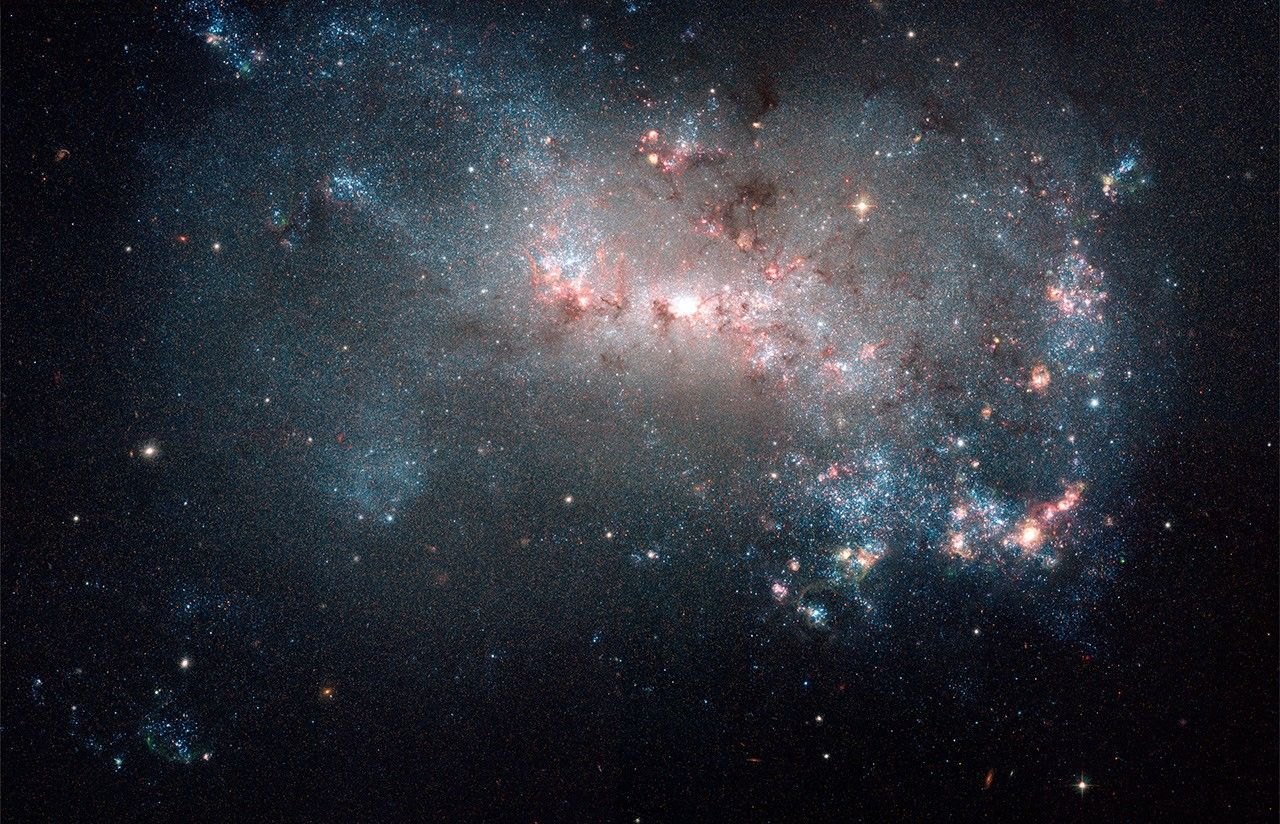
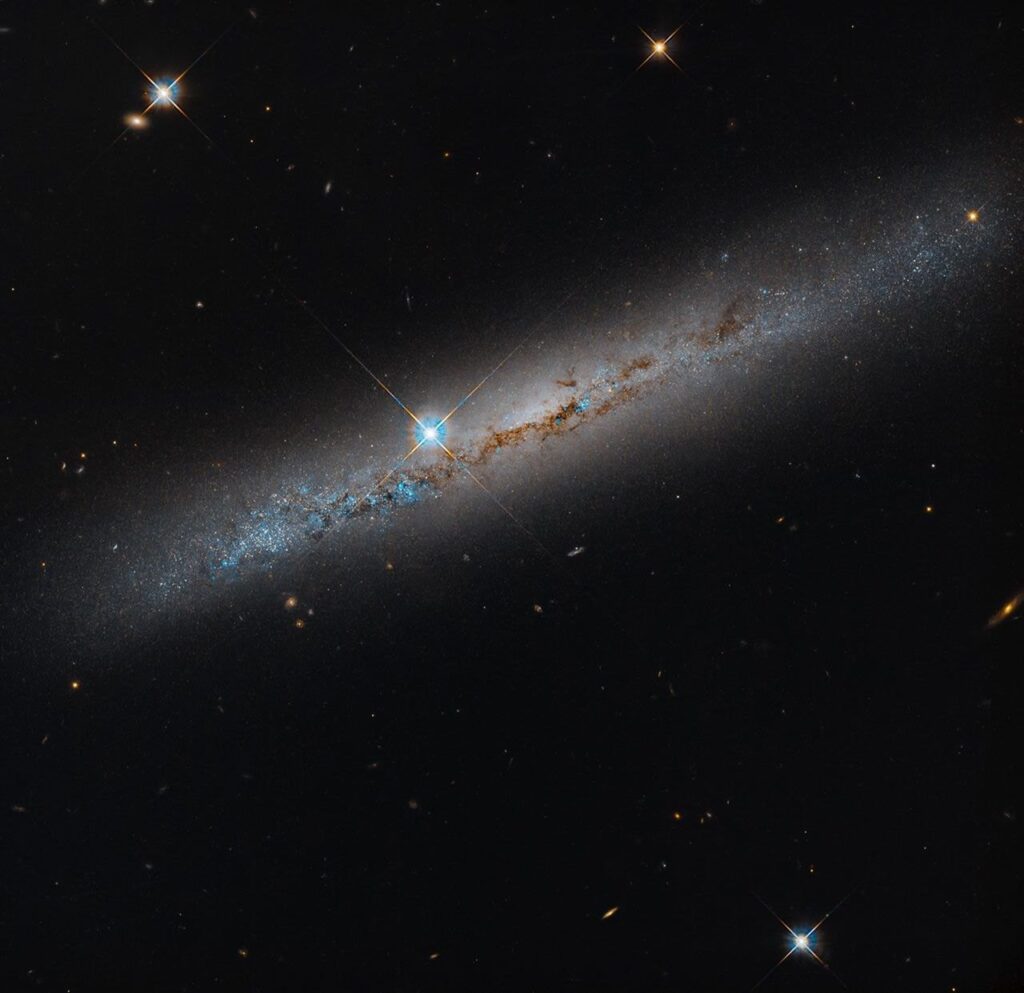
Researchers using NASA’s Hubble Space Telescope studied 37 nearby dwarf galaxies and found much less oxygen than simulations predict. Stars made it, so it was probably blown out of the galaxies by supernova winds.
The result was published Monday in The Astrophysical Journal. Dwarf galaxies are small systems holding anywhere from a few thousand to hundreds of millions of stars, and the study asks a simple bookkeeping question: how much of the oxygen their stars produce is still there?

Oxygen that stars made, but galaxies no longer hold
Stars forge heavy elements in their cores and, when massive ones explode as supernovae, scatter them into space. Astronomers call everything heavier than hydrogen and helium a “metal”. Oxygen is the most abundant element after hydrogen and helium, is relatively easy to detect, and its production by stars is well understood. That makes it a dependable stand-in for the whole family of heavy elements.
According to NASA, simulations predict that significantly more oxygen should sit inside these galaxies than the team measured. Co-investigator Grace Telford of the University of Utah put the logic plainly: “the oxygen must have been ejected.” Pushing gas out of a galaxy takes energy from massive stars and supernova explosions, which drive material into the space between galaxies.

The conclusion is that galactic winds launched by supernovae are more effective at stripping oxygen from low-mass galaxies than current models allow. Dwarf galaxies, the study finds, keep only a small fraction of the oxygen their stars create.
How the GLOW team tracked the oxygen
The work is part of the Galaxies Losing Oxygen via Winds project, known as GLOW, funded by NASA and the National Science Foundation. The team wanted to see how oxygen is split between three places: inside stars, in the gas and dust between stars, and in the space between galaxies.
Hubble supplied archival optical images that resolve individual stars. From those the team worked out each galaxy’s star-formation history and composition. They combined this with data from NASA’s retired Spitzer Space Telescope and from two ground-based radio facilities, the Very Large Array and the Australian Telescope Compact Array.
The sample was chosen with care. These galaxies have masses in the range where theory says a growing share of oxygen gets expelled by supernovae. They are also close enough for Hubble to separate single stars, which is not true of the vast majority of known dwarf galaxies.
Astronomers already suspected that galaxies shed large amounts of heavy elements. The open question is where those metals end up. A 2014 study of Milky Way-like star-forming galaxies found they lose a large fraction of their oxygen, some of it detected in the circumgalactic medium: the diffuse halo of gas around a galaxy, outside its disk. GLOW extends that approach to low-mass galaxies across a wide range of masses and environments.
“So, it’s really for practical reasons that we’ve chosen oxygen,” said Kristen Wingfield McQuinn, the GLOW principal investigator, who is also mission head of the Science Operations Center for NASA’s Nancy Grace Roman Space Telescope.
The missing oxygen still has no address
Earlier teams have measured oxygen in the circumgalactic medium of dwarf galaxies. NASA notes it is still unclear whether most of the missing oxygen sits there or has left the galaxy’s surroundings entirely. That distinction matters for how much dwarf galaxies enrich the intergalactic medium, the thin gas between galaxies.
What to watch: Smaller galaxies, and a telescope with a clock on it
McQuinn has an approved program to use Roman to find even fainter, lower-mass galaxies across a wide swath of sky. Once she has identified them, she hopes to use Hubble and the James Webb Space Telescope for deeper observations of their stars, which would let her reconstruct how each galaxy formed stars over cosmic time. Telford plans to use Hubble on some nearby GLOW targets to study the individual massive stars that make oxygen and drive it out, and how those stars differ in small galaxies.
Two things would sharpen the picture. One is a direct census of oxygen in the halos around these dwarfs, which would show whether the missing share is parked nearby or lost to intergalactic space. The other is whether the unusually strong winds show up in the star-by-star observations Telford describes, since models would need to be adjusted to reproduce them.
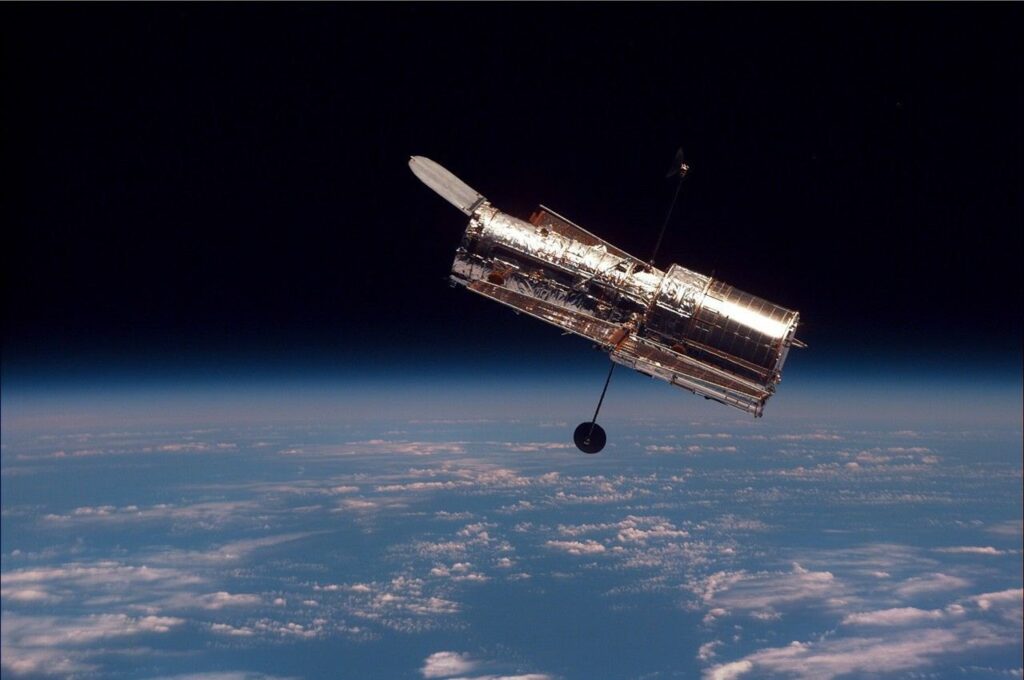
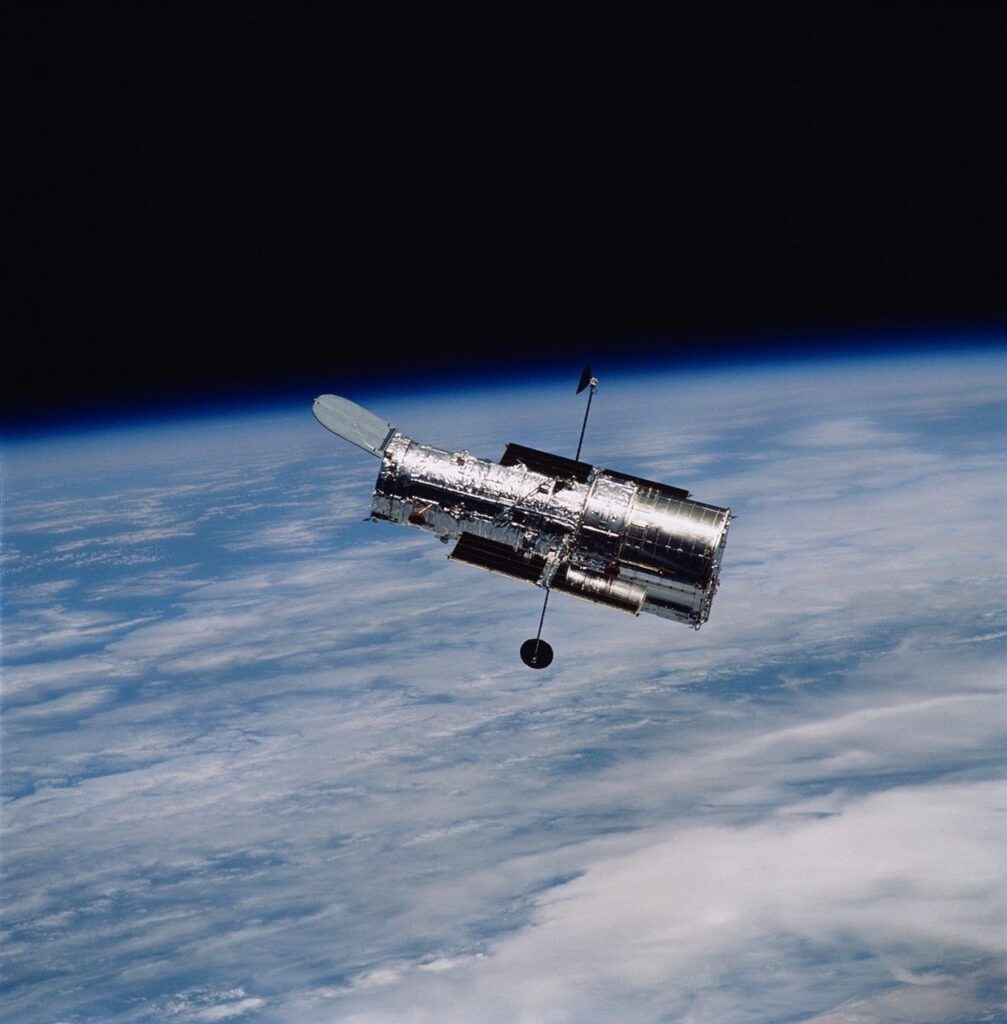
Hubble’s own future is part of the timeline. NASA recently asked industry whether a private spacecraft could lift Hubble out of its slow fall, a sign that the telescope’s orbit is decaying. The GLOW result rests on archival Hubble images, and NASA says the observatory has operated for over three decades and is managed from Goddard Space Flight Center, with science operations run by the Space Telescope Science Institute. Follow-up work on these galaxies depends on how long that observing capacity lasts, and on Roman, which McQuinn describes as newly launched.