Japan sets Mars moons mission launch for Oct. 19 UTC, with a Phobos sample due home in 2031
JAXA has fixed the MMX liftoff at 04:41 JST on Oct. 20 (19:41 UTC on Oct. 19) from Tanegashima, with backup days through Nov. 9.

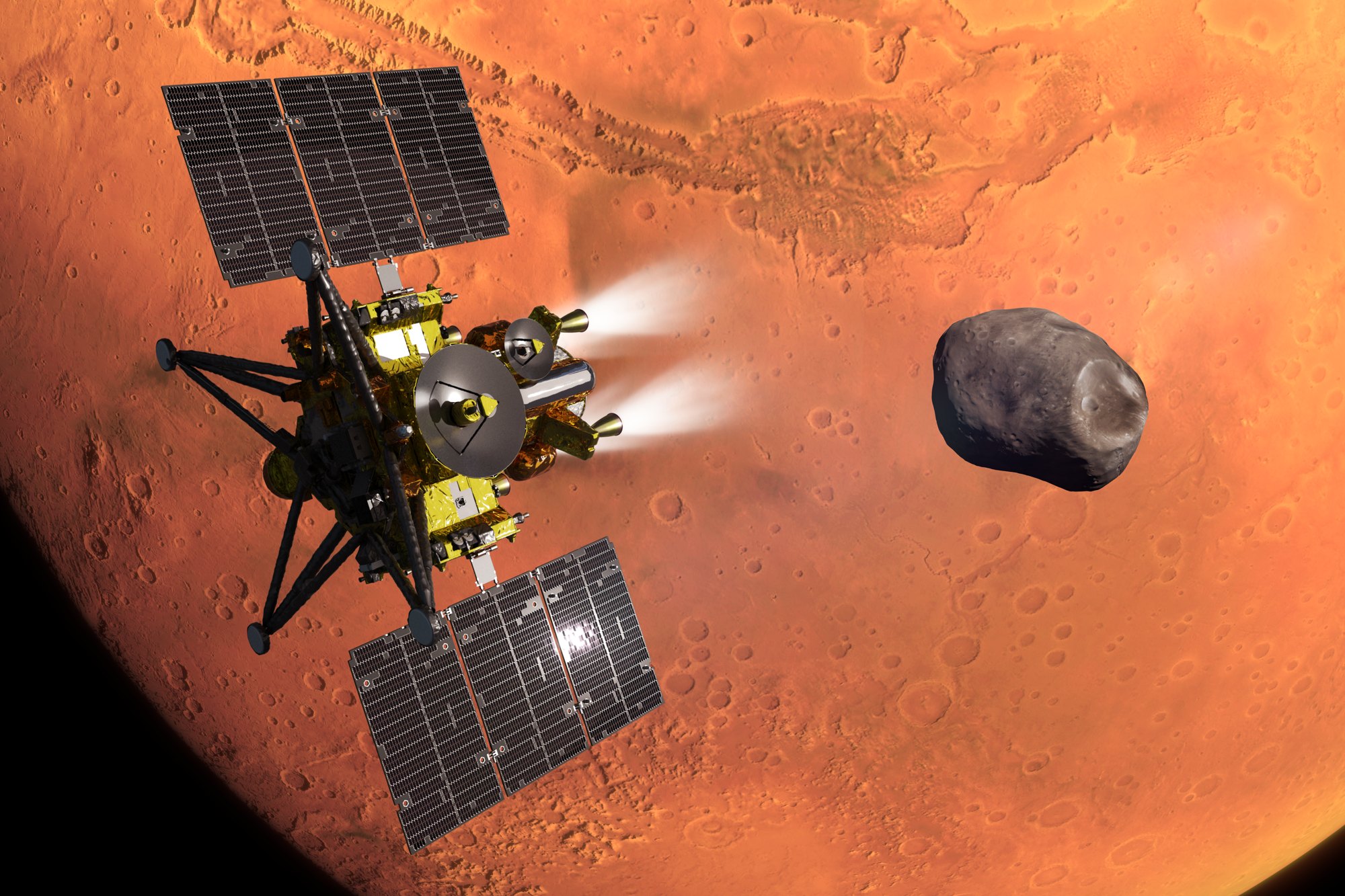
Japan’s space agency has set the launch of its Martian Moons eXploration spacecraft for 19:41 UTC on Oct. 19 (3:41 p.m. EDT), which is 04:41 JST on Oct. 20 in Japan, JAXA said. An H3 rocket will carry it from Tanegashima.
A fixed minute, and backup days through Nov. 9
The mission flies on H3 Launch Vehicle Flight No. 10 (H3F10) from the Yoshinobu Launch Complex at the Tanegashima Space Center. JAXA lists the liftoff time as 04:41:03 JST on October 20, 2026.

A reserved launch period runs from October 21 to November 9. JAXA notes that the launch time may vary during that period, so a slip would not simply repeat the same minute on a later day. A pre-launch briefing for the spacecraft and the rocket is available on the JAXA Channel. Readers following the date can check the rocket launch schedule, and our weekly look at launches puts this flight alongside the other departures of the week.
The clock times matter for anyone outside Japan: because of the 9-hour offset, the launch falls on the evening of Oct. 19 in Europe and the afternoon in the eastern United States.

What the spacecraft is meant to do after it leaves
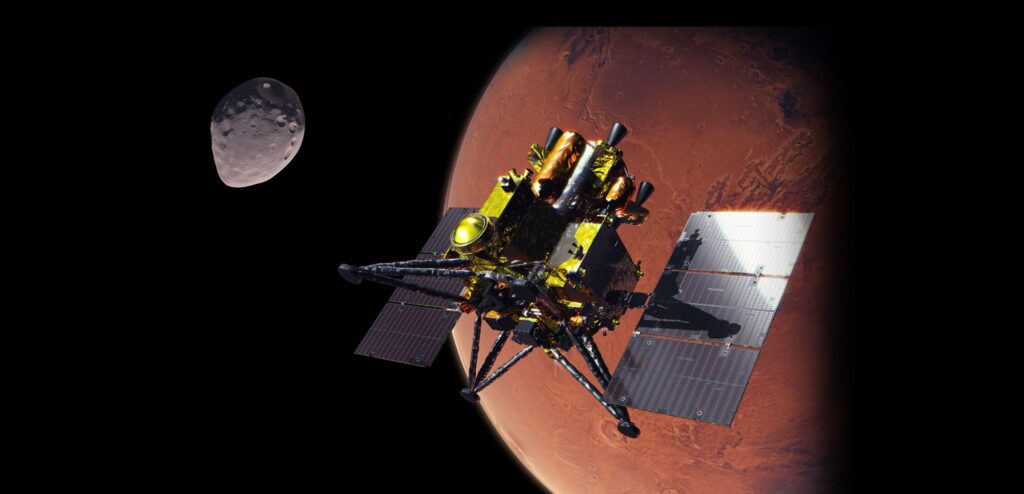
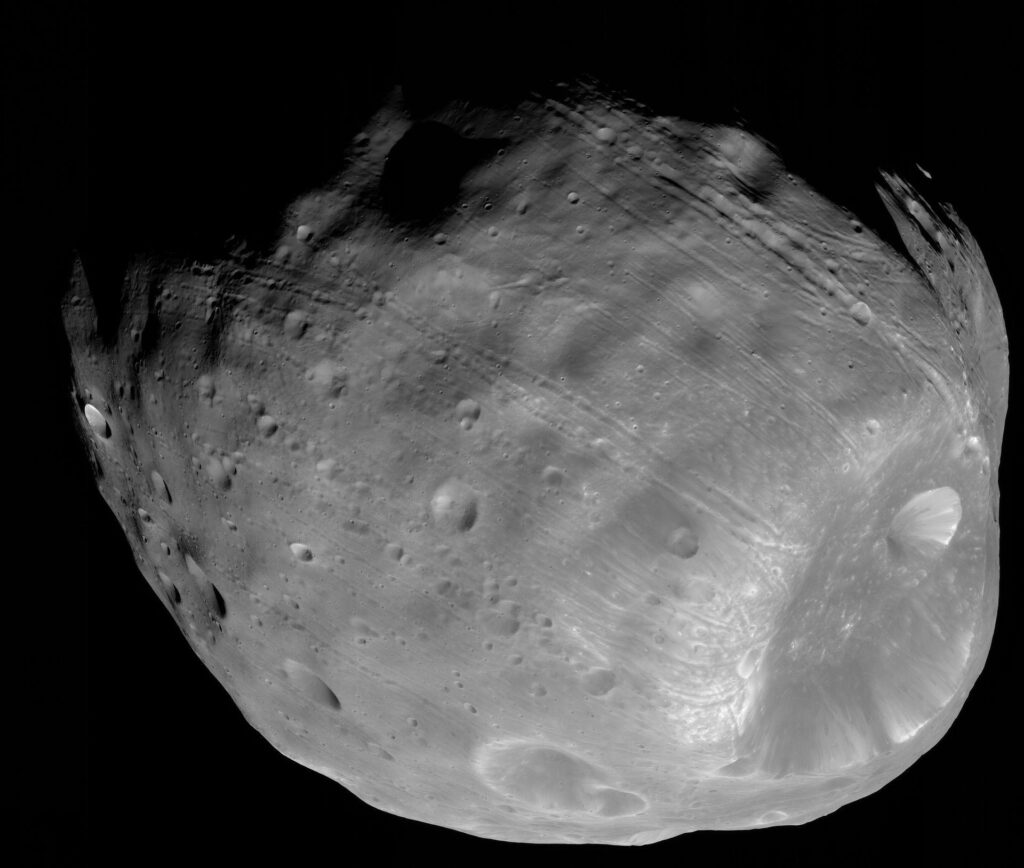
The Martian Moons eXploration (MMX) mission is aimed at Mars’ two small moons, Phobos and Deimos. According to JAXA’s mission page, the spacecraft is to enter a quasi-satellite orbit around Phobos, an orbit around Mars that keeps the spacecraft close enough to Phobos to appear to circle it, land there to collect samples and observe the moon, and also observe Deimos. NASA says the goals include learning where the moons came from and returning a Phobos sample to Earth.
JAXA leads the project with NASA, France’s CNES and Germany’s DLR, and ESA also takes part, according to ESA. The planned timeline, as given by NASA and ESA, runs as follows:
- Arrival in Mars orbit in August 2027, with the survey of the moons beginning;
- Phobos orbit from September 2027, according to ESA;
- Sample collection no earlier than December 2028, according to NASA;
- Release of the Idefix rover in early 2029 and a Phobos landing in 2030, according to ESA;
- Return of the sample capsule to Earth in 2031.
Why a few grams from a tiny moon are worth the trip
The scientific prize is a question that remote observation has not settled. NASA says samples could show whether the moons formed from a massive impact on Mars or are ancient captured asteroids. Those two stories predict different chemistry, and an actual sample of surface material could separate them in a way telescopes and flybys have not.
ESA says the return module is planned to deliver at least 10 grams of Phobos material, and that MMX would be the first spacecraft to collect samples from the surface of a moon other than Earth’s. NASA says it will receive and curate about 15% of the returned sample at the Johnson Space Center in Houston, so analysis will not be limited to Japan.
The sampling is difficult because Phobos has almost no gravity. ESA says the 25-kilogram Idefix rover would weigh only about 15 grams there, so any landing, drilling or rover motion has to be done with great care. NASA is contributing the MEGANE spectrometer, which measures gamma rays and neutrons to determine the elemental composition of the surface, and the P-Sampler, which collects material using bursts of high-pressure nitrogen gas. JAXA’s own C-Sampler takes cores from deeper below the surface, NASA says, so the team should get both surface and subsurface material.
The capsule is planned to land in Australia and then be taken to Japan for extraction and cataloguing, ESA said, with European scientists expected to get access.
All of this depends on the H3 flying as planned on Oct. 19 or within the backup period. JAXA has not announced results of the flight, and the schedule above is the plan as of the Oct. 18 announcement.