Dark comets: A tail for 1998 SH2 and a Hayabusa2 visit due in 2031
In July 2026 NASA reported a weak tail on near-Earth object 1998 SH2, a dark comet, while Hayabusa2 is scheduled to reach 1998 KY26 in 2031.

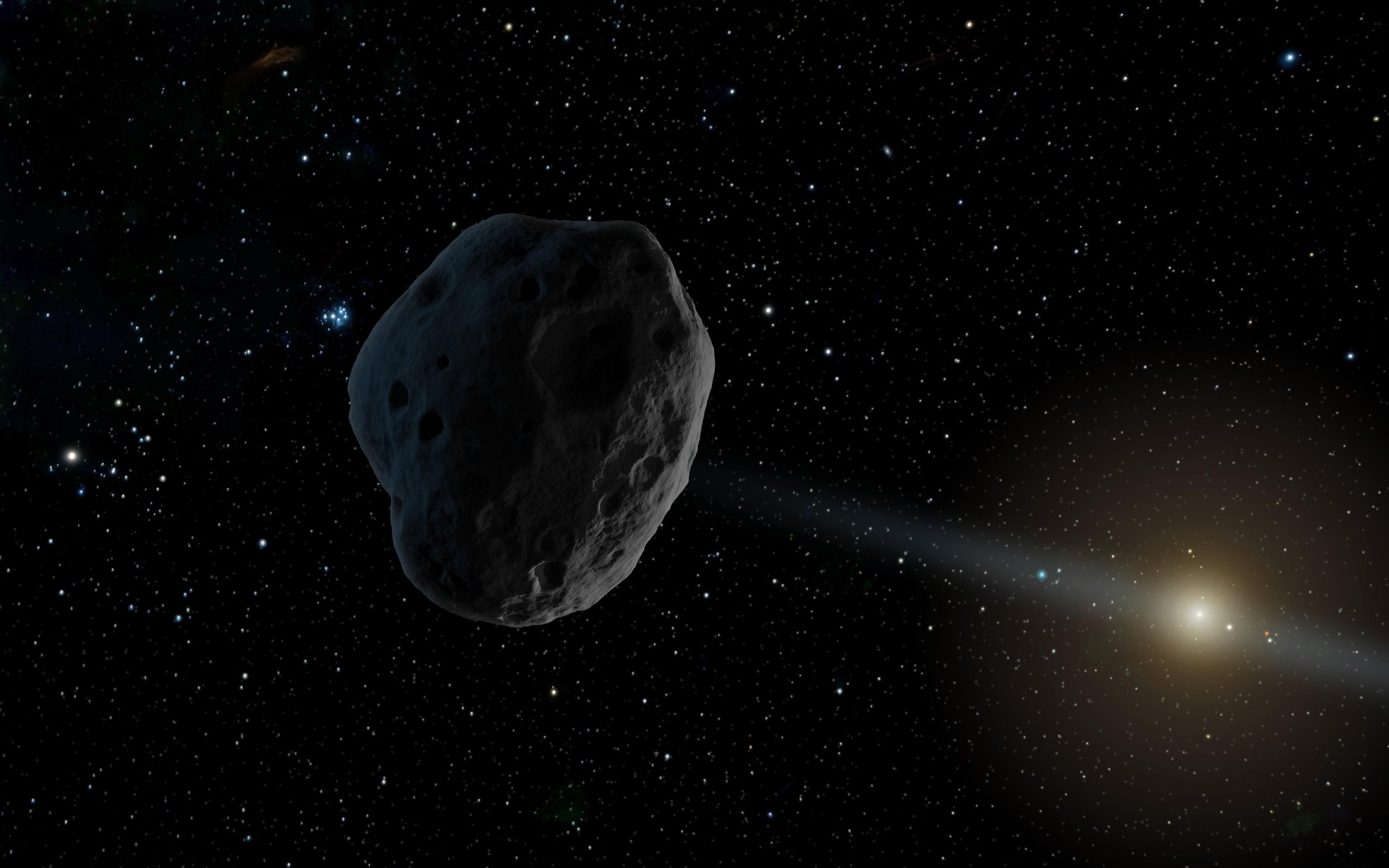
Observations of near-Earth object 1998 SH2 showed a weak tail, NASA’s Jet Propulsion Laboratory reported on July 16, 2026, confirming that a so-called dark comet is active. Japan’s Hayabusa2 is scheduled to reach another candidate, 1998 KY26, in 2031.
A tail on an object that looked like an asteroid
Dark comets are small bodies whose orbits are pushed by something other than gravity, yet which show no coma or tail. The first was found in 2016, and JPL says about a dozen more have been identified since. They split into two groups: larger objects on Jupiter-family-like orbits, and smaller ones that orbit closer to the Sun.


The newest result concerns 1998 SH2. It passed Earth on August 28, 2025, at under 2 million miles (3 million km), according to JPL. A team led by Davide Farnocchia, a navigation engineer at NASA’s Center for Near-Earth Object Studies, had suspected from its motion that it might be an active comet. They then observed it with the Canada-France-Hawaii Telescope in Hawaii and with the European Southern Observatory’s Danish Telescope and Very Large Telescope in Chile.
Olivier Hainaut, an ESO astronomer and co-author, said the data “showed a weak but clear tail, thus confirming that 1998 SH2 is, in fact, a comet”. Farnocchia explained the logic of the search, which relies on outgassing, the release of gas as a body’s ice warms and gives it a small push: “Because of outgassing, the motion of comets is more significantly perturbed than that of asteroids.” The work is published in Nature Astronomy (DOI 10.1038/s41550-026-02913-7).

What the 2024 studies established
The dark comet idea rests on a short list of papers. A study published in PNAS in December 2024 by Darryl Seligman and colleagues, available as an author’s version on arXiv, reported nongravitational accelerations on seven more objects previously classed as inactive. That roughly doubled the known sample, to 14 according to Italy’s INAF. Radiation effects do not explain the accelerations, and the authors propose volatile-driven outgassing instead.
That paper searched archival images for dust and found none. It also proposed the two-population split. The outer objects, with eccentric orbits, may be the low-activity end of the comet family. The inner objects, on near-circular orbits, may be a new population. INAF’s summary puts the outer group at hundreds of meters or more and the inner group at tens of meters or less.
A separate study led by Aster Taylor, published in Icarus in 2024, used dynamical simulations to trace origins. It concluded that most dark comets came from the ν6 resonance in the inner main asteroid belt, implying that volatile material survives there. One object, (523599) 2003 RM, probably came from the outer main belt, though a Jupiter-family comet origin is possible.
How 1998 SH2 changes the picture
The analysis is where the 2026 result matters most. Until now, “dark” meant that no activity had been seen. The 1998 SH2 tail shows that at least one outer dark comet was active all along, only too faintly for earlier images to reveal. That supports the 2024 PNAS view that the outer group sits at the low-activity end of the comet family, though it does not settle the inner group.
The population is also small enough that one object matters. JPL counts roughly 13 dark comets, and the PNAS paper’s 14 included objects with no dust detection at all. Two things remain uncertain. Nobody has yet measured what is venting from the inner dark comets, and the PNAS authors treat their link to a hidden, volatile-rich population as a possibility, not a result. The authors of the 2024 paper also say such bodies may have supplied material to Earth, a point that is proposed, not demonstrated.
Spin is another open question. INAF’s summary of the PNAS work says dark comets generally rotate fast, with periods of about 0.05 to 2 hours, but that periods are known for only a minority of them.
1998 KY26 is smaller than first thought
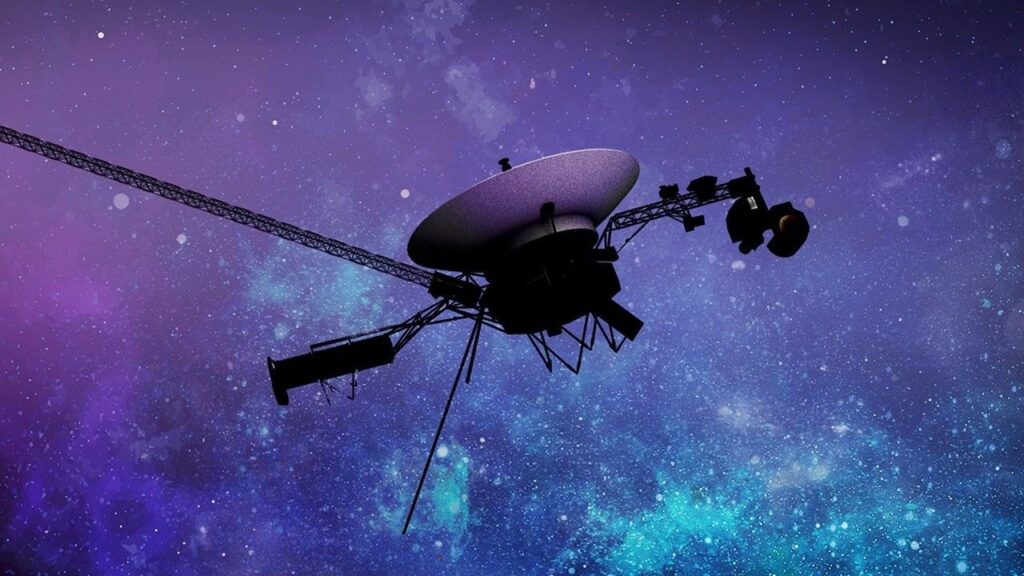
Hayabusa2’s extended mission, Hayabusa2#, is aimed at 1998 KY26. A Nature Communications study led by Toni Santana-Ros, published in September 2025, ran a photometric campaign, tracking the asteroid’s brightness over time, during the asteroid’s 2024 close approach to Earth. It found a spin period of about 5.35 minutes, half the earlier estimate, and, combined with 1998 Goldstone radar data, a diameter of 11 ± 2 m, about three times smaller than previous values. Its low cohesive strength suggests a possible rubble pile, a loose heap of fragments held together by gravity, though a monolithic body, a single solid piece, is not ruled out. The authors say James Webb Space Telescope observations could validate the results. The paper’s abstract also notes earlier reports of nongravitational acceleration, but no coma or dust tail has been observed.
JAXA’s own mission pages have not all caught up. A June 2026 JAXA release still describes the target as about 30 m across, while the German space agency DLR gives about 11 m and a rotation of about 5.4 minutes.
A Torifune flyby on the way to 1998 KY26
The spacecraft recently rehearsed the kind of fast encounter the extended mission requires. JAXA reported that Hayabusa2 flew past asteroid Torifune at about 18:30 JST on July 5, 2026, which is 09:30 UTC. The thermal infrared image was taken from about 10 km, and only part of the instrument data had reached Earth at the time. According to JAXA’s earlier announcement, the flyby also tests precise navigation relevant to planetary defense.
DLR says an Earth swingby is planned for December 2027 to redirect the spacecraft toward 1998 KY26. Arrival is scheduled for 2031. If the plan holds, it would be the first spacecraft visit to an asteroid of this size, and the first chance to look at an object linked to the dark comet debate up close. JAXA’s pre-flyby material frames the 2031 target as a test of whether such small, fast-spinning bodies are solid rock or loose aggregates.