A dune’s sand grains reveal the wind that built it, on Earth and Mars alike
Stanford researchers found that a dune's median sand grain size reveals the wind speed that shaped it, on Earth and on Mars, and in sandstone up to three billion years old.

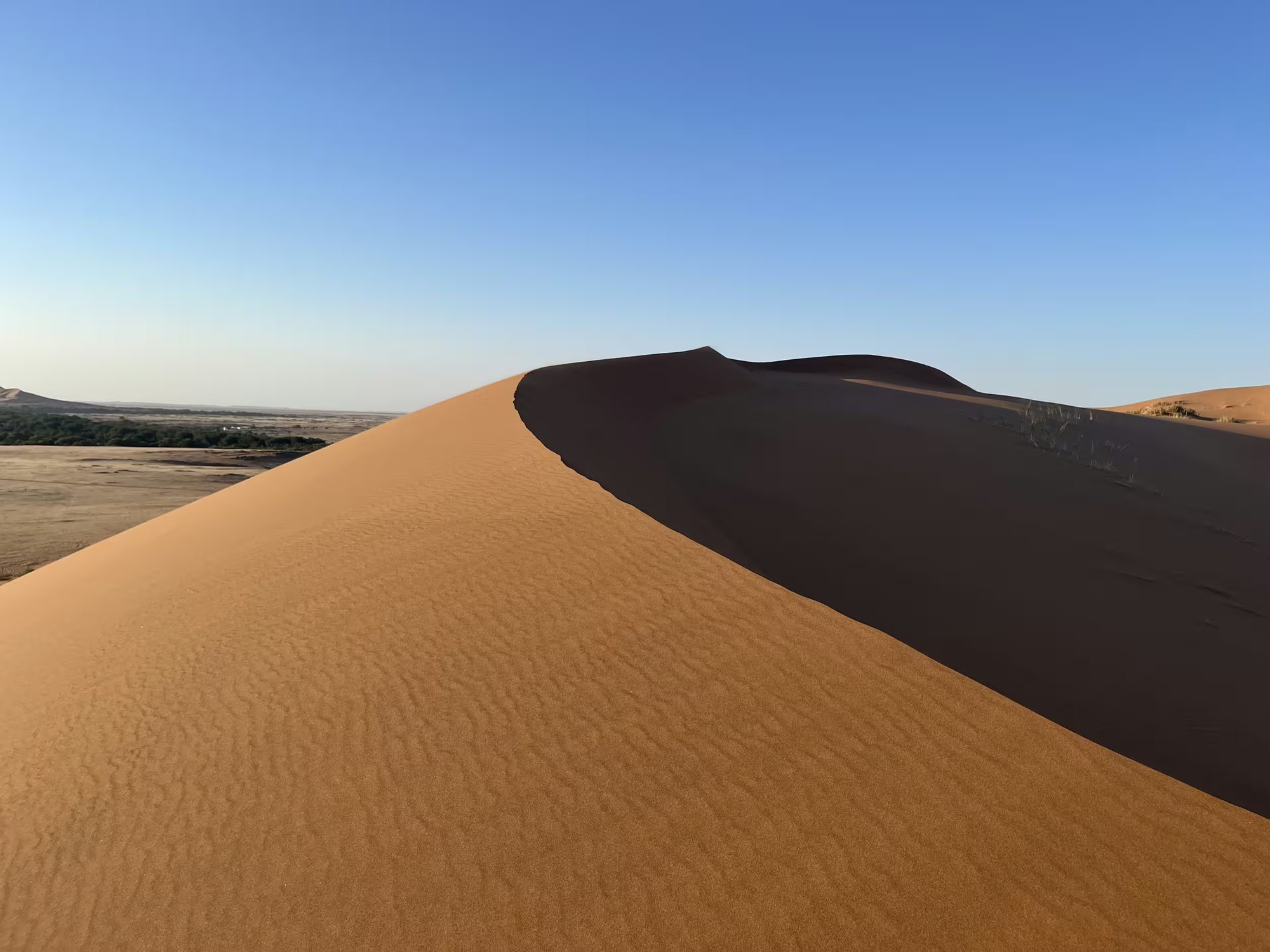
Stanford University researchers report that the median size of the sand grains in a dune reveals how fast the wind was blowing when the dune formed, and the link holds on both Earth and Mars, according to the Stanford Doerr School of Sustainability.
That turns sand into what the team calls a wind speedometer, usable on modern dunes and on ancient ones preserved in rock. The work was published in the Proceedings of the National Academy of Sciences.

The wind that builds a dune is only just strong enough
Wind-built dunes and ripples have been found on Venus, Mars, Saturn’s moon Titan and even a comet. Their shapes show which way the wind blew and how steady it was, but estimating how fast it blew has been hard.
The Stanford team started from a 2010 hypothesis by University of Pennsylvania researchers: dunes form under winds only slightly faster than the threshold needed to start moving sand. Lead author Colin Marvin said nobody had really tested the idea since, even though it matters for other worlds. Marvin did the work as a PhD student in the lab of senior author Mathieu Lapôtre, associate professor of Earth and planetary sciences, and is now a postdoctoral scholar at Brown University.

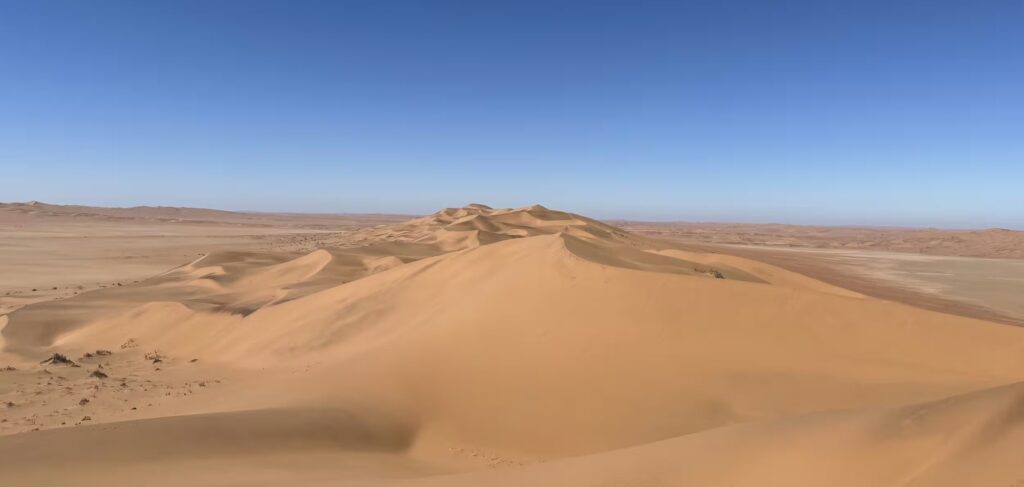
To test it, the researchers analyzed 30 years of wind data and grain-size measurements from 24 dune fields of different shapes, sizes and locations. For each field they worked out which wind speed moved the most sand over time. Those winds tracked grain size closely and exceeded the sand-moving threshold only modestly. The pattern held in every field studied, from Coral Pink Sand Dunes State Park in Utah to the Namib Sand Sea in Namibia, which the release describes as Earth’s oldest desert.
The release gives one worked example. A dune with a median grain diameter of 0.2 millimeters on modern Earth points to an effective dune-forming wind of about 16 miles per hour, measured about 33 feet above the ground.

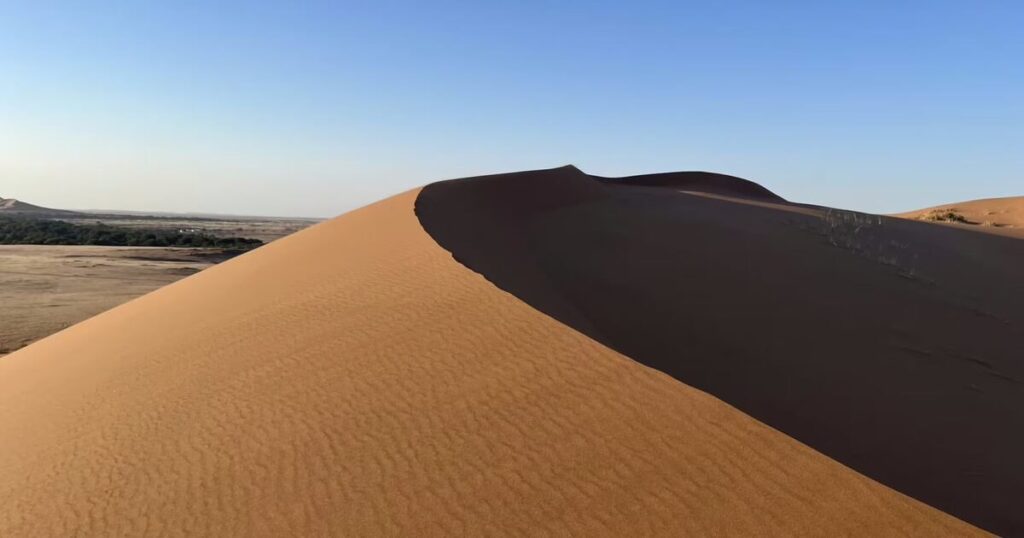
It works for modern dunes and for sandstones dating back three billion years.
Lapôtre said this in the release. He added that the method will let scientists “better reconstruct winds and climates through time, on Earth and beyond.”
Mars follows the same rule despite a very different atmosphere
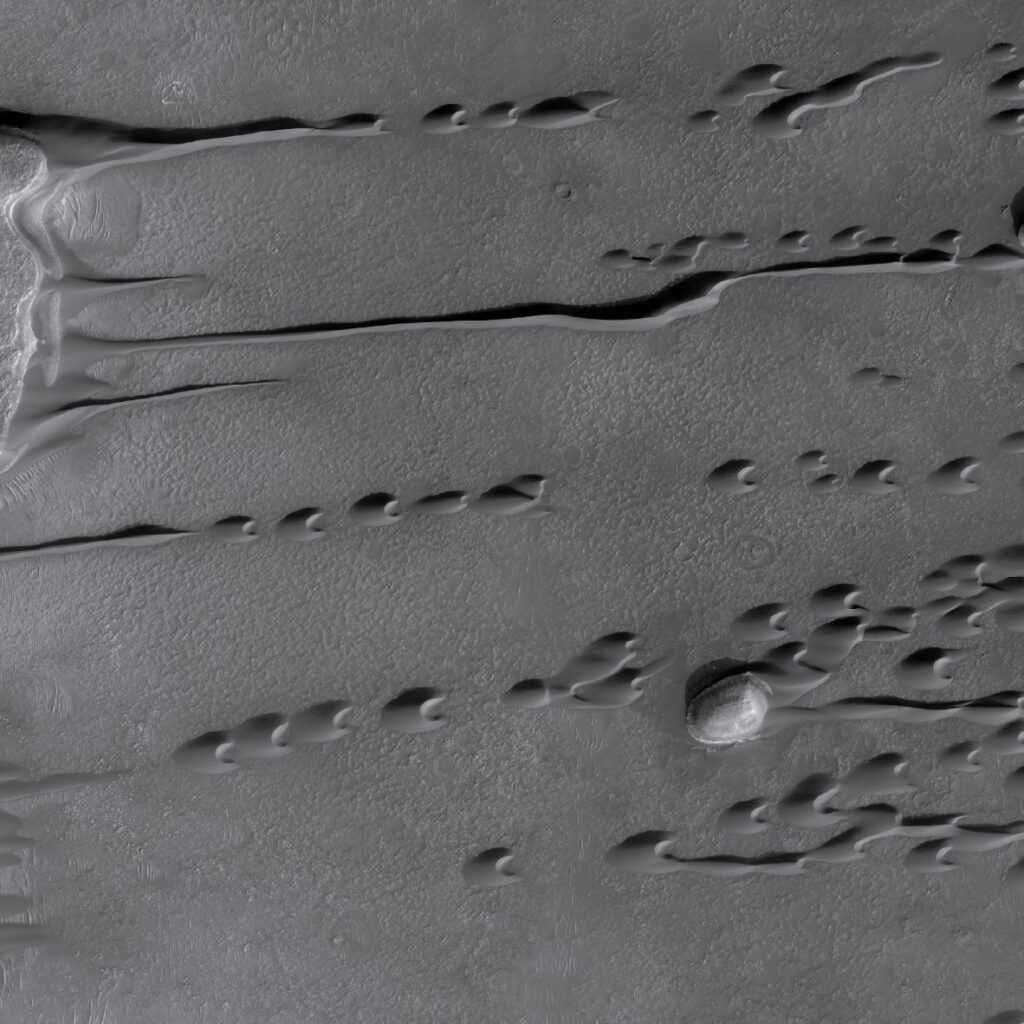
The team then ran the same analysis on a Martian dune field. A similar correlation appeared, even though Mars differs from Earth in atmospheric pressure, gravity and sediment density. The release suggests windblown dunes form in essentially the same way on any planetary body that has loose sediment and winds that become less common as they get stronger. It also implies that dunes in Earth’s deep past formed the same way, despite atmospheric changes over geological time.
The Martian example is a Hellespontus region dune field, photographed on March 16, 2008, by the HiRISE camera on NASA’s Mars Reconnaissance Orbiter (credit: NASA/JPL-Caltech/UArizona). Lapôtre said reconstructed winds could help test models of ancient atmospheric circulation on Earth and Mars, and that Marvin is working on that now. The research was supported by a National Science Foundation CAREER grant.
Why the match across two planets is surprising
The comparison is striking because the two atmospheres are so unlike each other. NASA’s Mars Fact Sheet gives a mean surface pressure of 6.36 millibars, roughly a hundredth of Earth’s, and a surface gravity of 3.73 meters per second squared against 9.82 on Earth, about 38%. Thin air pushes sand less and lower gravity lets grains fly differently, yet the grain-size to wind-speed link still emerged. That suggests the rule rests on how sand starts to move rather than on the details of any one atmosphere.
For planetary scientists the practical gain is a new kind of evidence. Orbiters such as HiRISE already image dunes in great detail, and dune shape tells direction. A grain-size measurement, from a rover or from sandstone in the rock record, would add a number for speed. The release does not say which missions or targets might use the method first, and it does not give the Mars wind speeds the team calculated.
The method is limited to places with loose sediment and a record of grain size, so it cannot be applied everywhere. The release presents it as a tool for several planets and moons rather than a finished result for any one of them.