Two Mars missions stall at once: Perseverance’s radios fail and Odyssey loses a wheel
NASA has paused science on the Perseverance rover after a radio fault, and Mars Odyssey has a stuck reaction wheel and offline instruments. Both teams aim to resume by the end of November.

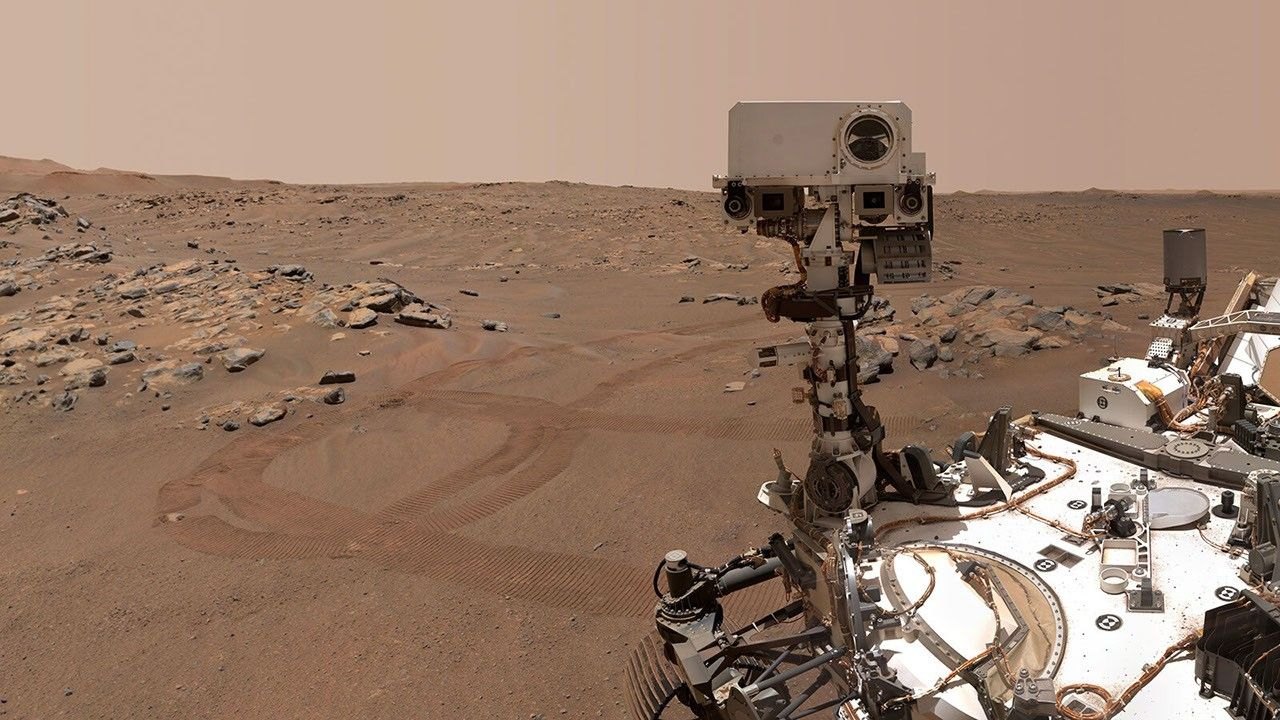
NASA has paused science on the Perseverance rover because of faults in both of its UHF radios, and its 25-year-old Mars Odyssey orbiter has a stuck reaction wheel and offline instruments, NASA said on Nov. 19. Both teams hope to resume by late November.
A missing heartbeat on Perseverance
On Oct. 30, when the rover powered on for the day, its primary UHF radio did not send the regular electronic pings, called heartbeats, to the main computer. UHF radios are what the Perseverance rover uses to send large volumes of data to orbiters, which relay it to Earth.

The computer resets a counter each time it hears a ping. After 25 missed heartbeats in a row, about 100 seconds of silence, fault protection did what it is designed to do: it shut off the unresponsive radio, switched to the identical backup radio and put the rover into safe mode, in which all non-essential systems are shut down.
Engineers then found a second problem. The backup radio was transmitting at about half of its expected power. The team has stopped using both radios until it understands the causes and judges one or both safe to use again.

The rover is stable and in contact with the team. It is talking directly to NASA’s Deep Space Network of ground antennas using X-band radio on its high-gain antenna, a link with a much lower data rate. To save bandwidth for diagnostic data, science and instrument operations are paused, so the rover is taking no new pictures and the raw-image feed on its mission website has stopped updating. A JPL team is studying how to bring the backup radio back, then will turn to the primary one. NASA says the rover could return to science by the end of November.
Odyssey is down to three wheels, and a fuel clock is running
Separately, Odyssey went into safe mode between Nov. 4 and 6. Engineers found that one of its four reaction wheels had stopped spinning. These are spinning flywheels that turn the spacecraft by speeding up or slowing down, for example to keep its solar arrays pointed at the Sun. One wheel already failed in 2013, and at least three are needed for normal pointing.


Without three working wheels, Odyssey must steer with its hydrazine thrusters, and NASA estimates it has fuel for only one to two months of that after 25 years in Mars orbit. Estimates are being refined. Odyssey is out of safe mode, but its science instruments are offline. In one test the wheel moved when commanded; more tests will show whether it can be recovered. The goal is for Odyssey to resume science and relay work in the last week of November.
Why the two failures hurt together
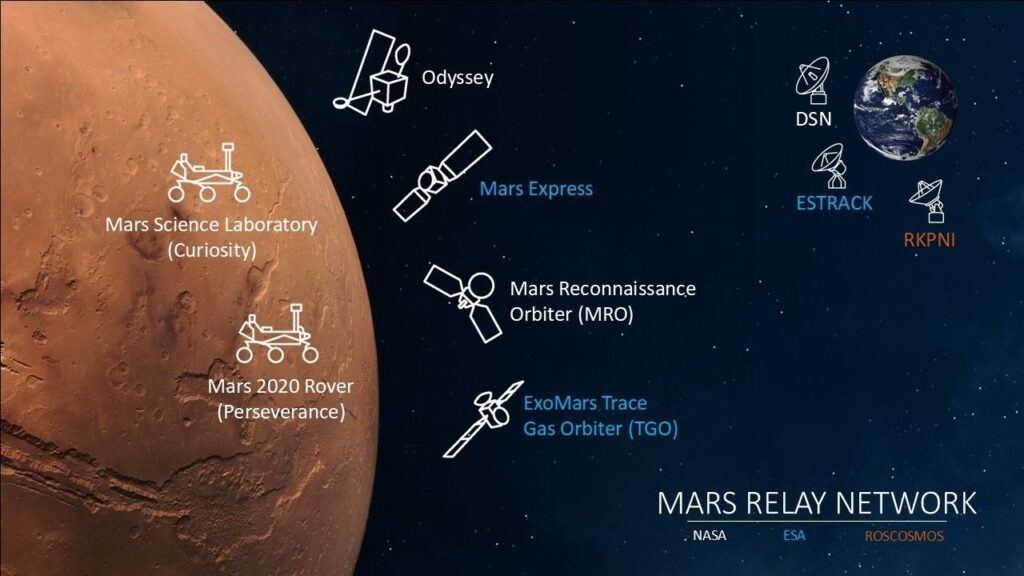
The timing matters because of how Mars missions share the work. NASA describes its Mars Relay Network as four orbiters that, besides their own science, pass data from the Curiosity and Perseverance rovers to Earth. A rover talking to Earth directly has far less bandwidth than one using an orbiter, so losing relay capacity from either side limits what the surface missions can return.
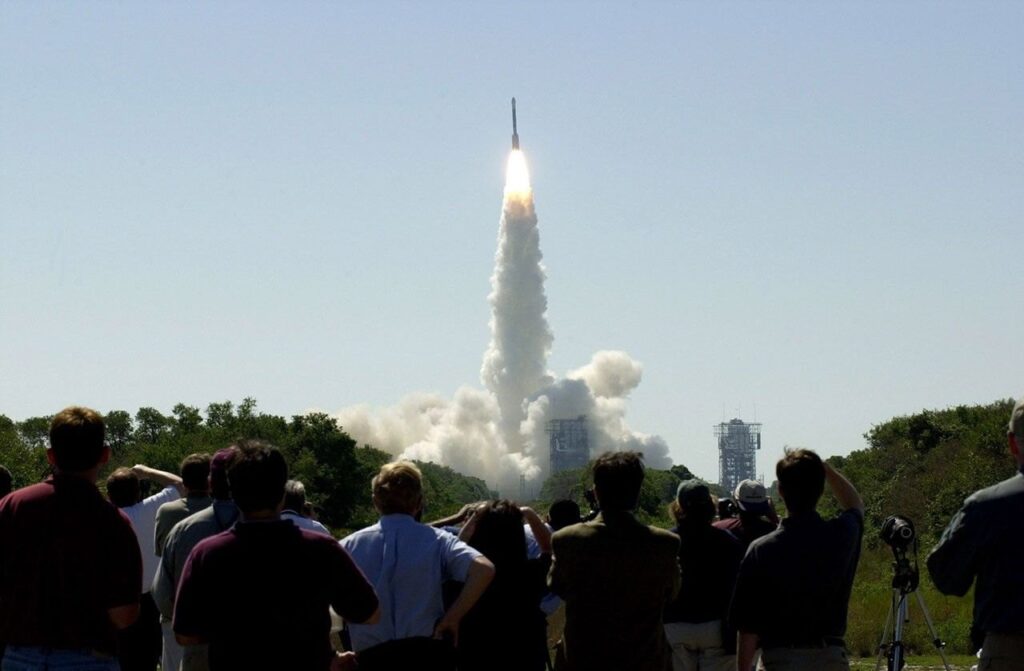
Odyssey’s role in that chain is long-standing. It launched on a Boeing Delta II rocket from Cape Canaveral on April 7, 2001, according to NASA’s photo archive, and it has since outlasted every other Mars mission. NASA says it was built for just over 2.5 years. Its records of the surface, including the water molecules and buried ice in the top meter, have guided landing-site choices and, in NASA’s words, may help the first astronauts.
The same service life explains the risk. A mission designed for 2.5 years but running for 25 has little margin left in hardware or propellant, and its two reaction-wheel failures, in 2013 and now, show the wear. Perseverance, by contrast, has redundant radios that behaved as designed, which is why the rover protected itself, though the weak backup left it with no good UHF path.
In the strategic sense, the episode shows how dependent NASA’s surface science is on a few aging relay spacecraft. Until Odyssey returns and a Perseverance radio is cleared, the rover team is working through a low-bandwidth link, and nobody outside the project will see new rover pictures. For the best of what the rovers and orbiters have already returned, see our guide to Mars pictures.
NASA says it will give further updates as the teams learn more.